- Company Articles
- Industry articles
- Industry News
- Recyclability of 40 Aluminum Roller Track Grey: Aligning with Green Manufacturing Goals

Recyclability of 40 Aluminum Roller Track Grey: Aligning with Green Manufacturing Goals
Related Product
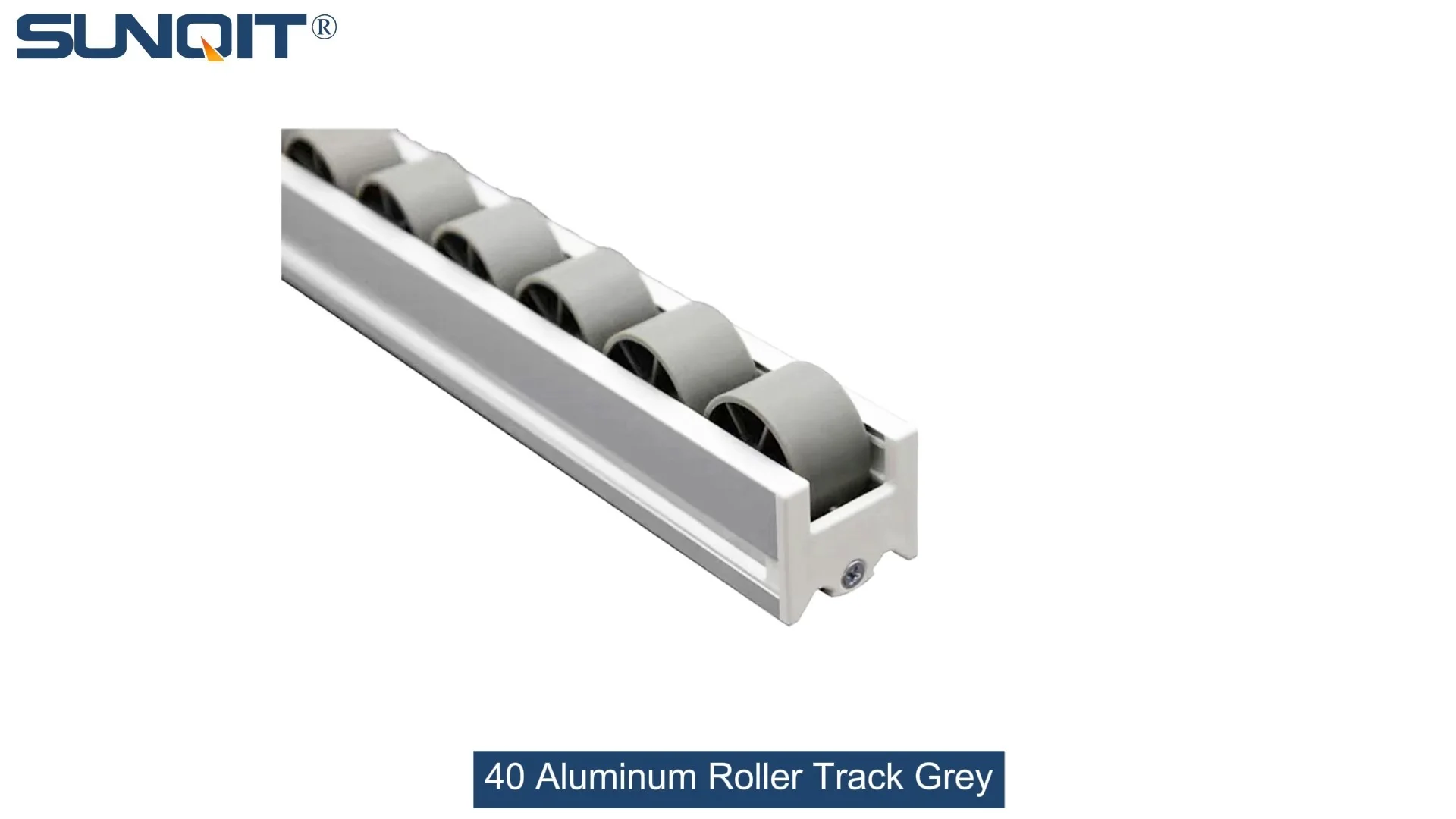
40 Aluminum Roller Track Grey
Durable and smooth-running modular roller rails. The system is fully assembled. The roller rail profile contains plastic rollers mounted on steel axles. Aluminum frame with plastic wheel make it anti corrosion,and material convey more smooth.
How a single component is reshaping sustainability in factory floors worldwide
The Green Manufacturing Revolution: Why Every Component Counts
Walk into any modern manufacturing facility today, and you'll notice a quiet shift happening. It's not just about producing faster or cheaper anymore—though those goals still matter. Today, the buzzword on factory floors, boardrooms, and even customer conversations is sustainability . From automotive plants in Detroit to electronics factories in Shenzhen, manufacturers are rethinking every step of their process, asking: How can we make this greener? How can we reduce waste? And perhaps most importantly, how can we build systems that don't just serve today's needs, but protect tomorrow's planet?
Green manufacturing isn't a trend; it's a necessity. Stricter environmental regulations, rising consumer demand for eco-friendly products, and the clear cost benefits of reducing waste have pushed sustainability from "nice-to-have" to "must-have." But here's the thing: sustainability isn't just about big, headline-grabbing initiatives like solar panels or electric forklifts. It's often the smaller, everyday components that add up to the biggest impact. Take, for example, the humble roller track—the unassuming system of wheels and rails that moves materials across assembly lines, feeds parts to workers, and keeps production flowing. It's easy to overlook, but when you consider how many roller tracks exist in a single factory, and how often they're replaced, their environmental footprint becomes impossible to ignore.
Enter the 40 Aluminum Roller Track Grey. At first glance, it might seem like just another piece of industrial equipment. But dig deeper, and you'll find a component designed with one of sustainability's core principles in mind: recyclability. Made from aluminum extrusion profile, this roller track isn't just built to last—it's built to be reborn. In this article, we'll explore why recyclability matters in manufacturing, how aluminum stands out as a sustainable material, and how the 40 Aluminum Roller Track Grey is becoming a cornerstone for lean system suppliers and eco-conscious factories aiming to align with green goals.
Aluminum: The Unsung Hero of Recyclable Manufacturing Materials
To understand why the 40 Aluminum Roller Track Grey is a game-changer, we first need to talk about aluminum itself. When it comes to sustainability, aluminum is in a league of its own. Unlike plastics, which degrade over time and often end up in landfills, or steel, which requires intensive energy to recycle, aluminum is infinitely recyclable. That's right—infinitely. It can be melted down, reshaped, and reused repeatedly without losing any of its structural integrity. This isn't just a marketing claim; it's a well-documented fact backed by the Aluminum Association, which reports that nearly 75% of all aluminum ever produced is still in use today. Think about that: the aluminum in your soda can might have started life as part of an airplane wing, or a window frame, or yes—even a roller track.
The energy savings of recycling aluminum are equally impressive. Producing new aluminum from bauxite ore requires a staggering amount of electricity—so much so that aluminum production is one of the most energy-intensive industrial processes on the planet. Recycling aluminum, by contrast, uses just 5% of that energy. Let that sink in: for every ton of aluminum recycled, we save 95% of the energy that would have been used to make new aluminum. That's not just good for the environment; it's good for the bottom line, too. Manufacturers that prioritize recycled aluminum components can significantly reduce their carbon footprint while cutting energy costs—a win-win that's hard to ignore.
But aluminum's sustainability story doesn't end with recyclability. Its lightweight nature also plays a role. Compared to steel, aluminum is 30% lighter, which means less fuel is needed to transport it, and less energy is required to move it around the factory floor. Its corrosion resistance means it lasts longer, reducing the need for frequent replacements. And when it does reach the end of its life, it's easy to disassemble and separate from other materials—no complicated sorting required. All of these qualities make aluminum extrusion profile the ideal choice for manufacturing components, especially those like roller tracks that are used in high-volume, high-wear environments.

40 Aluminum Roller Track Grey: Designed for a Circular Economy
Now, let's zoom in on the star of the show: the 40 Aluminum Roller Track Grey. What makes this specific roller track stand out in the crowded world of industrial components? It starts with its core material: aluminum extrusion profile. Extrusion is a manufacturing process where aluminum is pushed through a die to create complex shapes with consistent cross-sections. This process itself is efficient—minimizing waste and allowing for precise, custom designs. For the 40 Aluminum Roller Track Grey, the extrusion process creates a lightweight yet durable rail that can withstand the daily grind of factory use, from heavy material loads to constant movement.
But the recyclability of the 40 Aluminum Roller Track Grey isn't just about the aluminum itself; it's about how the entire system is designed. Unlike some roller tracks that use a mix of materials—plastic wheels, steel brackets, and aluminum rails, which can be a nightmare to separate for recycling—the 40 Aluminum Roller Track Grey is engineered with simplicity in mind. Its main rail is pure aluminum extrusion profile, and its accessories (like the plastic roller track guide rail grey, which is often made from recyclable HDPE) are designed to be easily detached. This modularity is key. When a section of the roller track wears out, you don't have to replace the entire system—just the damaged part. And when the track reaches the end of its useful life, disassembling it for recycling is straightforward: separate the aluminum rails, plastic guides, and metal connectors, each of which can be recycled through their respective streams.
Durability is another piece of the puzzle. A longer-lasting component means less frequent replacement, which in turn means less waste. The 40 Aluminum Roller Track Grey is built to handle heavy loads (up to 200kg per meter, in many cases) and resist the scratches, dents, and corrosion that come with industrial use. Its grey finish isn't just for aesthetics; it's a powder coating that adds an extra layer of protection, extending the track's lifespan even further. By reducing the need for replacements, the roller track reduces the demand for new materials—another win for sustainability.
Perhaps most importantly, the 40 Aluminum Roller Track Grey is part of a larger ecosystem of sustainable manufacturing components. Lean system suppliers, in particular, are increasingly integrating such recyclable components into their offerings. These suppliers understand that today's manufacturers don't just want efficient production systems—they want systems that align with their environmental values. By offering roller tracks, workbenches, and flow racks made from recyclable materials like aluminum, lean system suppliers are helping factories reduce their carbon footprint while maintaining the efficiency that lean manufacturing demands.

Comparing Materials: Why Aluminum Beats Steel and Plastic for Roller Tracks
To truly appreciate the sustainability of the 40 Aluminum Roller Track Grey, it helps to compare it to other common materials used in roller tracks: steel and plastic. Let's break down how they stack up in terms of recyclability, energy use, lifespan, and overall environmental impact.
| Material | Recyclability | Energy Use (Production vs. Recycling) | Lifespan (Industrial Use) | Weight (Per Meter) | Corrosion Resistance |
|---|---|---|---|---|---|
| Aluminum (40 Roller Track Grey) | Infinitely recyclable; 95% energy savings vs. new production | New: High energy; Recycled: 5% of new energy | 10–15 years | 2.5–3kg | High (naturally resistant; enhanced by coating) |
| Steel | Recyclable, but loses quality over time; 70% energy savings vs. new production | New: High energy; Recycled: 30% of new energy | 15–20 years (but prone to rust without coating) | 7–8kg | Low (requires painting/coating to prevent rust) |
| Plastic (PVC/HDPE) | Limited recyclability; often downcycled into lower-quality products | New: Moderate energy; Recycling: Minimal energy savings | 3–5 years (prone to cracking, warping under heat) | 1.5–2kg | High, but degrades under UV light and chemicals |
Looking at the table, aluminum's advantages are clear. While steel has a longer lifespan, its weight makes transportation and installation more energy-intensive, and its lower recyclability (losing quality with each cycle) means it can't match aluminum's circular potential. Plastic, meanwhile, might be lightweight, but its short lifespan and limited recyclability make it a poor choice for long-term sustainability. The 40 Aluminum Roller Track Grey, with its balance of recyclability, durability, and energy efficiency, emerges as the clear winner for factories aiming to reduce their environmental impact.
Another key factor is end-of-life disposal. When a steel roller track rusts beyond repair, it often ends up in a landfill because separating the steel from its coating (if it has one) is costly. Plastic roller tracks, once cracked or warped, are typically incinerated or landfilled, releasing greenhouse gases or leaching chemicals. The 40 Aluminum Roller Track Grey, however, can be melted down and turned into new aluminum products—from soda cans to car parts to, yes, new roller tracks—without losing a single ounce of quality. It's a closed-loop system that aligns perfectly with the circular economy model, where waste is minimized, and resources are kept in use for as long as possible.

Real-World Impact: How Factories Are Benefiting from Recyclable Roller Tracks
Talk is cheap; results matter. So, how are manufacturers actually using the 40 Aluminum Roller Track Grey to meet their green goals? Let's look at a case study from a mid-sized electronics assembly plant in Germany—a facility that prides itself on lean manufacturing and sustainability. Before switching to aluminum roller tracks, the plant used steel roller tracks for its PCB (printed circuit board) assembly line. The steel tracks were durable, but they were heavy, prone to rust in the humid factory environment, and when they finally wore out, the plant had to pay for special waste disposal to separate the steel from the plastic wheels.
Case Study: Electronics Plant Reduces Carbon Footprint by 22% with Aluminum Roller Tracks
In 2023, the plant partnered with a lean system supplier specializing in sustainable components. They replaced all 120 meters of steel roller track with 40 Aluminum Roller Track Grey. The results were striking:
- Energy savings: The lighter aluminum tracks reduced the load on the plant's conveyor motors, cutting electricity use for material handling by 15%.
- Waste reduction: When old steel tracks were replaced, only 30% could be recycled; with the aluminum tracks, 95% of the material was recycled, reducing landfill waste by 65%.
- Maintenance costs: The aluminum tracks' corrosion resistance meant no more repainting or rust repairs, slashing maintenance costs by 40%.
- Carbon footprint: Overall, the switch contributed to a 22% reduction in the plant's Scope 3 emissions (indirect emissions from purchased materials), helping them meet their EU Climate Law targets.
The plant manager summed it up: "We didn't just switch to aluminum for sustainability—though that was a big driver. We did it because it made our operation more efficient and cost-effective. The fact that it's better for the planet is the cherry on top."
This case study isn't an anomaly. From automotive parts suppliers in Japan to food packaging facilities in the U.S., lean system suppliers are reporting a surge in demand for aluminum-based components like the 40 Aluminum Roller Track Grey. Why? Because sustainability and efficiency go hand in hand. A recyclable, durable roller track doesn't just reduce waste—it reduces downtime, lowers costs, and makes workers' jobs easier (thanks to lighter, smoother-moving materials). It's a win for the environment, a win for the balance sheet, and a win for employee satisfaction.
Another example comes from a furniture manufacturer in Italy that uses the 40 Aluminum Roller Track Grey on its workbenches. The workbenches, where workers assemble wooden chairs, rely on roller tracks to feed screws, glue, and small parts to each station. Previously, the manufacturer used plastic roller tracks, which would warp in the summer heat, causing jams and delays. Switching to aluminum tracks eliminated the warping, reduced downtime by 25%, and when the tracks eventually need replacement, the manufacturer can send them to a local aluminum recycler—supporting the local economy while reducing waste.
Beyond the Track: Aluminum Profile Accessories and the Future of Green Manufacturing
The 40 Aluminum Roller Track Grey is just one piece of the puzzle. To truly build a sustainable manufacturing system, every component must be considered—including the accessories that make roller tracks functional. That's where aluminum profile accessories come into play. From connectors to brackets to end caps, these small parts are often overlooked, but they're critical to the recyclability of the entire system.
Aluminum profile accessories, like the 90° aluminum profile connector or the aluminum guide rail A, are designed to work seamlessly with aluminum extrusion profile components. Made from the same recyclable aluminum, these accessories ensure that when a roller track or workbench is disassembled, there's no mix of materials to sort. Even the plastic components, like the plastic roller track guide rail grey, are increasingly made from recycled or biodegradable plastics, further reducing environmental impact.
Looking ahead, the future of green manufacturing will only the focus on such integrated, recyclable systems. Lean system suppliers are already exploring ways to make components even more modular, allowing for easy upgrades without replacing entire systems. Imagine a roller track that can be reconfigured with new aluminum profile accessories as production needs change, rather than being scrapped. Or a workbench whose aluminum frame can be disassembled and reused in a different part of the factory. This level of flexibility not only reduces waste but also makes manufacturing facilities more adaptable to market changes—an essential trait in today's fast-paced economy.
Another trend is the rise of "closed-loop supply chains," where manufacturers partner with recyclers to take back old components and turn them into new ones. A lean system supplier, for example, might offer a take-back program for old aluminum roller tracks, melting them down to produce new extrusion profiles. This not only ensures that materials stay in the loop but also gives manufacturers a reliable, sustainable source of components.
Perhaps most exciting is the potential for aluminum extrusion profile to play a role in renewable energy manufacturing. Solar panel frames, wind turbine components, and battery production lines all require lightweight, durable materials—and aluminum fits the bill. As the world transitions to renewable energy, the demand for sustainable manufacturing components like the 40 Aluminum Roller Track Grey will only grow, creating a virtuous cycle of sustainability.
Conclusion: Small Components, Big Impact
At the end of the day, the 40 Aluminum Roller Track Grey is more than just a piece of industrial equipment. It's a symbol of how sustainability in manufacturing is about the sum of small, intentional choices. It's easy to get overwhelmed by the scale of the climate crisis, but every recyclable roller track, every aluminum profile accessory, and every lean system supplier committed to green practices is taking a step in the right direction.
For manufacturers, the message is clear: sustainability isn't a cost—it's an investment. An investment in a cleaner planet, in lower long-term costs, and in a reputation as a responsible business. The 40 Aluminum Roller Track Grey proves that even the most components can make a big difference. It's durable, efficient, and infinitely recyclable—a triple threat that checks every box for modern manufacturing.
As we look to the future, one thing is certain: the factories that thrive will be those that embrace the circular economy, where waste is eliminated, and resources are cherished. The 40 Aluminum Roller Track Grey is leading the way, showing that when it comes to green manufacturing, every component counts. So the next time you walk through a factory, take a closer look at that roller track moving parts across the floor. It might just be the unsung hero of the sustainability revolution.