- Company Articles
- Industry articles
- Industry standards
- Recycling Potential of 2020 EU Standard Aluminum Profile: Circular Economy Insights

Recycling Potential of 2020 EU Standard Aluminum Profile: Circular Economy Insights
Related Product
2020 EU Standard Aluminum Profile
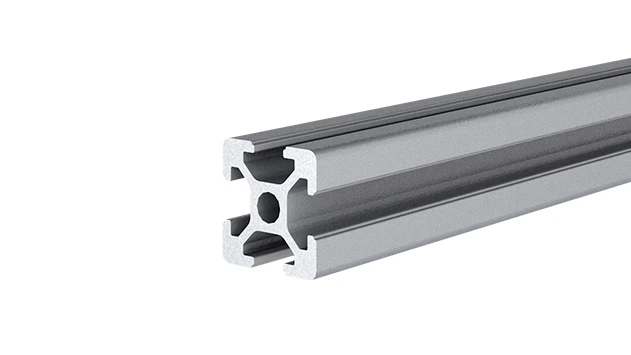
2020 is a 2.00 x 2.00CM fractional 20 series square extrusion T-slot profile with four open T-slots, one on each 2.00 face. The profile has align-a-grooves to assist in aligning connecting profiles.
In a world where sustainability is no longer a buzzword but a critical business imperative, the circular economy has emerged as a guiding principle for industries worldwide. At its core lies the idea of keeping resources in use for as long as possible, extracting maximum value from them, and then recovering and regenerating products and materials at the end of their service life. For the manufacturing sector, few materials embody this ethos as well as aluminum—and within the aluminum family, the 2020 EU Standard Aluminum Profile stands out as a paragon of recyclable design. This article dives into the recycling potential of this specific profile, exploring how its unique properties, widespread use in applications like workbenches and material racks, and compatibility with aluminum profile accessories make it a linchpin in the transition toward a more sustainable industrial landscape.
What is the 2020 EU Standard Aluminum Profile?
Before delving into its recycling potential, let's first clarify what the 2020 EU Standard Aluminum Profile is—and why it matters. As the name suggests, this profile adheres to strict European union standards, specifically engineered to meet the region's rigorous requirements for quality, safety, and sustainability. The "2020" in its name refers to its cross-sectional dimensions: typically 20mm x 20mm, though variations exist to accommodate different load-bearing needs and applications. This compact yet robust design makes it a versatile choice for a wide range of industrial and commercial uses, from lightweight shelving units in warehouses to sturdy workbenches in manufacturing facilities.
What sets the 2020 EU profile apart from non-standard alternatives is its precision engineering. Produced through aluminum extrusion—a process where heated aluminum billets are pushed through a die to create uniform, complex shapes—it boasts consistent dimensions, smooth surfaces, and tight tolerances. This uniformity is key not only for its performance in end products but also for its recyclability, as we'll explore later. Common applications include constructing modular workbenches (a staple in assembly lines and workshops), material racks for inventory storage, and even lightweight partitions in office spaces. Its popularity stems from a simple equation: strength + flexibility + cost-effectiveness.
Another defining feature of the 2020 EU Standard Aluminum Profile is its compatibility with a vast array of aluminum profile accessories. From connectors and brackets to end caps and aluminum profile rubber strips (used to seal edges or reduce noise), these accessories allow users to customize the profile into nearly any configuration without welding or heavy machining. This modularity is a hallmark of modern industrial design, enabling quick assembly, disassembly, and reconfiguration—traits that align perfectly with the circular economy's emphasis on adaptability and resource efficiency.
Why Aluminum Profiles Excel in Recycling: The Basics
To appreciate the recycling potential of the 2020 EU Standard Aluminum Profile, it's helpful to start with the basics of aluminum recycling. Unlike many materials—plastics, for example, which degrade in quality with each recycling cycle—aluminum is infinitely recyclable. This means it can be melted down, purified, and reused to create new products repeatedly without losing its inherent properties. In fact, recycling aluminum requires just 5% of the energy needed to produce it from raw bauxite ore, resulting in a 95% reduction in greenhouse gas emissions. For context, producing one ton of recycled aluminum saves approximately 9 tons of CO2 compared to producing the same amount from virgin materials. These figures alone make aluminum a sustainability standout, but the 2020 EU profile takes this a step further.
The 2020 EU Standard Aluminum Profile's design amplifies these natural advantages. For one, its extrusion-based manufacturing process minimizes waste from the start. Unlike cutting or machining solid blocks of aluminum, extrusion shapes the material precisely, leaving little excess to discard. Any scrap generated during production is often recycled on-site, feeding directly back into the manufacturing loop. Additionally, the profile's lightweight nature (aluminum has a density of just 2.7 g/cm³, about a third that of steel) reduces transportation emissions both during its initial distribution and when it's collected for recycling at the end of its life.
Perhaps most importantly, the 2020 EU profile is engineered with "design for disassembly" in mind—a circular economy principle that prioritizes easy separation of components at the end of a product's life. Thanks to its reliance on aluminum profile accessories like bolts, clips, and snap-on connectors (rather than permanent adhesives or welds), products made with this profile can be taken apart with minimal effort. This means when a workbench or material rack reaches the end of its useful life, the aluminum profiles can be separated from non-aluminum parts (such as rubber strips or plastic end caps) quickly and efficiently, ensuring minimal contamination during recycling.

The Recycling Process: From Discarded Profile to New Workbench
So, what happens to a 2020 EU Standard Aluminum Profile once it's no longer needed? Let's walk through the recycling journey, step by step, to see how it transforms from a discarded workbench component into a brand-new profile ready for its next life.
1. Collection and Sorting
The process begins with collection. Used aluminum profiles—whether from old workbenches, damaged racks, or obsolete shelving—are gathered from manufacturing facilities, construction sites, or recycling centers. In the EU, dedicated recycling programs and extended producer responsibility (EPR) laws often require manufacturers to take back end-of-life products, ensuring a steady stream of recyclable material. Once collected, the profiles are transported to a recycling facility, where the first critical step occurs: sorting.
Sorting is essential to remove contaminants, such as steel fasteners, plastic end caps, or aluminum profile rubber strips (though these are often removed earlier during disassembly). Workers or automated systems separate the 2020 EU profiles from other materials like steel, copper, or non-aluminum alloys. Since aluminum is non-magnetic, magnets are used to pull out ferrous metals, while density-based separators can distinguish aluminum from heavier materials. The goal here is to create a "clean" batch of aluminum, as even small amounts of contamination can affect the quality of the recycled material.
2. Shredding and Size Reduction
Once sorted, the profiles are sent to a shredder, where they're chopped into small, uniform pieces (typically 5-10cm in length). This size reduction increases the surface area of the aluminum, making it easier to melt and ensuring consistent heating during the next stage. Shredding also helps break down any remaining non-aluminum attachments that might have survived the sorting process, which can then be removed via additional separation steps (e.g., air classifiers to blow away lightweight plastics).
3. Melting and Purification
The shredded aluminum pieces are then loaded into a furnace, where they're heated to approximately 660°C—the melting point of aluminum. Unlike virgin aluminum production, which requires extremely high temperatures to extract aluminum from bauxite, recycling relies on much lower heat, contributing to its energy efficiency. As the aluminum melts, impurities like dirt, paint, or remaining plastic burn off as fumes, while heavier contaminants (like small steel fragments) sink to the bottom of the furnace, where they're removed as slag.
For applications requiring high-purity aluminum (such as the 2020 EU profile, which demands consistent quality), an additional purification step may be added. This often involves the use of flux—chemicals that bind to remaining impurities and form a protective layer on top of the molten aluminum, preventing recontamination. The result is a pool of molten aluminum that's 99.9% pure, ready to be cast into new forms.
4. Casting and Extrusion
The purified molten aluminum is then cast into ingots or billets—large blocks that serve as the raw material for extrusion. These billets are cooled, inspected for quality, and then reheated to a malleable temperature (around 400-500°C) before being fed into an extrusion press. Here, they're pushed through a 2020 EU standard die, reshaping the aluminum into the familiar 20mm x 20mm profile. The extruded profiles are then cooled, cut to length, and treated with surface finishes (like anodizing or powder coating) to enhance durability and aesthetics.
The beauty of this process is its circularity: a profile that once supported tools on a workbench can, within a matter of weeks, be transformed into a new profile destined for a material rack, a partition, or even another workbench. This closed-loop system not only conserves natural resources but also reduces the need for mining, which is both energy-intensive and environmentally destructive.
Comparing Recycling Potential: 2020 EU Profile vs. Other Materials
To truly grasp the recycling potential of the 2020 EU Standard Aluminum Profile, it's helpful to compare it to other commonly used materials in industrial applications. The table below highlights key metrics, including recyclability rates, energy savings, and environmental impact, to underscore why this profile is a sustainable standout.
| Material | Recyclability Rate | Energy Savings vs. Virgin Production | Common Challenges |
|---|---|---|---|
| 2020 EU Standard Aluminum Profile | 95-100% | 95% | Contamination from non-aluminum accessories |
| Steel (Mild Steel Profiles) | 85-90% | 75% | Heavy weight increases transportation emissions |
| Plastic (PVC/ABS Profiles) | 5-10% (mechanical recycling) | 30-40% | Degradation of polymer chains; limited reuse cycles |
| Wood (Plywood/Particleboard) | 50-60% (as biomass fuel) | N/A (not typically recycled into new wood products) | Moisture damage; chemical treatments hinder recycling |
As the table shows, the 2020 EU Standard Aluminum Profile outperforms most alternatives in recyclability and energy efficiency. Its near-100% recycling rate means almost no material is wasted, while the 95% energy savings translate to significantly lower carbon emissions. Compare this to plastic profiles, which often end up in landfills or incinerators due to low recycling rates, or wood, which is rarely recycled into new structural products. Even steel, a stalwart of industrial construction, falls short in energy savings and weight, making aluminum a more sustainable choice for applications where weight and recyclability matter.
One area where the 2020 EU profile does face challenges is contamination from aluminum profile accessories. For example, rubber strips used to seal edges or dampen noise can melt during the recycling process and release harmful fumes if not removed beforehand. Similarly, plastic end caps or non-aluminum connectors can introduce impurities. However, as we noted earlier, the profile's design for disassembly—using mechanical fasteners instead of adhesives—makes removing these accessories relatively straightforward, mitigating this risk.
Real-World Impact: Case Studies in Circular Manufacturing
To put the recycling potential of the 2020 EU Standard Aluminum Profile into context, let's look at two real-world examples of companies leveraging this material to build circular business models.
Case Study 1: Modular Workbench Manufacturer in Germany
A leading German manufacturer of modular workbenches, which supplies automotive and electronics factories across Europe, has made the 2020 EU profile the cornerstone of its sustainability strategy. The company's workbenches are designed to be fully disassembled, with all aluminum components (profiles, brackets, frames) clearly labeled for easy separation from non-aluminum parts like wooden countertops or plastic drawers. When a customer upgrades or replaces their workbench, the manufacturer offers a take-back program: old workbenches are collected, disassembled, and the aluminum profiles are sent to a local recycling partner.
The recycled aluminum is then used to produce new 2020 EU profiles, which are incorporated into new workbenches. According to the company's sustainability report, this closed-loop system has reduced its reliance on virgin aluminum by 40% over the past five years, cutting its carbon footprint by 35% and saving approximately €200,000 annually in raw material costs. Customers also benefit: the take-back program offers a discount on new workbenches, creating an incentive to participate in the circular economy.
Case Study 2: Material Rack Supplier in Spain
A Spanish supplier of material racks for warehouses faced a challenge: how to reduce waste from defective or returned products. Traditionally, damaged racks were sent to landfills or incinerated, as separating aluminum from other materials was too time-consuming. By switching to 2020 EU Standard Aluminum Profiles and aluminum profile accessories (like quick-release connectors and snap-on rubber strips), the company simplified disassembly. Today, when a rack is returned or damaged, workers can quickly remove non-aluminum parts, and the profiles are shredded and recycled locally.
The recycled aluminum is used to produce new profiles and accessories, including the plastic roller track guide rails used in the company's flow racks. This not only reduces waste but also ensures a steady supply of affordable raw materials, allowing the company to offer competitive pricing while meeting EU sustainability targets. In 2024, the company reported that 65% of its aluminum usage came from recycled sources, up from 20% in 2019—a direct result of its shift to the 2020 EU profile.
Challenges and Opportunities for Improvement
While the 2020 EU Standard Aluminum Profile holds immense promise for the circular economy, it's not without challenges. Addressing these hurdles is key to unlocking its full recycling potential.
One of the primary challenges is consumer and industrial awareness. Many businesses still view recycling as an afterthought, discarding old workbenches or racks instead of participating in take-back programs. Education is critical here: manufacturers and policymakers must work together to highlight the economic and environmental benefits of recycling aluminum profiles. For example, the cost savings from using recycled aluminum can be passed on to customers, creating a win-win for businesses and the planet.
Another challenge is the contamination of recycled material with low-quality aluminum alloys. While the 2020 EU profile is typically made from high-purity aluminum (alloy 6063 is common, known for its excellent extrudability and corrosion resistance), mixing it with lower-grade alloys during recycling can compromise its mechanical properties. To combat this, recycling facilities must invest in better sorting technologies, such as X-ray fluorescence (XRF) analyzers, which can identify alloy compositions quickly and accurately.
Finally, the design of aluminum profile accessories could be further optimized for recycling. While rubber strips and plastic end caps are functional, developing biodegradable or fully recyclable alternatives (e.g., rubber made from recycled tires, or plastic end caps made from 100% recycled polyethylene) would reduce contamination and simplify the recycling process. Some manufacturers are already experimenting with this: a Dutch company, for instance, has developed a rubber strip made from 80% recycled rubber, which can be melted down and reused in new accessories.
Looking Ahead: The Future of 2020 EU Aluminum Profile in the Circular Economy
As the EU tightens its sustainability regulations—including the upcoming Circular Economy Action Plan 2.0, which aims to increase recycling rates and reduce waste—the 2020 EU Standard Aluminum Profile is poised to play an even larger role in industrial sustainability. Here are three trends to watch:
1. Design for Recycling as Standard: Manufacturers will increasingly prioritize "recyclability by design," engineering products with the 2020 EU profile to be even easier to disassemble. This could include standardized connectors, color-coded components for quick sorting, and QR codes that provide recycling instructions to end users.
2. Digitalization of the Recycling Chain: Technologies like blockchain and IoT sensors will enhance traceability, allowing manufacturers to track a profile's journey from production to recycling. This transparency will build trust in recycled materials, encouraging more businesses to adopt them.
3. Integration with Renewable Energy: As recycling facilities transition to renewable energy (e.g., solar, wind), the carbon footprint of recycled aluminum will shrink further, making the 2020 EU profile an even more attractive alternative to virgin materials.
In conclusion, the 2020 EU Standard Aluminum Profile is more than just a building material—it's a symbol of how industrial design can align with the circular economy. Its recyclability, versatility, and compatibility with aluminum profile accessories make it a model for sustainable manufacturing. As businesses and policymakers continue to prioritize sustainability, this unassuming 20mm x 20mm profile will undoubtedly remain at the forefront of the movement, proving that small dimensions can have a big impact on our planet's future.