- Company Articles
- Industry articles
- Industry standards
- Regulatory Compliance for 4040F EU Standard Aluminum Profile in Medical Device Applications

Regulatory Compliance for 4040F EU Standard Aluminum Profile in Medical Device Applications
Related Product
4040F EU Standard Aluminum Profile
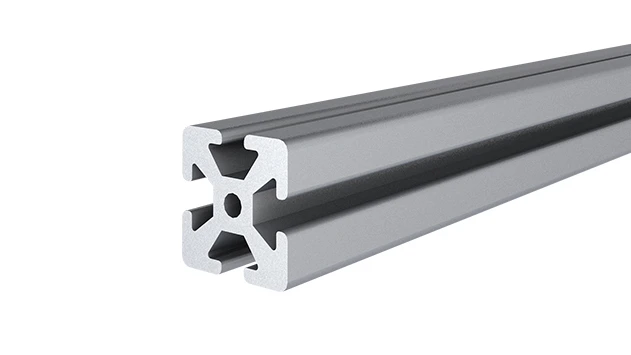
4040F is a 4.00x4.00 CM fractional 40 series square extrusion T-slot profile with four side open T-slots, each side with 4.00cm face. The profile has align-a-grooves to assist in aligning connecting profiles.
Navigating the intersection of precision engineering, patient safety, and EU regulatory standards
Introduction: The Unsung Backbone of Medical Device Manufacturing
In the high-stakes world of medical device manufacturing, every component matters. From the smallest screw in a surgical tool to the framework of a diagnostic machine, each part carries the weight of patient safety, operational reliability, and regulatory scrutiny. Among these components, one stands out for its versatility, strength, and adaptability: the aluminum profile. Specifically, the 4040F EU standard aluminum profile has emerged as a cornerstone in building everything from workbenches for assembly lines to material racks in cleanrooms. But in an industry where non-compliance can lead to product recalls, patient harm, or market exclusion, understanding the regulatory landscape around this unassuming component is not just important—it's critical.
Aluminum profiles, shaped through the aluminum extrusion profile process, offer unique advantages: they're lightweight yet robust, corrosion-resistant, and infinitely customizable with aluminum profile accessories like connectors, brackets, and hinges. In medical settings, these properties translate to workbenches that withstand rigorous sterilization, material racks that safely hold sensitive equipment, and conveyor systems that ensure seamless, contamination-free workflows. Yet, to earn a place in medical device production, these profiles must first clear a complex web of EU regulations designed to protect patients and ensure product quality.
This article dives into the regulatory compliance journey of the 4040F EU standard aluminum profile in medical device applications. We'll explore the key standards, testing requirements, and real-world challenges manufacturers face, all while highlighting why compliance isn't just a box to check—it's the foundation of trust between suppliers, device makers, and the healthcare professionals who rely on these tools daily.
Understanding the 4040F EU Standard Aluminum Profile: Beyond the Basics
Before delving into regulations, let's clarify what makes the 4040F EU standard aluminum profile unique. The "4040" refers to its cross-sectional dimensions: 40mm by 40mm, a common size for structural frameworks. The "F" denotes its specific extrusion design—typically featuring T-slots along its length, which allow for easy attachment of accessories without welding. This design aligns with EU standards for precision, ensuring consistency across manufacturers and compatibility with a wide range of aluminum profile accessories like end caps, brackets, and hinges.
Manufactured via aluminum extrusion—a process where heated aluminum billets are forced through a die to create complex cross-sectional shapes—the 4040F profile balances strength and lightness. Its composition often includes alloys like 6063, known for excellent corrosion resistance and machinability, making it ideal for medical environments where exposure to disinfectants and moisture is constant. But what truly sets it apart in medical applications is its adaptability: a single profile can be configured into a workbench for assembling surgical instruments, a material rack for storing sterile supplies, or a frame for mobile carts that transport equipment between operating rooms.
However, its versatility also means it must meet diverse regulatory demands. Whether used as part of a Class I medical device (e.g., a hospital cart) or a critical component in a Class III device (e.g., a diagnostic imaging machine), the 4040F profile's compliance journey hinges on understanding how EU regulations classify its role, material properties, and end-use application.

The EU Regulatory Landscape: MDR, ISO, and the Path to CE Marking
For any component used in medical devices sold within the EU, compliance starts with the Medical Device Regulation (EU MDR 2017/746), which replaced the earlier MDD (93/42/EEC) in 2021. The MDR is stringent, designed to enhance patient safety by tightening requirements for clinical data, post-market surveillance, and traceability. For aluminum profiles like the 4040F, the MDR's impact depends on their classification as either a "finished device" or a "component."
Most often, the 4040F profile is a component—a part intended to be incorporated into a finished medical device. Under the MDR, components are not CE marked independently but must be supplied with documentation demonstrating they meet the necessary requirements for the finished device's conformity. This shifts responsibility to device manufacturers, who must ensure all components, including aluminum profiles, align with the MDR's essential requirements (ERs) outlined in Annex I. These ERs cover safety, performance, design, and manufacturing, with specific focus on:
- Chemical safety: Ensuring the profile does not release harmful substances (e.g., heavy metals, allergens) that could leach into the environment or contact patients/staff.
- Mechanical strength: Withstanding intended use, including repeated loading (e.g., a workbench supporting 50kg of equipment) and environmental stress (e.g., temperature fluctuations in sterilization cycles).
- Biocompatibility: If the profile comes into direct or indirect contact with patients (e.g., via a medical cart touching skin), it must comply with ISO 10993 standards for biological evaluation.
Complementing the MDR is ISO 13485:2016, an international standard for quality management systems in medical device manufacturing. While ISO 13485 is not legally required, it is often a prerequisite for MDR compliance, as it ensures consistent processes for design, production, and supplier management. For aluminum profile suppliers, ISO 13485 certification demonstrates their ability to meet strict quality controls—from raw material sourcing (e.g., ensuring aluminum alloys are free from impurities) to extrusion precision (e.g., maintaining T-slot dimensions within ±0.1mm tolerances).
To visualize how these regulations intersect, consider the following table comparing key compliance requirements for 4040F aluminum profiles in medical device applications:
| Regulatory Requirement | EU MDR (2017/746) | ISO 13485:2016 | Relevance to 4040F Aluminum Profile |
|---|---|---|---|
| Biological Safety | Annex I, ER 10.4: Materials must not release substances in quantities that could harm patients. | Clause 7.4.2: Suppliers must provide evidence of material safety (e.g., biocompatibility test reports). | Requires testing for cytotoxicity, sensitization, and irritation if the profile contacts patients or staff. |
| Mechanical Performance | Annex I, ER 8.1: Devices must be designed to withstand normal use and reasonably foreseeable misuse. | Clause 7.3.6: Design verification must include mechanical testing (e.g., tensile strength, load capacity). | 4040F profiles must pass load tests (e.g., supporting 100kg for workbench applications) without deformation. |
| Traceability | Annex I, ER 23: Devices and components must be traceable throughout their lifecycle. | Clause 8.5.2: Records must include batch numbers, raw material sources, and manufacturing dates. | Profiles must be labeled with batch codes to track from extrusion to device assembly. |
| Post-Market Surveillance | Annex XIV: Manufacturers must monitor device performance post-launch, including component failures. | Clause 8.2.1: Suppliers must implement processes to address customer complaints (e.g., profile corrosion). | Suppliers must report defects (e.g., T-slot cracking) to device manufacturers and regulatory bodies. |
For manufacturers integrating 4040F profiles into medical devices, navigating these requirements means partnering with suppliers who can provide documentation like material certificates (e.g., EN 573-3 for aluminum alloys), test reports for mechanical and chemical properties, and compliance statements aligned with MDR and ISO 13485. Without this, the path to CE marking—the symbol of EU compliance—becomes nearly impossible.
Material Compliance: Beyond Strength—Ensuring Safety at the Atomic Level
At its core, regulatory compliance for the 4040F profile begins with its material composition. Aluminum itself is generally considered safe for medical use, but its alloys and surface treatments can introduce risks if not controlled. For example, alloys containing lead or cadmium—common in some industrial aluminum—are strictly prohibited in medical applications due to their toxicity. Similarly, surface coatings or anodization processes must use chemicals that do not leach harmful substances when exposed to disinfectants like hydrogen peroxide or alcohol.
EU MDR Annex I, ER 10.1, mandates that materials used in medical devices must be "suitable for their intended purpose" and "evaluated for their chemical, physical, and biological properties." For the 4040F profile, this translates to several key checks:
- Alloy Purity: The aluminum alloy (typically 6063) must meet EU standards for heavy metal limits, as outlined in EN 755-2 (Aluminum and aluminum alloys—Extruded profiles for general applications). This standard restricts lead to <0.1% by weight and cadmium to <0.01%, ensuring no toxic elements migrate from the profile into the environment.
- Surface Treatment: Anodization—a process that thickens the profile's natural oxide layer to enhance corrosion resistance—must use food-grade or medical-grade sealants. For example, sulfuric acid anodization is preferred over chromic acid, as chromium(VI) compounds are carcinogenic and banned under EU REACH regulations.
- Biocompatibility: If the 4040F profile is part of a device that contacts patients (e.g., a mobile workbench used during surgery), it must comply with ISO 10993-1:2018, which classifies biological evaluation based on contact type and duration. For short-term skin contact (e.g., a nurse pushing a cart), testing for cytotoxicity (ISO 10993-5) and skin sensitization (ISO 10993-10) is typically required. For prolonged contact (e.g., a bed frame), additional tests for systemic toxicity may be needed.
These requirements extend to aluminum profile accessories as well. A T-slot bracket made from low-quality plastic, for instance, could leach phthalates—a class of chemicals restricted under REACH—when exposed to heat or disinfectants. Thus, suppliers must ensure accessories meet the same material standards as the profiles themselves, often requiring separate testing for each component.
One real-world example of material compliance challenges comes from a European medical device manufacturer that used 4040F profiles in a mobile workbench for dental clinics. During pre-market testing, they discovered that the profile's anodization sealant contained trace amounts of formaldehyde, a skin irritant. Though the levels were below general industrial limits, EU MDR's stricter standards for medical devices required reformulation. The supplier switched to a formaldehyde-free sealant, delaying production by six weeks but ensuring compliance. This incident underscores a key lesson: material compliance is not just about meeting "general" safety standards—it's about exceeding them to align with the unique risks of medical environments.
Design and Manufacturing: Aligning Lean Systems with Regulatory Rigor
While material compliance is foundational, the 4040F profile's design and manufacturing processes are equally critical to meeting EU regulations. Medical device manufacturers often adopt lean system principles—focused on minimizing waste, optimizing workflows, and enhancing efficiency—to streamline production. The 4040F profile, with its modular T-slot design, fits naturally into lean systems: it allows for quick reconfiguration of workbenches, material racks, and conveyor systems, reducing downtime and improving adaptability.
However, lean efficiency must not compromise regulatory compliance. For example, a workbench built with 4040F profiles for assembling pacemakers must be both ergonomic (to reduce operator fatigue, a lean goal) and easy to clean (to prevent bacterial growth, a regulatory requirement). This balance requires careful design choices:
- Seamless Construction: T-slots are ideal for attaching accessories, but they can also trap dirt and moisture if not properly sealed. To comply with ISO 14644 (cleanroom standards), manufacturers may use T-slot covers or end caps to eliminate crevices, ensuring the workbench can be disinfected thoroughly.
- Weight Distribution: Lean systems prioritize mobility, often adding casters to workbenches. However, MDR requires that mobile devices remain stable during use—even when loaded. Designers must calculate the 4040F profile's load capacity (typically 200-300kg for a standard workbench) and ensure casters meet EU standards for lock strength and durability (e.g., EN 12530 for furniture casters).
- Compatibility with Sterilization: Many medical workbenches undergo regular sterilization via autoclaving or UV light. The 4040F profile's aluminum alloy must withstand these processes without warping, and its surface treatment must not degrade—for example, anodized layers must resist peeling after 100+ autoclave cycles.
Manufacturing processes for the 4040F profile also face regulatory scrutiny. Under ISO 13485, suppliers must implement strict process controls, from extrusion temperature (typically 500-550°C for 6063 alloy) to cooling rates, to ensure consistent mechanical properties. Even minor variations—like a 10°C increase in extrusion temperature—can alter the profile's tensile strength, potentially leading to failure in load-bearing applications.
Traceability is another critical manufacturing requirement. Each batch of 4040F profiles must be traceable to its raw material billet, extrusion die, and production date. This allows manufacturers to recall specific batches if defects are discovered post-market—a requirement under EU MDR's post-market surveillance obligations. For example, if a hospital reports that a workbench frame bent under load, the device manufacturer can trace the 4040F profile's batch, identify if other devices use the same batch, and take corrective action before more incidents occur.
To achieve this, suppliers often use barcode or QR code systems, printing unique identifiers on each profile. These codes link to digital records that include alloy composition, extrusion parameters, and test results—ensuring full transparency for regulatory auditors. For smaller aluminum profile accessories like brackets or hinges, traceability is equally important, though more challenging due to their size. Suppliers may batch-label accessories, linking them to the same production records as the profiles they accompany.
Testing and Certification: Proving Compliance Through Data
Even with rigorous material selection and manufacturing controls, regulatory compliance for the 4040F profile hinges on objective testing data. EU MDR and ISO 13485 require that components undergo verification and validation testing to prove they meet design specifications and intended use requirements. For aluminum profiles, this testing covers mechanical, chemical, and biological properties, often conducted by accredited third-party laboratories.
Mechanical Testing: The 4040F profile's structural integrity is tested via several methods. Tensile testing measures its ability to withstand pulling forces, ensuring it doesn't fracture under load. For workbench applications, flexural testing (bending) is critical—simulating the weight of equipment placed on the bench—and must show minimal deflection (typically <2mm under 100kg load). Compression testing ensures the profile can support vertical loads, such as stacked material racks, without collapsing. These tests must be repeated for different batch sizes, as alloy composition or extrusion parameters can vary slightly between production runs.
Chemical Testing: To ensure no harmful substances leach from the profile, chemical analysis is conducted using methods like gas chromatography-mass spectrometry (GC-MS) or inductively coupled plasma mass spectrometry (ICP-MS). These tests screen for heavy metals, volatile organic compounds (VOCs), and other contaminants. For example, ISO 10993-12 requires testing for leachables in simulated use conditions—exposing the profile to artificial sweat or saliva (depending on contact type) and analyzing the solution for toxins.
Biological Testing: As mentioned earlier, biocompatibility testing under ISO 10993 is critical if the profile contacts patients or staff. Cytotoxicity testing (ISO 10993-5) uses cell cultures to check if leachables from the profile damage cells, while sensitization testing (ISO 10993-10) uses animal models to assess allergic reactions. For profiles used in implantable devices (though rare for 4040F), more invasive tests like systemic toxicity or carcinogenicity may be required, though these are less common for structural components like workbenches or racks.
Once testing is complete, suppliers must compile a technical file demonstrating compliance—a requirement for both ISO 13485 certification and EU MDR conformity assessment. This file includes:
- Material certificates (e.g., EN 755-2 for aluminum alloys).
- Test reports from accredited laboratories (mechanical, chemical, biological).
- Manufacturing process documentation (extrusion parameters, quality control checks).
- Risk assessment reports (e.g., FMEA—Failure Mode and Effects Analysis—identifying potential failure points and mitigations).
For device manufacturers, this technical file is critical when applying for CE marking. Notified Bodies—independent organizations authorized by the EU to assess compliance—will review the file to ensure the 4040F profile meets all applicable requirements. A missing test report or incomplete risk assessment can delay certification, costing manufacturers time and revenue.
One common pitfall is assuming that "general" industrial testing suffices for medical applications. For example, a supplier might provide a tensile strength test report for the 4040F profile, but if the test was conducted at room temperature and the profile will be used in a sterilization autoclave (121°C), the data is irrelevant. Testing must replicate real-world conditions to be valid—a lesson reinforced by a 2022 EU audit that found 15% of medical device components failed due to inadequate testing conditions.
Challenges and Future Trends: Staying Ahead in a Rapidly Evolving Regulatory Environment
Despite its many advantages, ensuring regulatory compliance for the 4040F EU standard aluminum profile in medical devices is not without challenges. One of the biggest hurdles is the evolving nature of EU regulations. The MDR, for example, introduced stricter clinical data requirements and post-market surveillance obligations, which have forced suppliers and device manufacturers to invest in more robust documentation and monitoring systems. For small and medium-sized enterprises (SMEs), these costs can be prohibitive, potentially limiting competition and innovation.
Supply chain complexity is another challenge. The 4040F profile's compliance depends not just on the profile itself but on its aluminum profile accessories , raw materials, and even the chemicals used in surface treatments. A single non-compliant accessory—like a hinge with excessive lead content—can invalidate the entire device's CE marking. This requires manufacturers to implement rigorous supplier qualification programs, auditing not just direct suppliers but also sub-suppliers (e.g., alloy producers, anodization facilities).
Looking ahead, several trends are shaping the future of regulatory compliance for aluminum profiles in medical devices:
- Sustainability: The EU's Green Deal and Circular Economy Action Plan are pushing for more sustainable medical devices, including recyclable components. Aluminum profiles, being 100% recyclable, are well-positioned here, but compliance may soon require proof of recycled content or carbon-neutral manufacturing processes.
- Digitalization: Blockchain technology is emerging as a tool for enhanced traceability, allowing manufacturers to track 4040F profiles from raw material to end-of-life with immutable records. This could streamline regulatory audits and post-market surveillance.
- Smart Materials: Advances in aluminum alloys may lead to "smart" profiles embedded with sensors that monitor load, temperature, or corrosion. While promising, these innovations will require new testing standards to ensure sensor materials and electronics meet MDR requirements.
For manufacturers and suppliers, adapting to these trends means investing in R&D, digital tools, and sustainable practices—all while maintaining the rigorous compliance standards that protect patients. It's a balancing act, but one that ultimately drives innovation and trust in the medical device industry.
Conclusion: Compliance as a Foundation for Trust
The 4040F EU standard aluminum profile may seem like a simple component, but its role in medical device manufacturing is anything but trivial. From workbenches that assemble life-saving equipment to material racks that store sterile supplies, it is a silent workhorse—one that must meet the highest standards of safety, reliability, and regulatory compliance.
Navigating EU regulations like MDR and ISO 13485 requires a deep understanding of material science, manufacturing processes, and testing requirements. It demands collaboration between suppliers, device manufacturers, and regulatory bodies, with each stakeholder playing a role in ensuring patient safety. For the 4040F profile, compliance is not just about checking boxes—it's about proving, through data and documentation, that every extrusion, every accessory, and every surface treatment meets the rigorous demands of medical use.
As the medical device industry evolves, so too will the regulatory landscape. But one thing remains constant: the 4040F EU standard aluminum profile, with its blend of strength, versatility, and compliance-ready design, will continue to be a cornerstone of innovation. For manufacturers who prioritize compliance, it's not just a component—it's a foundation for trust, ensuring that the devices built with it are safe, reliable, and ready to improve patient outcomes across Europe and beyond.