- Company Articles
- Industry articles
- Industry standards
- Reusable Modular Systems: 2040 EU Standard Aluminum Profile for Continuous Improvement

Reusable Modular Systems: 2040 EU Standard Aluminum Profile for Continuous Improvement
Related Product
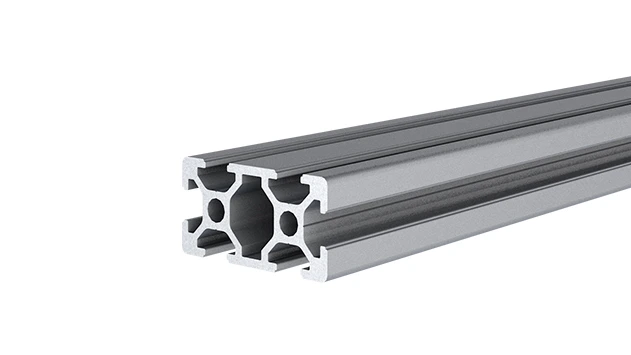
2040 EU Standard Aluminum Profile
2040 is a 2.00 x 4.00CM fractional 20 series square extrusion T-slot profile with four open T-slots, two side with 2.00cm face, the other side with 4.00cm face. The profile has align-a-grooves to assist in aligning connecting profiles.
How a single profile is transforming workspaces, workflows, and the future of lean manufacturing
Walk into any busy manufacturing plant, warehouse, or even a small workshop, and you'll likely spot the same challenge: workspaces stuck in time. A workbench built five years ago for a specific task now struggles to adapt to new product lines. A material handling system that once felt efficient now creates bottlenecks as production demands grow. We've all seen it—the frustration of trying to fit a square peg into a round hole when your tools, tables, and workflows can't keep up with change.
But what if your workspace could evolve as quickly as your business does? What if you could reconfigure a workbench in an hour instead of replacing it entirely? That's where reusable modular systems come in—and at the heart of this revolution lies a quiet hero: the 2040 EU Standard Aluminum Profile . It's not just a piece of metal; it's a building block for continuous improvement, a tool that turns rigid workspaces into flexible ecosystems where adaptability isn't an afterthought, but the starting point.
Why Modular Systems Matter: Beyond "One-Size-Fits-All"
Traditional manufacturing setups often follow a "build once, use forever" mindset. Steel workbenches are welded into place, wooden shelves are cut to fixed lengths, and conveyor systems are bolted to the floor. When a new product requires a taller work surface, or a shift in demand calls for a reorganized assembly line, the solution too often involves tearing down and rebuilding—wasting time, money, and materials.
Modular systems flip that script. They're designed to be reusable and reconfigurable , using standardized components that snap together, adjust, and adapt. Think of it like adult Lego: strong enough for industrial use, but flexible enough to let you build, break down, and rebuild whenever needed. And at the center of this system is the aluminum profile—a lightweight, durable extrusion with precision-engineered T-slots that make attaching accessories, shelves, and tools a breeze.
But not all aluminum profiles are created equal. The 2040 EU Standard Aluminum Profile stands out for a reason: it's built to a strict set of European standards, ensuring consistency, compatibility, and quality across suppliers. Whether you're ordering from Germany, Poland, or China, a 2040 profile from a reputable supplier will fit with 2040 accessories from another—no guesswork, no mismatched parts, just seamless integration.
Meet the 2040 EU Standard Aluminum Profile: The Backbone of Your Workspace
Let's start with the basics: what is a 2040 EU Standard Aluminum Profile? The name gives it away: "2040" refers to its dimensions—20mm in width and 40mm in height (or vice versa, depending on orientation). The "EU Standard" means it adheres to strict manufacturing guidelines for material thickness, slot dimensions, and tolerances, ensuring it works with a vast ecosystem of compatible parts.
At first glance, it might look like a simple rectangular tube, but the magic is in the details. The T-slots running along its length are precision-cut to accept bolts, brackets, and accessories without welding or drilling. This means you can attach a shelf bracket at 10cm, then move it to 15cm an hour later if your needs change. The aluminum alloy itself is lightweight (about a third the weight of steel) but surprisingly strong—capable of supporting heavy tools, materials, and even entire workbenches without bending or warping.
But the real power of the 2040 profile lies in its versatility. It's not just for building frames; it's a multitasker. Need a workbench? Combine 2040 profiles with a plywood or aluminum top. A material rack? Add shelves using angle brackets. A safety guardrail? Attach plastic or metal panels. Even roller tracks for moving parts between stations—2040 profiles provide the stable base needed to mount rollers, guides, and connectors. It's the Swiss Army knife of industrial design.
Key Features of the 2040 EU Standard Aluminum Profile
- Precision T-Slots: Uniform slot width (typically 8mm or 10mm) ensures compatibility with hundreds of aluminum profile accessories , from end caps to heavy-duty brackets.
- Lightweight Strength: Made from 6063-T5 aluminum alloy—resistant to corrosion, easy to cut, and strong enough for loads up to 150kg per meter (depending on configuration).
- EU Standard Compatibility: Works with profiles of other sizes (like 2020, 3030, or 4040) using adapter brackets, letting you mix and match for custom builds.
- Surface Finish: Anodized or powder-coated options for durability and aesthetics—choose from silver, black, or custom colors to match your workspace.
- Easy to Modify: Cut to length with a standard miter saw, no special tools required. Drill-free assembly saves time and reduces errors.

Aluminum Profile Accessories: Turning Profiles into Systems
A 2040 profile on its own is just a piece of aluminum. But pair it with the right aluminum profile accessories , and it becomes a complete solution. These accessories are the glue that holds your modular system together—literally and figuratively. Let's break down the essentials:
Connectors: The Unsung Heroes of Modularity
Connectors are what let you join profiles at any angle—90°, 45°, 135°, or even custom angles. The 90° aluminum profile connector is the most common, used for building square frames like workbench legs or shelf corners. For more complex structures, 135° connectors help create sturdy braces, while 45° connectors are perfect for diagonal supports. Many connectors use T-slot bolts that tighten from the inside, giving a clean, bolt-free look on the outside.
End Caps and Covers: Finishing Touches with Purpose
Ever run your hand along an aluminum profile and caught a sharp edge? End caps solve that. The 2020 aluminum profile end cap (for smaller profiles) and 3030 aluminum profile end cap (for larger ones) snap into place, covering raw edges and adding a professional finish. T-slot rubber seal covers are another must-have—they fill the T-slots when not in use, preventing dust buildup and making cleaning easier. In food processing or pharmaceutical settings, they also help meet hygiene standards by eliminating hard-to-clean gaps.
Brackets and Supports: Adding Functionality
Want to add a shelf to your workbench? Use angle brackets. Need to mount a monitor arm? A flat bracket with T-slot bolts does the job. Heavy-duty gusset brackets (like the gusset alp 4040 or gusset alp 3030) reinforce joints for extra stability, ideal for load-bearing structures like material racks. Even something as simple as a caster wheel bracket can turn a stationary workbench into a mobile cart—no welding, no drilling, just a few bolts tightened with an Allen key.
The beauty of these accessories is that they're designed to work together. A 2040 profile, 90° connector, and angle bracket from the same supplier (or even different suppliers, thanks to EU standards) will fit perfectly. This interoperability means you're never locked into one brand—you can mix and match to get the best price, quality, or lead time for your project.
From Workbenches to Roller Tracks: Real-World Applications
Enough theory—let's talk about how the 2040 EU Standard Aluminum Profile transforms real workspaces. We'll dive into two common applications: the humble workbench and the material-moving roller track. Both are staples in manufacturing, and both show why modular systems are game-changers.
Case Study 1: The Customizable Workbench
Imagine a small electronics manufacturer that assembles circuit boards. Their old workbenches were wooden, fixed at 80cm high, with no built-in storage. Employees complained about back pain from bending, and tools were scattered across the surface, slowing down assembly. When they switched to a modular workbench built with 2040 profiles, everything changed.
First, they adjusted the height. Using 2040 legs with adjustable feet, they set the workbench to 90cm for taller employees and 75cm for shorter ones—no more one-size-fits-all ergonomics. Then, they added shelves using angle brackets and additional 2040 crossbars, creating space for bins of components. A tool rail with hanging hooks (attached via T-slot bolts) kept screwdrivers and pliers within arm's reach. Even ESD (electrostatic discharge) protection was easy: they added an ESD mat to the top and grounded it through a bracket on the leg.
Six months later, when the company started producing larger boards, they didn't need new workbenches. They simply loosened the bolts, added two more 2040 crossbars to widen the top, and extended the shelves. Total time to reconfigure: 2 hours. Cost: less than $100 in new profiles and brackets. Compare that to buying a new wooden bench ($500+) and waiting for delivery—modularity saved them time and money, and kept production running.
Case Study 2: Roller Tracks for Seamless Material Flow
Now, let's look at material handling. A automotive parts supplier was struggling with bottlenecks in their assembly line: parts were stored on racks 10 meters from the assembly station, requiring workers to walk back and forth dozens of times a day. They wanted a roller track to slide parts directly to the station, but traditional steel roller tracks were expensive and hard to adjust.
Their solution? A modular roller track built with 2040 profiles. They mounted 2040 rails to the existing rack and the assembly station, then attached plastic roller track guide rails (yellow, to stand out) using roller track placon mounts—accessories designed to connect rollers to aluminum profiles. The track sloped slightly downward, letting gravity move the parts, and they added a stop at the end to prevent overshooting.
When the assembly line expanded three months later, they extended the track by adding more 2040 profiles and rollers—no need to call in contractors. They even added a branch in the track to feed a second workstation, using a 90° aluminum crossing joint to split the flow. The result? A 40% reduction in walking time, fewer errors from manual handling, and a workflow that could grow with the business.
Supporting Lean Systems: The Path to Continuous Improvement
At this point, you might be thinking, "This all sounds great, but how does it tie into lean system principles?" Lean manufacturing is all about eliminating waste—whether it's time, materials, or effort—and creating value for the customer. Modular systems built with 2040 profiles align perfectly with that mission.
Waste Reduction: From "Tear Down" to "Reconfigure"
Traditional setups generate "muda" (waste) in two ways: first, when you build something that's over-engineered for the current task, and second, when you have to destroy it to adapt to new tasks. A modular 2040 system eliminates both. Need a smaller workbench? Take apart the old one and reuse the profiles. Expanding production? Add more sections instead of building new from scratch. Even scrap is minimized—cutoffs from 2040 profiles can often be repurposed into smaller brackets or supports.
Improved Flow: The Foundation of Lean Workcells
Lean workcells thrive on smooth, uninterrupted flow—parts moving from station to station with minimal delay. Roller tracks mounted on 2040 profiles make that flow possible, connecting workbenches into a cohesive system. And because the tracks are adjustable, you can fine-tune the path to eliminate bottlenecks. For example, if parts are piling up at a station, you can add a buffer section to the roller track, or reangle the track to distribute parts more evenly.
Employee Empowerment: Ownership of the Workspace
Continuous improvement isn't just about tools—it's about culture. When employees can adjust their workbenches, rearrange shelves, or tweak roller tracks without waiting for maintenance, they take ownership of their workspace. A line worker might notice that moving a tool holder 10cm to the left reduces reach time—with modular systems, they can make that change in 10 minutes, then test and refine it. This empowerment fosters a culture where everyone is looking for ways to improve, not just managers.
| Aspect | Traditional Fixed Systems | 2040 Aluminum Modular Systems |
|---|---|---|
| Assembly Time | Days (requires welding, drilling, or custom cutting) | Hours (bolt-together assembly with basic tools) |
| Customization | Limited (requires redesign and rebuilding) | Unlimited (adjust heights, add/remove components in minutes) |
| Reusability | Low (often discarded when needs change) | High (components reused in new configurations) |
| Cost Over Time | High (frequent replacements add up) | Low (initial investment pays off with reusability) |
| Sustainability | Poor (wood/steel waste, high carbon footprint from manufacturing) | Excellent (aluminum is 100% recyclable, less waste from reconfiguration) |
Sustainability: Building a Greener Workspace
In today's world, sustainability isn't just a buzzword—it's a business imperative. Customers, regulators, and employees all demand greener practices, and modular systems with 2040 aluminum profiles deliver on that front in ways traditional setups can't.
First, aluminum is one of the most recyclable materials on the planet. Over 75% of all aluminum ever produced is still in use today, thanks to recycling that requires just 5% of the energy needed to produce new aluminum. When a modular system reaches the end of its life (which, with reusability, is decades later than traditional setups), the 2040 profiles can be melted down and turned into new profiles, accessories, or even consumer goods—no waste, no landfill.
Second, modular systems reduce the need for frequent replacements. A wooden workbench might last 5-7 years before warping or rotting; a steel one might rust or become obsolete. A 2040 aluminum workbench, with its corrosion-resistant alloy and reconfigurable design, can last 20+ years—cutting down on the resources needed to manufacture and transport new equipment.
Even the packaging matters. Aluminum profiles are often shipped in bulk, with minimal packaging, unlike preassembled wooden or steel furniture that requires excessive padding and boxes. And because modular systems are lightweight, shipping costs (and associated carbon emissions) are lower too.
The Future of Modular Systems: Beyond Manufacturing
While manufacturing has been the early adopter, modular systems with 2040 profiles are spreading to new industries. Warehouses are using them for adjustable racking that grows with inventory. Retailers are building pop-up displays that can be reconfigured for seasonal promotions. Even healthcare facilities are getting on board, using modular workstations that can be sanitized easily and adjusted for different medical procedures.
The next frontier? Smart integration. Imagine 2040 profiles with built-in sensors that track tool usage or monitor workspace ergonomics. Or accessories like LED lights, USB chargers, or even small fans that snap into T-slots, turning a basic workbench into a connected hub. Some suppliers are already experimenting with "smart" brackets that wirelessly report when a component is loose or needs maintenance—preventing downtime before it happens.
As technology advances, the 2040 EU Standard Aluminum Profile will remain the backbone, providing the flexibility needed to integrate new tools and systems. It's not just a product; it's a platform for innovation.
Final Thoughts: Building for Change
The 2040 EU Standard Aluminum Profile isn't just about building better workbenches or roller tracks. It's about building better businesses—businesses that can adapt to market shifts, empower their employees, and reduce their environmental footprint. In a world where change is the only constant, modular systems aren't a luxury; they're a necessity.
So, the next time you look at your workspace, ask yourself: Is this setup holding us back, or helping us grow? If it's the former, maybe it's time to think modular. With 2040 profiles and aluminum profile accessories, you're not just buying parts—you're investing in a system that grows with you, supports your lean goals, and turns "we can't" into "we can, and we will."
After all, continuous improvement starts with the right tools. And the 2040 EU Standard Aluminum Profile? It's the tool that makes improvement possible—one T-slot, one bracket, one reconfiguration at a time.