- Company Articles
- Industry articles
- Industry News
- Roller Track Placon Mount Connector Market Overview: Top Suppliers 2025

Roller Track Placon Mount Connector Market Overview: Top Suppliers 2025
Related Product
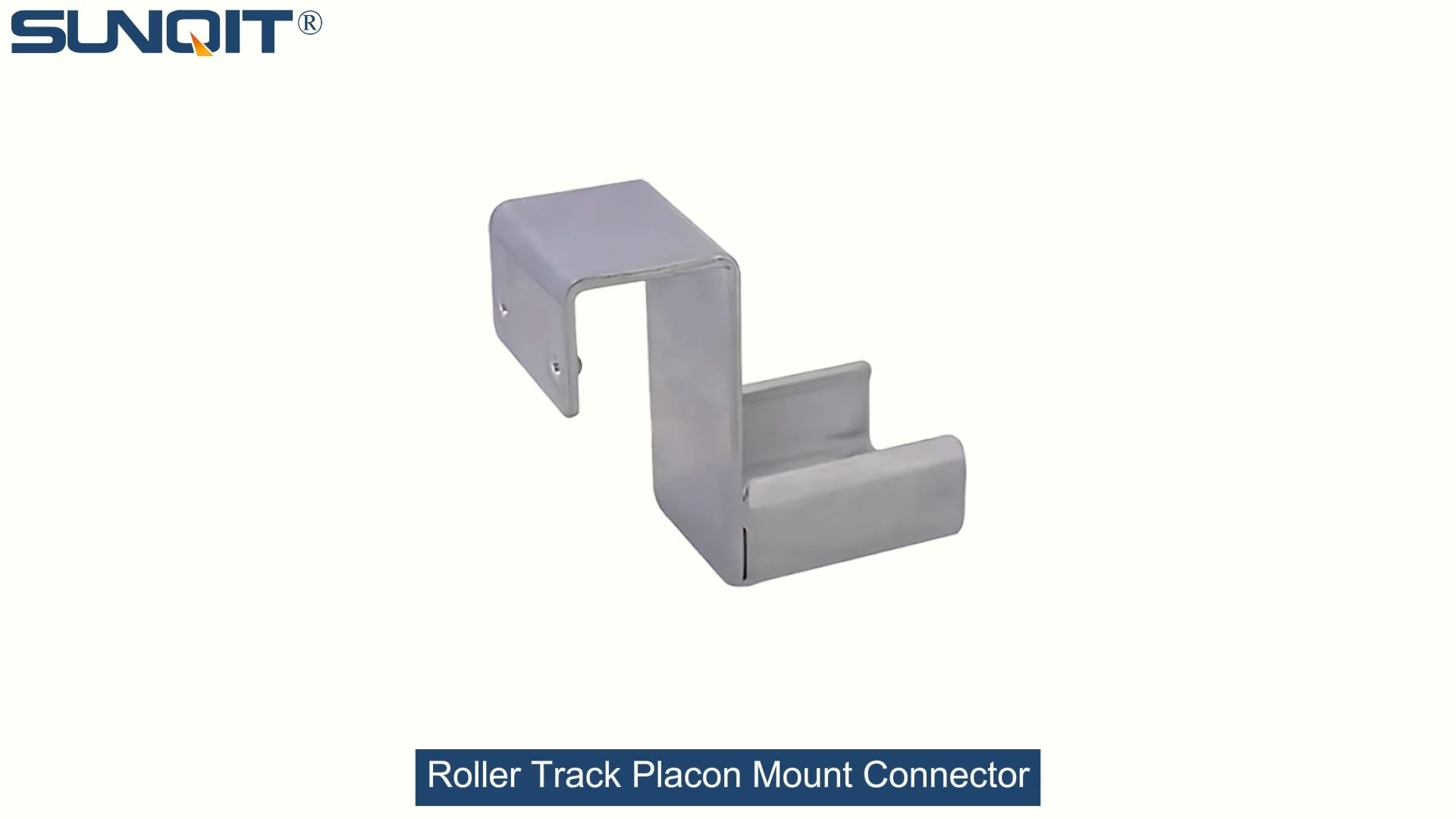
Roller Track Placon Mount Connector
Roller track placon mount work as a connector for roller track and pipe or aluminum profile in rack syetem, it is a necessary parts in rack system which widely used in industrial plant and logistic,warehouse storage.
Introduction: The Backbone of Modern Lean Manufacturing
In the fast-paced world of manufacturing, where efficiency, flexibility, and adaptability are not just goals but necessities, every component plays a critical role in keeping production lines moving. Among these unsung heroes are roller track placon mount connectors – small yet indispensable parts that serve as the "joints" of material handling systems. These connectors are the silent enablers of seamless workflow, allowing roller tracks, conveyors, and flow racks to be assembled, adjusted, and reconfigured with precision. As global manufacturing shifts toward leaner, more agile operations, the demand for high-quality roller track placon mount connectors has surged, making them a cornerstone of modern production environments.
This market overview delves into the current state of the roller track placon mount connector industry, exploring key trends, product innovations, top suppliers, and application insights. Whether you're a manufacturer looking to optimize your production line, a supplier expanding your product portfolio, or an industry observer tracking manufacturing evolution, this analysis offers a comprehensive look at how these small components are driving big changes in the world of lean manufacturing.
Market Trends Shaping the Roller Track Placon Mount Connector Industry
The roller track placon mount connector market is being propelled by several key trends that reflect broader shifts in global manufacturing. Understanding these trends is essential for both suppliers and end-users to stay ahead in a competitive landscape.
1. The Rise of Flexible Production Systems – Traditional rigid manufacturing lines are giving way to flexible systems that can adapt to changing product designs, production volumes, and market demands. Roller track placon mount connectors, with their ability to enable quick assembly and reconfiguration, are at the heart of this transition. Manufacturers across industries are investing in modular material handling systems, where components like roller track placon mount for aluminum profile high and roller track placon mount for rail connection allow for easy adjustments without major overhauls.
2. Lean Manufacturing Goes Mainstream – Lean principles, focused on minimizing waste and maximizing value, have become a standard across manufacturing sectors. Roller track placon mount connectors align perfectly with this ethos by supporting reusable, reconfigurable systems that reduce the need for new equipment purchases. For instance, parallel rotatory lean pipe joints and internal rotatary aluminum joints enable components to be repurposed when production needs change, cutting down on material waste and lowering long-term costs.
3. Automation and Industry 4.0 Integration – As factories embrace automation and smart manufacturing, roller track placon mount connectors are evolving to meet the demands of connected systems. Modern connectors are designed to work seamlessly with sensors, IoT-enabled conveyors, and automated guided vehicles (AGVs), ensuring precise alignment and stable operation in high-speed environments. Materials like aluminum and stainless steel are preferred for their durability and compatibility with automated systems, reducing maintenance downtime.
4. Sustainability as a Core Requirement – Environmental consciousness is no longer an afterthought but a key purchasing criterion. Suppliers are responding by prioritizing eco-friendly materials, such as recyclable aluminum and low-VOC coatings, in their roller track placon mount connectors. Additionally, the focus on sustainable improvement – a core principle of lean manufacturing – drives the development of connectors that extend the lifespan of material handling systems, further reducing the industry's carbon footprint.

Key Product Analysis: Types and Innovations in Roller Track Placon Mount Connectors
Roller track placon mount connectors are not a one-size-fits-all solution. They come in a diverse range of designs, each tailored to specific applications, materials, and load requirements. Below is an in-depth look at the most common types and their unique features:
| Connector Type | Primary Material | Key Features | Typical Applications | Advantages |
|---|---|---|---|---|
| Roller Track Placon Mount for Rail Connection | Aluminum Alloy | Lightweight, corrosion-resistant, designed for seamless rail-to-rail linking | Conveyor systems, flow racks, material transfer lines | Ensures smooth material flow with minimal friction; easy to install and adjust |
| Roller Track Placon Mount for Aluminum Profile High | High-Strength Aluminum | Tall mounting bracket, compatible with 40/80 series aluminum profiles | Workstations, assembly lines, elevated conveyor tracks | Provides stable support for vertical load; ideal for multi-level production setups |
| Roller Track Placon Mount for Aluminum Profile Flat | Aluminum Alloy | Low-profile design, flush mounting with flat aluminum profiles | Workbenches, ESD stations, small-part flow racks | Saves space; integrates seamlessly with flat surfaces for clean, organized work areas |
| End Support for Roller Track Placon Mount with Stop | Steel with Zinc Coating | Built-in stop mechanism to prevent material overrun; heavy-duty construction | Warehouse flow racks, order picking systems, packaging lines | Enhances safety by controlling material movement; suitable for high-load applications |
| Roller Track Placon Mount Center Support Bracket | Aluminum-Steel Composite | Reinforced center support, adjustable height, compatible with multiple track sizes | Long-span conveyor tracks, heavy-duty material handling | Reduces track sagging; supports longer track sections without compromising stability |
Material Innovations – The choice of material is critical for roller track placon mount connectors, as it directly impacts durability, weight, and cost. Aluminum alloys dominate the market due to their winning combination of lightweight, corrosion resistance, and strength. For example, aluminum guide rail A and aluminum guide rail B are widely used in food processing and pharmaceutical industries, where hygiene and rust resistance are paramount. Steel connectors, often zinc-coated or stainless steel, are preferred for heavy-load applications, such as automotive manufacturing, where durability under extreme stress is non-negotiable.
Design Innovations – Recent years have seen a focus on user-centric design. Many connectors now feature tool-less assembly, with quick-lock mechanisms that reduce installation time by up to 40%. Rotational joints, such as 180° internal rotation lean pipe joints and parallel rotatory lean pipe joints , allow for 360° adjustment, making it easier to align tracks on uneven surfaces or around production line obstacles. Additionally, modular designs enable mixing and matching of components, giving manufacturers the flexibility to create custom material handling systems without custom tooling.

Top Suppliers in 2025: Leading the Charge in Lean Manufacturing Solutions
The roller track placon mount connector market is populated by suppliers ranging from niche specialists to global manufacturers. Among these, a few stand out for their product quality, innovation, and commitment to customer-centric solutions. Below is an analysis of leading suppliers shaping the industry in 2025:
Supplier Spotlight: A Leader in Lean System Integration
One of the most prominent players in the market is a China-based manufacturer with a strong focus on lean manufacturing components. With decades of experience, this supplier has built a reputation for delivering comprehensive solutions that go beyond individual connectors to include full lean pipe systems , flexible production equipment , and custom lean solutions . Their product portfolio covers a wide range of roller track placon mount connectors, from standard aluminum brackets to specialized steel supports for heavy-duty applications.
Key Strengths:
- Comprehensive Product Range – Beyond connectors, they offer basic aluminum tubes , internal rotary aluminum joints , workbenches , turnover trolleys , and conveyors , allowing customers to source all lean system components from a single supplier.
- Customization Expertise – They specialize in tailoring solutions for industries like 3C assembly, medical device manufacturing, and (warehousing and logistics). For example, their ESD-compliant connectors and workbench components are designed to meet the strict static control requirements of electronics manufacturing.
- Sustainability Focus – All aluminum products are made from recyclable materials, and their lean solutions emphasize "reusable, (sustainable improvement)" – a philosophy that aligns with global efforts to reduce manufacturing waste.
- Global Industry Reach – Their components are used in factories across (home appliances), (automotive), (telecom equipment), and (medical devices) industries, demonstrating adaptability to diverse manufacturing needs.
Other Notable Suppliers – While the above supplier leads in integrated solutions, other key players include regional specialists focused on niche markets. European suppliers, for instance, are known for high-precision stainless steel connectors tailored to the food and pharmaceutical sectors, where hygiene standards are strict. North American suppliers excel in heavy-duty steel connectors for automotive and aerospace manufacturing, emphasizing durability and compliance with strict safety regulations. Asian suppliers, beyond the spotlighted leader, offer cost-effective aluminum connectors for small to medium enterprises (SMEs) entering the lean manufacturing space.

Application Insights: How Roller Track Placon Mount Connectors Drive Industry-Specific Efficiency
Roller track placon mount connectors are not just components; they are enablers of industry-specific efficiency. Let's explore how they impact key manufacturing sectors:
1. 3C Assembly (Consumer Electronics) – In the fast-changing world of smartphones, laptops, and wearables, production lines must quickly adapt to new models. Roller track placon mount connectors allow manufacturers to reconfigure flow racks and conveyors in hours, not days. For example, 40 steel roller track yellow wheel connectors with flat placon mounts are used in high-speed assembly lines, ensuring small components like circuit boards and screens move smoothly between workstations. ESD-compliant versions, paired with ESD workbenches , prevent static damage to sensitive electronics, a critical requirement in this industry.
2. Automotive Manufacturing – Automotive plants handle heavy components, from engine parts to body panels, requiring robust material handling systems. Here, end support for roller track placon mount with stop and center support brackets are essential. These connectors support heavy-duty conveyor tracks, ensuring parts move safely and precisely along the assembly line. Their adjustability also allows for quick changes when switching between vehicle models, a common need in automotive plants with diverse product lines.
3. Medical Device Production – Medical device manufacturing demands precision, cleanliness, and compliance with strict regulations. Aluminum roller track placon mount connectors, with their corrosion-resistant properties and smooth surfaces, are ideal for this environment. They are used in cleanroom flow racks and assembly stations, where easy cleaning and minimal particle generation are critical. Additionally, custom connectors with antimicrobial coatings are available to meet the unique needs of medical equipment production.
4. Warehousing and Logistics – In warehouses, order fulfillment speed depends on efficient material flow. Flow racks equipped with roller track placon mount connectors allow for first-in, first-out (FIFO) inventory management, reducing picking time and errors. The swivel roller balls and plastic roller track guide rails (available in yellow and grey for visual organization) work with these connectors to create gravity-fed systems that move packages and bins smoothly, even in high-throughput distribution centers.
5. Home Appliance Manufacturing – From refrigerators to washing machines, home appliances vary widely in size and weight. Roller track placon mount connectors enable the creation of flexible production lines that handle different appliance models. For example, aluminum guide rails and parallel lean pipe joints are used to adjust conveyor heights and widths, ensuring appliances of all sizes move through assembly, testing, and packaging stages efficiently.
Market Challenges and Opportunities
While the roller track placon mount connector market is growing, it faces challenges that suppliers and manufacturers must address to capitalize on opportunities:
Challenges:
- Raw Material Price Volatility – Aluminum and steel prices fluctuate with global market conditions, impacting production costs. Suppliers must invest in strategic sourcing and material diversification to maintain competitive pricing.
- Counterfeit Products – Low-quality, counterfeit connectors flood some markets, posing risks of production line failures and safety hazards. This underscores the need for strict quality control and brand protection efforts.
- Technical Skill Gaps – As connectors become more specialized (e.g., ESD-compliant, IoT-integrated), manufacturers need skilled technicians to install and maintain them. The industry faces a shortage of workers trained in lean manufacturing and advanced material handling systems.
Opportunities:
- Emerging Markets – Manufacturing growth in Southeast Asia, India, and Latin America is driving demand for affordable, high-quality lean components. Suppliers that expand into these regions with localized production and support stand to gain significant market share.
- Integration with Automation – The rise of collaborative robots (cobots) and smart factories creates opportunities for connectors that work with automated systems. Innovations like sensor-embedded connectors that monitor track alignment and wear could open new revenue streams.
- Circular Economy Initiatives – Governments and corporations are increasingly prioritizing circular manufacturing models. Suppliers that offer recycling programs for old connectors or design products for easy disassembly and reuse will attract environmentally conscious customers.
Conclusion: The Future of Roller Track Placon Mount Connectors
As manufacturing continues to evolve, roller track placon mount connectors will remain vital to the industry's ability to adapt, innovate, and thrive. Their role in enabling lean, flexible, and sustainable production systems cannot be overstated. From the smallest electronics assembly line to the largest automotive plant, these connectors are the invisible threads that hold modern manufacturing together.
For businesses looking to stay competitive, choosing the right supplier – one that offers quality, customization, and a commitment to sustainability – is key. As the market grows, we can expect to see further innovations in material science, design, and integration with smart technologies, making roller track placon mount connectors even more integral to the factories of tomorrow. In the end, it's clear: in the world of lean manufacturing, the smallest components often make the biggest difference.