- Company Articles
- Industry articles
- Industry standards
- Roller Track Placon Mount Joints and Workplace Safety: Compliance Guidelines

Roller Track Placon Mount Joints and Workplace Safety: Compliance Guidelines
Related Product
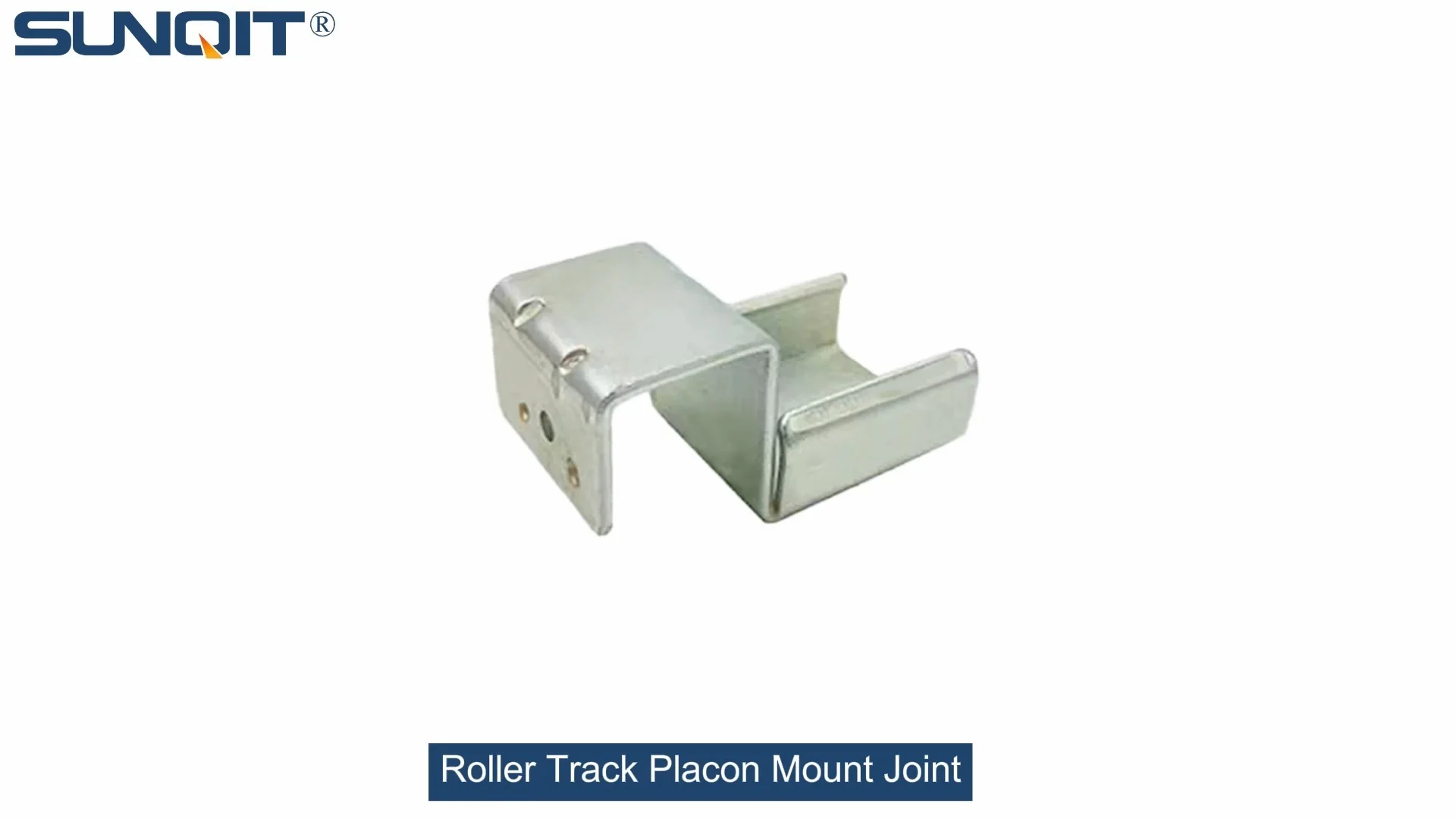
Roller Track Placon Mount Joint
Roller track placon mount work as a connector for roller track and pipe or aluminum profile in rack syetem, it is a necessary parts in rack system which widely used in industrial plant and logistic,warehouse storage.
In the bustling rhythm of manufacturing floors, where every second counts and precision matters, the safety of your team isn't just a checkbox—it's the foundation of every successful operation. Behind the seamless flow of materials, the steady hum of production lines, and the pride in delivering quality products lies a network of small but critical components. Among these, roller track placon mount joints stand as unsung guardians, ensuring that the tools your team relies on daily don't just perform—they protect. This guide dives into how these unassuming connectors shape workplace safety, the compliance standards that govern their use, and the practical steps to turn "meeting regulations" into "empowering your workforce."
The Hidden Backbone: Why Roller Track Placon Mount Joints Matter for Safety
Walk through any manufacturing facility, and you'll see them: flow racks gliding with components, conveyors moving assemblies to the next station, workbenches organized for efficiency. What you might not notice is the intricate web of connections holding these systems together—especially roller track placon mount joints. These small, precision-engineered parts do more than just link rails or secure tracks; they bear the weight of daily operations, absorb the vibrations of constant use, and keep materials moving predictably. When a joint is poorly made or incorrectly installed, the risk isn't just a slowdown—it's a potential hazard: a sudden shift in a loaded rack, a jamming conveyor, or a misaligned track that catches an operator's hand.
In lean manufacturing, where every element is designed to eliminate waste and boost productivity, safety can't be an afterthought. Roller track placon mount joints are where lean principles and safety intersect. A well-designed joint, paired with quality lean pipe and compatible accessories, creates a system that's not only efficient but inherently safe—minimizing sharp edges, reducing manual lifting strain, and ensuring smooth, controlled movement of materials. For workers, this means less fatigue, fewer near-misses, and the confidence to focus on their tasks without worrying about equipment failure. For businesses, it translates to lower downtime, fewer workers' compensation claims, and a culture where safety is woven into the fabric of productivity.
Compliance Standards: The Rules That Protect Your Team
Safety in manufacturing isn't about guesswork—it's about following proven standards that prioritize people. When it comes to roller track systems and their components, compliance starts with understanding the regulations that govern workplace safety, material handling, and equipment design. Below is a breakdown of key standards that every facility should consider, along with how roller track placon mount joints play a role in meeting them:
| Standard/Regulation | Focus Area | Key Requirements for Roller Track Joints | Why It Matters |
|---|---|---|---|
| ISO 45001 (Occupational Health & Safety Management) | Overall workplace safety framework | Joints must be durable, corrosion-resistant, and designed to prevent entrapment hazards (e.g., no exposed pinch points). | Ensures a systematic approach to identifying and mitigating risks, including those from material handling equipment. |
| OSHA 1910.266 (Material Handling Equipment) | Equipment safety in general industry | Joints must maintain structural integrity under rated load (tested to 125% of maximum capacity); secure fastening to prevent detachment during use. | OSHA inspections prioritize equipment that poses "imminent danger"—a loose joint could trigger fines or shutdowns. |
| ANSI/ASSE Z535 (Safety Signage & Labeling) | Hazard communication | Joints should be compatible with safety labels (e.g., load limits, maintenance reminders) and positioned to keep labels visible. | Clear communication reduces human error—workers know exactly what each joint can handle and when to inspect it. |
| ESD S20.20 (Electrostatic Discharge Protection) | Electronics manufacturing (e.g., 3C assembly) | Joints used in ESD workstations must be conductive or dissipative to prevent static buildup that could damage components or cause sparks. | In industries like consumer electronics, a single static discharge can ruin products—but it can also ignite flammable materials in other settings. |
These standards aren't just boxes to tick. They're the result of decades of learning from workplace incidents, designed to protect the people who keep your facility running. When you choose roller track placon mount joints that meet or exceed these guidelines, you're not just complying with the law—you're investing in a culture where your team feels valued.

From Installation to Inspection: Building a Safety-First Workflow
Even the highest-quality joint can fail if it's not installed or maintained properly. Creating a safe workplace means embedding safety into every step of your roller track system's lifecycle—starting with how you set it up.
Step 1: Pre-Installation Planning—Measure Twice, Install Once
Before picking up a tool, ask: What's the maximum load this system will carry? Will it be used in a wet environment (requiring corrosion-resistant stainless steel joints) or near electrostatic-sensitive components (needing ESD-compliant materials)? Consult your lean solution provider to ensure compatibility between roller track placon mount joints, lean pipe, and other accessories—mismatched parts are a common source of instability. For example, a joint designed for light-duty aluminum pipe shouldn't be paired with heavy steel roller track; the stress will weaken the connection over time.
Step 2: Safe Installation—Precision is Non-Negotiable
Installation isn't just about tightening bolts. Follow these best practices to ensure joints are secure and safe:
- Use the right tools: Avoid makeshift wrenches or over-tightening with power tools, which can strip threads or crack the joint. Most manufacturers provide torque specifications—stick to them.
- Check alignment: A joint that's slightly off-angle might seem minor, but it creates uneven stress on the track. Use a level to ensure rails are straight and joints are flush with the mounting surface.
- Secure all fasteners: Missing or loose screws are a leading cause of joint failure. Use lock washers or thread-locking compound for joints in high-vibration areas (like near conveyors).
- Test before full use: After installation, do a "dry run" with a light load. Watch how the track moves—are there jerks or sticking points? Listen for unusual noises, which can signal a misaligned joint.
Step 3: Ongoing Maintenance—Catch Issues Before They Become Hazards
Safety doesn't end after installation. Create a regular inspection schedule for roller track placon mount joints—weekly visual checks for obvious wear, monthly torque tests, and quarterly deep dives. Look for:
- Signs of corrosion, especially in humid or chemical-exposed areas (replace with stainless steel joints if needed).
- Cracks or deformation in the joint body—even small fractures can compromise strength.
- Loose or damaged fasteners—tighten or replace immediately.
- Excessive play in the joint (wiggle the track gently; movement beyond 1-2mm indicates wear).
Document these checks! A simple log noting dates, findings, and repairs creates accountability and helps spot patterns—like a batch of joints that wear out faster, signaling a need to switch suppliers.

Real-World Impact: Safety in Action Across Industries
Different industries face unique safety challenges, but the goal is the same: protect workers while keeping operations running smoothly. Here's how roller track placon mount joints make a difference in key sectors:
3C Assembly: Precision for Fragile Components and Fast-Paced Teams
In 3C manufacturing (computers, communication, consumer electronics), production lines move at lightning speed, with small, delicate parts flowing through workstations. ESD workbenches and conveyors are critical to prevent static damage, but without reliable roller track joints, the risk of jams or sudden stops increases. A leading 3C manufacturer in Shenzhen recently upgraded their flow racks with high-precision aluminum roller track placon mount joints, paired with ESD-compliant lean pipe. The result? A 40% reduction in track-related incidents, as the smoother movement eliminated the need for workers to manually adjust stuck components—keeping hands away from moving parts.
Medical Device Manufacturing: Cleanliness and Compliance Go Hand-in-Hand
Medical facilities demand strict hygiene and traceability. Roller track systems here must be easy to clean, resistant to disinfectants, and free of crevices where bacteria can hide. A medical equipment plant in Guangzhou switched to stainless steel roller track placon mount joints with smooth, sealed surfaces. Not only did this meet FDA requirements for clean manufacturing, but the corrosion-resistant design reduced joint failure from 8% to less than 1% annually—meaning fewer unplanned shutdowns and safer handling of sterile components.
Warehouse Logistics: Heavy Loads, Heavy Responsibility
Warehouses often deal with bulk materials, where a single flow rack can hold hundreds of kilograms. A logistics hub in Shanghai learned this the hard way: a poorly installed joint on a steel roller track gave way under a loaded pallet, causing a domino effect of falling boxes. After partnering with a supplier specializing in heavy-duty lean solutions, they retrofitted their racks with reinforced roller track placon mount joints and implemented load-testing protocols. Since then, they've had zero incidents—and workers report feeling more confident loading and unloading, knowing the system can handle the weight.

Choosing the Right Partner: Why Supplier Quality Impacts Safety
You can't build a safe system with subpar components. When selecting a supplier for roller track placon mount joints, lean pipe, or complete lean solutions, look beyond price—focus on partners who prioritize safety and compliance. Here's what to ask:
- Do they test to global standards? Reputable suppliers will provide certificates showing their joints meet ISO, OSHA, or ESD S20.20 requirements. Ask for test reports on load capacity, corrosion resistance, and durability.
- Can they customize for your needs? Every facility is different. A supplier who offers tailored solutions—like ESD joints for electronics or stainless steel options for food-grade environments—shows they understand your unique safety challenges.
- Do they provide technical support? Installation guides, torque specs, and maintenance training are signs of a supplier invested in your success. Avoid suppliers who just ship parts without guidance—you're not just buying a joint; you're buying peace of mind.
Remember: A cheap joint might save money upfront, but the cost of an accident—medical bills, downtime, damaged reputation—is far higher. Investing in quality components from a trusted lean pipe supplier is an investment in your team's safety.
Conclusion: Safety Starts with the Smallest Connections
At the end of the day, workplace safety isn't about rules or regulations—it's about people. The operator who relies on a steady flow rack to do their job safely. The team leader who wants to go home knowing everyone made it through the shift unharmed. The business owner who understands that a safe workplace is a productive, loyal one.
Roller track placon mount joints might be small, but their impact is huge. They're a reminder that in manufacturing, safety isn't a big, overwhelming concept—it's in the details: the precision of a joint, the care in installation, the commitment to regular checks. When you prioritize these details, you're not just building a better system—you're building a better workplace.
So the next time you walk through your facility, take a moment to look at those connections. They're not just holding up your equipment—they're holding up your team.