- Company Articles
- Industry articles
- Industry standards
- Safety Features of 2040 EU Standard Aluminum Profile: Rounded Edges & Load Ratings

Safety Features of 2040 EU Standard Aluminum Profile: Rounded Edges & Load Ratings
Related Product
2040 EU Standard Aluminum Profile
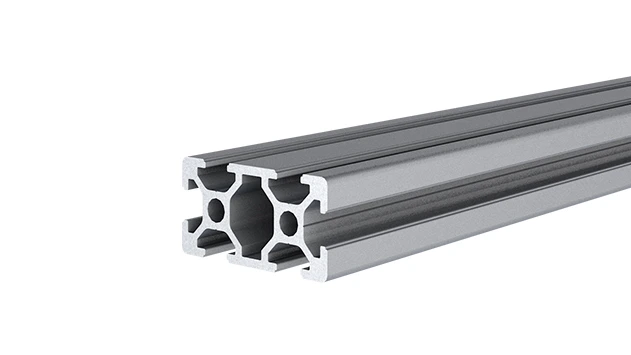
2040 is a 2.00 x 4.00CM fractional 20 series square extrusion T-slot profile with four open T-slots, two side with 2.00cm face, the other side with 4.00cm face. The profile has align-a-grooves to assist in aligning connecting profiles.
Walk into any modern manufacturing plant, warehouse, or assembly facility, and you'll likely spot a common backbone: aluminum profiles. These sleek, modular structures form the skeleton of workbenches, material racks, conveyor systems, and more. But beyond their versatility and durability, there's a silent hero in their design—safety. Today, we're diving deep into one of the most trusted names in this space: the 2040 EU Standard Aluminum Profile. Specifically, we'll unpack two critical safety features that make it a staple in safety-first workplaces: its rounded edges and robust load ratings. Along the way, we'll also touch on how aluminum profile accessories and complementary components like aluminum profile rubber strips elevate its safety game, ensuring that every corner of your workspace feels less like a industrial zone and more like a thoughtfully designed environment where people (and productivity) thrive.
Why Safety in Aluminum Profiles Matters More Than You Think
Before we zoom into the 2040 EU Standard, let's take a step back. In fast-paced environments—where workers are moving materials, operating machinery, or collaborating on tight deadlines—even small design flaws can lead to big problems. A sharp edge on a workbench might seem minor until a team member brushes against it while rushing to meet a deadline, resulting in a cut that takes them off the floor. A rack that's not rated for the weight of daily shipments could collapse, damaging inventory and endangering anyone nearby. These aren't just hypothetical scenarios; OSHA reports that over 20% of workplace injuries in manufacturing stem from "contact with objects and equipment," often linked to poor material design. That's where the 2040 EU Standard Aluminum Profile comes in. Engineered with European safety regulations in mind, it's not just a building block for structures—it's a commitment to protecting the people who use them.
Rounded Edges: The First Line of Defense Against Everyday Hazards
Let's start with the obvious: edges. Think about the last time you reached for a tool on a metal shelf and accidentally grazed your hand on a sharp corner. It stings, right? Now imagine that happening multiple times a day, to multiple people, in a facility with hundreds of metal structures. Over time, those "minor" scrapes add up—both in terms of worker discomfort and lost productivity. Sharp edges don't just cause cuts; they can snag gloves, clothing, or hair, turning a quick movement into a dangerous entanglement. In worst-case scenarios, a worker could trip if their sleeve catches, leading to falls or collisions with other equipment.
The 2040 EU Standard Aluminum Profile eliminates this risk with its signature rounded edges. Unlike generic aluminum profiles that might skimp on edge finishing, the 2040 EU model is designed with a specific radius (typically 1.5mm to 2mm) along all exposed edges. This isn't just a cosmetic choice—it's a deliberate engineering decision rooted in ergonomics. The rounded design distributes pressure evenly when a hand or arm makes contact, reducing the likelihood of cuts or abrasions. Even better, it minimizes the chance of clothing or tools getting caught, turning potential hazards into non-issues.
To put this in perspective, consider a case study from a automotive parts manufacturer in Germany. Before switching to 2040 EU Standard profiles, their assembly line workbenches used older, square-edged aluminum. Over six months, they recorded 12 minor hand injuries and 8 incidents of snagged uniforms. After retrofitting with 2040 profiles, those numbers dropped to zero in the next six months. "It was like night and day," said the facility manager. "Workers used to be hesitant to lean on the benches or reach across them quickly. Now, they move with confidence, and that speed translates directly to better output."
But the benefits don't stop at physical safety. Rounded edges also make the profile easier to clean and maintain—no sharp crevices for dirt, grease, or debris to hide in. In food processing or pharmaceutical environments, where hygiene is critical, this is a game-changer. A quick wipe with a disinfectant cloth is all it takes to keep surfaces sanitized, reducing the risk of contamination. For warehouse managers, this means less time spent on deep cleaning and more time focused on core operations.

Load Ratings: Building Trust in Every Structure
If rounded edges protect workers from immediate harm, load ratings protect them (and your business) from catastrophic failure. Load rating refers to the maximum weight a structure—like a workbench, rack, or conveyor—can safely support without deforming, bending, or collapsing. For the 2040 EU Standard Aluminum Profile, this number isn't arbitrary; it's the result of rigorous testing and engineering, ensuring that every profile can handle the demands of real-world use.
So, how is the load rating determined? It starts with the material itself. The 2040 EU profile is typically made from 6063-T5 aluminum alloy, a grade known for its excellent strength-to-weight ratio. The "2040" designation refers to its dimensions: 20mm in width and 40mm in height (though exact measurements can vary slightly by manufacturer, all adhere to EU standard tolerances). The alloy is heat-treated to enhance its mechanical properties, including tensile strength and yield strength. Tensile strength (how much force it can withstand before breaking) for 6063-T5 is around 180 MPa, while yield strength (how much it can stretch before permanent deformation) is about 145 MPa. These numbers form the foundation of the load rating calculation.
Next, engineers consider the profile's cross-sectional design. The 2040 profile features internal ribs and hollow sections, which distribute weight evenly and resist bending. Think of it like an I-beam in construction—by optimizing the shape, manufacturers can maximize strength without adding unnecessary weight. Computer-aided design (CAD) simulations are used to test how the profile behaves under different loads: static loads (like a stack of boxes sitting on a shelf), dynamic loads (like a trolley rolling over a conveyor), and even impact loads (like a tool being dropped on a workbench).
To give you a concrete example, let's look at static load ratings for a single 2040 EU Standard Aluminum Profile. When used as a horizontal beam with supports at both ends (span of 1 meter), the profile can typically handle around 50-70 kg of evenly distributed weight without permanent deformation. If the span is shorter (e.g., 0.5 meters), that number jumps to 150-200 kg. For vertical applications, like the legs of a workbench, the load capacity is even higher—often exceeding 300 kg per leg, depending on the number of supports and how they're connected.
| Application | Span Length | Static Load Capacity (kg) | Dynamic Load Capacity (kg) |
|---|---|---|---|
| Horizontal Beam (Single Profile) | 1000mm | 50-70 | 30-45 |
| Horizontal Beam (Single Profile) | 500mm | 150-200 | 90-120 |
| Workbench Frame (4 Profiles as Legs) | 800mm Height | 800-1000 | 600-750 |
| Material Rack (3 Levels) | 1500mm Width | 300-400 per Level | 200-250 per Level |
Dynamic load capacity, as shown in the table, refers to weight that's in motion—like a pallet being slid onto a rack or a toolbox being placed on a workbench. These loads are more stressful on the profile, so the rating is lower than static capacity. Manufacturers test this by simulating repeated loading and unloading, ensuring the profile doesn't weaken over time.
Why does this matter for your business? Imagine investing in a material rack to store heavy components, only to have it collapse under the weight of a full shipment. The damage could include broken inventory, downtime while you clean up and rebuild, and potential injuries. With the 2040 EU Standard profile, you can trust that the load rating is accurate and reliable, giving you peace of mind to focus on growth. Plus, EU standards require manufacturers to provide detailed load charts and certification, so you're never guessing—you have hard data to back up your structural decisions.
Aluminum Profile Accessories: Elevating Safety Even Further
A great profile is only as good as its accessories. Aluminum profile accessories are the unsung heroes that turn basic profiles into fully functional, safety-focused systems. For the 2040 EU Standard, these accessories are designed to complement its safety features, creating a cohesive solution that leaves no gaps in protection.
Take aluminum profile rubber strips, for example. These flexible strips fit into the T-slots of the 2040 profile, adding a layer of cushioning and grip. On workbenches, they prevent tools and parts from sliding around during use, reducing the risk of items falling off and causing injuries. In material handling, they dampen noise when products are placed on racks, making the workplace quieter and less stressful. They also act as a barrier against metal-on-metal contact, preventing scratches on both the profile and your inventory. Available in various colors (like black, gray, or yellow), they can even be used to color-code work zones, enhancing organization and reducing confusion.
End caps are another essential accessory. While the 2040 profile has rounded edges, the ends (where the profile is cut to length) can still be sharp or unfinished. End caps—made from durable plastic or rubber—snap onto the ends of the profile, covering any rough edges and preventing dust, debris, or moisture from entering the hollow interior. This not only improves safety but also extends the life of the profile by protecting it from corrosion.
Connectors, like 90° aluminum profile connectors or 45° aluminum profile connectors, are critical for structural integrity. These accessories ensure that joints between profiles are tight and secure, distributing weight evenly across the entire structure. Poorly designed connectors can create weak points, but EU-standard connectors are engineered to work seamlessly with the 2040 profile, maintaining its load rating and stability. Many connectors also feature rounded edges themselves, aligning with the profile's overall safety ethos.
For lean system enthusiasts, these accessories are a dream. Lean manufacturing is all about efficiency, organization, and continuous improvement—and the 2040 profile with its accessories fits right in. A workbench built with 2040 profiles, rubber strips, and secure connectors becomes a hub of productivity, where tools are within reach, surfaces are non-slip, and workers feel confident in their environment. Material racks, assembled with load-rated profiles and sturdy connectors, keep inventory organized and accessible, reducing the time spent searching for parts and minimizing the risk of accidents during retrieval.
Real-World Applications: From Workbenches to Whole Facilities
Let's bring this all together with some practical examples of how the 2040 EU Standard Aluminum Profile is used in real workplaces. These aren't just theoretical—they're scenarios you might encounter in your own facility, showing how safety features translate to better outcomes.
Assembly Line Workbenches: In electronics manufacturing, precision is key. Workers spend hours soldering, testing, and assembling small components, often leaning over workbenches for extended periods. A workbench built with 2040 profiles offers the perfect balance of stability and ergonomics. The rounded edges mean no more accidental scrapes when reaching for a soldering iron, while the load rating ensures the bench can support heavy equipment (like oscilloscopes or power supplies) without wobbling. Adding aluminum profile rubber strips to the work surface keeps small parts from rolling off, and end caps eliminate sharp corners where wires or cables might get caught. The result? A workspace that's comfortable, safe, and optimized for focus.
Material Storage Racks: Warehouses dealing with automotive parts or industrial components need racks that can handle heavy, bulky items. A 3-level material rack built with 2040 profiles (as seen in the load rating table earlier) can safely store 300-400 kg per level, with dynamic capacity for when pallets are loaded or unloaded. The rounded edges reduce the risk of damage to parts (and workers) during handling, while connectors ensure the rack stays stable even when fully loaded. Plus, the modular design of the 2040 profile means the rack can be reconfigured as inventory needs change—no need to buy new racks, just adjust the existing ones.
Lean System Conveyors: Conveyors are the arteries of many facilities, moving products from one station to the next. Using 2040 profiles as the frame for a roller conveyor ensures the structure is lightweight (easy to install and reposition) yet strong enough to support the weight of moving goods. The rounded edges of the profile prevent snags as products glide along the rollers, while the load rating guarantees the conveyor won't sag or bend under continuous use. Aluminum profile rubber strips along the sides of the conveyor keep products centered, reducing jams and downtime.
In each of these cases, the 2040 EU Standard Aluminum Profile isn't just a material—it's a partner in safety. It works behind the scenes, ensuring that workers can focus on their tasks without worrying about hazards, and businesses can focus on growth without fearing accidents or failures.
Choosing the Right Supplier: Why Compliance Matters
Not all aluminum profiles are created equal. To reap the safety benefits of the 2040 EU Standard, it's crucial to choose a reputable supplier—one that adheres strictly to EU safety regulations and provides certified products. A trustworthy supplier will have documentation proving their profiles meet the required edge radius, load ratings, and material standards. They'll also offer a range of compatible accessories (like aluminum profile rubber strips, end caps, and connectors) that are designed to work seamlessly with the 2040 profile, ensuring no compromises in safety or performance.
Beware of suppliers offering "EU-style" or "similar to 2040" profiles at rock-bottom prices. These knockoffs often cut corners on material quality, edge finishing, or testing, putting your workers and business at risk. Investing in genuine EU-standard profiles might cost a bit more upfront, but the savings in reduced injuries, downtime, and replacements more than make up for it in the long run.
Conclusion: Safety as a Foundation, Not an Afterthought
The 2040 EU Standard Aluminum Profile is more than just a piece of metal. It's a testament to the idea that safety should be built into every aspect of workplace design—not added on later as an afterthought. Its rounded edges protect workers from everyday scrapes and snags, while its robust load ratings ensure structural stability, even under the demands of busy environments. When paired with aluminum profile accessories like rubber strips, end caps, and secure connectors, it becomes a cornerstone of lean system success, fostering efficiency, productivity, and peace of mind.
In a world where workplace safety is both a moral imperative and a business necessity, the 2040 EU Standard Aluminum Profile stands out as a smart choice. It's a reminder that the best safety solutions are those you barely notice—they just work, day in and day out, letting your team focus on what they do best. So, whether you're building a single workbench or overhauling your entire facility, consider the 2040 EU Standard. Your workers (and your bottom line) will thank you.