- Company Articles
- Industry articles
- Industry standards
- Safety Standards: Ensuring Compliance with 3060 National Standard Profile A Racks

Safety Standards: Ensuring Compliance with 3060 National Standard Profile A Racks
Related Product
3060 National Standard Profile A
Workbench, production line, logistic rack, warehouse rack Industry: Manufacturer workshop, Automobile, Electronic, Assembling, logistic
Walk into any busy warehouse, manufacturing plant, or distribution center, and you'll likely see rows of metal racks standing tall, holding everything from raw materials to finished products. These racks are the unsung heroes of logistics—they keep spaces organized, maximize storage, and keep operations running smoothly. But here's the thing: not all racks are created equal. And when it comes to safety, cutting corners can have devastating consequences. Today, we're zeroing in on a specific player in the racking world: the 3060 National Standard Profile A Racks. If you're responsible for managing a facility that uses these racks, or if you're considering adding them to your space, understanding their safety standards isn't just a box to check—it's a commitment to protecting your team, your inventory, and your business.
Let's start by demystifying what these racks are, why they matter, and how to ensure they're always operating at their safest. Because when it comes to racks, "good enough" is never enough.
What Exactly Is a 3060 National Standard Profile A Rack?
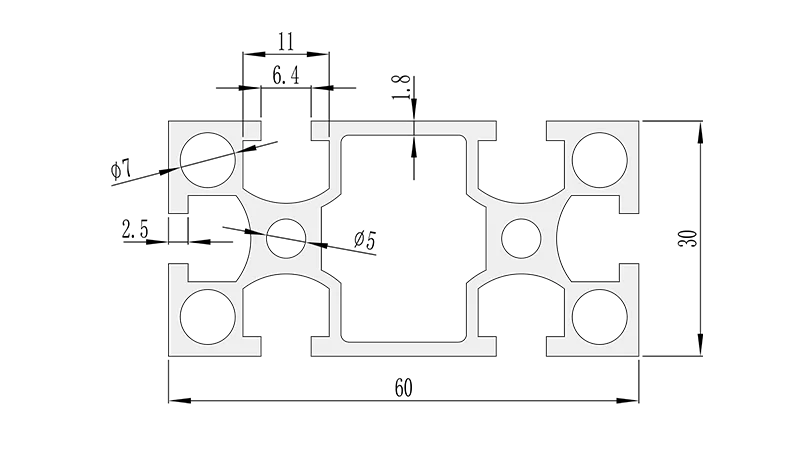
First things first: let's break down the name. "3060 National Standard Profile A" refers to a specific type of aluminum extrusion profile—a long, slender piece of aluminum shaped into a cross-section that's 30 millimeters wide and 60 millimeters tall. Think of it like a building block, but for industrial structures. These profiles are designed to interlock with other components (like brackets, connectors, and shelves) to create sturdy, customizable racks. And the "National Standard" part? That means they're manufactured to meet strict government-set guidelines for material quality, dimensions, and performance—no shoddy, off-brand materials allowed here.
Aluminum is the star material here, and for good reason. It's lightweight, which makes installing and reconfiguring racks easier, but don't let that fool you—aluminum profiles like 3060 are surprisingly strong. They're also resistant to rust and corrosion, which is a big win in environments where moisture or chemicals might be present. Unlike steel, which can get heavy and prone to rust, aluminum strikes that sweet spot between durability and practicality. That's why 3060 National Standard Profile A Racks are a favorite in industries like automotive, electronics, and food processing—they're tough enough to handle heavy loads but versatile enough to adapt to changing needs.
But why "Profile A"? National standards often categorize profiles by their design nuances—things like wall thickness, slot configurations (those T-shaped grooves you see on aluminum profiles), and structural reinforcements. Profile A, in particular, is known for its balanced design: thick enough walls to support significant weight, but not so bulky that it wastes space. It's the kind of profile engineers reach for when they need a rack that can do it all—hold pallets of parts, stack boxes of inventory, or even double as a workbench surface in a pinch.
Why Safety Standards for These Racks Are Non-Negotiable
Imagine this: It's a Tuesday morning, and your warehouse team is busy restocking shelves. A worker is loading a pallet onto a 3060 Profile A Rack when suddenly, there's a loud creak. The shelf buckles, the pallet crashes to the floor, and boxes spill everywhere. Luckily, no one is hurt… this time. But what if the next time, someone is standing too close? Or what if the falling inventory damages expensive equipment? Accidents like this aren't just costly—they're preventable. And that's where safety standards come in.
The truth is, racks are under constant stress. Every time you load a box, stack a pallet, or even walk past a rack, you're interacting with a structure that's holding potentially thousands of pounds. If that structure isn't built, installed, or maintained properly, it becomes a ticking time bomb. According to the Occupational Safety and Health Administration (OSHA), falling objects from racks are a leading cause of warehouse injuries, and rack collapses can result in fines, lawsuits, and even temporary shutdowns. For small businesses, that kind of disruption can be catastrophic. For larger operations, it's a blow to morale and productivity.
But safety standards aren't just about avoiding the worst-case scenario. They're about creating a workplace where your team feels confident. When workers know the racks they're using are up to code—inspected regularly, loaded correctly, and built to last—they can focus on their jobs instead of worrying about what might go wrong. That peace of mind translates to better efficiency, fewer mistakes, and a stronger company culture. So whether you're setting up a new rack system or auditing an existing one, prioritizing safety isn't just the law—it's good business.
Material Safety: Why the Aluminum Profile Itself Matters
Let's get into the nitty-gritty: the aluminum profile that makes up these racks. Not all aluminum is the same, and that's a big deal for safety. The 3060 National Standard Profile A isn't just "aluminum"—it's a specific alloy (usually 6063-T5, a common grade for structural applications) that's been heat-treated to boost its strength. This alloy is chosen for its excellent combination of tensile strength (how much pulling force it can handle before breaking) and yield strength (how much it can bend before permanently deforming). In plain English: it's tough enough to take a beating without giving out.
One of the key specs to watch for is wall thickness. National standards for 3060 Profile A typically require a minimum wall thickness of 1.5mm, though some heavy-duty versions go up to 2.0mm. Why does this matter? A thinner wall might save a few dollars upfront, but it can't handle the same load as a thicker one. Over time, thin walls can bend or crack under constant weight, leading to sagging shelves or even collapse. That's why reputable suppliers (like the ones who specialize in 3060 national standard profile a) will always provide material certificates proving their aluminum meets these thickness and alloy standards. If a supplier can't show you those certificates, walk away—your team's safety isn't worth the risk.
Corrosion resistance is another material safety factor. Even though aluminum is naturally resistant to rust, certain environments (like coastal warehouses with salt air or facilities that use cleaning chemicals) can still cause pitting or discoloration over time. That's why some 3060 Profile A Racks come with anodized or powder-coated finishes—these treatments add a protective layer that keeps the aluminum safe from the elements. When inspecting your racks, keep an eye out for signs of corrosion: white, powdery spots or pitted surfaces. These are red flags that the material might be weakening, even if the rack still looks "fine" on the outside.
Design Standards: Building Racks That Can Handle the Load
Okay, so the aluminum profile is strong—but a rack is only as safe as its design. Think of it like building a house: even the best bricks won't hold up if the foundation is weak or the beams are spaced too far apart. For 3060 Profile A Racks, design standards cover everything from how the profiles are connected to how much weight each shelf can hold. Let's break it down.
Load Capacity: The Golden Number
Every rack has a maximum load capacity, and ignoring it is one of the easiest ways to court disaster. For 3060 Profile A Racks, load capacity is determined by a few factors: the thickness of the aluminum profile, the spacing between vertical supports (called "uprights"), and the type of shelving used (plywood, metal decking, etc.). A typical 3060 Profile A Rack with uprights spaced 1.2 meters apart might have a shelf capacity of 500kg, while a rack with uprights spaced 0.8 meters apart could handle 750kg. These numbers aren't guesswork—they're calculated by engineers using software that simulates how the rack will bend and stress under different loads.
| Upright Spacing (meters) | 3060 Profile A Wall Thickness (mm) | Maximum Shelf Load (kg) |
|---|---|---|
| 1.2 | 1.5 | 500 |
| 1.0 | 1.5 | 650 |
| 0.8 | 1.5 | 750 |
| 1.0 | 2.0 | 800 |
The key here is to never exceed the rated load. It might be tempting to squeeze an extra box onto a shelf "just this once," but that "once" could be the straw that breaks the camel's back. Overloading causes the aluminum profile to flex beyond its yield strength, leading to permanent deformation. You might not notice it at first—maybe the shelf sags a little, or there's a tiny bend in the beam—but over time, that damage adds up. Eventually, the shelf will fail, and everything on it will come crashing down.
Structural Bracing: Keeping Racks From Wobbling
Ever tried to build a tower with blocks and had it topple over because it was too wobbly? Racks are the same way. Without proper bracing, even the strongest aluminum profiles can bend or twist under lateral forces (like when a forklift accidentally bumps into a rack, or when a heavy load is dropped onto a shelf). That's why 3060 Profile A Racks use diagonal bracing—metal rods or strips that connect uprights and beams to form triangles (the strongest shape in engineering). These braces prevent the rack from swaying, keeping it stable even in busy environments.
Another structural element to watch is the base. Racks need a solid foundation, whether they're bolted to the floor or sitting on leveling feet. If the floor is uneven, the rack will lean, putting extra stress on one side. Over time, that stress can cause the aluminum profile to crack at the joints. For mobile racks (those with caster wheels), the base becomes even more critical. The caster wheels need to be heavy-duty, with locks to prevent movement when the rack is loaded. A cheap caster might roll smoothly at first, but under a heavy load, the wheel could bend or the brake could fail—turning a mobile rack into a runaway hazard.
Installation: Getting It Right the First Time
You could have the best 3060 Profile A Racks money can buy, but if they're installed incorrectly, they're just fancy scrap metal. Installation is where many safety issues start, so let's talk about how to do it right.
Start With a Level Surface
This seems obvious, but you'd be surprised how many racks are installed on uneven floors. Use a spirit level to check the area where the rack will go. If the floor slopes more than 1/4 inch over 10 feet, you'll need to use shims or adjustable leveling feet to even it out. A rack that's leaning might not collapse immediately, but over time, the uneven weight distribution will stress the aluminum profile and joints, leading to premature failure.
Use the Right Aluminum Profile Accessories
Racks are only as strong as their weakest link, and that link is often the accessories used to connect the aluminum profiles. We're talking about brackets, bolts, nuts, and angle codes—small parts that play a huge role in safety. For 3060 Profile A Racks, always use accessories that are specifically designed for that profile. A bracket meant for a 2020 profile (smaller and thinner) won't fit properly on a 3060, and it won't provide the same support. Genuine aluminum profile accessories are made to tight tolerances, ensuring a snug, secure fit that won't loosen over time.
When tightening bolts, use a torque wrench to ensure they're snug but not over-tightened. Over-tightening can strip the threads on the aluminum profile or snap the bolt, while under-tightening leaves the joint loose. Most manufacturers recommend a torque of 15-20 Nm for M8 bolts (a common size for 3060 profiles). And don't forget to check the bolts periodically—vibration from forklifts or heavy loads can loosen them over time.
Don't Skip the Cross-Bracing
Earlier, we talked about diagonal bracing for stability, but cross-bracing (horizontal bars that connect the front and back of the rack) is just as important. Cross-bracing prevents the rack from "racking" (twisting sideways) when a load is added or removed. For tall racks (over 2 meters), you'll need cross-bracing on both the front and back, and possibly in the middle. Think of it like adding a belt to a pair of pants—it keeps everything held together.
Maintenance: Keeping Racks Safe for the Long Haul
A rack isn't a "set it and forget it" piece of equipment. Even the best 3060 Profile A Racks need regular check-ups to stay safe. Here's what your maintenance routine should include:
Weekly Visual Inspections
Every week, have a member of your team walk the rack aisles and look for obvious issues: bent or cracked aluminum profiles, loose bolts, sagging shelves, or damaged accessories. Pay special attention to areas near forklift traffic—these are prime spots for dents and dings. If you see a bent upright, don't try to straighten it yourself—aluminum weakens when it's bent and then bent back. Instead, mark the rack as out of service and contact a professional to replace the damaged part.
Monthly Load Checks
Once a month, verify that shelves aren't overloaded. This can be as simple as checking the load labels (more on that below) and comparing them to what's actually on the shelf. If you notice a shelf is consistently near its limit, consider adding an extra upright to reduce the span and increase capacity. It's better to invest in a few extra parts than to risk a collapse.
Quarterly Deep Dives
Every three months, do a more thorough inspection. Tighten any loose bolts, check caster wheels for wear (if applicable), and inspect the aluminum profile for signs of corrosion or fatigue (like small cracks at the joints). If you're using wooden shelves, look for rot or warping—these can weaken the shelf and cause items to tip. For metal shelves, check for rust or bending.
Label Everything Clearly
Load capacity labels should be visible on every rack, at eye level. The label should include the maximum shelf load, the total rack load, and the date the rack was last inspected. This isn't just for compliance— it's a reminder to everyone on your team that safety is a priority. If a label is missing or faded, replace it immediately.
Accessories That Boost Safety (and Which to Avoid)
Racks rarely stand alone—they're usually paired with accessories that make them more functional. But not all accessories are created equal. Some enhance safety, while others introduce new risks. Let's break down the good, the bad, and the ugly.
The Good: Heavy-Duty Caster Wheels and Leveling Feet
If you need a mobile rack, invest in heavy-duty caster wheels rated for at least 1.5 times the rack's total load capacity. Look for casters with double-ball bearings (for smooth rolling) and locking brakes (to keep the rack stationary when in use). Swivel casters are great for maneuverability, but make sure they have a locking mechanism that engages both the wheel and the swivel plate—this prevents the rack from rolling or spinning unexpectedly.
For fixed racks, adjustable leveling feet are a must. These small, threaded feet screw into the bottom of the uprights, allowing you to level the rack on uneven floors (we talked about this earlier). Look for feet with rubber pads—they grip the floor better and reduce noise when the rack is loaded.
The Good: Safety Rails and Netting
Safety rails (metal bars that attach to the front of shelves) prevent items from falling off, while netting can catch loose items before they hit the ground. Both are especially useful for racks that hold small parts or irregularly shaped items. When installing rails or netting, make sure they're securely fastened to the aluminum profile using genuine accessories—zip ties or duct tape might work temporarily, but they'll fail under stress.
The Bad: Cheap, Generic Brackets
Earlier, we mentioned using genuine aluminum profile accessories, but it's worth repeating: avoid cheap, off-brand brackets or connectors. These are often made from low-quality metal that can bend or snap under load. A $2 bracket might save you money today, but if it fails and causes a collapse, the cost in damages and injuries will be exponentially higher.
The Ugly: Overloading With "Quick Fix" Shelves
We've all been there: you need a little extra storage space, so you grab a piece of plywood and lay it across two shelves to create a "new" shelf. While this might seem like a clever hack, it's a safety nightmare. Plywood isn't designed to span large distances without support, and it can sag or break under load. If you need extra shelves, invest in proper shelf boards designed for your 3060 Profile A Rack—they'll have the right thickness and support to keep everything safe.
Real-World Example: A Safe 3060 Profile A Rack Setup
Let's put all this together with a real-world scenario. Meet Maria, the warehouse manager at a mid-sized electronics manufacturer. Last year, Maria's team was struggling with disorganized storage and frequent near-misses with falling components. She decided to invest in 3060 National Standard Profile A Racks, and here's how she ensured they stayed safe:
First, she worked with a reputable supplier who provided material certificates for the 3060 profiles (1.5mm wall thickness, 6063-T5 alloy) and genuine aluminum profile accessories. The supplier also helped her calculate load capacities: each shelf would hold 600kg, with uprights spaced 1.0 meters apart. Maria labeled each rack with the load capacity and had the installation team use torque wrenches to tighten all bolts to 18 Nm.
For mobile racks (used to transport components to the assembly line), Maria chose caster wheels rated for 1000kg each (well above the rack's total load of 800kg) with double locks. She also added safety rails to the front of each shelf and netting on the sides to catch small screws and washers that might fall off.
Maintenance is now part of Maria's weekly routine. Every Monday, her team does a visual inspection, checking for bent profiles, loose bolts, and damaged casters. Once a month, they tighten all bolts and verify load limits. So far, it's been a year with zero rack-related incidents—and Maria's team reports feeling much more confident working around the racks.
Maria's story isn't unique. It's a reminder that safety with 3060 Profile A Racks isn't about luck—it's about planning, using quality materials, and staying vigilant. It's about investing in the right tools and training, and never assuming that "it won't happen here."
Conclusion: Safety Is a Team Sport
At the end of the day, ensuring compliance with 3060 National Standard Profile A Rack safety standards isn't the job of one person—it's a team effort. From the engineers who design the racks to the suppliers who provide the materials, from the installers who set them up to the warehouse staff who use them daily, everyone has a role to play.
If you take away one thing from this article, let it be this: safety isn't optional. It's the foundation of a productive, efficient, and human-centered workplace. So take the time to inspect your racks, train your team, and invest in quality materials. Your bottom line will thank you, but more importantly, your team will too.
Because when it comes to 3060 National Standard Profile A Racks, the only thing that should be standing tall is the rack itself—strong, stable, and ready to keep your operation running safely for years to come.