- Company Articles
- Industry articles
- Industry standards
- Safety Standards for Aluminum Workbench C: Ensuring Workplace Protection

Safety Standards for Aluminum Workbench C: Ensuring Workplace Protection
Related Product
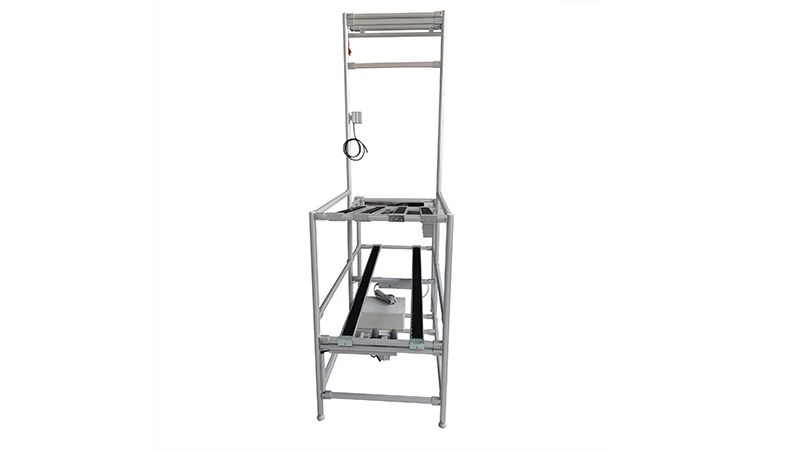
Aluminum Workbench C
aluminum-tube-workbench-is-more-flexible-and-durable,-compared-with-traditional-pe/abs-coated-steel-tube.-it-is-easy-to-assemble,-anti-corrosion,-rust-protection,-and-recycle-use-after-disassemble.
Introduction: The Critical Role of Workbench Safety
In the bustling environment of manufacturing plants, electronics assembly lines, and laboratories, the workbench is more than just a surface—it's the backbone of daily operations. Every component placed on it, every tool used, and every worker leaning over it depends on its ability to stay stable, secure, and safe. Among the various workbench types available, the Aluminum Workbench C has emerged as a popular choice for its lightweight yet durable design, making it ideal for industries prioritizing efficiency without compromising on safety. But what truly sets a reliable Aluminum Workbench C apart? The answer lies in its adherence to strict safety standards.
Workplace accidents related to unstable workbenches, overloaded surfaces, or poor ergonomics are far too common, leading to injuries, production delays, and costly downtime. In fact, according to OSHA statistics, over 20% of workplace injuries in manufacturing involve falls, trips, or tipping equipment—often linked to inadequate workbench stability. This is where Aluminum Workbench C shines, but only if built and maintained with safety at its core. In this article, we'll dive deep into the safety standards that govern Aluminum Workbench C, exploring its design, key components like aluminum profile and adjustable leveling feet, and how it ensures protection in diverse work environments.
Workplace accidents related to unstable workbenches, overloaded surfaces, or poor ergonomics are far too common, leading to injuries, production delays, and costly downtime. In fact, according to OSHA statistics, over 20% of workplace injuries in manufacturing involve falls, trips, or tipping equipment—often linked to inadequate workbench stability. This is where Aluminum Workbench C shines, but only if built and maintained with safety at its core. In this article, we'll dive deep into the safety standards that govern Aluminum Workbench C, exploring its design, key components like aluminum profile and adjustable leveling feet, and how it ensures protection in diverse work environments.
Understanding Aluminum Workbench C: Design and Materials
Before delving into safety standards, it's essential to understand what makes Aluminum Workbench C unique. Unlike traditional wooden or steel workbenches, this model leverages aluminum profile—a lightweight, corrosion-resistant material that offers an impressive strength-to-weight ratio. Aluminum profile, often made from aluminum extrusion profile, is shaped into precise cross-sections (like T-slots) that allow for easy customization with accessories such as shelves, tool holders, and cable management systems. This modularity is a key advantage, but it also demands careful attention to structural integrity to maintain safety.
Aluminum Workbench C typically features a single-deck surface (as referenced in the keyword "workbench e (single deck-without caster)"), though variations with casters exist for mobility. Its design prioritizes stability, with a frame constructed from interlocking aluminum profile sections connected by internal rotary aluminum joints or fixed aluminum joints. The work surface itself is often made from aluminum honeycomb panel or a non-slip, ESD-safe material, catering to industries like electronics where static discharge can damage sensitive components.
Common applications include electronics assembly, light manufacturing, and quality control labs, where precision and safety are paramount. But regardless of the industry, the foundational safety principles remain the same: stability, load capacity, ergonomics, and compliance with regulations.
Aluminum Workbench C typically features a single-deck surface (as referenced in the keyword "workbench e (single deck-without caster)"), though variations with casters exist for mobility. Its design prioritizes stability, with a frame constructed from interlocking aluminum profile sections connected by internal rotary aluminum joints or fixed aluminum joints. The work surface itself is often made from aluminum honeycomb panel or a non-slip, ESD-safe material, catering to industries like electronics where static discharge can damage sensitive components.
Common applications include electronics assembly, light manufacturing, and quality control labs, where precision and safety are paramount. But regardless of the industry, the foundational safety principles remain the same: stability, load capacity, ergonomics, and compliance with regulations.

Core Safety Principles for Aluminum Workbench C
Safety in workbench design isn't just about meeting minimum requirements—it's about creating an environment where workers feel confident and protected. For Aluminum Workbench C, four core principles guide its safety standards:
1. Stability : A workbench must remain steady under all operating conditions, even when loaded with tools, materials, or when workers lean on it. This is where components like adjustable leveling feet play a critical role, allowing the bench to adapt to uneven floors and prevent tipping.
2. Load Capacity : Every workbench has a maximum weight it can safely support. Exceeding this limit risks structural failure, leading to collapses or damage to materials. Aluminum Workbench C, built with high-grade aluminum profile, is engineered to handle specific load ratings—often ranging from 200kg to 500kg, depending on size and design.
3. Ergonomics : A poorly designed workbench can lead to chronic injuries like back pain or repetitive strain. Aluminum Workbench C addresses this with adjustable height options (when paired with certain accessories) and a surface height optimized for standing or seated work, reducing strain on the neck, shoulders, and wrists.
4. ESD Protection : In electronics manufacturing, static electricity can destroy microchips or circuit boards. Many Aluminum Workbench C models are designed as ESD workstations, featuring surfaces and components that dissipate static charges, protecting both workers and products.
1. Stability : A workbench must remain steady under all operating conditions, even when loaded with tools, materials, or when workers lean on it. This is where components like adjustable leveling feet play a critical role, allowing the bench to adapt to uneven floors and prevent tipping.
2. Load Capacity : Every workbench has a maximum weight it can safely support. Exceeding this limit risks structural failure, leading to collapses or damage to materials. Aluminum Workbench C, built with high-grade aluminum profile, is engineered to handle specific load ratings—often ranging from 200kg to 500kg, depending on size and design.
3. Ergonomics : A poorly designed workbench can lead to chronic injuries like back pain or repetitive strain. Aluminum Workbench C addresses this with adjustable height options (when paired with certain accessories) and a surface height optimized for standing or seated work, reducing strain on the neck, shoulders, and wrists.
4. ESD Protection : In electronics manufacturing, static electricity can destroy microchips or circuit boards. Many Aluminum Workbench C models are designed as ESD workstations, featuring surfaces and components that dissipate static charges, protecting both workers and products.

Key Safety Components of Aluminum Workbench C
To bring these principles to life, Aluminum Workbench C relies on several key components, each contributing to its overall safety. Let's break them down:
Aluminum Profile: The Backbone of Strength
At the heart of Aluminum Workbench C is the aluminum profile—typically made from 6061 or 6063 aluminum alloy, known for its high tensile strength and corrosion resistance. These alloys undergo heat treatment to enhance durability, ensuring the frame can withstand daily wear and tear without bending or warping. The T-slot design of the aluminum extrusion profile also allows for secure attachment of accessories, with bolts and brackets that lock into place, preventing over time.
Unlike steel, aluminum is lightweight, making the workbench easier to reposition (when equipped with casters) without sacrificing strength. This combination of lightness and rigidity reduces the risk of injury during setup or relocation, as workers can maneuver the bench with less physical effort.
Adjustable Leveling Feet: Stability on Uneven Ground One of the most overlooked yet critical safety features is the adjustable leveling feet. Floors in manufacturing facilities are rarely perfectly flat—cracks, uneven concrete, or worn areas can cause a workbench to rock or tip. Adjustable leveling feet solve this by allowing each leg to be extended or retracted individually, ensuring the workbench sits flush with the ground.
These feet typically feature rubber or non-slip pads to grip the floor, preventing slippage even when the bench is loaded. High-quality models, like the "heavy duty split foot seat" or "suction cup anti-slip foot adjuster," provide extra stability by distributing weight evenly and adhering to smooth surfaces. For Aluminum Workbench C, leveling feet are not optional—they're a mandatory component for meeting safety standards.
Caster Wheels: Mobility Without Compromise While some Aluminum Workbench C models are stationary (like "workbench e (single deck-without caster)"), others include caster wheels for flexibility. When casters are present, their design becomes a safety focus. Key features include:
- Locking Mechanisms : Each caster should have a brake that locks both the wheel and swivel motion, preventing unintended movement during use. - Load Ratings : Casters must be rated to support the workbench's total load (including the bench itself and any materials placed on it). For example, a bench with a 300kg capacity might require casters rated for 80kg each (with four casters, totaling 320kg to account for uneven weight distribution). - Smooth Swivel Control : Casters should move freely when unlocked but not wobble, reducing the risk of tipping when turning corners.
Work Surface: Protection for Workers and Products The work surface is where workers interact with the bench most, so its safety features are directly felt. For Aluminum Workbench C, common surface safety features include:
- Non-Slip Texture : Prevents tools or materials from sliding during use, reducing the risk of falls or dropped items. - ESD Dissipation : For ESD workstations, the surface is coated with a conductive material that redirects static charges to the ground, protecting sensitive electronics. - Edge Protection : Rounded or reinforced edges prevent cuts or scrapes when workers bump against the bench.
Aluminum Profile: The Backbone of Strength
At the heart of Aluminum Workbench C is the aluminum profile—typically made from 6061 or 6063 aluminum alloy, known for its high tensile strength and corrosion resistance. These alloys undergo heat treatment to enhance durability, ensuring the frame can withstand daily wear and tear without bending or warping. The T-slot design of the aluminum extrusion profile also allows for secure attachment of accessories, with bolts and brackets that lock into place, preventing over time.
Unlike steel, aluminum is lightweight, making the workbench easier to reposition (when equipped with casters) without sacrificing strength. This combination of lightness and rigidity reduces the risk of injury during setup or relocation, as workers can maneuver the bench with less physical effort.
Adjustable Leveling Feet: Stability on Uneven Ground One of the most overlooked yet critical safety features is the adjustable leveling feet. Floors in manufacturing facilities are rarely perfectly flat—cracks, uneven concrete, or worn areas can cause a workbench to rock or tip. Adjustable leveling feet solve this by allowing each leg to be extended or retracted individually, ensuring the workbench sits flush with the ground.
These feet typically feature rubber or non-slip pads to grip the floor, preventing slippage even when the bench is loaded. High-quality models, like the "heavy duty split foot seat" or "suction cup anti-slip foot adjuster," provide extra stability by distributing weight evenly and adhering to smooth surfaces. For Aluminum Workbench C, leveling feet are not optional—they're a mandatory component for meeting safety standards.
Caster Wheels: Mobility Without Compromise While some Aluminum Workbench C models are stationary (like "workbench e (single deck-without caster)"), others include caster wheels for flexibility. When casters are present, their design becomes a safety focus. Key features include:
- Locking Mechanisms : Each caster should have a brake that locks both the wheel and swivel motion, preventing unintended movement during use. - Load Ratings : Casters must be rated to support the workbench's total load (including the bench itself and any materials placed on it). For example, a bench with a 300kg capacity might require casters rated for 80kg each (with four casters, totaling 320kg to account for uneven weight distribution). - Smooth Swivel Control : Casters should move freely when unlocked but not wobble, reducing the risk of tipping when turning corners.
Work Surface: Protection for Workers and Products The work surface is where workers interact with the bench most, so its safety features are directly felt. For Aluminum Workbench C, common surface safety features include:
- Non-Slip Texture : Prevents tools or materials from sliding during use, reducing the risk of falls or dropped items. - ESD Dissipation : For ESD workstations, the surface is coated with a conductive material that redirects static charges to the ground, protecting sensitive electronics. - Edge Protection : Rounded or reinforced edges prevent cuts or scrapes when workers bump against the bench.

Safety Standards and Regulations: What You Need to Know
Aluminum Workbench C isn't just built to "feel safe"—it must comply with global, regional, and industry-specific standards. These regulations ensure consistency and minimum safety thresholds. Here are the key ones to consider:
International Standards (ISO) The International Organization for Standardization (ISO) sets guidelines for workbench safety, including ISO 10218 (for industrial equipment) and ISO 13857 (on safety distances to prevent crushing hazards). For ESD workstations, ISO 61340 outlines requirements for electrostatic discharge protection, ensuring surfaces and components meet specific resistance levels (typically between 10^6 and 10^9 ohms).
Regional Regulations - OSHA (U.S.) : The Occupational Safety and Health Administration mandates that workbenches must be "stable and secure" (29 CFR 1910.22) and designed to prevent employee injury. OSHA also requires load ratings to be clearly marked, so workers know not to exceed weight limits. - EU Standards : In the European union, EN 527-1 (office furniture) and EN 61340 (ESD protection) apply. EN 527-1 specifies test methods for stability, strength, and durability, including load tests where the bench is subjected to 1.5 times its rated capacity for 1 hour.
Industry-Specific Requirements In the electronics industry, for example, IPC-A-610 (acceptability standards for electronic assemblies) references ESD workstation requirements, while the pharmaceutical industry may require workbenches with antimicrobial surfaces. Aluminum Workbench C must be tailored to these needs, often with additional certifications from third-party labs.
International Standards (ISO) The International Organization for Standardization (ISO) sets guidelines for workbench safety, including ISO 10218 (for industrial equipment) and ISO 13857 (on safety distances to prevent crushing hazards). For ESD workstations, ISO 61340 outlines requirements for electrostatic discharge protection, ensuring surfaces and components meet specific resistance levels (typically between 10^6 and 10^9 ohms).
Regional Regulations - OSHA (U.S.) : The Occupational Safety and Health Administration mandates that workbenches must be "stable and secure" (29 CFR 1910.22) and designed to prevent employee injury. OSHA also requires load ratings to be clearly marked, so workers know not to exceed weight limits. - EU Standards : In the European union, EN 527-1 (office furniture) and EN 61340 (ESD protection) apply. EN 527-1 specifies test methods for stability, strength, and durability, including load tests where the bench is subjected to 1.5 times its rated capacity for 1 hour.
Industry-Specific Requirements In the electronics industry, for example, IPC-A-610 (acceptability standards for electronic assemblies) references ESD workstation requirements, while the pharmaceutical industry may require workbenches with antimicrobial surfaces. Aluminum Workbench C must be tailored to these needs, often with additional certifications from third-party labs.
Testing and Compliance: Ensuring Safety in Practice
Meeting safety standards isn't just about design—it's about proving performance through rigorous testing. For Aluminum Workbench C, manufacturers conduct several key tests to ensure compliance:
Load Testing : The workbench is loaded with weights exceeding its rated capacity (typically 1.5 times) for an extended period (often 24 hours) to check for deformation or structural failure. For example, a bench rated for 200kg might be tested with 300kg to ensure it remains stable.
Stability Testing : The bench is tilted at various angles (up to 10 degrees) with a load to simulate uneven floors or worker leaning. If it tips, the design is adjusted—often by widening the base or adding heavier-duty leveling feet.
ESD Testing : For ESD workstations, surface resistance is measured using a megohmmeter to ensure it falls within the safe range (10^6–10^9 ohms). The bench is also tested for charge decay, ensuring static charges dissipate within 2 seconds.
Material Certification : Aluminum profile must meet standards for strength and corrosion resistance, often certified by organizations like the Aluminum Association. Joints and connectors (like "internal rotatary aluminum joint" or "parallel fixation aluminum pipe joint") are tested for shear and tensile strength to ensure they don't loosen under stress.
Reputable suppliers will provide test reports and certifications, giving buyers confidence that the Aluminum Workbench C meets or exceeds safety standards.
Load Testing : The workbench is loaded with weights exceeding its rated capacity (typically 1.5 times) for an extended period (often 24 hours) to check for deformation or structural failure. For example, a bench rated for 200kg might be tested with 300kg to ensure it remains stable.
Stability Testing : The bench is tilted at various angles (up to 10 degrees) with a load to simulate uneven floors or worker leaning. If it tips, the design is adjusted—often by widening the base or adding heavier-duty leveling feet.
ESD Testing : For ESD workstations, surface resistance is measured using a megohmmeter to ensure it falls within the safe range (10^6–10^9 ohms). The bench is also tested for charge decay, ensuring static charges dissipate within 2 seconds.
Material Certification : Aluminum profile must meet standards for strength and corrosion resistance, often certified by organizations like the Aluminum Association. Joints and connectors (like "internal rotatary aluminum joint" or "parallel fixation aluminum pipe joint") are tested for shear and tensile strength to ensure they don't loosen under stress.
Reputable suppliers will provide test reports and certifications, giving buyers confidence that the Aluminum Workbench C meets or exceeds safety standards.
Safety Features Comparison: Aluminum Workbench C vs. Traditional Workbenches
To highlight why Aluminum Workbench C stands out, let's compare its safety features with traditional wooden or steel workbenches:
| Safety Feature | Aluminum Workbench C | Traditional Wooden Workbench | Traditional Steel Workbench |
|---|---|---|---|
| Weight & Mobility | Lightweight (easier to move safely with casters); low risk of injury during relocation | Heavy (difficult to move; risk of strain during repositioning) | Very heavy (high risk of injury if moved improperly) |
| Stability | Adjustable leveling feet; aluminum profile frame resists warping | Prone to warping over time; fixed feet may not adapt to uneven floors | Stable but heavy; may damage floors if not properly padded |
| ESD Protection | Available as ESD workstation with dissipative surfaces | Not inherently ESD-safe; requires additional coatings | Conductive (may require grounding to prevent ESD damage) |
| Corrosion Resistance | Aluminum profile resists rust; suitable for humid environments | Prone to rot and mold in damp conditions | May rust without proper coating; heavy maintenance |
| Ergonomics | Modular design allows height adjustment with accessories | Fixed height; limited customization | Heavy and rigid; difficult to modify for ergonomics |
This comparison shows that Aluminum Workbench C excels in safety-critical areas like mobility, stability, and adaptability, making it a superior choice for modern workplaces.
Common Safety Hazards and Mitigation Strategies
Even with robust design, Aluminum Workbench C can pose hazards if misused or poorly maintained. Here are common risks and how to mitigate them:
Hazard 1: Tipping Due to Uneven Loading Workers often place heavy items on one side of the bench, creating an imbalance. Mitigation: Mark load zones on the surface to encourage even weight distribution. Train workers to avoid overloading one area, and ensure the bench's load rating is clearly displayed.
Hazard 2: Overloading Beyond Capacity Ignoring load ratings can lead to frame failure. Mitigation: Conduct regular training on load limits; use visual cues (like color-coded zones) to indicate maximum weights.
Hazard 3: Loose Joints and Connections Over time, aluminum joints or connectors may loosen, reducing stability. Mitigation: Implement monthly inspection protocols to tighten bolts and replace worn joints (like "internal rotatary aluminum joint" or "parallel aluminum joint a").
Hazard 4: Static Discharge in Electronics Work Without ESD protection, static can damage components. Mitigation: Use ESD-safe Aluminum Workbench C models with grounded surfaces and wrist strap connections. Test ESD properties quarterly.
Hazard 5: Slippery Surfaces Spills or oil can make the work surface hazardous. Mitigation: Choose non-slip surfaces; provide spill kits nearby; enforce immediate cleanup protocols.
Hazard 1: Tipping Due to Uneven Loading Workers often place heavy items on one side of the bench, creating an imbalance. Mitigation: Mark load zones on the surface to encourage even weight distribution. Train workers to avoid overloading one area, and ensure the bench's load rating is clearly displayed.
Hazard 2: Overloading Beyond Capacity Ignoring load ratings can lead to frame failure. Mitigation: Conduct regular training on load limits; use visual cues (like color-coded zones) to indicate maximum weights.
Hazard 3: Loose Joints and Connections Over time, aluminum joints or connectors may loosen, reducing stability. Mitigation: Implement monthly inspection protocols to tighten bolts and replace worn joints (like "internal rotatary aluminum joint" or "parallel aluminum joint a").
Hazard 4: Static Discharge in Electronics Work Without ESD protection, static can damage components. Mitigation: Use ESD-safe Aluminum Workbench C models with grounded surfaces and wrist strap connections. Test ESD properties quarterly.
Hazard 5: Slippery Surfaces Spills or oil can make the work surface hazardous. Mitigation: Choose non-slip surfaces; provide spill kits nearby; enforce immediate cleanup protocols.
Maintenance and Inspection: Keeping Aluminum Workbench C Safe Over Time
Safety isn't a one-time achievement—it requires ongoing care. For Aluminum Workbench C, a proactive maintenance plan ensures it remains safe for years. Key steps include:
Daily Checks : Workers should inspect the bench before use, looking for loose casters, damaged leveling feet, or unstable surfaces. Report any issues immediately.
Weekly Inspections : Tighten all visible bolts and joints (paying special attention to aluminum profile connections). Check caster brakes for proper function and replace worn brake pads.
Monthly Deep Dives : Test load capacity with a known weight (e.g., 50kg bags of sand) to ensure the bench doesn't sag or tip. Inspect the work surface for cracks, peeling ESD coating, or sharp edges.
Quarterly ESD Testing : For ESD workstations, use a surface resistance meter to verify static dissipation. replace any components that fall outside the safe range (e.g., worn ESD mats).
Annual Overhaul : replace worn parts like caster wheels, leveling feet, or damaged aluminum profile sections. Consult the supplier for replacement parts to ensure compatibility and safety.
Daily Checks : Workers should inspect the bench before use, looking for loose casters, damaged leveling feet, or unstable surfaces. Report any issues immediately.
Weekly Inspections : Tighten all visible bolts and joints (paying special attention to aluminum profile connections). Check caster brakes for proper function and replace worn brake pads.
Monthly Deep Dives : Test load capacity with a known weight (e.g., 50kg bags of sand) to ensure the bench doesn't sag or tip. Inspect the work surface for cracks, peeling ESD coating, or sharp edges.
Quarterly ESD Testing : For ESD workstations, use a surface resistance meter to verify static dissipation. replace any components that fall outside the safe range (e.g., worn ESD mats).
Annual Overhaul : replace worn parts like caster wheels, leveling feet, or damaged aluminum profile sections. Consult the supplier for replacement parts to ensure compatibility and safety.
Conclusion: Safety as a Foundation, Not an Afterthought
Aluminum Workbench C has revolutionized workplace efficiency with its lightweight, modular design—but its true value lies in its commitment to safety. From the strength of its aluminum profile to the precision of its adjustable leveling feet, every component is engineered to protect workers, products, and productivity. By adhering to international standards, conducting rigorous testing, and implementing proactive maintenance, Aluminum Workbench C isn't just a tool—it's a partner in creating safer, more efficient workplaces.
For businesses, investing in a safety-compliant Aluminum Workbench C isn't just about avoiding fines or accidents—it's about fostering a culture where workers feel valued and protected. After all, a safe workplace is a productive workplace. So whether you're setting up a new electronics assembly line or upgrading your lab's workbenches, remember: safety standards aren't just guidelines—they're the foundation of success.
For businesses, investing in a safety-compliant Aluminum Workbench C isn't just about avoiding fines or accidents—it's about fostering a culture where workers feel valued and protected. After all, a safe workplace is a productive workplace. So whether you're setting up a new electronics assembly line or upgrading your lab's workbenches, remember: safety standards aren't just guidelines—they're the foundation of success.