- Company Articles
- Industry articles
- Industry standards
- Safety Standards for Gusset ALP 4040: Preventing Workplace Accidents and Injuries

Safety Standards for Gusset ALP 4040: Preventing Workplace Accidents and Injuries
Related Product
Gusset ALP 4040
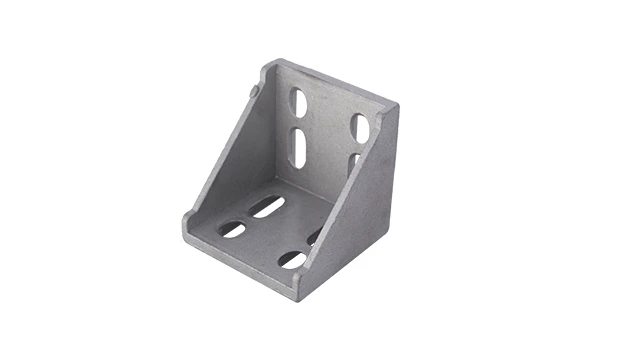
The 4040 bracket/Gusset is an external fastening method that creates a 90 degree connection. 4040 means this size is used for 40 series aluminum profile with a quick connection by bolt and nut. It is a lightweight bracket that requires no machining servic
Walk into any modern manufacturing facility, warehouse, or assembly plant, and you'll likely see a maze of aluminum profile structures—workbenches where technicians assemble circuit boards, material racks stacked with components, and conveyor systems moving products seamlessly from one station to the next. These setups aren't just about organization; they're the backbone of efficient lean system operations. But here's the thing: even the sturdiest-looking structures can hide hidden risks. One small weak link in the chain—like a poorly installed bracket or a worn-out connector—can lead to collapses, slips, or worse. That's where components like the Gusset ALP 4040 come in. As a critical aluminum profile accessory , it's designed to reinforce joints and keep these structures stable. But to truly keep workers safe, we need to talk about the safety standards that govern its use. In this article, we'll break down why Gusset ALP 4040 matters, the common accidents it helps prevent, and the best practices every workplace should follow to keep their teams out of harm's way.
What Even Is Gusset ALP 4040?
Let's start with the basics. If you're not familiar with industrial hardware, the term "Gusset ALP 4040" might sound like jargon. But in reality, it's a simple yet powerful component. Imagine building a bookshelf: you've got vertical posts and horizontal shelves, but without brackets to hold the shelves to the posts, the whole thing would wobble. Gusset ALP 4040 is like that bracket—but for heavy-duty aluminum profile structures. It's a metal plate (usually made of high-grade aluminum or steel) with pre-drilled holes, designed to fit snugly at the corners where two or more aluminum profiles meet. Its job? To distribute weight evenly across the joint, preventing stress from on a single point and weakening the connection over time.
But why "ALP 4040"? The numbers refer to the size of the aluminum profile it's designed for. A 4040 profile is 40mm by 40mm in cross-section—one of the most common sizes used in industrial workbenches, racks, and machine guards. The Gusset ALP 4040 is specifically engineered to match this profile's dimensions, ensuring a tight, secure fit. You'll find it in everything from workbench setups where workers stand for hours assembling products to material racks holding hundreds of pounds of inventory. In short, it's the unsung hero that keeps these structures from falling apart when they're put to the test.
Why Gusset ALP 4040 Matters in Workplace Safety
At first glance, a gusset might seem like a small part of a big system. But in workplace safety, small parts often play the biggest roles. Let's say you're working at a workbench assembling car parts. The bench is made of aluminum profiles, held together by joints. Without a Gusset ALP 4040, those joints are just relying on bolts to hold the weight of your tools, the parts, and maybe even your own leaning weight as you reach for something. Over time, the bolts can loosen from vibration, or the aluminum around the holes can start to crack from stress. One day, the bench leg gives way, and suddenly you're on the floor—along with a heavy toolbox that was on the shelf above. That's not just a bruised knee; it's a costly accident that could take you out of work for weeks.
Now, multiply that scenario across an entire facility. Material racks loaded with boxes, conveyor supports holding heavy belts, or even safety barriers separating workers from machinery—all of these depend on strong joints. The Gusset ALP 4040 acts like a seatbelt for these structures: it doesn't just hold them together; it absorbs shock, distributes weight, and prevents catastrophic failure. In lean system environments, where efficiency is king, downtime from accidents can derail production schedules and hurt the bottom line. So, investing in proper gussets isn't just about safety—it's about keeping the whole operation running smoothly.

Common Accidents Linked to Poorly Managed Aluminum Profile Joints
To understand why Gusset ALP 4040 safety standards are so important, let's look at the risks when those standards are ignored. Here are three of the most common accidents we see in workplaces that cut corners on aluminum profile accessory safety:
1. Structural Collapse
This is the most dramatic—and dangerous—scenario. Imagine a material rack in a warehouse, six feet tall, loaded with 50-pound boxes. The rack's vertical and horizontal profiles are connected with basic joints, but no gussets. Over weeks of loading and unloading, the joints loosen. One afternoon, a worker adds a few more boxes to the top shelf, and suddenly the whole rack tips over. The boxes crash down, potentially hitting anyone nearby. In 2022, OSHA reported over 1,200 workplace accidents involving falling objects from racks—many of which could have been prevented with proper bracing like Gusset ALP 4040.
2. Slip and Trip Hazards
It's not just collapses that cause problems. When aluminum profile structures like workbench legs or conveyor supports become loose, they can shift out of alignment. A workbench that's suddenly wobbly might have a corner that dips lower than the others, creating a trip edge. Or a conveyor support that's leaning could cause the belt to sag, spilling products onto the floor. Those spilled products become trip hazards, and before you know it, someone's ankle is twisted, or they're face-down on the concrete. These might seem like "small" accidents, but they account for nearly 25% of all workplace injuries each year, according to the National Safety Council.
3. Tool and Equipment Damage
Accidents don't just hurt people—they damage expensive equipment, too. A workbench that collapses might a $5,000 diagnostic machine on top of it. A conveyor support that fails could bend the belt or damage the motor, leading to hours (or days) of downtime. In one case study from a electronics plant in Texas, a loose joint on a testing station workbench caused the station to tilt, spilling sensitive circuit boards onto the floor. The cost to replace the boards and repair the bench? Over $10,000. And that doesn't include the lost production time while the line was down.
| Accident Type | Common Cause | How Gusset ALP 4040 Helps Prevent It |
|---|---|---|
| Structural Collapse | Loose or overstressed joints from weight or vibration | Distributes weight evenly across the joint, reducing stress on bolts and aluminum profiles |
| Slip/Trip Hazards | Shifting structures creating uneven surfaces or spilled products | Stabilizes joints to prevent shifting, keeping surfaces level and conveyors aligned |
| Equipment Damage | Falling structures or tilting workbenches tools/machinery | Reinforces joints to maintain structural integrity, even under heavy loads |

Key Safety Standards for Gusset ALP 4040 Installation and Use
Now that we've covered the risks, let's talk about how to avoid them. Safety standards for Gusset ALP 4040 aren't just guidelines—they're rules designed to keep people safe and operations running. These standards cover everything from the material the gusset is made of to how tight the bolts should be when installing it. Let's break them down into four critical areas:
Material Quality and Durability
Not all gussets are created equal. A cheap, thin gusset made from low-grade metal might look the part, but it won't stand up to real-world stress. Safety standards require that Gusset ALP 4040 be made from high-strength aluminum alloy (typically 6061-T6, which is known for its strength and corrosion resistance) or stainless steel for environments with moisture or chemicals. The material should be tested to ensure it can withstand at least 500 pounds of shear force per joint—that's the equivalent of stacking 10 average-sized adults on top of a single joint without it bending or breaking. Reputable suppliers will provide material certificates proving their gussets meet these standards, so always ask for that paperwork before purchasing.
Load Capacity Ratings
Every Gusset ALP 4040 should come with a load capacity rating, which tells you how much weight it can safely support when installed correctly. This isn't a number to guess at—engineers calculate it based on the gusset's thickness, the size of the bolt holes, and the type of aluminum profile it's paired with. For example, a standard Gusset ALP 4040 might be rated for 800 pounds when used with a 4040 aluminum profile and M8 bolts. But if you're building a structure that will hold more than that—say, a rack for heavy machinery parts—you'll need a reinforced gusset or multiple gussets per joint. Never exceed the load rating, even if the structure "feels" sturdy. Overloading is one of the top causes of joint failure.
Proper Installation Torque
You could have the best gusset in the world, but if you don't bolt it down correctly, it won't do any good. Torque—the amount of force used to tighten a bolt—is critical here. Too loose, and the bolt will vibrate free over time. Too tight, and you risk stripping the threads in the aluminum profile or even cracking the gusset itself. Safety standards specify that M8 bolts (the most common size for 4040 profiles) should be torqued to 18-22 Newton-meters (Nm) when used with Gusset ALP 4040. That's tight enough to hold the joint securely but not so tight that it damages the material. Always use a calibrated torque wrench for installation—"eyeballing" it with a regular wrench is a recipe for disaster.
Regular Inspection and Maintenance
Even properly installed gussets need check-ups. Vibration from machinery, temperature changes, and regular use can loosen bolts over time. Safety standards recommend inspecting Gusset ALP 4040 joints at least once a month. During inspections, look for: loose bolts (retighten to the specified torque), cracks in the gusset or around the bolt holes, and signs of corrosion (especially in humid or chemical-heavy environments). If you find any damage, replace the gusset immediately—don't try to "patch" it with duct tape or extra bolts. Remember, a damaged gusset is a weak link, and weak links lead to accidents.
Compliance: Why Following Standards Isn't Optional
You might be thinking, "We've never had an accident, so why bother with all these standards?" Here's the reality: workplace safety isn't just about luck. It's about compliance—and compliance isn't just a box to check for OSHA. It's about protecting your team, your business, and your reputation. Let's start with the legal side: OSHA's General Duty Clause requires employers to provide a workplace "free from recognized hazards that are causing or are likely to cause death or serious physical harm." If an accident occurs and it's found that your facility ignored aluminum profile accessory safety standards—like using unrated gussets or skipping inspections—you could face fines up to $156,259 per serious violation. In extreme cases, managers could even face criminal charges if negligence leads to a worker's death.
But beyond the legal risks, there's the human cost. An accident that injures a worker isn't just a statistic—it's a colleague who can't support their family, a team that's shaken by the incident, and a workplace culture that erodes when employees don't feel safe. Then there's the financial hit: workers' compensation claims, increased insurance premiums, and lost productivity from downtime. A single serious accident can cost a small business tens of thousands of dollars—money that could have been invested in better equipment or employee training. So, compliance isn't just about avoiding penalties; it's about building a workplace where people want to show up, knowing their employer has their back.
Real-World Impact: A Case Study
Let's put this all into perspective with a real example. A mid-sized automotive parts manufacturer in Michigan was struggling with a recurring problem: their assembly line workbench es kept wobbling, leading to frequent spills of small parts and a few near-misses where workers almost tripped. The maintenance team checked the bolts regularly, tightening them each time, but the problem kept coming back. They assumed the issue was with the bolts themselves, so they switched to "stronger" bolts—only to have the aluminum profiles around the bolt holes start cracking a month later.
That's when they brought in a safety consultant, who noticed something obvious: none of the workbench joints had gussets. The facility had used basic L-brackets instead of Gusset ALP 4040, thinking they were "good enough." The consultant recommended upgrading to compliant gussets, torquing the bolts to the correct specification, and starting a weekly inspection schedule. The plant manager was hesitant at first—"This is just more expense," he said—but agreed to try it on one assembly line as a test.
The results were dramatic. In the six months before the upgrade, that line had 12 reported incidents (spills, near-trips, minor cuts from falling tools). In the six months after installing Gusset ALP 4040 and following the safety standards? Zero incidents. The workers reported feeling more stable at their benches, and the maintenance team spent less time retightening bolts. Encouraged, the plant rolled out the upgrade to all lines. A year later, their OSHA incident rate had dropped by 45%, and their insurance provider even gave them a discount for improving safety practices. The plant manager later joked, "I wish we'd done this sooner—it saved us more in downtime than the gussets cost."
Best Practices for Implementing Gusset ALP 4040 Safety Standards
Ready to make your workplace safer? Here are five actionable steps to ensure your Gusset ALP 4040 and other aluminum profile accessory s are up to the task:
1. Start with Training
Your maintenance team and anyone involved in installing or modifying aluminum profile structures should know the basics: how to read load ratings, how to use a torque wrench, and what to look for during inspections. Many aluminum profile suppliers offer free training sessions or online guides—take advantage of them. Even 30 minutes of training can turn a well-meaning but untrained worker into someone who spots potential issues before they become accidents.
2. Source from Reputable Suppliers
Not all gussets are created equal. Avoid cheap, unbranded aluminum profile accessory s from unknown suppliers—they might not meet material or load standards. Stick with suppliers who provide test certificates, warranty information, and clear installation guidelines. A little extra cost upfront is worth it to avoid a costly accident later.
3. Label Structures with Load Limits
Once a structure is built with Gusset ALP 4040, label it with its maximum load capacity. This prevents workers from overloading racks or workbenches out of ignorance. For example, a material rack rated for 1,000 pounds should have a clear sticker that says "MAX LOAD: 1,000 LBS—DO NOT EXCEED." Simple labels go a long way in preventing human error.
4. Create an Inspection Checklist
Don't leave inspections to memory. Create a simple checklist that includes: checking bolt torque, looking for cracks in gussets or profiles, inspecting for corrosion, and ensuring labels are still visible. Assign a specific team member to conduct inspections and log their findings—this creates accountability and makes it easy to spot trends (like a particular joint that always loosens, indicating a deeper issue).
5. Encourage Worker Feedback
Your frontline workers are the ones using these structures every day—they'll be the first to notice if a workbench starts wobbling or a rack feels unstable. Create a culture where employees feel comfortable reporting safety concerns without fear of retaliation. Maybe set up a simple online form or a physical suggestion box labeled "Safety Tips." Some of the best safety improvements come from workers who know the job best.
Final Thoughts: Safety Starts with the Small Parts
At the end of the day, workplace safety isn't about grand gestures—it's about the details. It's about choosing the right aluminum profile accessory instead of the cheapest one. It's about torquing a bolt to 20 Nm instead of "just tight enough." It's about taking five minutes each week to check a gusset for cracks. These small actions add up to a big difference: a workplace where accidents are rare, workers feel valued, and productivity thrives.
The Gusset ALP 4040 might not be the most glamorous part of your lean system setup, but it's one of the most important. By following safety standards for its material, installation, and maintenance, you're not just preventing collapses or spills—you're building a foundation of trust. And in the world of manufacturing and warehousing, trust is the strongest structure of all.
So, the next time you walk through your facility, take a second look at those aluminum profile joints. Are they reinforced with Gusset ALP 4040? Are the bolts tight? Is there a label with the load limit? If not, today's the day to start making a change. Your team deserves nothing less.