- Company Articles
- Industry articles
- Industry standards
- Smart Manufacturing: 4040r EU Standard Aluminum Profile for IoT-Enabled Stations

Smart Manufacturing: 4040r EU Standard Aluminum Profile for IoT-Enabled Stations
Related Product
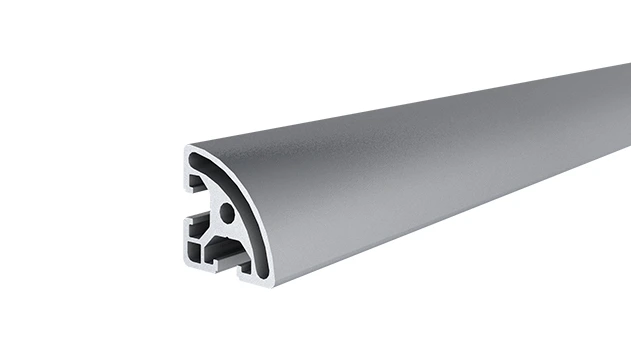
4040R EU Standard Aluminum Profile
4040R is a 4.00x4.00 CM fractional 40 series square extrusion T-slot profile with two side open T-slots, each side with 4.00cm face,the other side is round face. The profile has align-a-grooves to assist in aligning connecting profiles.
Walk into any modern manufacturing facility today, and you'll notice a quiet revolution unfolding. The clunky, static workbenches of yesteryear are making way for sleek, adaptable stations that hum with connectivity. This isn't just about aesthetics—it's about survival. In an era where smart manufacturing and Industry 4.0 dominate, factories need workspaces that can keep up with IoT sensors, real-time data tracking, and ever-shifting production demands. At the heart of this transformation? Components like the 4040r EU Standard Aluminum Profile. Let's dive into how this unassuming piece of aluminum is redefining what an IoT-enabled workstation can do, and why it's becoming a cornerstone of lean systems worldwide.
The Rise of Smart Manufacturing and IoT-Enabled Stations
Gone are the days when manufacturing floors ran on guesswork and manual checks. Today, "smart" is the name of the game. IoT-enabled stations—workbenches, assembly lines, and material racks equipped with sensors, cameras, and connectivity tools—are transforming how we produce everything from smartphones to automotive parts. These stations collect data in real time: How long does it take to assemble a component? Are tools being used efficiently? Is there a bottleneck in the workflow? This data isn't just for show; it's actionable. Managers can tweak processes on the fly, predict maintenance needs, and even train new workers using augmented reality overlays.
But here's the catch: For all this to work, the physical infrastructure of the factory needs to be just as flexible and intelligent as the technology it supports. A rigid, fixed workbench can't easily accommodate a new sensor or a reconfigured assembly line. That's where aluminum extrusion profiles step in. Lightweight, strong, and infinitely customizable, they're the backbone that lets IoT-enabled stations adapt and grow.
Why Aluminum Extrusion Profiles Matter in Modern Workspaces
If you've ever wondered why aluminum is everywhere in modern manufacturing, let's break it down. Unlike steel, which is heavy and hard to modify, aluminum is lightweight but surprisingly strong—think of how it's used in airplanes and high-performance cars. Then there's the extrusion process: manufacturers push molten aluminum through a die to create profiles with precise, consistent shapes. This means you can get profiles with T-slots, grooves, and channels that make attaching accessories a breeze. No more drilling holes or welding—just slide a bracket into a T-slot and tighten a screw.
But it's not just about convenience. Aluminum extrusion profiles are corrosion-resistant, which is a big deal in factories where spills, humidity, or chemicals are common. They're also eco-friendly—aluminum is 100% recyclable, and many profiles are made from recycled materials. For companies aiming to reduce their carbon footprint, that's a win-win.
Most importantly, aluminum extrusion profiles are modular. Need to add a shelf to your workbench? Swap out a short profile for a longer one. Want to mount a tablet holder for IoT data displays? Grab a compatible bracket. This modularity is exactly what IoT-enabled stations need. As technology evolves, your workspace can evolve with it—no need to tear everything down and start over.

Spotlight on 4040r EU Standard Aluminum Profile: Design and Benefits
Now, let's zoom in on the star of the show: the 4040r EU Standard Aluminum Profile. If you're not familiar with profile naming conventions, "4040" refers to its dimensions—40mm by 40mm, a sweet spot for balance between strength and versatility. The "r" likely stands for "rounded," hinting at its design: smooth, rounded edges that reduce the risk of scratches or injuries, a small detail that makes a big difference in busy workspaces.
What sets the 4040r apart? For starters, it's built to EU standards, which means rigorous testing for quality, durability, and safety. When you're integrating sensitive IoT equipment—like temperature sensors or vibration monitors—you need a profile that won't warp, bend, or degrade over time. The 4040r delivers that stability, with a wall thickness (usually around 2-3mm) that can support heavy tools, monitors, and even small automated arms.
The T-slot design is another standout feature. Most 4040r profiles have T-slots running along all four sides, spaced evenly for maximum flexibility. This means you can attach accessories from any angle—perfect for mounting IoT sensors on the side, a tool rack on the front, and a cable management system on the back. No more limiting yourself to pre-drilled holes; the T-slots let you position components exactly where you need them.
Let's talk finish. Many 4040r profiles come anodized, a process that adds a protective layer of oxide to the aluminum. This not only makes the profile resistant to scratches and corrosion but also gives it a clean, professional look—important for workstations that might be visible to clients or used in video training materials. Some suppliers also offer powder-coated options in colors like black, white, or gray, letting you match your factory's branding or color-code workstations by function (e.g., green for assembly, blue for testing).
Enhancing Functionality with Aluminum Profile Accessories
A 4040r profile on its own is just a piece of aluminum. But pair it with the right aluminum profile accessories, and it becomes a powerhouse. Think of it like building with Legos—each accessory adds a new function, turning a basic frame into a fully equipped IoT-enabled workstation.
Let's start with joints and connectors. Internal straight aluminum joints, for example, let you connect two 4040r profiles at a 90-degree angle without any exposed hardware, keeping the look sleek and reducing snags. Need a corner that can rotate? A 135-degree aluminum pipe joint outside connection adds flexibility, perfect for workstations that need to fold or adjust. Then there are brackets—simple but essential. Roller track placon mounts, for instance, let you attach roller tracks to the profile, creating a smooth surface for sliding materials or bins. This is a game-changer for lean systems, where minimizing movement (and wasted time) is key.
Cable management is another area where accessories shine. T-slot rubber seal covers slide into the T-slots, hiding messy wires and protecting them from damage. For IoT stations, which often have multiple sensors, cameras, and displays, this isn't just about aesthetics—it's about reliability. Tangled wires can lead to disconnected sensors or tripped workers; with proper cable management, you avoid both.
Don't forget the little things, like feet and casters. Adjustable leveling feet let you stabilize the workstation on uneven floors, ensuring sensors stay calibrated. If you need the station to move (e.g., between production lines), add swivel casters with brakes—lock them in place when in use, unlock to roll to a new location. It's this combination of big and small accessories that makes the 4040r so versatile.
Essential Aluminum Profile Accessories for 4040r Workstations
| Accessory Type | Function | IoT-Enabled Station Benefit |
|---|---|---|
| Internal Straight Aluminum Joint | Connects profiles at 90-degree angles | Creates stable frames for mounting sensors and displays |
| Roller Track Placon Mount | Attaches roller tracks to profiles | Enables smooth material flow, reducing manual handling |
| T-Slot Rubber Seal Cover | Hides and protects cables | Prevents wire damage, ensuring consistent IoT connectivity |
| Adjustable Leveling Feet | Stabilizes workstations on uneven floors | Keeps sensors and equipment level for accurate data collection |
| Swivel Casters with Brakes | Allows workstation mobility | Facilitates quick reconfiguration of production lines |
Building Lean Systems: Workbenches and Beyond with 4040r
Lean manufacturing isn't just a buzzword—it's a philosophy about eliminating waste, streamlining processes, and focusing on value. And at the heart of any lean system is the workstation. A poorly designed workbench can lead to wasted motion (workers reaching too far for tools), wasted time (searching for parts), and even wasted materials (scrap from errors due to disorganization). The 4040r profile, with its modularity and accessory compatibility, is tailor-made for building lean workbenches and systems.
Take the "Workbench E (single deck-without caster)" as an example. Built with 4040r profiles, this workbench can be customized with tool hooks, bins, and shelves exactly where the worker needs them. No more excess space or missing storage—everything has a place. Add a roller track along the back, and materials glide into position, reducing the need to lift or carry heavy items. For IoT integration, mount a small monitor on the side to display real-time production metrics, or attach a barcode scanner holder for tracking inventory. It's a workstation that adapts to the worker, not the other way around.
But lean systems go beyond workbenches. Material racks, like "Material Rack B (3 row and 3 floor)," can be built with 4040r to organize parts by frequency of use—most-used parts at eye level, less-used ones on lower shelves. Roller tracks on each shelf let bins slide out easily, so workers spend less time searching and more time assembling. IoT sensors can be mounted on the rack to track stock levels, sending alerts when parts are running low—no more unexpected shortages halting production.
The beauty of using 4040r in lean systems is that it grows with your needs. If you start with a basic workbench and later realize you need a testing station, you can reconfigure the 4040r profiles and add new accessories (like a static-dissipative mat for ESD workbenches) without buying a whole new setup. This flexibility reduces waste in another way: you're not throwing away old equipment every time your process changes.
Real-World Applications: How 4040r Transforms Production Lines
Let's ground this in a real scenario. Imagine a mid-sized electronics manufacturer that's struggling with its assembly line. Their old steel workbenches are heavy and fixed, so reconfiguring for new product models takes days. IoT sensors are bolted on haphazardly, leading to loose connections and unreliable data. Workers complain about back pain from reaching for tools, and the factory manager is tired of constant delays.
Enter the 4040r EU Standard Aluminum Profile. The manufacturer decides to upgrade 10 workstations, starting with the assembly line. They replace the steel frames with 4040r profiles, using internal straight joints to build sturdy, lightweight frames. Adjustable leveling feet stabilize the workbenches on the factory's uneven concrete floor, ensuring sensors stay calibrated. Roller track placon mounts add roller tracks along the front, so circuit boards and components slide into place effortlessly.
Aluminum profile accessories take it to the next level. Tool holders are mounted on the side via T-slots, placing screwdrivers and pliers within arm's reach. T-slot rubber covers hide the sensor wires, making the workstation look neat and preventing tripping hazards. A small monitor, attached with a swivel bracket, displays real-time data from IoT sensors: how many units have been assembled, average time per unit, and alerts if a component is defective.
The results? Reconfiguring the line for a new smartphone model now takes hours instead of days—just loosen the joints, adjust the profiles, and reattach the accessories. Worker complaints about back pain drop by 60%, and productivity increases by 25% as less time is spent searching for tools or fixing sensor connections. The factory manager can now make data-driven decisions, like reallocating workers to bottlenecks identified by the IoT system. And because the 4040r profiles are modular, adding more workstations as the company grows is as simple as ordering new profiles and accessories.
Future-Proofing Manufacturing: Adaptability and Scalability of 4040r
In manufacturing, the only constant is change. New technologies emerge, consumer demands shift, and regulations evolve. To stay competitive, factories need infrastructure that can keep up—and that's where the 4040r profile truly shines: it's future-proof.
Take IoT integration, for example. Today's sensors might measure temperature and vibration, but tomorrow's could include AI-powered cameras or RFID scanners. The 4040r's T-slots and modular design mean you can swap out old sensors for new ones without rebuilding the entire workstation. Need to add a robotic arm to the line? The 4040r's strength supports the arm's weight, and brackets can be positioned to hold it exactly where it needs to be.
Scalability is another key factor. As your business grows, you don't want to replace all your workstations—you want to add to them. Since 4040r profiles are standardized, you can buy additional profiles and accessories from the same supplier, ensuring they'll fit perfectly with your existing setup. This consistency reduces downtime and training costs—workers already familiar with the original workstations can use the new ones with minimal adjustment.
Sustainability is also part of future-proofing. As regulations around carbon emissions tighten, manufacturers are under pressure to reduce waste. The 4040r's recyclability and durability mean it has a longer lifespan than many traditional materials, and when it does reach the end of its life, it can be recycled into new profiles. This circular approach not only helps the planet but also saves money on raw materials.
Choosing the Right Components: A Guide to Sourcing 4040r and Accessories
Ready to upgrade your workstations with 4040r? Here's what to keep in mind when sourcing components. First, prioritize suppliers who specialize in EU standard aluminum extrusion profiles. EU standards ensure quality, but not all suppliers are equal—look for ones with certifications like ISO 9001, which guarantees consistent manufacturing processes. Ask for samples if possible; a quick check of the profile's finish, T-slot alignment, and joint fit can save you from headaches later.
When it comes to aluminum profile accessories, compatibility is key. Not all accessories fit all 4040 profiles—some might be designed for thicker walls or different T-slot sizes. Stick to accessories from the same supplier as your 4040r profiles, or ask the supplier to confirm compatibility. It's also worth investing in high-quality accessories; a cheap joint might bend under heavy use, undoing all the benefits of the 4040r's strength.
Consider lead times and support. If you need to reconfigure a workstation quickly, you don't want to wait weeks for accessories to arrive. Look for suppliers with local warehouses or fast shipping options. Good customer support is also crucial—you might have questions about which bracket to use for a specific sensor, or how to attach a roller track at an angle. A supplier with knowledgeable staff can save you time and frustration.
Finally, think about total cost of ownership, not just upfront price. A slightly more expensive 4040r profile from a reputable supplier might last twice as long as a cheaper alternative, saving you money on replacements. Similarly, durable accessories mean fewer repairs and less downtime. It's an investment, but one that pays off in efficiency, flexibility, and peace of mind.
Wrapping Up: The 4040r Profile—Your Partner in Smart Manufacturing
Smart manufacturing isn't just about adding sensors to old workbenches. It's about reimagining the workspace as a flexible, connected ecosystem where people, tools, and technology work together seamlessly. The 4040r EU Standard Aluminum Profile, with its strength, modularity, and compatibility with aluminum profile accessories, is the foundation of that ecosystem.
Whether you're building a simple lean workbench or a fully integrated IoT-enabled production line, the 4040r delivers. It adapts to your needs today and grows with you tomorrow, reducing waste, boosting productivity, and keeping your factory competitive in a fast-changing world. So the next time you walk into a modern manufacturing facility, take a closer look at those sleek, aluminum workstations—chances are, they're built with 4040r. And now, you'll know why.