- Company Articles
- Industry articles
- Industry standards
- Standard Sizes of Lean Pipe Clamp B: Choosing the Right Fit for Your Pipes

Standard Sizes of Lean Pipe Clamp B: Choosing the Right Fit for Your Pipes
Related Product
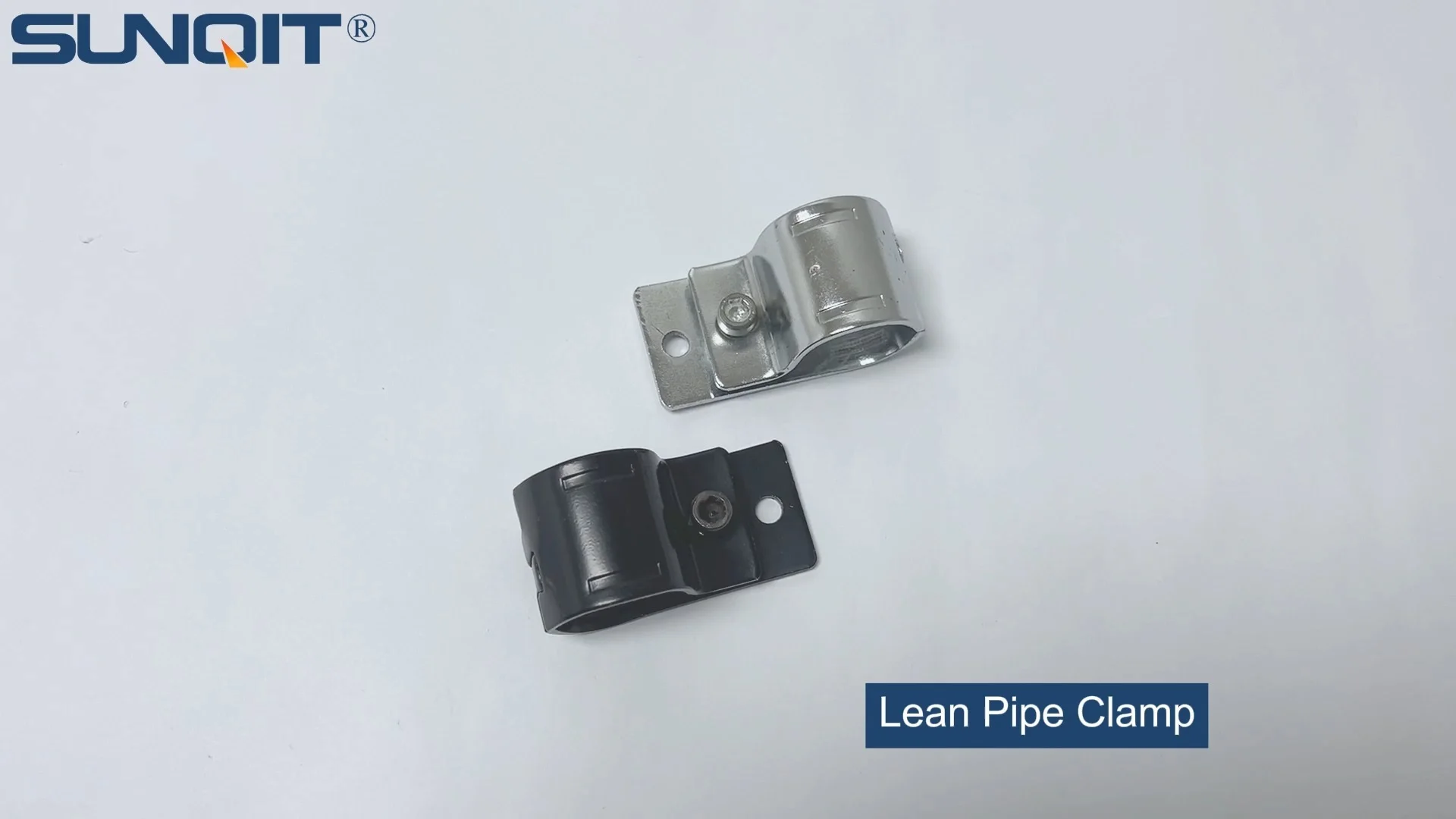
Lean Pipe Clamp
Lean pipe clamp is used for rack system hang monitor or other panel for workbenck, flowrack in production daily use.
The Unsung Hero of Lean Systems: Why Lean Pipe Clamp B Matters
Let's start with a scenario we've all encountered (or at least heard about): A small manufacturing shop invests in a shiny new lean production line. They've got the lean pipe frames, the workbenches, and even the roller tracks to keep materials flowing. But within a week, the whole setup starts wobbling. The workbench sags under the weight of tools, and the roller track jiggles so much that parts slide off at odd angles. Frustrated, the team blames the pipes or the workbench design—until a veteran technician points out the real culprit: the clamps holding everything together. Specifically, they used the wrong size of Lean Pipe Clamp B.
Here's the thing about lean systems: They're only as strong as their weakest link. And more often than not, that link is something small,, and easy to overlook—like a clamp. Lean Pipe Clamp B might not get the same attention as flashy aluminum profiles or high-tech conveyor systems, but it's the silent force that turns a jumble of pipes and joints into a stable, efficient workspace. Whether you're building a simple workbench, a complex material rack, or a dynamic roller track, choosing the right clamp size isn't just a "nice-to-have"—it's the difference between a system that hums and one that headaches.
In this article, we're diving deep into Lean Pipe Clamp B: what it is, its standard sizes, how to pick the perfect fit for your lean pipe or aluminum pipe, and why getting this small detail right can save you big time in repairs, downtime, and frustration. Let's get started.
What Exactly Is Lean Pipe Clamp B?
Before we talk sizes, let's make sure we're all on the same page about what Lean Pipe Clamp B actually is. At its core, Clamp B is a specialized fastener designed to connect two or more pieces of lean pipe (or other materials like aluminum pipe) at a fixed angle—usually 90 degrees, though some variations handle other angles. Unlike adjustable clamps that let you swivel pipes around, Clamp B is all about rigidity: once tightened, it locks the pipes in place, creating a sturdy frame that can support weight, resist vibration, and stand up to the daily grind of a production floor.
You'll find Clamp B in just about every lean setup imaginable. It's the clamp that holds the legs of your workbench to the tabletop frame. It's what connects the vertical supports of a material rack to its horizontal shelves. It's even hidden in roller track assemblies, securing the aluminum guide rails to the main frame. Think of it as the "glue" of lean systems—quiet, but absolutely essential.
Now, not all clamps are created equal. Lean Pipe Clamp B comes in different materials (steel, aluminum, sometimes plastic-coated for ESD applications), but today, we're focusing on the feature that makes or breaks its performance: size. Get the size wrong, and even the sturdiest steel clamp won't do its job.

Standard Sizes of Lean Pipe Clamp B: A Detailed Breakdown
Lean Pipe Clamp B isn't a one-size-fits-all part. Its dimensions are carefully calibrated to match the outer diameter of the pipes it's designed to hold. Most manufacturers follow industry standards, but there's still variation depending on the pipe material (PE-coated lean pipe, aluminum pipe, stainless steel) and the intended load. To simplify, we've compiled the most common standard sizes into a table—think of it as your cheat sheet for clamp shopping.
| Clamp B Size (Inner Diameter, mm) | Compatible Pipe Outer Diameter (mm) | Common Pipe Materials | Typical Load Capacity (kg per Clamp) | Primary Applications |
|---|---|---|---|---|
| 16mm | 15-16mm | 0.8mm PE-coated lean pipe, small stainless steel pipe | 30-50kg | Light-duty workbenches, mini roller tracks, small turnover trolleys |
| 20mm | 19-20mm | 1.0-1.2mm PE-coated lean pipe, basic aluminum tube | 50-80kg | Standard workbenches, single-level material racks, hand trolleys |
| 28mm | 27-28mm | 1.5-2.0mm PE-coated lean pipe, aluminum lean pipe | 80-120kg | Heavy-duty workbenches, multi-level material racks, roller tracks |
| 30mm | 29-30mm | Stainless steel pipe series, thick-walled aluminum pipe | 120-180kg | Industrial material racks, conveyor supports, ESD workstations |
| 40mm | 38-40mm | Large aluminum profile, heavy-duty stainless steel pipe | 180-250kg | Heavy machinery frames, high-capacity roller tracks, pallet racks |
Let's unpack what this means. Take the 20mm Clamp B, for example. It's designed to grip pipes with an outer diameter of 19-20mm—like the 1.2mm PE-coated lean pipe commonly used in standard workbenches. At 50-80kg per clamp, it's strong enough to hold the weight of tools, parts, and even a operator leaning on the workbench. Step up to the 28mm clamp, and you're looking at thicker pipes: 1.5-2.0mm PE-coated lean pipe or aluminum pipe used in roller tracks or material racks. These clamps can handle 80-120kg, making them ideal for setups where materials are constantly moving (hello, lean manufacturing flow!)
Pro tip: Always measure your pipe's outer diameter with a caliper before buying clamps. Even "standard" pipes can have slight variations—especially if they're from a lesser-known supplier. A 1mm difference might not sound like much, but it's enough to make a clamp either too loose (wobbly) or too tight (risk of cracking the pipe coating).

Choosing the Right Size: Key Factors to Consider
Now that you've got the size chart, how do you pick the right one for your project? It's not just about matching numbers—it's about understanding your setup's unique needs. Let's break down the critical factors.
1. Pipe Material and Wall Thickness
First, identify what kind of pipe you're using. Lean pipe (the classic PE-coated steel) is the most common, but aluminum pipe and stainless steel pipe series are gaining popularity for their lightweight and corrosion-resistant properties. Each material has different standard diameters:
- PE-coated lean pipe: Typically 16mm, 20mm, or 28mm outer diameter. Thinner walls (0.8-1.2mm) mean lighter weight, so they pair well with smaller clamps (16mm, 20mm).
- Aluminum pipe: Often 28mm or 30mm outer diameter, with thicker walls (1.2-2.0mm) for strength without the steel weight. These need 28mm or 30mm clamps.
- Stainless steel pipe: Used in cleanrooms or food processing, with diameters ranging from 16mm to 40mm. Heavier than aluminum, so opt for clamps rated for higher loads (e.g., 30mm clamps for 30mm stainless steel pipe).
Wall thickness matters too. A 20mm pipe with a 1.2mm wall will have a slightly larger outer diameter than a 20mm pipe with a 0.8mm wall (thanks to the extra metal). If you're unsure, ask your pipe supplier for the exact outer diameter spec.
2. Load Capacity: How Much Weight Will It Hold?
Let's get practical: What's going on top of your structure? A workbench for small electronics assembly won't need the same strength as a material rack holding 20kg boxes. As a rule of thumb, the heavier the load, the larger the clamp (and pipe) you need. For example:
Example: You're building a workbench (let's call it "Workbench E" from the keyword list—single deck, no casters) for a tech repair shop. The tools and parts on top will weigh around 60kg total. The workbench has four legs, so each leg clamp will bear about 15kg (60kg ÷ 4). A 20mm Clamp B (rated for 50kg) is more than enough—no need to overspend on 28mm clamps here.
Now, if you're building a Material Rack B (3 rows, 3 floors) to hold automotive parts, each shelf might hold 150kg. With three vertical supports per shelf, each clamp could see 50kg (150kg ÷ 3). Here, a 28mm clamp (80-120kg capacity) is the safer bet. Overengineering? Maybe—but in lean systems, "safer" always beats "just enough" when it comes to structural integrity.
3. Compatibility with Lean Pipe Joints
Clamp B rarely works alone—it's usually paired with lean pipe joint s to create angles or T-junctions. If your joint is designed for 20mm pipe, using a 28mm clamp (and pipe) will throw off the alignment. For example, a 90° lean pipe joint for 20mm pipe has a socket that's exactly 20mm—force a 28mm pipe into it, and you'll either crack the joint or bend the pipe. Always check that your clamp size, pipe size, and joint size are all in sync.
Pro move: Buy clamps and joints from the same supplier. Most manufacturers design their components to work together, so you avoid compatibility headaches. If you mix brands, double-check the specs (or better yet, ask the supplier for a compatibility chart).
4. Future-Proofing: Will You Expand Later?
Lean systems are all about adaptability. Today's simple workbench might become tomorrow's assembly line with added roller tracks or a second level. If you think you'll expand, size up slightly. For example, using 28mm clamps now (even if you don't need the load capacity) means you can swap in heavier pipes or add components like roller tracks later without rebuilding the entire frame.

Common Mistakes to Avoid When Selecting Clamp B Sizes
Even with the best intentions, it's easy to slip up when choosing clamp sizes. Let's highlight the most common mistakes—and how to steer clear of them.
Mistake #1: "One Size Fits All" Thinking
We get it—buying one size of clamp for all your projects is tempting. It saves time, reduces inventory, and simplifies ordering. But lean systems are diverse! A clamp that works for a 16mm lean pipe in a turnover trolley won't cut it for a 30mm aluminum pipe in a conveyor support. Mixing sizes where needed might mean a few extra SKUs, but it's worth it for stability.
Mistake #2: Ignoring Pipe Coating Thickness
PE-coated lean pipe has a plastic layer that adds 0.5-1mm to the outer diameter. For example, a steel pipe with a 19mm inner diameter might have a 20mm outer diameter after coating. If you measure the pipe before coating (or forget about the coating altogether), you'll end up with a clamp that's too small. Always measure the final outer diameter—coating and all.
Mistake #3: Overlooking Vibration and Movement
Setups with moving parts (like roller tracks or conveyors) generate vibration. Over time, even a slightly loose clamp can work itself free. If your system involves constant motion, err on the side of a snugger fit (e.g., a 28mm clamp for a 27.5mm pipe) or use lock washers to keep clamps tight.
Installation Tips for Optimal Performance
You've picked the perfect clamp size—now it's time to install them. Even the right size will underperform if installed incorrectly. Here are pro tips to ensure your clamps (and thus your lean system) stay strong for years.
1. Torque Matters: Don't Over-Tighten
Most Clamp B models use a hex bolt to tighten around the pipe. It's tempting to crank it as hard as possible, but that's a bad idea. Over-tightening can crush the pipe coating (on PE-coated lean pipe) or warp the clamp (on aluminum clamps). Instead, follow the manufacturer's torque recommendation—usually 3-5 Nm (Newton-meters) for steel clamps, 2-3 Nm for aluminum. If you don't have a torque wrench, tighten until the clamp grips firmly, then give it a 1/4 turn more.
2. Align Pipes Before Tightening
Make sure the pipes are straight and at the correct angle (90 degrees for most Clamp B applications) before fully tightening. A misaligned pipe will put extra stress on the clamp, leading to premature wear. Use a square tool to check angles, and have a helper hold the pipes steady while you tighten.
3. Inspect Regularly (Yes, Even Clamps Need Love)
Lean systems take a beating—constant use, temperature changes, and vibrations can loosen clamps over time. Add a monthly check to your maintenance schedule: wiggle the pipes gently, and retighten any clamps that feel loose. It's a 5-minute task that prevents big problems later.
Real-World Applications: How the Right Clamp Size Makes a Difference
Still not convinced that clamp size is a big deal? Let's look at two real-world examples where choosing (or choosing wrong) made all the difference.
Example 1: The Wobbly Workbench Fix
A medical device manufacturer built a series of ESD workstations using 20mm PE-coated lean pipe. They used 20mm Clamp B, but the workbenches still wobbled. After measuring, they realized their pipes were actually 21mm outer diameter (a thick coating from the supplier). Switching to 22mm clamps (a less common size, but available from their lean pipe supplier ) solved the problem. The workbenches stabilized, and ESD performance improved because there was no more metal-on-metal contact from loose clamps.
Example 2: Roller Track Rescue
A logistics company installed a 10-meter roller track to move packages between sorting stations. They used 28mm aluminum pipe and 28mm Clamp B, but the track kept jamming. Investigation revealed the culprit: the roller track's aluminum guide rails were attached with 20mm clamps (too small for the 28mm pipe). Upgrading to 28mm clamps aligned the rails perfectly, and packages started flowing smoothly. Productivity jumped by 15%—all from changing a few clamps.
Conclusion: Invest in the Right Clamp Size—Your Lean System Will Thank You
At the end of the day, Lean Pipe Clamp B might be small, but its impact is huge. It's the difference between a lean system that's a source of pride (and profit) and one that's a constant source of stress. By taking the time to measure your pipes, consult the size chart, and consider your load and application, you're not just buying clamps—you're investing in the efficiency, safety, and longevity of your entire operation.
So the next time you're setting up a workbench, building a material rack, or installing a roller track, remember: the right clamp size isn't an afterthought. It's the foundation of a system that works with you, not against you. And isn't that the whole point of lean manufacturing? To make work easier, faster, and more reliable—one small, crucial detail at a time.