- Company Articles
- Industry articles
- Industry standards
- Standard Specifications of Parallel Lean Pipe Joints: Size, Load, and Tolerance

Standard Specifications of Parallel Lean Pipe Joints: Size, Load, and Tolerance
Related Product
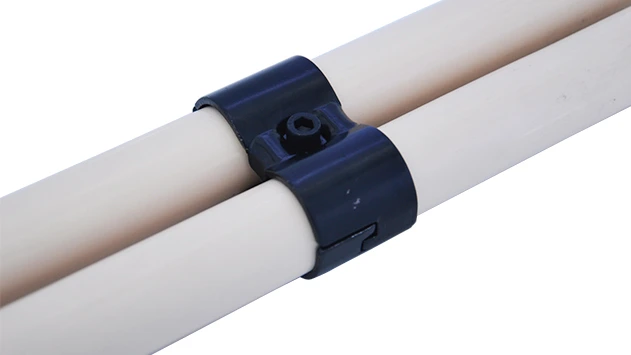
Parallel Lean Pipe Joint
Parallel lean pipe joint used for 2 pcs 28MM lean pipe connection in parallel direction to enhance frame structure, usually for heavy payload requirement for workbench. flow rack, hand trolley.
A Guide to Understanding the Backbone of Efficient Lean Manufacturing Systems
In the fast-paced world of manufacturing, where every second counts and efficiency is the name of the game, the unsung heroes often lie in the smallest components. Take, for example, the parallel lean pipe joint —a seemingly simple piece that holds together the intricate framework of lean systems, workbenches, and material racks. For production managers, facility engineers, and even frontline workers, understanding the specifications of these joints isn't just about ticking boxes on a checklist; it's about ensuring that the entire workflow hums like a well-tuned machine, reducing downtime, minimizing errors, and keeping teams productive.
Lean manufacturing isn't just a buzzword—it's a philosophy built on eliminating waste and optimizing flow. And at the heart of that philosophy are the tools and components that make flexibility and adaptability possible. Parallel lean pipe joints, in particular, are the connective tissue that allows teams to build, modify, and reconfigure workspaces on the fly. Whether you're assembling a lightweight workbench for electronics assembly or a heavy-duty material rack for automotive parts, the right joint can mean the difference between a setup that lasts for years and one that wobbles, breaks, or slows down operations.
In this guide, we'll dive deep into the standard specifications of parallel lean pipe joints, focusing on three critical areas: size, load capacity, and tolerance. We'll explore why these specs matter, how they're determined, and what to look for when choosing joints for your specific needs. Along the way, we'll touch on related components like lean pipe and accessories , and even compare materials like aluminum and steel to help you make informed decisions. By the end, you'll not only know the numbers but also understand how they translate to real-world performance on the factory floor.
Size Specifications: The Foundation of Compatibility
When it comes to parallel lean pipe joints, size isn't just about how big or small they are—it's about compatibility. A joint that's too loose won't hold the pipe securely; one that's too tight might crack the pipe or make assembly a frustrating chore. To ensure that lean pipe and accessories work seamlessly together, manufacturers have established standard size guidelines that balance flexibility with stability.
Key Dimensions to Consider
Parallel lean pipe joints are designed to connect two or more lean pipes in a parallel configuration, often forming the sides of a workbench, the rails of a conveyor, or the supports of a material rack. The most critical dimension here is the inner diameter (ID) of the joint, which must match the outer diameter (OD) of the lean pipe it's intended to connect. Let's break down the standard sizes you'll encounter in the market:
- 1.0mm to 2.0mm Pipe Thickness: Most lean pipes, whether made of steel, aluminum, or plastic-coated materials, come in standard outer diameters ranging from 28mm to 30mm. Parallel joints for these pipes typically have an inner diameter of 28.5mm to 30.5mm, leaving a small gap for easy assembly while ensuring a snug fit once tightened.
- Joint Length: The length of the parallel joint (the section that runs parallel to the pipes) varies based on application. For light-duty setups like small workbenches, a joint length of 50mm to 80mm is common. For heavier applications, such as supporting multi-tier material racks, lengths can extend to 100mm or more to distribute weight evenly.
- Mounting Hole Size: Many parallel joints feature pre-drilled holes for bolts or screws, which secure the joint to the pipe. These holes are usually sized for M5 or M6 bolts, standard in the industry, to ensure compatibility with common tools and fasteners.
But size isn't just about numbers—it's about real-world usability. Imagine a scenario where a maintenance team needs to reconfigure a production line overnight to accommodate a rush order. If the parallel joints are too tight, requiring excessive force to assemble, the team might fall behind schedule. If they're too loose, the newly built workbench might wobble, leading to errors in assembly. That's why standardization matters: it ensures that regardless of the supplier, a 28mm OD lean pipe will fit into a standard parallel joint from any reputable lean pipe supplier .
| Joint Type | Pipe OD Compatibility (mm) | Joint Length (mm) | Mounting Hole Size |
|---|---|---|---|
| Light-Duty Parallel Joint | 28mm – 30mm | 50mm – 80mm | M5 |
| Heavy-Duty Parallel Joint | 28mm – 30mm | 100mm – 150mm | M6 |
| Aluminum Parallel Joint | 25mm – 30mm (for aluminum lean pipe ) | 60mm – 90mm | M5 |
As the table shows, even within "standard" sizes, there's room for specialization. Aluminum parallel joints, for example, are often slightly smaller in inner diameter to account for the lighter weight of aluminum lean pipe , ensuring a secure fit without adding unnecessary bulk. This attention to detail is what separates reliable suppliers from the rest—they don't just sell parts; they engineer solutions that fit the unique needs of lean manufacturing.
Load Capacity: How Much Weight Can They Really Handle?
If size is about fit, then load capacity is about strength—and in manufacturing, strength isn't optional. A parallel lean pipe joint that fails under load can bring an entire production line to a halt, risking damage to materials, equipment, and even worker safety. That's why understanding how much weight a joint can support is critical when designing any lean system, from a simple workbench to a complex conveyor setup.
Factors Influencing Load Capacity
Load capacity isn't a single, fixed number; it's determined by a combination of factors, each playing a role in how well the joint performs under stress:
- Material Composition: The material of the joint itself is the first line of defense. Steel joints, for example, are known for their high tensile strength and can typically support 200kg to 500kg per joint, depending on design. Aluminum joints, while lighter, still offer impressive strength—around 150kg to 300kg—making them ideal for applications where weight reduction is key, such as mobile workbenches or carts.
- Design and Geometry: The shape of the joint matters. Parallel joints with reinforced ribs or thicker walls distribute weight more evenly, reducing stress on any single point. A joint with a "U" shape (open on one side) might be easier to assemble but may have lower load capacity than a closed "O" shape, which wraps around the pipe for better support.
- Installation Quality: Even the strongest joint will fail if installed incorrectly. Over-tightening can strip threads or crack the joint, while under-tightening leaves gaps that weaken the connection. Using the right torque (typically 8-10 Nm for M6 bolts) ensures maximum load capacity.
- Number of Joints in the System: Load capacity is rarely about a single joint—it's about the system as a whole. A workbench with four parallel joints supporting a top shelf will distribute the load across all four, meaning each joint only bears a fraction of the total weight. Engineers often calculate "worst-case" scenarios, such as a worker leaning on one corner of the bench, to ensure the system can handle uneven loads.
Let's put this into perspective with a real-world example. A mid-sized electronics manufacturer uses a series of workbenches, each supported by eight parallel lean pipe joints, to assemble circuit boards. Each workbench holds tools, components, and a laptop, totaling around 150kg. If each joint is rated for 30kg (a conservative estimate for aluminum joints), the total capacity would be 240kg—well above the actual load, leaving a safety margin for unexpected weight, like a worker placing a heavy box temporarily on the bench.
Testing and Certification
Reputable suppliers don't just claim load capacities—they test them. Most parallel lean pipe joints undergo rigorous testing in labs, where they're subjected to static loads (constant weight) and dynamic loads (weight that shifts, like moving parts on a conveyor). These tests simulate real-world conditions, ensuring that the stated load capacity is not just a marketing number but a reliable benchmark.
For example, a supplier might test a steel parallel joint by gradually increasing the weight until it deforms, then set the rated capacity at 50% of that failure point to account for safety. This "safety factor" is crucial, as it protects against variables like material fatigue over time or accidental overloading.
When shopping for parallel joints, look for suppliers who provide test reports or certifications (like ISO 9001) that validate their load capacity claims. It's a small step that can save big headaches down the line.

Tolerance: The Art of Precision in Manufacturing
If size is about fit and load capacity is about strength, then tolerance is about precision. Tolerance refers to the allowable variation in a dimension—how much a joint's actual size can differ from the "ideal" size specified on the blueprint. In lean manufacturing, where components must fit together seamlessly, tight tolerances are the difference between a system that's stable and one that's prone to wobbling, jamming, or premature wear.
Why Tolerance Matters in Parallel Lean Pipe Joints
Imagine assembling a puzzle where each piece is slightly warped—some edges are too thick, others too thin. The puzzle might still come together, but the finished picture would be uneven, with gaps and overlaps. The same principle applies to parallel lean pipe joints. If the inner diameter of a joint is supposed to be 28.5mm but varies by ±0.5mm (a tolerance of 1mm total), some joints will fit too tightly, others too loosely, making assembly inconsistent and the final structure unstable.
In manufacturing, tight tolerances are especially critical for moving parts. Consider a conveyor system that uses parallel joints to support roller tracks. If the joints are out of tolerance, the tracks might not align, causing products to get stuck or tip over. For an ESD workbench (used in electronics manufacturing to prevent static damage), even a small wobble from loose joints could lead to costly errors in delicate assembly work.
Standard Tolerances in the Industry
Most parallel lean pipe joints adhere to ISO (International Organization for Standardization) tolerance standards, which define acceptable variations for dimensions like inner diameter, length, and hole position. Here are the key tolerances you'll encounter:
- Inner Diameter (ID): Typically ±0.1mm to ±0.3mm for precision-machined joints. This tight range ensures that the joint fits snugly on standard lean pipes (OD ±0.1mm), with no gaps that could cause rattling or shifting.
- Length Tolerance: ±0.5mm to ±1.0mm. For parallel joints, consistent length ensures that pipes align correctly, especially in multi-joint systems like the sides of a workbench.
- Hole Position Tolerance: ±0.2mm. This ensures that mounting holes line up perfectly with pre-drilled holes in the pipe, making assembly faster and reducing the risk of cross-threading bolts.
But how are these tolerances achieved? It starts with manufacturing processes. High-quality parallel joints are often made using CNC (Computer Numerical Control) machining, which uses computer programs to control tools with pinpoint accuracy. CNC machines can repeat dimensions to within 0.01mm, far tighter than manual machining, ensuring that every joint off the production line meets the same specs.
The Cost of Poor Tolerance
Poor tolerance isn't just an annoyance—it's a hidden cost. Let's say a factory orders a batch of parallel joints with loose ID tolerances (±0.5mm). During assembly, half the joints fit perfectly, but the other half are either too tight (requiring extra time to force onto pipes) or too loose (needing shims or additional fasteners to secure). The result? Longer assembly times, increased labor costs, and a higher risk of rework if joints loosen over time.
In extreme cases, poor tolerance can compromise safety. A joint with a hole position tolerance of ±1mm might not align with the pipe's holes, leading to bolts that only partially thread in. Over time, vibration from the production line could loosen these bolts, causing the structure to collapse. For workers nearby, this isn't just a productivity issue—it's a hazard.

Materials: Choosing Between Aluminum, Steel, and Beyond
While size, load, and tolerance get most of the attention, the material of a parallel lean pipe joint plays a starring role in its performance, durability, and suitability for specific environments. Today's manufacturers have more options than ever, from traditional steel to lightweight aluminum and even specialty materials for harsh conditions. Let's explore the pros and cons of the most common choices.
Aluminum Lean Pipe Joints: Lightweight and Corrosion-Resistant
Aluminum has become a favorite in lean manufacturing, and for good reason. Aluminum lean pipe joints offer a winning combination of strength, lightness, and resistance to corrosion, making them ideal for industries like food processing, pharmaceuticals, or cleanrooms where hygiene and weight matter.
One of the biggest advantages of aluminum is its weight—about one-third that of steel. This makes aluminum joints perfect for mobile applications, such as turnover trolleys or portable workbenches, where reducing the load on casters extends their lifespan. Aluminum also naturally forms a protective oxide layer, preventing rust even in humid environments, which is a game-changer for facilities near the coast or with high moisture levels.
However, aluminum isn't without trade-offs. While strong enough for most light to medium-duty applications, it's not as rigid as steel, so it may flex under extreme loads. It's also more expensive upfront, though the long-term savings in weight and corrosion resistance often offset the initial cost.
Steel Joints: The Workhorse of Heavy-Duty Applications
For decades, steel has been the backbone of industrial manufacturing, and parallel lean pipe joints are no exception. Steel joints are prized for their raw strength—supporting up to 500kg per joint—and rigidity, making them the go-to choice for heavy-duty setups like material racks, conveyor supports, or workbenches that bear constant, heavy loads.
Steel is also cost-effective, making it a budget-friendly option for large-scale installations. However, it's prone to rust if not coated, which is why many steel joints come with a zinc plating or powder coating to protect against corrosion. In outdoor or wet environments, stainless steel joints (alloyed with chromium and nickel) take it a step further, offering superior rust resistance at a higher price point.
Plastic-Coated Steel: The Best of Both Worlds?
For facilities that need the strength of steel with added protection against scratches or chemical exposure, plastic-coated steel joints are a middle ground. These joints feature a steel core wrapped in a durable plastic layer (often PVC or polyethylene), combining the load capacity of steel with the corrosion resistance and impact protection of plastic. They're popular in automotive manufacturing, where parts may slide against the joints, or in warehouses with rough handling.
Real-World Applications: Where Parallel Joints Shine
Understanding specifications is one thing, but seeing how parallel lean pipe joints perform in real applications brings their importance to life. From the factory floor to the warehouse, these joints are the silent architects of efficient, flexible workspaces. Let's explore a few key applications.
Workbenches: The Heart of Assembly Lines
The humble workbench is where most manufacturing magic happens, and parallel lean pipe joints are its backbone. A typical workbench frame uses parallel joints to connect the vertical legs to the horizontal rails, creating a stable platform for assembly, testing, or packaging. The joints allow for customization—adding shelves, tool hooks, or ESD mats—without welding or permanent modifications.
In electronics manufacturing, for example, ESD workbenches (designed to dissipate static electricity) rely on aluminum parallel joints to keep the frame lightweight yet sturdy. The joints' tight tolerances ensure that the workbench top stays level, preventing delicate components from rolling off. In automotive plants, steel joints support heavy-duty workbenches that hold engines or transmissions, with load capacities exceeding 400kg per joint to handle the weight.
Material Racks and Flow Systems
Material racks, used to store everything from raw materials to finished products, depend on parallel joints for stability and adjustability. A multi-tier rack might use parallel joints to connect vertical supports to horizontal beams, allowing workers to adjust shelf heights as inventory needs change. In flow rack systems, where products slide from the back to the front via gravity, parallel joints secure the roller tracks, ensuring they're aligned at the perfect angle for smooth movement.
Here, tolerance is critical. If the joints holding the roller tracks are out of alignment by even 1mm, products might jam or slide too slowly, disrupting the flow of materials to the production line. Tight tolerance joints keep the tracks straight, reducing downtime and keeping operations running smoothly.
Mobile Trolleys and Carts
Mobile trolleys, used to transport materials between workstations, are another area where parallel joints shine. Aluminum joints are often the top choice here, thanks to their light weight, which reduces the strain on casters and makes the trolleys easier to maneuver. The joints' load capacity ensures that even fully loaded trolleys (with tools, parts, or finished goods) remain stable, preventing tipping during transport.
Conclusion: Investing in the Right Joints for Long-Term Efficiency
At the end of the day, parallel lean pipe joints are more than just hardware—they're the foundation of efficient, flexible, and safe manufacturing systems. Whether you're building a simple workbench or a complex conveyor line, understanding their size, load capacity, tolerance, and material options ensures that your setup meets your needs today and can adapt to tomorrow's challenges.
For facility managers and production teams, this knowledge translates to better decision-making. It means choosing aluminum joints for mobile applications, steel for heavy loads, and prioritizing tight tolerances for precision systems. It means working with suppliers who test their products and stand behind their specifications, rather than cutting corners on cost.
In the world of lean manufacturing, where every detail matters, the parallel lean pipe joint may be small, but its impact is huge. It's the difference between a production line that stumbles and one that thrives—a silent partner in the quest for efficiency, productivity, and success.