- Company Articles
- Industry articles
- Industry standards
- Sustainability Benefits of 4080A EU Standard Aluminum Profile: Reusability & Waste Reduction

Sustainability Benefits of 4080A EU Standard Aluminum Profile: Reusability & Waste Reduction
Related Product
4080A EU Standard Aluminum Profile
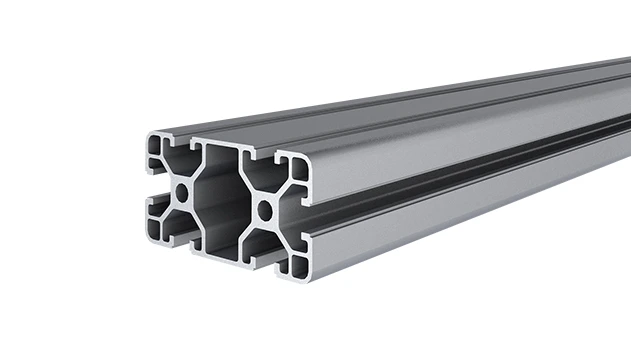
4080A is a 4.00x8.00 CM fractional 40 series square extrusion T-slot profile with two side open T-slots, each side with 4.00cm face, two side with 8.00cm face. The profile has align-a-grooves to assist in aligning connecting profiles.
In today's manufacturing landscape, sustainability isn't just a buzzword—it's a critical commitment to the planet and future generations. As businesses strive to reduce their environmental footprint, the choice of materials becomes a cornerstone of this effort. Among the most promising solutions is the 4080A EU Standard Aluminum Profile , a versatile building block that's redefining how we approach production, efficiency, and waste. More than just a component, it's a testament to how thoughtful design can align industrial needs with ecological responsibility. Let's explore how this aluminum extrusion profile, paired with smart aluminum profile accessories, is driving reusability and waste reduction, while seamlessly integrating with lean systems to create a more sustainable future.
Understanding the 4080A EU Standard Aluminum Extrusion Profile
Before diving into its sustainability benefits, let's clarify what makes the 4080A EU Standard Aluminum Profile unique. Part of the broader family of aluminum extrusion profiles, this specific variant is engineered to meet strict European union standards for quality, durability, and performance. The "4080" refers to its cross-sectional dimensions—typically 40mm in width and 80mm in height—making it a workhorse for structural applications in factories, warehouses, and production lines. What sets it apart, however, isn't just its size, but its design philosophy: modularity, adaptability, and a focus on minimizing waste from the start.
Aluminum extrusion, the process used to create this profile, is inherently efficient. Unlike traditional manufacturing methods that carve or mold materials (often generating significant scrap), extrusion pushes heated aluminum billets through a die, shaping them into consistent, precise profiles with minimal waste. This process not only reduces material loss during production but also ensures each 4080A profile is uniform, reliable, and ready to integrate with a wide range of aluminum profile accessories—from connectors and end caps to brackets and casters. It's this flexibility that lays the groundwork for its sustainability superpowers.
Reusability: The Heart of Sustainable Design
Modularity That Stands the Test of Time
At the core of the 4080A profile's sustainability story is reusability. Unlike fixed, welded steel structures or one-time-use plastic components, this aluminum profile is designed to be disassembled, reconfigured, and repurposed repeatedly. Imagine a production line that needs to adapt to a new product model: with traditional materials, this might mean cutting, welding, or even discarding old equipment. With 4080A profiles, it's as simple as loosening a few connectors, rearranging the structure, and reattaching the aluminum profile accessories to create something entirely new.
Take workbenches, for example. A manufacturer might start with a single-deck workbench built using 4080A profiles and basic accessories. As production scales, they can add shelves, extend the length, or even convert it into a mobile workstation by adding casters—no need to buy a bench. When the product line retires, the same profiles can be stripped down and used to build material racks, conveyor supports, or tool storage units. This cycle of reuse drastically reduces the demand for new raw materials, as the same aluminum pieces serve multiple purposes over decades.
Aluminum Profile Accessories: Enabling Endless Adaptability
The magic of reusability wouldn't be possible without the ecosystem of aluminum profile accessories that complement the 4080A. These small but mighty components—think corner connectors, T-slot nuts, hinge brackets, and adjustable feet—turn static structures into dynamic systems. For instance, a 90° aluminum profile connector allows two 4080A profiles to join at a right angle securely, but when the need arises, that connector can be unscrewed, and the profiles can be reconnected in a straight line or at a 45° angle using a different accessory. This adaptability means the only limit is creativity, not the material itself.
Even better, these accessories are designed to last as long as the profiles themselves. Made from high-grade aluminum or durable plastics, they resist wear and corrosion, ensuring that even after multiple reconfigurations, the connection remains strong. This longevity further cements the 4080A system's role as a sustainable alternative to disposable or short-lived materials.

Waste Reduction: From Production to Disposal
Minimizing Waste in Manufacturing
Sustainability isn't just about reusing products—it's about reducing waste at every stage of the lifecycle. The 4080A profile excels here, starting with its production. As mentioned earlier, aluminum extrusion is a low-waste process. The precision of the die ensures that each profile is exactly the shape and size needed, with scrap limited to small trimmings (which are often recycled on-site). Compare this to steel fabrication, where cutting and welding can generate up to 20% scrap material, or plastic molding, which frequently results in excess runoff and defective parts. With 4080A, waste is an afterthought, not a byproduct.
But the savings don't stop there. Because the 4080A profile is pre-engineered to work with standard aluminum profile accessories, there's no need for custom fabrication or on-site modification. A factory worker doesn't need to saw, drill, or grind the profile to fit a specific accessory—everything clicks into place via T-slots or pre-drilled holes. This not only saves time but also eliminates the waste from cutting tools, adhesives, or excess materials that would otherwise be needed to adapt non-modular components.
Longevity: Reducing the Need for Replacements
Aluminum is renowned for its durability, and the 4080A profile is no exception. Resistant to rust, corrosion, and impact, it can withstand the harsh conditions of industrial environments—from high humidity in food processing plants to heavy machinery vibrations in automotive factories—without degrading. This longevity means fewer replacements over time. A steel structure might rust and need replacement after 5–10 years; a 4080A aluminum structure, with proper care, can last 20–30 years or more. Each year it stays in use is a year saved from manufacturing new materials, and a year of reduced waste from disposing of old, worn-out equipment.
100% Recyclable: Closing the Loop
Even when a 4080A profile finally reaches the end of its useful life (decades down the line), it doesn't become waste. Aluminum is 100% recyclable, and unlike plastics or paper, it retains its quality through countless recycling cycles. Recycling aluminum requires just 5% of the energy needed to produce new aluminum from bauxite ore—a staggering reduction that slashes carbon emissions and conserves natural resources. For context, the Aluminum Association estimates that recycling one ton of aluminum saves 14,000 kWh of energy and prevents 10 tons of greenhouse gas emissions. That's the equivalent of taking two cars off the road for a year.
This closed-loop system—reuse, recycle, repeat—ensures that the 4080A profile never truly becomes "waste." Even damaged profiles can be melted down and extruded into new ones, keeping the material in circulation indefinitely. It's a stark contrast to materials like wood (which decomposes but can't be recycled into new lumber without losing strength) or certain plastics (which often end up in landfills despite recycling efforts).
Synergy with Lean Systems: Efficiency Meets Sustainability
The 4080A EU Standard Aluminum Profile doesn't just stand alone as a sustainable material—it also aligns seamlessly with lean systems, a manufacturing philosophy focused on eliminating waste (muda) and maximizing value. Lean systems prioritize efficiency, flexibility, and continuous improvement, and the 4080A profile supports all three.
In a lean environment, production lines must adapt quickly to changes in demand, product design, or workflow. Fixed, rigid structures hinder this agility, leading to waste in the form of downtime, excess inventory, or underutilized space. The 4080A profile, with its modular design and aluminum profile accessories, enables "just-in-time" reconfiguration. For example, if a product's assembly process changes, workers can rearrange workstations in hours instead of days, minimizing downtime and keeping production flowing. This flexibility reduces the waste of idle resources and ensures every square foot of the factory is used efficiently.
Lean systems also emphasize reducing "overproduction," and the 4080A profile helps here too. Instead of over-investing in custom-built equipment that may become obsolete, manufacturers can start small with a basic 4080A setup and scale incrementally, adding profiles and accessories only as needed. This "build-as-you-grow" approach prevents over-ordering materials and reduces the waste of unused or underused equipment.
Case Example: A Electronics Manufacturer's Lean-Sustainability Journey
Consider a mid-sized electronics manufacturer that historically relied on steel workbenches and fixed material racks. When they adopted a lean system, they faced a problem: their rigid infrastructure couldn't keep up with frequent product changes. Switching to 4080A EU Standard Aluminum Profiles transformed their operations. They replaced steel workbenches with modular aluminum ones, using aluminum profile accessories like adjustable shelves and ESD (electrostatic discharge) mats to meet product requirements. When a new smartphone model required a longer assembly line, they disassembled two smaller workbenches, added extra 4080A profiles, and reconnected them into a single, extended workstation—no new materials needed.
Over three years, the company reported a 35% reduction in waste from equipment replacement and a 28% drop in energy use (thanks to lighter aluminum structures and fewer shipments of new furniture). By integrating 4080A profiles with their lean system, they proved that sustainability and efficiency aren't competing goals—they're two sides of the same coin.
Comparing Sustainability: 4080A Aluminum vs. Traditional Materials
| Sustainability Metric | 4080A EU Standard Aluminum Profile | Traditional Steel Structures | Plastic/Composite Materials |
|---|---|---|---|
| Reusability | High: Modular design allows disassembly and reconfiguration; compatible with endless accessories. | Low: Welded or bolted structures are difficult to modify; often discarded when needs change. | Very Low: Typically one-time use; prone to cracking or warping, making reuse impractical. |
| Waste During Production | Low: Extrusion process generates minimal scrap; high material efficiency. | High: Cutting, welding, and shaping steel produce significant scrap metal. | High: Molding and casting plastics often result in excess material and defective parts. |
| Lifespan | 20–30+ years: Resistant to corrosion, impact, and wear. | 5–15 years: Prone to rust and degradation in harsh environments. | 3–7 years: Degrade from UV exposure, heat, and mechanical stress. |
| Recyclability | 100% recyclable; retains quality indefinitely; uses 95% less energy than new production. | Recyclable but requires energy-intensive melting; may lose strength after recycling. | Limited recyclability; often downcycled into lower-quality products; many end up in landfills. |
| Lean System Compatibility | High: Supports quick reconfiguration, reduces downtime, and minimizes overproduction of equipment. | Low: Rigid structures hinder agility; requires significant time and resources to modify. | Very Low: Lack of durability and modularity makes adaptation costly and wasteful. |
The Future of Sustainable Manufacturing: Beyond the Profile
As businesses and consumers alike demand more sustainable practices, the 4080A EU Standard Aluminum Profile represents a shift toward "circular manufacturing"—a model where products are designed to be reused, repaired, or recycled, rather than discarded. But its impact doesn't stop at the factory floor. By choosing materials like 4080A, companies send a message: sustainability is a priority, and every component, no matter how small, plays a role in building a greener future.
Looking ahead, innovations in aluminum profile accessories—such as lighter, stronger connectors or smart sensors that monitor wear and tear—will only enhance the 4080A's sustainability. Imagine accessories that alert maintenance teams when a joint needs tightening, extending the profile's lifespan even further. Or bio-based plastics for non-structural accessories, reducing reliance on fossil fuels. These advancements will make the 4080A profile not just a sustainable choice today, but a cornerstone of tomorrow's eco-friendly manufacturing.
Conclusion: A Profile for Progress
The 4080A EU Standard Aluminum Profile is more than just a building material—it's a tool for change. Its reusability, paired with aluminum profile accessories, reduces the need for new resources. Its efficient production and recyclability minimize waste from cradle to grave. And its compatibility with lean systems ensures that sustainability and productivity go hand in hand. For manufacturers ready to embrace a greener future, the choice is clear: invest in materials that work with the planet, not against it.
In the end, sustainability isn't about perfection—it's about progress. And with the 4080A profile, progress has never been more tangible. It's a small change that adds up to big results: less waste, lower emissions, and a manufacturing industry that leaves a lighter footprint for generations to come. So the next time you walk through a factory, take a closer look at the structures around you. Chances are, if they're built with 4080A aluminum profiles, they're not just supporting production—they're supporting a better world.