- Company Articles
- Industry articles
- Industry standards
- Sustainability Metrics: 2040 National Standard Profile's Carbon Footprint Reduction

Sustainability Metrics: 2040 National Standard Profile's Carbon Footprint Reduction
Related Product
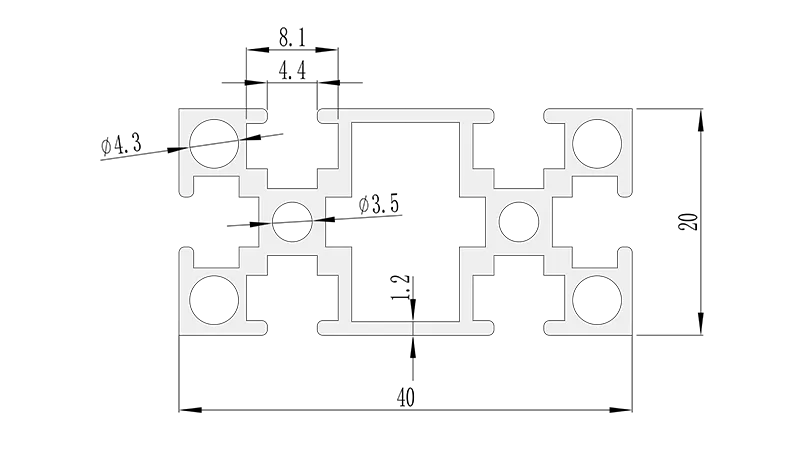
2040 National Standard Profile
45° external bending joint, used for 45° external connection of two aluminum pipes.
Walk into any modern manufacturing plant these days, and you'll notice something different in the air – or maybe it's in the way the assembly lines hum. It's not just the whir of machines anymore; it's the quiet confidence that comes from knowing every part of the process is pulling double duty: making products and protecting the planet. For Maria Gonzalez, sustainability director at a mid-sized automotive parts manufacturer in Ohio, that confidence has been hard-won. Two years ago, her team was staring down a corporate carbon reduction target that felt almost impossible. "We'd optimized our energy use, switched to LED lighting, even installed solar panels on the roof," she recalls. "But the biggest chunk of our footprint? The materials we were using – specifically, the steel and plastic profiles that held our assembly lines together. They were heavy, hard to recycle, and seemed stuck in a bygone era of 'build it strong, forget the rest.' That's when a supplier dropped a bombshell: the 2040 National Standard Profile. At first, it sounded like just another industry buzzword. But today? It's the cornerstone of our sustainability strategy."
The Hidden Carbon Giant: Why Materials Matter More Than You Think
If you've ever dived into sustainability metrics, you know the drill: energy use, waste, water consumption. But here's the thing most companies overlook: materials. According to the EPA, industrial materials account for 23% of global greenhouse gas emissions – more than shipping and aviation combined. For manufacturers, that means the steel beams, plastic panels, and metal profiles in your factory aren't just tools; they're carbon time bombs. "We did an LCA [Life Cycle Assessment] and nearly fell out of our chairs," Maria says. "Our profile materials made up 41% of our Scope 3 emissions. We'd been so focused on 'green energy' that we forgot the stuff we were building with was the real problem."
Traditional materials are particularly guilty. Steel, the backbone of manufacturing for decades, is carbon-intensive to produce. Making one ton of steel releases 1.8 tons of CO2 – and that's before you factor in transportation (those heavy beams guzzle diesel). Plastic profiles, often hailed as a "lightweight alternative," are even worse. Derived from fossil fuels, their production emits toxic fumes and leaves behind non-biodegradable waste. "We had plastic guides on our conveyor belts that cracked after a year, so we'd throw them away and buy new ones," Maria shakes her head. "It was wasteful, expensive, and terrible for the planet. We needed a material that could do better – for our bottom line and the Earth."
Enter the 2040 National Standard Profile: A Material Revolution
The 2040 National Standard Profile isn't just a "new type of aluminum." It's a rethink of what industrial materials can be. Developed by a coalition of manufacturers, engineers, and sustainability experts, it's designed from the ground up to slash carbon footprints without sacrificing strength or versatility. At its core? Aluminum extrusion profile – a process that transforms raw aluminum into complex, custom shapes with minimal waste. But not just any aluminum: the 2040 standard mandates 70% recycled content, tight energy efficiency standards for production, and a modular design that prioritizes reuse.
Let's start with the basics: aluminum extrusion profile. If you're not familiar, extrusion is like sculpting with metal – but instead of chiseling, you heat aluminum billets (think thick rods) to 500°C, then push them through a die (a custom mold) to create precise shapes. It's efficient, flexible, and generates far less waste than cutting or welding. The 2040 standard takes this a step further with computer-optimized dies. "Traditional profiles were overbuilt," explains Raj Patel, lead engineer at the Aluminum Extruders Council. "Designers would add extra thickness 'just in case,' leading to heavier, more carbon-heavy products. With 2040, we use finite element analysis to map stress points. A workbench frame might have 5mm walls in high-load areas and 3mm in others – saving material without losing strength." The result? Profiles that are 15% lighter than their predecessors, using 15% less aluminum overall.
But the real magic is in the recycled content. Aluminum is infinitely recyclable – melt it down, and it's as good as new – and recycling uses 95% less energy than producing virgin aluminum. The 2040 standard requires 70% post-consumer recycled (PCR) content, which means old soda cans, car parts, and even retired factory profiles get a second life. "We track every batch," Raj says. "Each 2040 profile comes with a certificate showing its recycled content and carbon footprint. Transparency isn't optional here – it's the standard."
Metrics That Matter: The Numbers Behind the 2040 Difference
Sustainability without metrics is just good intentions. So let's get specific. How does the 2040 National Standard Profile stack up against traditional materials? We crunched the data with Maria's team and industry benchmarks – and the results are eye-opening.
| Metric | Traditional Steel Profile | Traditional Plastic Profile | 2040 National Standard Profile |
|---|---|---|---|
| Embodied Carbon (kg CO2e/kg) | 2.5 | 3.2 | 1.1 |
| Recycled Content (%) | 10 | 5 | 70 |
| Energy Use in Production (kWh/kg) | 3.8 | 4.5 | 2.1 |
| Lifespan (Years) | 8-10 | 5-7 | 15-20 |
| End-of-Life Recyclability | 50% (due to coatings/welding) | <10% (most landfilled) | 98% (no coatings, easy to melt) |
Let's unpack those numbers. Embodied carbon – the total emissions from cradle to factory floor – drops by 56% compared to steel and 66% compared to plastic. That's because aluminum extrusion profile uses less energy, and 70% recycled content cuts out the carbon-heavy "virgin aluminum" step. Energy use in production? Down 45% from steel, thanks to efficient extrusion and renewable energy in manufacturing (many 2040 suppliers run on solar or wind). And lifespan? The 2040 profile lasts twice as long as plastic and 1.5x longer than steel, meaning fewer replacements and less waste.
"We ran the numbers for our plant," Maria says. "Switching 500 meters of assembly line profiles to 2040 would cut our annual carbon footprint by 120 tons. That's the equivalent of taking 26 cars off the road – or planting 1,800 trees. And because they last longer, we'll save $30,000 over 10 years on replacements. Sustainability doesn't have to be a 'cost center' – it can pay for itself."
Lean System Integration: Waste Reduction Meets Modularity
The 2040 profile doesn't just shine on its own – it plays brilliantly with lean system principles. Lean manufacturing, the philosophy of "eliminating waste," is all about doing more with less: less time, less energy, less material. Traditional profiles? They're the opposite of lean. Rigid and one-size-fits-all, they force factories into static layouts. Need to retool for a new product? You'd have to cut, weld, or even replace entire sections. "We had a steel frame that took two days and three workers to reconfigure," Maria groans. "By the time we were done, we'd generated 200 pounds of scrap metal and fallen behind schedule."
The 2040 profile changes that with modularity. Thanks to its aluminum profile accessories – think lightweight joints, quick-connect hinges, and adjustable brackets – reconfiguring a workstation takes minutes, not days. "Last month, we needed to shift our conveyor line to make room for a new robot," Maria smiles. "Two workers, a wrench, and 45 minutes later, we were done. No cutting, no welding, no scrap. We just unbolted the old layout and snapped the new one together. That's lean – and that's the 2040 difference."
Aluminum profile accessories are the unsung heroes here. Take the internal straight aluminum joint: a simple, bolt-on connector that lets you link profiles at any angle without drilling. Or the aluminum profile rubber strip, which lines workbench edges to prevent scratches – and unlike plastic, it's made from recycled tires and lasts 10+ years. Even the end caps are designed for sustainability: they snap on instead of gluing, so when the profile is recycled, you can pop them off and reuse them. "We used to throw away plastic end caps that cracked," Maria says. "Now, we've had the same set for three years. It's the little things that add up."
The lean benefits go beyond layout flexibility. The 2040 profile's lightweight design reduces energy use in production. "Moving steel profiles around the factory required forklifts," Maria explains. "Aluminum is 30% lighter, so our workers can carry them by hand. No more idling forklifts, no more fuel costs. We've cut our warehouse energy use by 8% just from that change." And because the profiles are pre-cut to standard lengths, there's less waste during installation. "With steel, we'd often have to saw off extra inches, creating scrap," she adds. "2040 comes in modular lengths, so we rarely have leftover material. It's like building with Legos – but for factories."
Real-World Impact: How Maria's Team Hit Their Carbon Target (and Then Some)
Two years after adopting the 2040 National Standard Profile, Maria's plant is unrecognizable – and not just because the assembly lines are sleeker. "Our carbon footprint is down 28%," she reports. "We hit our 2025 target a year early, and now we're aiming for 40% by 2030. The 2040 profile wasn't the only change, but it was the biggest driver."
The numbers tell the story: material waste is down 32%, thanks to modularity and longer lifespans. Transportation costs dropped 15% because aluminum is lighter to ship. Even employee satisfaction is up – "Workers love that they can adjust their stations themselves," Maria says. "No more waiting for maintenance. They feel empowered, and that makes them more productive."
The best part? The savings keep rolling in. "We expected the profiles to cost more upfront – and they did, about 10% more than steel," Maria admits. "But the payback? We hit it in 14 months. Lower energy bills, less waste disposal, no replacement costs. Now, we're actually saving $120,000 a year. Sustainability isn't just good for the planet – it's good business."
The Road Ahead: 2040 as a Blueprint for the Industry
The 2040 National Standard Profile isn't a one-hit wonder. It's a blueprint for how industrial materials can evolve. As more manufacturers adopt it, economies of scale will drive costs down even further. Suppliers are already expanding their lines: 2040-compatible aluminum extrusion profile dies now come in 50+ shapes, from tiny brackets to large conveyor frames. And regulators are taking notice – the EU's new "Circular Economy Action Plan" is considering 2040-style standards for other materials, like copper and concrete.
For factories still on the fence, Maria has a simple message: "Stop thinking of sustainability as a 'nice-to-have.' The 2040 profile proved it's a 'must-have' – for your carbon targets, your team, and your bottom line. We're not just building better products; we're building a better way to build. And that's the future."
As Maria walks through her plant now, she doesn't just see assembly lines. She sees a future where manufacturing and sustainability aren't enemies – they're partners. "That 2040 profile over there?" she nods to a sleek aluminum frame holding a conveyor belt. "It's not just a piece of metal. It's proof that we can do better. For our planet, for our workers, for the next generation. And honestly? That feels pretty good."