- Company Articles
- Industry articles
- Industry standards
- Sustainability of 3030b EU Standard Aluminum Profile: Recyclability & Eco-Friendliness

Sustainability of 3030b EU Standard Aluminum Profile: Recyclability & Eco-Friendliness
Related Product
3030B EU Standard Aluminum Profile
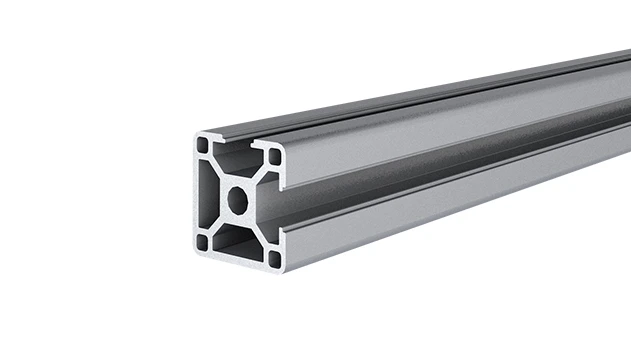
3030 is a 3.00 x 3.00CM fractional 30 series square extrusion T-slot profile with two side open T-slots, each side with 3.00cm face, 2 side with open slot, 2 side with closed face. The profile has align-a-grooves to assist in aligning connecting profiles.
In a world where "going green" has shifted from a buzzword to a business imperative, manufacturers, builders, and designers are on a constant hunt for materials that don't just meet performance needs but also align with environmental goals. Enter the 3030b EU standard aluminum profile—a humble yet powerful player in the sustainable materials revolution. You might not realize it, but this unassuming 30x30mm aluminum extrusion is quietly reshaping industries, from automotive to construction, by proving that strength, versatility, and eco-friendliness can go hand in hand. Let's dive into why this specific aluminum profile has become a go-to choice for sustainability-focused teams, and how its recyclability and eco-friendly design are setting new standards for responsible manufacturing.
What Exactly Is 3030b EU Standard Aluminum Profile?
First things first: let's demystify the name. The "3030b" refers to its dimensions—30 millimeters in width and 30 millimeters in height—making it a compact yet sturdy option for a wide range of applications. The "EU standard" tag isn't just a fancy label; it's a guarantee that the profile meets strict European union regulations on quality, safety, and environmental impact. This means every 3030b profile rolling off the production line has been tested for durability, chemical composition, and energy efficiency during manufacturing. But what really sets it apart is its roots in aluminum extrusion profile technology—a process that's as kind to the planet as it is to your project's budget.
Aluminum extrusion, in simple terms, is how this profile gets its shape. Imagine heating aluminum billets (think: giant aluminum logs) until they're malleable, then forcing them through a custom die (a metal mold) under high pressure. The result? A continuous length of aluminum with a precise cross-section—in this case, the 30x30mm "b" design, which often includes T-slots for easy assembly with bolts, brackets, or other aluminum profile accessories. What's remarkable about extrusion is how little waste it generates. Unlike cutting or machining solid blocks of metal, extrusion shapes aluminum with minimal material loss, and any scrap produced during the process is almost entirely recyclable. That's the first hint of why this profile is a sustainability star.
The Eco-Friendly Edge of Aluminum Extrusion
To truly appreciate the 3030b's green credentials, we need to zoom out and look at the entire lifecycle of aluminum—from extraction to end-of-life. Aluminum is one of the most abundant metals on Earth, but that doesn't mean its production is without impact. However, when compared to other metals like steel or copper, aluminum extrusion stands out for its energy efficiency. Let's break it down: producing primary aluminum (from raw bauxite ore) is energy-intensive, but here's the twist: over 75% of all aluminum ever produced is still in use today. Why? Because aluminum is infinitely recyclable, and recycling it uses just 5% of the energy required to make new aluminum from scratch. That's a 95% energy savings—an astronomical number when you consider the scale of global manufacturing.
Now, the 3030b EU standard aluminum profile leans into this advantage. Many manufacturers now use high percentages of recycled aluminum (often called "secondary aluminum") in their extrusion processes. Some even source 100% recycled aluminum for their profiles, cutting down on the need for mining and reducing greenhouse gas emissions. But the eco-friendliness doesn't stop there. The extrusion process itself is designed to minimize energy waste. Modern extrusion presses use advanced heating systems that recover and reuse heat, and water-based coolants (instead of harsh chemicals) to quench the extruded profiles. Even the lubricants used during extrusion are often biodegradable, ensuring that every step of the process leaves a lighter footprint.

Recyclability: Aluminum's Superpower, and Why 3030b Profiles Excel
If there's one stat that sells aluminum's sustainability, it's this: aluminum can be recycled infinitely without losing strength or quality. A 3030b profile used in a factory workbench today could be melted down next decade and turned into a window frame, then a bike frame, then a smartphone case—all without any degradation in performance. Compare that to plastic, which degrades with each recycling cycle, or steel, which loses some structural integrity after repeated recycling. Aluminum's "infinite recyclability" is a game-changer for circular economy models, where materials are kept in use for as long as possible, and waste is eliminated.
But why does the 3030b profile, specifically, shine here? Its design plays a role. Unlike complex metal components with mixed materials (think: plastic coatings or non-recyclable adhesives), 3030b profiles are typically made of pure aluminum alloys, with minimal additional elements. This makes them easy to separate and recycle at the end of their lifecycle. Even when paired with aluminum profile accessories—like brackets, end caps, or connectors—most of these (fùjiàn, accessories) are also aluminum-based, ensuring the entire assembly can be recycled as a single unit. No need to disassemble tiny plastic parts or strip off coatings; just melt it down and start fresh. This simplicity is key for businesses looking to reduce their waste management costs and meet sustainability targets.
A Closer Look: Sustainability Metrics Compared
To put the 3030b's impact into perspective, let's compare it to two common alternatives: mild steel and PVC plastic. The table below breaks down their recyclability, energy use, and environmental footprint.
| Metric | 3030b EU Standard Aluminum Profile | Mild Steel Profile (Similar Size) | PVC Plastic Profile (Similar Size) |
|---|---|---|---|
| Recyclability Rate | 95%+ (infinitely recyclable) | 60-70% (loses quality after 2-3 cycles) | <10% (degrades, often downcycled) |
| Energy to Recycle (vs. Primary Production) | 5% of primary energy use | 50% of primary energy use | Not economically viable to recycle |
| Carbon Footprint (kg CO₂ per kg of material) | ~2.5 (using 50% recycled content) | ~1.8 (primary production) | ~3.0 (production + disposal) |
| Average Lifespan | 50+ years (with proper maintenance) | 30-40 years (prone to corrosion) | 10-15 years (degrades in UV light/heat) |
| End-of-Life Impact | High value as recycled material; minimal waste | Moderate scrap value; some waste from coatings | Mostly landfilled or incinerated; releases toxins |
The numbers speak for themselves. While steel has a lower carbon footprint during primary production, its recyclability is limited, and it's heavier (meaning higher transportation emissions). PVC, on the other hand, is lightweight but environmentally costly, with near-zero recyclability and toxic byproducts when burned. The 3030b aluminum profile strikes a balance: its high recyclability, long lifespan, and energy savings during recycling make it a clear winner for sustainability.
Beyond the Profile: Aluminum Profile Accessories and Circular Design
A profile is only as good as the system it builds. That's where aluminum profile accessories come in—and yes, they're just as eco-friendly as the 3030b itself. Think about the nuts, bolts, brackets, end caps, and T-slot connectors that turn a simple aluminum extrusion into a workbench, a conveyor frame, or a machine guard. Most of these accessories are made from the same recycled aluminum alloys as the profile, ensuring the entire assembly is a closed-loop system. Even plastic components, like end caps or gaskets, are often made from recycled or biodegradable plastics, further reducing the environmental impact.
Take, for example, the T-slot nuts and bolts used to join 3030b profiles. These small but critical accessories are typically made from aluminum or stainless steel (another highly recyclable material), and they're designed for repeated use. Unlike welds or adhesives, which permanently bond materials and make disassembly a nightmare, T-slot connections allow for easy modifications or repairs. Need to reconfigure a production line? Simply loosen the bolts, adjust the profiles, and tighten them back up. This modularity extends the lifespan of the entire system, reducing the need for new materials. It's a classic case of "reduce, reuse, recycle" in action—and it's why lean manufacturers (those focused on minimizing waste) love aluminum profiles.
Real-World Impact: 3030b Profiles in Sustainable Industries
Let's get concrete: where is the 3030b EU standard aluminum profile making a difference today? One major area is in automotive manufacturing. Car companies are racing to reduce vehicle weight to improve fuel efficiency and meet emissions targets. Aluminum profiles, including the 3030b, are replacing heavier steel components in car frames, door panels, and battery enclosures. A single electric vehicle can contain over 200kg of aluminum, and much of that is in extruded profiles. By using recycled aluminum in these profiles, automakers are cutting their carbon footprint while keeping vehicles strong and safe.
Another industry embracing the 3030b is renewable energy. Solar panel frames, wind turbine components, and battery storage systems all rely on lightweight, corrosion-resistant materials. Aluminum profiles fit the bill perfectly, and their recyclability aligns with the green mission of the renewable sector. Even in construction, the 3030b is gaining ground. Architects are using it for modular partitions, window frames, and support structures, appreciating its ability to be prefabricated off-site (reducing on-site waste) and recycled at the end of the building's life.
Small businesses are getting in on the action too. A local furniture maker, for instance, might use 3030b profiles to build modular shelving units. By choosing aluminum over solid wood or particleboard, they're reducing deforestation and avoiding formaldehyde-based adhesives. Plus, if a customer wants to resize their shelves later, the modular design lets them do so without buying a whole new unit. It's sustainability that's accessible to everyone, not just big corporations.
Challenges and Innovations: Making Aluminum Even Greener
Of course, no material is perfect. The production of primary aluminum still requires significant energy, and while recycling helps, there's room for improvement. That's why manufacturers are investing in new technologies to make aluminum extrusion even more eco-friendly. One promising innovation is the use of renewable energy in extrusion plants. Many facilities now run on solar, wind, or hydroelectric power, further cutting their carbon emissions. Others are experimenting with hydrogen-based heating systems to replace natural gas, reducing reliance on fossil fuels.
Another area of focus is "green alloys." By tweaking the composition of aluminum alloys, scientists are creating profiles that are lighter, stronger, and easier to recycle. For example, adding small amounts of scandium or lithium can increase strength without compromising recyclability. These advanced alloys are making 3030b profiles suitable for even more demanding applications, from aerospace to marine engineering, where performance and sustainability are equally critical.
The Future Is Aluminum: Why 3030b Profiles Are Here to Stay
As governments tighten environmental regulations and consumers demand greener products, the case for 3030b EU standard aluminum profiles only grows stronger. Its combination of strength, versatility, and recyclability makes it a cornerstone of the circular economy. Think about it: a profile installed in a factory today could still be in use 50 years from now, either in its original form or recycled into something entirely new. That's a legacy few materials can claim.
For businesses, the benefits are clear: lower long-term costs (thanks to recyclability and durability), compliance with eco-regulations, and a marketing edge with sustainability-focused customers. For the planet, it's a step toward reducing resource depletion and greenhouse gas emissions. And for you, the next time you see a sleek aluminum frame, a modular workbench, or a lightweight car part, you'll know there's more to it than meets the eye—it's a small but powerful choice for a greener future.
Conclusion: Choosing Sustainability, One Profile at a Time
The 3030b EU standard aluminum profile isn't just a material—it's a statement. It says that performance doesn't have to come at the expense of the planet, and that sustainability can be built into every step of the manufacturing process. From its energy-efficient extrusion to its infinite recyclability, and even its modular design that encourages reuse, this profile embodies what it means to "build better."
So whether you're a manufacturer designing the next generation of products, a builder constructing a eco-friendly home, or a small business owner looking to reduce waste, consider the 3030b aluminum profile. It's not just a smart choice for your project—it's a smart choice for the planet. And in a world where every decision counts, that's something worth celebrating.