- Company Articles
- Industry articles
- Industry standards
- Sustainability of 4040F EU Standard Aluminum Profile: Recyclability & Eco-Friendly Manufacturing

Sustainability of 4040F EU Standard Aluminum Profile: Recyclability & Eco-Friendly Manufacturing
Related Product
4040F EU Standard Aluminum Profile
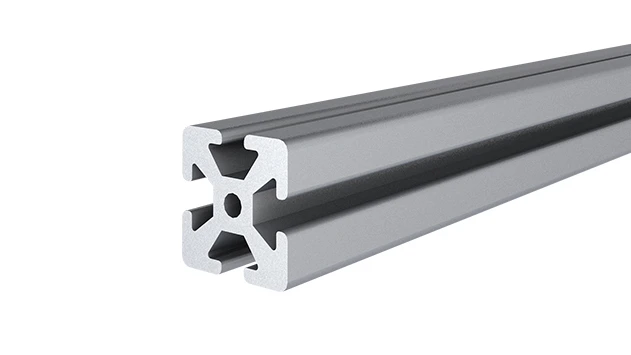
4040F is a 4.00x4.00 CM fractional 40 series square extrusion T-slot profile with four side open T-slots, each side with 4.00cm face. The profile has align-a-grooves to assist in aligning connecting profiles.
In today's manufacturing landscape, sustainability isn't just a buzzword—it's a responsibility. As industries worldwide strive to reduce their environmental footprint, the materials we choose play a pivotal role in shaping a greener future. One material that has emerged as a champion of sustainability is the 4040F EU standard aluminum profile. More than just a structural component, this aluminum extrusion profile embodies the principles of eco-friendly manufacturing, recyclability, and long-term durability. Let's dive into why this profile stands out, how its production aligns with green practices, and why it's becoming a go-to choice for forward-thinking manufacturers and lean system suppliers alike.
What is the 4040F EU Standard Aluminum Profile?
Before we explore its sustainability credentials, let's get to know the 4040F itself. Part of the broader family of aluminum extrusion profiles, the 4040F is defined by its dimensions: 40mm x 40mm, with a "F" designation that refers to specific flange designs and slot configurations under EU standards. This precision-engineered profile is a workhorse in industrial settings, commonly used to build workbenches, material racks, conveyor systems, and lean manufacturing setups. Its popularity stems from its versatility—paired with aluminum profile accessories like connectors, brackets, and hinges, it can be assembled into custom structures that adapt to evolving production needs without the need for welding or complex tools.
But what truly sets the 4040F apart isn't just its functionality. It's the material itself: aluminum. Unlike steel, which is heavy and energy-intensive to process, or plastic, which degrades over time and clogs landfills, aluminum brings a unique set of environmental benefits to the table. And when crafted into an extrusion profile like the 4040F, these benefits are amplified, making it a cornerstone of sustainable manufacturing.
Eco-Friendly Manufacturing: From Ore to Extrusion
The sustainability journey of the 4040F EU standard aluminum profile begins long before it reaches the factory floor. Let's walk through its manufacturing process to see how eco-friendly practices are woven into every step.
1. Aluminum Production: A Focus on Energy Efficiency
Aluminum starts as bauxite, an ore rich in aluminum oxide. Extracting aluminum from bauxite involves two key steps: refining bauxite into alumina (aluminum oxide) and then smelting alumina into pure aluminum. Historically, this process was energy-heavy, but modern advancements have drastically reduced its environmental impact. Today, leading smelters use renewable energy sources like hydroelectric power, cutting down on greenhouse gas emissions. For example, in Norway, where hydroelectricity is abundant, aluminum production has one of the lowest carbon footprints globally.
Once pure aluminum is produced, it's transformed into billets—cylindrical blocks that serve as the raw material for extrusion. This is where the 4040F takes shape. The extrusion process involves heating the billet to around 500°C (much lower than the melting point of steel, which requires temperatures above 1300°C) and forcing it through a die to create the profile's specific cross-section. This low-heat process not only saves energy but also minimizes waste, as the die can be reused for thousands of profiles, ensuring consistency and reducing material loss.
2. Closed-Loop Manufacturing: Minimizing Waste
Waste reduction is a cornerstone of eco-friendly manufacturing, and aluminum extrusion excels here. During the extrusion of the 4040F profile, any scrap material—such as trimmings or off-cuts—is collected and recycled on-site. This closed-loop system means almost no aluminum goes to waste. In fact, many extrusion facilities report scrap recycling rates of over 95%, turning waste into new billets that can be extruded again. This not only reduces the need for virgin aluminum but also cuts down on the energy and resources required to mine and process new ore.
3. Finishing Touches: Low-Impact Coatings
After extrusion, the 4040F often undergoes surface treatments to enhance durability or aesthetics—think anodizing, powder coating, or electrophoresis. These processes are designed to be eco-friendly, too. Anodizing, for instance, uses an electrolytic process to create a protective oxide layer on the aluminum's surface, requiring only water, electricity, and non-toxic chemicals. Unlike paint, which can contain volatile organic compounds (VOCs), anodized finishes are long-lasting and free from harmful emissions. Similarly, powder coating uses dry powder pigments that are electrostatically applied and cured with heat, producing minimal waste and no solvent runoff.

Recyclability: Aluminum's Superpower
If there's one feature that cements aluminum's status as a sustainable material, it's its recyclability. Aluminum is 100% recyclable, and it can be recycled infinitely without losing its mechanical properties. This means a 4040F profile that's no longer needed can be melted down, purified, and extruded into a new profile—or any other aluminum product—with the same strength and quality as the original. Compare this to plastic, which degrades with each recycling cycle, or steel, which can be recycled but often requires blending with virgin material to maintain integrity. Aluminum's infinite recyclability is a game-changer for circular economy models.
The energy savings from recycling aluminum are staggering. Producing aluminum from recycled scrap uses just 5% of the energy required to produce it from bauxite ore. To put that in perspective: recycling one ton of aluminum saves enough energy to power a typical home for over 10 years. For manufacturers, this translates to lower carbon footprints and reduced reliance on fossil fuels. When a lean system supplier chooses 4040F profiles for their clients' workbenches or material racks, they're not just providing a durable solution—they're contributing to a system where end-of-life products become valuable resources, not waste.
But recyclability isn't just about the material itself; it's also about design. The 4040F's modular nature—assembled with aluminum profile accessories like snap-fit connectors or T-slot fasteners—makes it easy to disassemble at the end of its lifecycle. Unlike welded steel structures, which are often scrapped entirely, the 4040F can be taken apart, with individual profiles and accessories sorted for recycling or reuse. This "design for disassembly" approach ensures that even complex systems built with 4040F profiles can be broken down efficiently, maximizing the recovery of recyclable materials.
4040F vs. Traditional Materials: A Sustainability Showdown
To truly appreciate the 4040F's eco-friendly edge, let's compare it to two common alternatives: steel and plastic.
| Feature | 4040F Aluminum Profile | Steel Profile | Plastic Profile |
|---|---|---|---|
| Energy to Produce (per ton) | 62 kWh (recycled); 13,000 kWh (virgin) | 3,800 kWh (virgin steel) | 8,000–10,000 kWh (depends on type) |
| Recyclability | 100% infinite recycling | Recyclable, but quality degrades over cycles | Limited; often downcycled into lower-grade products |
| Weight (40x40mm profile) | ~1.8 kg/m | ~5.0 kg/m | ~0.8 kg/m (but less durable) |
| Durability | Resistant to corrosion; 20+ year lifespan | Prone to rust without coating; 15–20 year lifespan | Degrades in UV light; 5–10 year lifespan |
| End-of-Life Impact | High value as scrap; minimal landfill contribution | Heavy; transportation for recycling is energy-heavy | Often ends in landfills; non-biodegradable |
The table tells a clear story: aluminum profiles like the 4040F outperform steel and plastic in almost every sustainability category. While plastic is lighter, its short lifespan and poor recyclability make it a poor long-term choice. Steel, though strong, is energy-intensive to produce and transport, and its susceptibility to corrosion often leads to premature replacement. The 4040F, with its lightweight design, infinite recyclability, and low energy footprint, strikes the perfect balance between functionality and environmental responsibility.
Real-World Impact: How 4040F Profiles Drive Sustainable Manufacturing
Sustainability isn't just about numbers on a page—it's about real change in factories, warehouses, and supply chains. Let's look at how the 4040F is making a difference in practical applications.
1. Lean Manufacturing Systems
Lean manufacturing is all about eliminating waste—whether it's time, materials, or energy. Lean system suppliers often recommend 4040F profiles for building modular workstations, flow racks, and turnover trolleys because they align with lean principles. For example, a manufacturer using 4040F-based workbenches can reconfigure them as production needs change, avoiding the cost and waste of buying new furniture. When a line is retired, the profiles are recycled, and the energy saved from not producing new steel or plastic workbenches reduces the company's carbon footprint.
2. Automotive and Electronics Industries
The automotive and electronics sectors are under increasing pressure to reduce emissions and meet strict sustainability regulations. Both industries rely heavily on aluminum extrusion profiles for lightweight components and assembly lines. In automotive plants, 4040F profiles are used to build ergonomic workstations that reduce worker fatigue and improve efficiency. In electronics manufacturing, their corrosion resistance and ESD (electrostatic discharge) compatibility (when paired with ESD-safe aluminum profile accessories) make them ideal for handling sensitive components. And when these plants upgrade their facilities, the old 4040F structures are recycled, closing the loop on resource use.
3. Green Building and Renewable Energy
Beyond industrial settings, 4040F profiles are finding their way into green building projects and renewable energy setups. Solar panel mounting systems, for instance, use aluminum profiles for their lightweight strength and resistance to weathering. Since solar installations are designed to last 25+ years, the durability of 4040F ensures minimal maintenance and replacement. When the panels reach the end of their life, the aluminum frames are recycled, further reducing the project's environmental impact.
The Role of Suppliers: Choosing Partners Who Prioritize Sustainability
While the 4040F profile itself is inherently sustainable, its impact is amplified when sourced from suppliers who share a commitment to eco-friendly practices. A responsible lean system supplier or aluminum profile supplier will prioritize transparency in their manufacturing processes, from sourcing recycled aluminum to using renewable energy in extrusion. They'll also offer take-back programs for old profiles, ensuring that even end-of-life products are recycled properly.
When selecting a supplier, look for certifications like ISO 14001 (environmental management) or EPD (Environmental Product Declarations), which verify a product's environmental performance. Suppliers who invest in energy-efficient extrusion presses, water recycling systems, and waste reduction programs are not just selling a product—they're partnering with you to achieve your sustainability goals.
Conclusion: The 4040F Profile—Building a Greener Tomorrow, Today
The 4040F EU standard aluminum profile is more than a building block for industrial systems. It's a symbol of how manufacturing can evolve to meet the demands of a sustainable future. From its energy-efficient production and closed-loop manufacturing to its infinite recyclability and modular design, every aspect of the 4040F is engineered with the planet in mind. For manufacturers, it's a practical choice that reduces costs, improves flexibility, and aligns with corporate social responsibility goals. For lean system suppliers, it's a tool to help clients build more efficient, eco-friendly operations.
As we move toward a world where sustainability is no longer optional but essential, materials like the 4040F will play a starring role. They prove that we don't have to sacrifice performance for the planet—that with smart design and responsible manufacturing, we can build systems that are strong, adaptable, and kind to the environment. So the next time you walk through a factory, a warehouse, or even a solar farm, take a closer look at the structures around you. Chances are, you'll spot the 4040F profile—quietly working to build a greener, more sustainable world, one extrusion at a time.