- Company Articles
- Industry articles
- Industry standards
- Sustainability of 4080A EU Standard Aluminum Profile: Reusability & Eco-Friendly Design

Sustainability of 4080A EU Standard Aluminum Profile: Reusability & Eco-Friendly Design
Related Product
4080A EU Standard Aluminum Profile
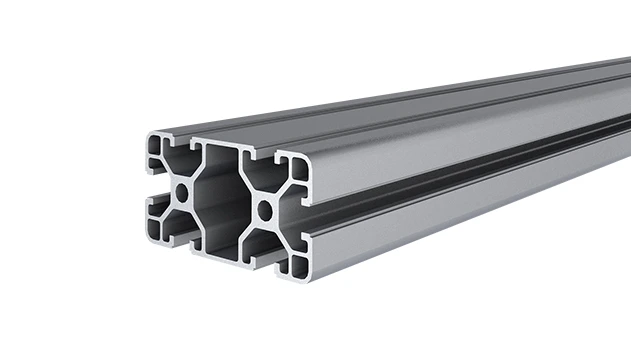
4080A is a 4.00x8.00 CM fractional 40 series square extrusion T-slot profile with two side open T-slots, each side with 4.00cm face, two side with 8.00cm face. The profile has align-a-grooves to assist in aligning connecting profiles.
In today's manufacturing landscape, sustainability isn't just a buzzword—it's a critical pillar shaping how businesses design, produce, and operate. As industries worldwide grapple with reducing their carbon footprint and meeting increasingly strict environmental regulations, the materials we choose play a starring role. Enter the 4080A EU standard aluminum profile: a workhorse of modern manufacturing that's quietly revolutionizing sustainability through its unique blend of reusability and eco-friendly design. Let's dive into why this unassuming piece of metal is becoming a go-to for forward-thinking companies aiming to build greener, more efficient operations.
Why Sustainability in Manufacturing Matters More Than Ever
Before we get into the specifics of the 4080A profile, let's take a step back. Why does sustainability in manufacturing matter right now? For starters, consumers are voting with their wallets—73% of global consumers say they'd pay more for products from sustainable brands, according to a 2023 Nielsen report. Governments are also cracking down: the EU's Carbon Border Adjustment Mechanism (CBAM) and the U.S.'s Inflation Reduction Act are pushing manufacturers to rethink supply chains and material choices. But beyond compliance and consumer demand, there's a moral imperative: manufacturing accounts for roughly 28% of global energy consumption and 24% of carbon emissions, according to the International Energy Agency. So, choosing materials that minimize this impact isn't just good business—it's good for the planet.
This is where aluminum profiles, particularly the 4080A EU standard variety, come into play. Unlike traditional materials like steel or plastic, aluminum offers a unique combination of strength, lightness, and recyclability. But the 4080A profile takes it a step further, thanks to its adherence to EU standards, modular design, and focus on reducing waste throughout its lifecycle. Let's unpack what makes this profile a sustainability standout.
What Is the 4080A EU Standard Aluminum Profile?
First things first: let's demystify the name. The "4080A" refers to the profile's dimensions: 40mm in width and 80mm in height, with "A" indicating a specific cross-sectional design (think of it as the profile's "shape" when viewed from the end). This might sound technical, but these dimensions are carefully engineered to balance strength and versatility. The "EU standard" part is key, too—it means the profile meets strict European union regulations for material safety, energy efficiency in production, and environmental impact. For manufacturers operating in the EU or exporting to European markets, this compliance isn't just a box to check; it's a guarantee that the product aligns with some of the world's most rigorous sustainability standards.
But what's actually in this profile? At its core, it's made from aluminum, a metal known for its low density and high corrosion resistance. Most 4080A profiles are produced using aluminum extrusion profile techniques—a process where aluminum billets are heated and pushed through a die to create the desired cross-section. This method is efficient because it produces minimal waste and allows for complex shapes to be formed in one step. What's more, many manufacturers now use recycled aluminum in their 4080A profiles; some even source up to 70% of their raw material from post-consumer or post-industrial scrap, drastically reducing the energy needed to produce new aluminum (recycling aluminum uses just 5% of the energy required to produce it from bauxite ore, according to the Aluminum Association).
A Closer Look at the Design: Modularity as a Sustainability Superpower
One of the 4080A profile's most underrated features is its modularity—and modularity is sustainability's best friend. Unlike welded steel structures or glued plastic components, the 4080A profile is designed to be assembled and disassembled with ease, thanks to a range of aluminum profile accessories. Think: 90° aluminum profile connectors that snap or bolt into place, end caps that protect the profile's ends while adding stability, and brackets that allow for quick adjustments. This isn't just about convenience; it's about reusability.
Imagine a factory that needs to reconfigure its production line to accommodate a new product. With traditional fixed structures, this might mean cutting, welding, or even scrapping old equipment—generating waste and requiring new materials. But with 4080A profiles, the process is different. Workers can simply unbolt the connectors, disassemble the existing structure (say, a workbench or material rack), and reassemble the profiles into a new shape. The same profiles that once supported a conveyor system can now form the frame of a quality control station. This ability to repurpose the material again and again drastically extends its lifespan, reducing the need for new production and the associated environmental impact.

Reusability: The 4080A Profile's Secret to Longevity
Let's talk about reusability in more detail, because it's a cornerstone of the 4080A profile's sustainability story. Aluminum itself is infinitely recyclable—meaning it can be melted down and reshaped without losing quality—but the 4080A takes this a step further by prioritizing "reuse before recycling." In other words, why melt it down when you can keep using the same profile in a new configuration?
Consider a typical lifecycle of a 4080A profile. It starts as raw material (often recycled aluminum) in an extrusion facility, where it's shaped into the 40x80mm cross-section. From there, it's shipped to a manufacturer that assembles it into a workbench using aluminum profile accessories like connectors and end caps. That workbench serves on the factory floor for 5 years, then the factory upgrades its layout. Instead of sending the workbench to a landfill, the manufacturer disassembles it, sorts the profiles from the accessories, and uses the profiles to build a material rack. The material rack lasts another 3 years, after which the company decides to downsize. Now, the profiles are still in good condition, so they're sold or donated to a small business that uses them to build shelving. Finally, after a decade or more of use, the profiles might show signs of wear—but even then, they're sent to a recycling facility, melted down, and turned into new aluminum products. Compare that to a plastic workbench, which might crack after 2-3 years and end up in a landfill, or a steel structure that rusts and is too heavy to repurpose, leading to it being scrapped (and requiring energy to recycle, though steel is recyclable too).
Sustainability Comparison: 4080A Aluminum vs. Traditional Materials
| Factor | 4080A Aluminum Profile | Traditional Steel (Welded) | Plastic (Reinforced) |
|---|---|---|---|
| Reusability Potential | High (modular, easy disassembly) | Low (welded joints hard to separate) | Very Low (prone to cracking, glued joints) |
| Recyclability Rate | 100% (infinitely recyclable, no quality loss) | 90%+ (recyclable but energy-intensive) | 5-10% (limited recycling, often downcycled) |
| Energy Use in Production | Low (especially with recycled content) | High (requires high heat for smelting/welding) | Moderate-High (depends on plastic type, fossil fuel-based) |
| Typical Lifespan (Industrial Use) | 10+ years (with repurposing) | 5-8 years (prone to rust without coating) | 2-3 years (degrades under heat/weight) |
| Waste Generated During Use | Minimal (no need for frequent replacement) | Moderate (coating wear, rust removal) | High (cracking, discoloration, replacement parts) |
The table above highlights just how much the 4080A profile outperforms traditional materials in key sustainability metrics. But numbers only tell part of the story. Let's look at a real-world example: a automotive parts manufacturer in Germany that switched from steel workbenches to 4080A aluminum workbenches. Within two years, they reported a 35% reduction in waste from production line reconfigurations, as they could reuse 80% of their old profiles in new setups. They also saved on shipping costs, thanks to aluminum's lighter weight, and reduced their carbon footprint by using profiles made with 60% recycled aluminum. "We used to dread layout changes because they meant so much waste," said the plant manager. "Now, it's just a matter of unbolting and rebuilding. The profiles feel like a long-term investment, not a one-time expense."
Eco-Friendly Design: From Production to End-of-Life
Reusability is crucial, but the 4080A profile's sustainability story starts long before it's assembled into a workbench—it begins in the production process. Aluminum extrusion, the method used to create the 4080A profile, is inherently efficient. Unlike casting, which can produce excess material that goes to waste, extrusion shapes the aluminum in one continuous process, with scrap rates as low as 5% (most of which is recycled on-site). Many extrusion facilities also use renewable energy; in Europe, where the 4080A is most commonly produced, a growing number of plants run on solar, wind, or hydroelectric power, further reducing the carbon footprint of each profile.
But it's not just about how the profile is made—it's about what it's made of. As mentioned earlier, recycled aluminum is a staple in 4080A production. Let's put that into perspective: producing one ton of aluminum from recycled scrap saves 9 tons of CO2 emissions compared to producing it from bauxite, according to the European Aluminum Association. For a manufacturer using 100 tons of 4080A profiles annually (a modest amount for a mid-sized factory), that's 900 tons of CO2 saved each year—equivalent to taking 195 cars off the road, based on EPA estimates.
End-of-Life: Closing the Loop
Even when a 4080A profile reaches the end of its reuse life—maybe after 15 years of being repurposed as a workbench, then a rack, then a shelving unit—it still has value. Aluminum's recyclability means that the profile can be melted down and turned into a new 4080A profile, a beverage can, or even an airplane part, with no loss in quality. This "closed-loop" system is a stark contrast to plastic, which often downcycles into lower-quality products (like park benches or plastic lumber) before eventually reaching the landfill. Steel is recyclable too, but aluminum's lower melting point (660°C vs. steel's 1510°C) makes recycling it far less energy-intensive—another win for the environment.
What's more, the EU's strict waste management regulations mean that manufacturers using 4080A profiles are incentivized to recycle. The Waste Framework Directive, for example, requires that at least 70% of construction and demolition waste be recycled by 2030, and aluminum profiles easily meet this threshold. Many suppliers even offer take-back programs, where they'll collect old profiles from customers, recycle them, and use the recycled aluminum in new production—closing the loop and ensuring minimal waste.
Applications: How the 4080A Profile Supports Sustainable Operations
To truly understand the 4080A profile's impact, let's look at how it's used in the real world. Its versatility means it pops up in a range of industries, but two areas stand out: lean system manufacturing and custom workbench design. Both are perfect examples of how sustainability and functionality can go hand in hand.
Lean Systems: Waste Reduction at Its Core
Lean manufacturing is all about eliminating waste—whether it's time, materials, or energy. And the 4080A profile is a lean system's dream come true. Lean systems thrive on flexibility: the ability to adapt to changing demand, reduce downtime, and optimize workflows. The 4080A profile supports this by allowing for quick, tool-free adjustments. For example, a lean production line might use 4080A profiles to build a kanban system—material racks that signal when parts need to be restocked. If demand for a part increases, workers can add more levels to the rack using aluminum profile accessories like brackets and connectors, without needing to buy a whole new rack. This reduces overproduction of equipment and keeps the line running smoothly.
Another example: lean work cells, where teams collaborate on specific tasks. These cells need to be ergonomic, with workbenches, tool holders, and material bins positioned for maximum efficiency. With 4080A profiles, managers can adjust the height of workbenches to suit different workers, add or remove shelves as needed, and even integrate conveyor systems (using roller track accessories, another keyword from the list) to move parts between cells. Because the profiles are lightweight, reconfiguring the cell takes hours instead of days, minimizing downtime and keeping the focus on productivity—all while reducing waste.
Workbenches: Built to Last, Designed to Adapt
Workbenches are the backbone of any manufacturing facility, and they're also a prime example of how the 4080A profile shines. A typical workbench made with 4080A profiles is sturdy enough to support heavy machinery (the profile's 40x80mm dimensions provide excellent load-bearing capacity) but light enough to be moved if needed (especially with casters, another common accessory). What makes it sustainable, though, is its adaptability.
Consider a electronics assembly workbench. Initially, it might have a flat top, a few shelves for tools, and a small bin for screws. But as the company starts producing larger devices, the workbench needs more surface area. With 4080A profiles, the solution is simple: add an extension using additional profiles and connectors. Later, if the company switches to smaller components, the extension can be removed and the profiles repurposed elsewhere. Compare this to a wooden workbench, which would need to be cut or replaced, or a plastic workbench that might crack under the weight of new equipment. The 4080A workbench grows with the business, reducing the need for constant replacements.
Even the accessories play a role here. Aluminum profile end caps, for instance, prevent dust and debris from collecting inside the profile, extending its life. Cable management clips (another type of accessory) keep wires organized, reducing the risk of damage and the need for replacements. It's these small, thoughtful design choices that add up to big sustainability wins.
Aluminum Profile Accessories: The Unsung Heroes of Reusability
We've mentioned aluminum profile accessories a few times, but they deserve their own spotlight—because without them, the 4080A profile's modularity wouldn't be possible. These accessories are the glue that holds the sustainability story together, and they're designed with the same eco-friendly principles as the profiles themselves.
Take 90° aluminum profile connectors, for example. These small, often die-cast components allow two profiles to be joined at a right angle without welding. They're made from the same recycled aluminum as the profiles, and they're reusable—meaning you can unbolt them, use them in another project, and they'll still perform as well as new. End caps, which fit over the ends of the profiles, are often made from recycled plastic or aluminum, and they prevent corrosion by keeping moisture out. Even the bolts and screws used to secure the accessories are often made from stainless steel or coated steel, ensuring they don't rust and can be reused multiple times.
Another standout accessory is the t-slot rubber seal cover. The 4080A profile, like many aluminum extrusion profiles, has t-slots—long, narrow grooves along its length that allow for accessories to be attached without drilling. The rubber seal cover fits into these slots, protecting them from dust and debris while also reducing noise (a bonus for factory workers). When the profile is repurposed, the seal can be peeled off and reused, or recycled if it's worn. It's a small detail, but it's indicative of how every component in the 4080A system is designed with longevity in mind.
The Future of Sustainable Manufacturing: Why the 4080A Profile Is Just the Beginning
As manufacturers continue to prioritize sustainability, the 4080A EU standard aluminum profile is poised to become even more influential. Innovations in extrusion technology are making production even more efficient—some facilities now use AI to optimize die designs, reducing material waste by up to 10%. Advances in aluminum alloys are also improving the profile's strength-to-weight ratio, meaning even lighter, more durable profiles that use less material. And as the circular economy gains traction, we're likely to see more take-back programs, where suppliers not only sell 4080A profiles but also manage their end-of-life recycling, creating a truly closed-loop system.
But the 4080A profile isn't just a product—it's a mindset shift. It challenges the "use-and-discard" model that has dominated manufacturing for decades, proving that sustainability and profitability can go hand in hand. When a manufacturer chooses 4080A profiles, they're not just buying a material; they're investing in a system that reduces waste, cuts costs, and future-proofs their operations against stricter environmental regulations.
Conclusion: Small Profile, Big Impact
The 4080A EU standard aluminum profile might not look like much at first glance—just a length of silver metal with a specific shape. But beneath its simple exterior lies a sustainability powerhouse, driven by reusability, eco-friendly design, and modularity. From its recycled aluminum content and energy-efficient production to its ability to be repurposed again and again, this profile is redefining what it means to be a sustainable material in manufacturing.
For businesses looking to reduce their environmental impact without sacrificing performance, the choice is clear. The 4080A profile isn't just a trend; it's a long-term solution that aligns with the planet's needs and the bottom line. As one sustainability director at a European automotive supplier put it: "We used to think of sustainability as a cost. Now, with materials like the 4080A profile, we see it as an investment—one that pays off in reduced waste, lower energy bills, and a better future for our industry."
In the end, sustainability in manufacturing isn't about grand gestures—it's about the small, intentional choices we make every day. And the 4080A EU standard aluminum profile? It's one of those choices that adds up to something extraordinary.