- Company Articles
- Industry articles
- Industry standards
- Sustainability of 4080B EU Standard Aluminum Profile: Reusability & Recyclability

Sustainability of 4080B EU Standard Aluminum Profile: Reusability & Recyclability
Related Product
4080B EU Standard Aluminum Profile
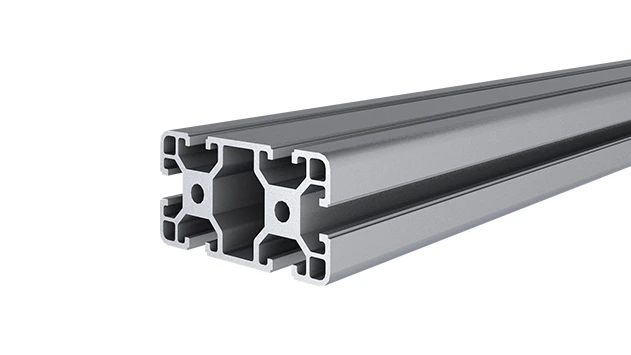
4080B is a 4.00x8.00 CM fractional 40 series square extrusion T-slot profile with two side open T-slots, each side with 4.00cm face, two side with 8.00cm face. The profile has align-a-grooves to assist in aligning connecting profiles.
In today's manufacturing landscape, sustainability isn't just a buzzword—it's a critical driver of innovation. As companies across industries strive to reduce their environmental footprint, the choice of materials has never been more important. Enter the 4080B EU standard aluminum profile: a workhorse in industrial design that's quietly revolutionizing how we think about sustainable manufacturing. More than just a structural component, this aluminum extrusion profile embodies the principles of circular economy, offering unmatched reusability and recyclability. Let's dive into why it's becoming the go-to choice for forward-thinking lean system suppliers and manufacturers alike.
Understanding the 4080B EU Standard Aluminum Profile
First, let's get familiar with what makes the 4080B profile stand out. Part of the broader family of aluminum extrusion profiles, the 4080B is defined by its dimensions—40mm in width and 80mm in height—and adherence to strict EU standards for quality and performance. Its design features a T-slot structure, which might sound technical, but here's the simple truth: those slots are like the profile's "universal language." They allow for easy attachment of aluminum profile accessories, from connectors and end caps to brackets and hinges, without the need for welding or permanent modifications. This modularity isn't just convenient for assembly; it's the cornerstone of its sustainability story.
Unlike rigid materials that lock you into a single use, the 4080B is built for adaptability. Imagine a factory floor where production lines need to shift from assembling smartphones to tablets overnight, or a warehouse that reconfigures its storage racks seasonally. The 4080B doesn't just keep up—it leads the way. Its compatibility with a wide range of aluminum profile accessories means that a single length of profile can be part of a workbench today, a material rack tomorrow, and a conveyor guard next month. That's the power of design thinking centered on reusability.
Reusability: The Art of Second (and Third, and Fourth) Lives
Reusability is where the 4080B truly shines. Let's break it down: when a manufacturing project ends or a workspace needs a makeover, traditional materials like steel or wood often end up in landfills because they're difficult to disassemble or repurpose. The 4080B, however, is designed to be taken apart and reassembled with minimal effort. This is thanks in large part to its (aluminum profile accessories)—the unsung heroes of its sustainability narrative.
Take end caps, for example. These small, unassuming pieces snap onto the ends of the profile, protecting them from damage during transport or storage. When it's time to reconfigure, you simply pop them off, disconnect the connectors, and repurpose the profile. No cutting, no welding, no waste. Even more impressive are the connectors: 90° aluminum profile connectors, 45° angle codes, and three-way joints allow you to pivot, extend, or stack profiles in endless configurations. A lean system supplier might use the same 4080B profiles to build a workbench E (single deck-without caster) one quarter and a material rack B (3 row and 3 floor) the next, all by swapping out a few accessories.
Real-world examples bring this to life. Consider a mid-sized electronics manufacturer in Germany that specializes in custom circuit boards. Their production needs change weekly, with batches ranging from small prototypes to large-scale orders. Instead of investing in new workstations each time, they use 4080B profiles and aluminum profile accessories to adjust bench heights, add tool holders, or reposition material racks. Over three years, they've estimated saving over 20 tons of waste by reusing 85% of their original profiles. "It's like having a toolkit that never runs out," says their facility manager. "We don't see profiles as 'used'—we see them as 'pre-configured for the next project.'"
Another key factor in reusability is durability. Aluminum is naturally resistant to corrosion, and the 4080B's extrusion process enhances its strength, making it capable of withstanding heavy loads and daily wear and tear. Unlike plastic profiles, which degrade under UV light or extreme temperatures, or steel, which rusts without constant maintenance, the 4080B maintains its integrity over decades. This longevity means fewer replacements, less frequent material extraction, and a lower overall environmental impact.

Recyclability: Aluminum's Superpower
If reusability is the 4080B's present, recyclability is its future—and what a future it is. Aluminum is one of the most recyclable materials on the planet, and the 4080B leverages this superpower to its fullest. Here's why that matters: recycling aluminum uses just 5% of the energy required to produce new aluminum from bauxite ore. That's a 95% energy savings—an astronomical figure when you scale it up to industrial levels. For context, recycling one ton of aluminum saves enough energy to power a home for over 10 years. When you choose the 4080B, you're not just buying a profile; you're investing in a material that gives back to the planet, again and again.
The recycling process itself is remarkably efficient. Even after years of use, the 4080B can be melted down and reformed into new profiles without losing any of its structural properties. Unlike plastics, which degrade with each recycling cycle, aluminum retains its quality indefinitely. This "infinite recyclability" is why aluminum extrusion profiles like the 4080B are the backbone of a circular economy. A lean system supplier that prioritizes sustainability will often source recycled aluminum for their profiles, closing the loop between waste and production.
Let's compare this to other common industrial materials to put it in perspective. Steel is recyclable, but it's heavier, which increases transportation emissions, and its recycling process is more energy-intensive. Plastic? Most industrial plastics are either non-recyclable or lose significant quality after one cycle, making them a poor long-term choice. Wood, while renewable, requires deforestation and often treatments with chemicals that leach into the environment. The 4080B, by contrast, offers a rare combination of strength, lightness, and recyclability that's hard to match.
| Material | Reusability | Recyclability | Energy Savings in Recycling | Typical Lifespan |
|---|---|---|---|---|
| 4080B Aluminum Profile | High (modular, disassemblable with accessories) | High (infinite cycles, no quality loss) | 95% vs. primary production | 20+ years (with proper care) |
| Steel Profile | Medium (difficult to disassemble, welding required) | Medium (recyclable but energy-intensive) | 75% vs. primary production | - 15 years (prone to rust) |
| Plastic Extrusion | Low (limited reconfiguration, degrades over time) | Low (often single-use, quality degradation) | 30-50% (varies by type) | 5-8 years (UV/heat damage) |
| Wooden Structure | Low (permanent fasteners, prone to warping) | Medium (biodegradable but limited industrial recycling) | N/A (biodegradation, not recycled industrially) | 5-10 years (rot, pests) |
Aluminum Profile Accessories: The Glue That Holds Sustainability Together
We've mentioned aluminum profile accessories a few times, but it's worth diving deeper into why they're so crucial to the 4080B's sustainability. Think of the profile as a canvas, and the accessories as the paintbrushes—without the right tools, even the best canvas can't reach its potential. From simple end caps that protect the profile during storage to complex 135° aluminum profile connectors that enable angular designs, these accessories turn static profiles into dynamic, adaptable systems.
Consider caster wheels and accessories, for instance. Adding casters to a 4080B-based workbench transforms it into a mobile workstation, allowing it to move where it's needed most. When the project ends, you remove the casters, and the profile becomes part of a stationary rack. Similarly, roller track and accessories can turn a section of 4080B into a conveyor system for material handling, then later be repurposed as a guide rail for a different process. Each accessory extends the profile's utility, reducing the need for new materials.
Lean system suppliers have caught onto this, too. Many now offer "accessory starter kits" alongside 4080B profiles, empowering customers to experiment with configurations without overbuying. This not only cuts costs but also reduces waste from unused or mismatched parts. A supplier in the Netherlands, for example, reports that customers using their 4080B and accessory bundles have reduced their material waste by 35% compared to those using traditional steel systems. "It's a win-win," says their sales director. "Customers save money, and we all reduce our impact on the planet."
Beyond the Factory Floor: Broader Environmental Benefits
The sustainability of the 4080B isn't limited to its reusability and recyclability—it ripples out to other areas of environmental impact. Let's start with transportation: aluminum is significantly lighter than steel, so profiles made from it reduce the weight of equipment, workstations, and even the vehicles that transport them. Less weight means less fuel consumption and lower carbon emissions. A logistics company in the UK switched to 4080B-based turnover trolleys and saw a 12% reduction in fuel costs for their delivery vans, simply because the trolleys were 40% lighter than their steel predecessors.
Then there's the matter of maintenance. Steel requires regular painting or coating to prevent rust, and wood needs treatments to resist pests and moisture—both of which involve harsh chemicals that harm the environment. Aluminum, on the other hand, forms a natural oxide layer that protects it from corrosion, eliminating the need for toxic coatings. This not only reduces chemical waste but also cuts down on the water and energy used in maintenance routines.
Even the production process of the 4080B is more sustainable than you might think. Aluminum extrusion uses less energy than casting or forging, and many manufacturers now power their extrusion presses with renewable energy. Plus, since the 4080B is often made from recycled aluminum (post-consumer or post-industrial scrap), its production has a fraction of the carbon footprint of profiles made from primary aluminum. Some lean system suppliers even offer "carbon-neutral" 4080B options, offsetting any remaining emissions through reforestation or renewable energy projects.
Challenges and Misconceptions
Of course, no material is without its challenges, and the 4080B is no exception. One common misconception is that aluminum is "too expensive" compared to steel or plastic. While it's true that the upfront cost of 4080B profiles and aluminum profile accessories can be higher, the long-term savings tell a different story. When you factor in reusability (fewer new purchases), recyclability (potential revenue from scrap), and lower maintenance costs, the 4080B often comes out ahead. A study by the European Aluminum Association found that industrial users of aluminum profiles recoup their initial investment within 2-3 years through reduced waste and reusability benefits.
Another concern is strength: can a lightweight aluminum profile really stand up to heavy industrial use? The answer is a resounding yes. The 4080B's extrusion process aligns the aluminum's grain structure, giving it impressive load-bearing capacity—up to 500kg per linear meter in some configurations. When paired with reinforced accessories like heavy-duty connectors, it's more than capable of handling the demands of automotive, aerospace, and electronics manufacturing. In fact, many automotive plants now use 4080B profiles for assembly line fixtures, replacing heavier steel systems that were harder to move and maintain.
The Future of Sustainable Manufacturing: 4080B and Beyond
As the world moves toward a circular economy, materials like the 4080B EU standard aluminum profile will only grow in importance. We're already seeing innovations that push its sustainability further: manufacturers are developing even more durable aluminum profile accessories, using recycled content in higher percentages, and exploring bio-based lubricants for the extrusion process. Some are even experimenting with "digital twins"—3D models that track a profile's lifecycle, making it easier to reuse or recycle by logging its history of configurations and repairs.
Lean system suppliers, too, are evolving. Many now offer take-back programs, where they collect used 4080B profiles, refurbish them, and resell them at a discount. This closes the loop even tighter, ensuring that profiles never reach landfills. In Sweden, a supplier partnered with local factories to create a "profile bank," where companies can borrow, lend, or trade 4080B profiles and accessories, reducing the need for new production altogether.
Perhaps the most exciting trend is the integration of 4080B with smart technology. Imagine a material rack built with 4080B profiles that uses sensors to track inventory levels, or a workbench that adjusts its height automatically based on the user's needs—all while being completely reconfigurable. The T-slot design that makes the 4080B so adaptable also makes it easy to integrate IoT devices, turning sustainable materials into smart, sustainable systems.
Conclusion: Choosing the 4080B is Choosing the Planet
At the end of the day, sustainability is about choices. Every material we select, every process we adopt, and every product we design sends a message about our commitment to the planet. The 4080B EU standard aluminum profile isn't just a material—it's a statement. It says that we value adaptability over waste, longevity over disposability, and collaboration over excess. Whether you're a lean system supplier looking to offer greener solutions or a manufacturer aiming to reduce your footprint, the 4080B and its (aluminum profile accessories) provide a clear path forward.
So the next time you walk through a factory, a warehouse, or even a modern office, take a closer look at the structures around you. Chances are, you'll spot the telltale T-slots of an aluminum extrusion profile—maybe even a 4080B. And when you do, remember: that simple piece of aluminum is more than just a beam or a frame. It's a symbol of how manufacturing can grow, adapt, and thrive—without leaving the planet behind. In a world that demands more from every resource, the 4080B doesn't just meet the standard; it sets a new one.