- Company Articles
- Industry articles
- Industry standards
- Sustainable Benefits of 4040C EU Standard Aluminum Profile: Reusability & Recyclability

Sustainable Benefits of 4040C EU Standard Aluminum Profile: Reusability & Recyclability
Related Product
4040C EU Standard Aluminum Profile
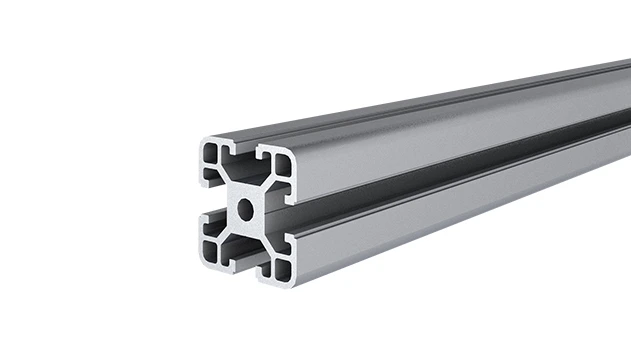
4040C is a 4.00x4.00 CM fractional 40 series square extrusion T-slot profile with four open T-slots, each side with 4.00cm face. The profile has align-a-grooves to assist in aligning connecting profiles.
In today's manufacturing landscape, sustainability isn't just a buzzword—it's a critical business imperative. As factories, warehouses, and production facilities strive to reduce their environmental footprint, the materials they choose play a pivotal role. Enter the 4040C EU Standard Aluminum Profile : a workhorse of the industrial world that's quietly revolutionizing how businesses approach both efficiency and eco-responsibility. Far more than just a structural component, this aluminum extrusion profile stands out for two key reasons: its remarkable reusability and unmatched recyclability. Let's dive into why this humble profile is becoming a cornerstone of sustainable manufacturing, and how it's helping businesses do more with less—for the planet and their bottom line.
The Rise of Sustainable Manufacturing: Why Materials Matter
Before we zoom in on the 4040C profile, let's take a step back. The manufacturing industry has long been under scrutiny for its resource consumption and waste generation. From raw material extraction to production line inefficiencies, the sector contributes a significant portion of global carbon emissions. But times are changing. Governments are tightening environmental regulations, consumers are demanding greener products, and businesses are realizing that sustainability and profitability can go hand in hand.
At the heart of this shift is a focus on the entire lifecycle of materials. It's no longer enough to create products that work well—they must also be designed to minimize waste, maximize resource use, and leave a lighter footprint. This is where aluminum, and specifically profiles like the 4040C, shines. Unlike materials that degrade after use or require energy-intensive disposal, aluminum offers a closed-loop solution that aligns with the principles of a circular economy.
But what makes the 4040C EU Standard Aluminum Profile so special? To answer that, we need to explore two core pillars: reusability and recyclability. These aren't just add-ons to its functionality—they're baked into its design, making it a sustainable choice from the moment it's installed to the day it's retired (and beyond).
Reusability: Designed to Adapt, Not Dispose
Imagine walking into a busy electronics factory. On the production floor, workers are assembling smartphones on a sleek, modular workbench. A few months later, the factory switches to manufacturing tablets, requiring a taller workbench with additional shelving. Instead of tearing down the old setup and buying new materials, the team simply disassembles the existing structure, reconfigures the aluminum profiles, and adds a few new aluminum profile accessories —and just like that, the workbench is ready for its new role. This isn't a futuristic scenario; it's the reality of working with 4040C aluminum profiles.
Reusability is where the 4040C truly excels, thanks to its modular design and compatibility with a wide range of accessories. Unlike fixed, one-and-done materials like welded steel or glued plastic, aluminum profiles are built to be taken apart and reassembled repeatedly. Let's break down why this matters:
Modularity: The Key to Endless Adaptability
The 4040C profile is part of the EU standard aluminum extrusion system, which means it's engineered to work seamlessly with a variety of connectors, joints, and brackets. These accessories—think corner brackets, T-slot nuts, and hinge connectors—act like building blocks, allowing users to create everything from workbenches and material racks to conveyor systems and machine guards. And when needs change? Simply loosen a few bolts, rearrange the profiles, and add or remove accessories as needed.
Take, for example, a workbench built with 4040C profiles. A small manufacturer might start with a basic single-deck workbench (without casters) for assembling small parts. As the business grows, they might add casters for mobility, extra shelves for tool storage, or even a second deck for larger components—all without replacing the core profiles. Later, if the workbench is no longer needed in that area, it can be disassembled and repurposed as a packing station, a quality control table, or even a mobile cart for transporting materials. The profiles themselves remain intact, retaining their structural integrity through each transformation.
Durability: Built to Last (and Last)
Reusability means little if the material can't withstand repeated use. Aluminum is inherently strong yet lightweight, and the 4040C profile, with its standardized cross-section (40mm x 40mm), is designed to handle heavy loads without bending or warping. Whether it's supporting tools, raw materials, or even machinery, the profile maintains its shape and strength over years of use. This durability ensures that even after multiple reassemblies, the profiles don't need to be replaced—unlike plastic, which can crack, or wood, which rots or warps.
Consider a lean system in a automotive parts plant. Lean manufacturing relies on minimizing waste, and that includes waste from inefficient processes or short-lived equipment. By using 4040C profiles for production line structures, the plant can adapt its layout as workflows change—adding a new conveyor section here, reconfiguring a material rack there—without incurring the cost and waste of building new structures from scratch. The profiles' longevity ensures that they can keep up with the plant's evolving needs for decades, not just years.
Cost Savings: Reusability = Reduced Expenses
At first glance, aluminum profiles might seem pricier than alternatives like steel or plastic. But when you factor in reusability, the tables turn. Instead of buying new materials every time a production line is reconfigured or a workbench is repurposed, businesses can reuse existing profiles and accessories. Over time, this translates to significant cost savings on materials, labor (since disassembly and reassembly are quick), and disposal fees (since there's less waste to haul away).
A small manufacturing company in Germany, for instance, reported saving over 30% on facility upgrades after switching to 4040C profiles. Instead of purchasing new steel racks every time their inventory needs changed, they reused their existing aluminum profiles and bought only the necessary accessories. "It's like having a toolkit that never runs out," said the plant manager. "We're not just saving money—we're saving time, too. Reconfiguring a rack takes hours, not days."

Recyclability: Closing the Loop on Aluminum's Lifespan
Even the most reusable materials eventually reach the end of their functional life. But for 4040C aluminum profiles, "end of life" is just the beginning of a new journey. Aluminum is one of the most recyclable materials on the planet, and the 4040C profile is no exception. Let's explore why this matters, and how it contributes to a truly sustainable lifecycle.
Aluminum Recycling: A Model of Efficiency
Here's a staggering statistic: recycling aluminum uses just 5% of the energy required to produce new aluminum from bauxite ore. That's a 95% energy savings—an environmental win that also makes economic sense. Unlike materials like plastic, which degrade in quality when recycled (a process called "downcycling"), aluminum can be melted down and reused repeatedly without losing its strength or properties. This means a 4040C profile that's recycled today could become part of a new profile, a car part, or even a beverage can tomorrow—with no loss in performance.
The 4040C EU Standard Aluminum Profile is made from high-purity aluminum, which makes it easy to recycle. When it's finally time to retire a structure—say, after 20 years of service—the profiles can be collected, cleaned, and melted down at a recycling facility. The molten aluminum is then cast into new extrusion billets, which are shaped into new profiles (including 4040C) or other aluminum products. This closed-loop system drastically reduces the need for mining new bauxite, cutting down on deforestation, water pollution, and greenhouse gas emissions associated with primary aluminum production.
From Factory Floor to Recycling Bin: A Seamless Process
For businesses, recycling 4040C profiles is surprisingly straightforward. Unlike composite materials (which require separation of different components), aluminum profiles are often made of a single material—pure aluminum—with minimal non-aluminum parts (like plastic end caps or rubber gaskets, which are easy to remove). This simplicity makes them highly valuable to recyclers, who often pay for clean aluminum scrap. In some cases, businesses can even partner with their aluminum profile supplier for take-back programs, where old profiles are collected and recycled, with the supplier crediting the business for the returned material.
Consider a large distribution center that's upgrading its entire material handling system. Instead of sending old aluminum racks and conveyor components to the landfill, the center works with its supplier to recycle the profiles. The recycled aluminum is then used to produce new profiles for the center's upgraded system, creating a circular loop that benefits both the environment and the business's bottom line. It's a win-win: the center reduces its disposal costs, supports sustainable practices, and even gets a credit toward new materials.
How 4040C Stacks Up: A Comparison with Other Materials
To truly appreciate the sustainability of 4040C aluminum profiles, it helps to compare them with common alternatives. Let's take a look at how they measure up in terms of reusability, recyclability, and environmental impact:
| Material | Reusability | Recyclability Rate | Energy Savings (vs. Primary Production) | Typical Lifespan (Industrial Use) |
|---|---|---|---|---|
| 4040C EU Standard Aluminum Profile | High (modular, reconfigurable with accessories) | 95%+ (can be recycled infinitely without quality loss) | 95% (recycling uses 5% of primary production energy) | 20–30 years (often longer with proper care) |
| Steel (Welded) | Low (welded joints are permanent; difficult to disassemble) | 85% (recyclable, but requires more energy than aluminum) | 74% (recycling uses 26% of primary production energy) | 15–20 years (prone to rust if not coated) |
| Plastic (PVC/Polypropylene) | Low (prone to cracking; limited reconfigurability) | 9% (global average; most plastic is downcycled) | Minimal (recycling plastic often uses significant energy) | 5–10 years (degrades with UV exposure and wear) |
| Wood | Medium (can be repurposed, but prone to damage) | Low (often contaminated with adhesives/coatings; limited recycling) | N/A (wood is biodegradable but requires deforestation) | 5–15 years (susceptible to rot, pests, and warping) |
The table tells a clear story: 4040C aluminum profiles outperform alternatives in nearly every sustainability metric. Their high reusability reduces the need for new materials, their unmatched recyclability closes the loop on waste, and their long lifespan ensures that businesses get maximum value from each profile. When you add in the energy savings from recycling, it's easy to see why more and more manufacturers are making the switch.
Real-World Impact: Stories of Sustainability in Action
Numbers and statistics are powerful, but real-world examples bring sustainability to life. Let's look at a few businesses that have embraced 4040C aluminum profiles and reaped the benefits of reusability and recyclability.
Case Study 1: A Small Electronics Manufacturer
A family-owned electronics manufacturer in Poland was struggling with frequent production line changes. Every time they introduced a new product, they had to build custom workbenches and material racks from steel, which was time-consuming and generated a lot of waste. In 2020, they switched to 4040C aluminum profiles and aluminum profile accessories. Within a year, they reported:
- A 40% reduction in waste from production line reconfigurations
- 35% lower costs on material purchases (thanks to reusing profiles)
- A 25% decrease in downtime during line changes (since disassembly/reassembly was faster)
Today, the manufacturer estimates that its initial investment in aluminum profiles has paid for itself three times over, and it plans to expand its use of 4040C profiles to other areas of the factory.
Case Study 2: A Large Automotive Plant
A major automotive plant in Germany was facing pressure from regulators to reduce its carbon footprint. As part of its sustainability initiative, the plant replaced all steel material racks and workbenches with 4040C aluminum profiles. Over five years, the switch led to:
- A 50% reduction in the plant's Scope 3 emissions (from material production and disposal)
- Annual savings of €120,000 on waste disposal and new material costs
- A 98% recycling rate for old aluminum components (vs. 20% for steel)
The plant now requires all new equipment to be built with aluminum profiles, and it has even started a recycling program for its suppliers, encouraging them to adopt similar sustainable practices.
The Future of Sustainable Manufacturing: 4040C as a Catalyst
As businesses continue to prioritize sustainability, the demand for materials like 4040C EU Standard Aluminum Profile is only going to grow. But this isn't just about replacing old materials with new ones—it's about rethinking how we design, build, and operate industrial spaces. The 4040C profile embodies a shift toward circularity, where products are designed to be reused, recycled, and regenerated, rather than discarded.
Looking ahead, we can expect to see even more innovation in aluminum profile design and accessories, making reusability even easier and recyclability even more efficient. For example, some manufacturers are experimenting with "smart" profiles embedded with RFID tags, allowing businesses to track a profile's lifecycle—from production to recycling—for better sustainability reporting. Others are developing new joint designs that make disassembly faster and tool-free, further reducing downtime during reconfigurations.
But perhaps the biggest impact of 4040C profiles is cultural. By choosing sustainable materials, businesses send a message to their employees, customers, and communities that they care about the planet. This not only boosts brand reputation but also fosters a culture of sustainability within the organization—encouraging teams to find new ways to reduce waste, reuse resources, and think critically about their environmental impact.
Conclusion: More Than a Profile—A Sustainable Legacy
The 4040C EU Standard Aluminum Profile is more than just a structural component. It's a symbol of how sustainability and functionality can coexist—and thrive—in the industrial world. Its reusability, enabled by modular design and versatile accessories, allows businesses to adapt to changing needs without waste. Its recyclability, rooted in aluminum's unique properties, ensures that even at the end of its life, it continues to contribute to a greener planet.
For manufacturers, warehouse operators, and facility managers, choosing 4040C profiles isn't just a practical decision—it's a commitment to a more sustainable future. It's about investing in materials that work as hard for the environment as they do for your business. And in a world where sustainability is no longer optional, that's a choice that pays dividends—for your bottom line, your brand, and the planet we all share.
So the next time you walk through a factory or warehouse, take a closer look at the structures around you. If they're built with 4040C EU Standard Aluminum Profiles, you're not just seeing a workbench, a rack, or a conveyor—you're seeing the future of sustainable manufacturing. And that future looks bright.