- Company Articles
- Industry articles
- Industry standards
- Sustainable Improvement: 4040E EU Standard Aluminum Profile in Adaptive Production Lines

Sustainable Improvement: 4040E EU Standard Aluminum Profile in Adaptive Production Lines
Related Product
4040E EU Standard Aluminum Profile
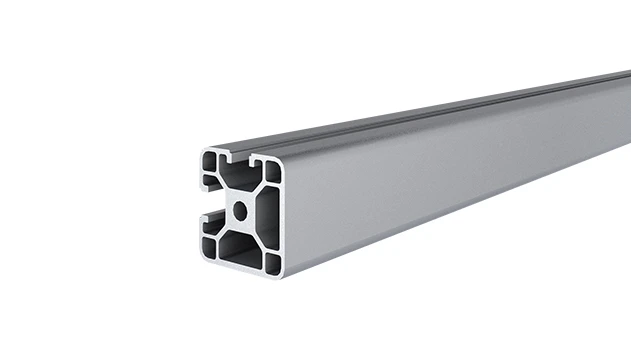
4040E is a 4.00x4.00 CM fractional 40 series square extrusion T-slot profile with two side open T-slots, two side with closed face, each side with 4.00cm face. The profile has align-a-grooves to assist in aligning connecting profiles.
Walk into any modern manufacturing facility, and you'll notice a quiet revolution unfolding. The days of rigid, one-size-fits-all production lines are fading—replaced by spaces that bend, shift, and evolve as quickly as market demands. But here's the catch: adapting quickly often means sacrificing either sustainability or durability. Or does it? That's where the 4040E EU Standard Aluminum Extrusion Profile comes in. It's not just a piece of metal; it's the backbone of production lines that refuse to choose between flexibility, longevity, and eco-responsibility. Let's dive into why this unassuming profile is becoming the go-to for teams aiming to build smarter, greener, and more adaptive workspaces.
First Things First: What *Is* the 4040E EU Standard Aluminum Extrusion Profile?
Let's start with the basics. If you're new to industrial profiles, "extrusion" is just a fancy word for shaping material by pushing it through a mold. Aluminum, with its malleability and strength, is perfect for this process. The "4040E" part? That's a size spec—think of it as the profile's "DNA." It measures 40mm by 40mm (hence "4040"), with a specific cross-sectional design (the "E" variant) that's optimized for versatility. And "EU Standard"? That means it meets strict European norms for quality, safety, and sustainability—no cutting corners here.
But numbers and specs only tell part of the story. What makes this profile special is how it balances form and function. Its T-slot design (those grooves running along the length) isn't just for show. They're like built-in connection points, letting you attach brackets, panels, or accessories without welding or drilling. Imagine building with a giant, industrial-grade Erector Set—only sturdier, lighter, and infinitely reusable. That's the 4040E in a nutshell.
Why It Matters: The Core Benefits for Adaptive Production Lines
Adaptive production lines thrive on three things: the ability to reconfigure fast, the strength to handle daily wear, and a footprint that aligns with sustainability goals. Let's break down how the 4040E checks all three boxes.
1. Sustainability That Doesn't Just Sound Good—It *Is* Good
Here's a stat that might surprise you: aluminum is 100% recyclable, and recycling it uses just 5% of the energy needed to produce new aluminum. That's a game-changer for facilities aiming to cut their carbon footprint. Unlike steel (heavy, prone to rust) or plastic (hard to recycle, short lifespan), the 4040E profile is built to last decades—and when it finally retires? It can be melted down and turned into a new profile, no waste left behind.
But sustainability isn't just about end-of-life. The EU Standard certification ensures the production process itself is eco-conscious—lower emissions, responsible sourcing, and minimal waste during extrusion. For teams reporting on ESG goals, this isn't just a bonus; it's a requirement. And let's not forget weight: aluminum is about 30% lighter than steel. That means less energy spent moving equipment, lower shipping costs, and even reduced strain on your facility's floors. Small wins add up.
2. Adaptability: Reconfigure in Hours, Not Weeks
Ever tried to rearrange a production line built with welded steel frames? It's like trying to rearrange a brick wall—you either need a cutting torch or a whole new setup. With the 4040E, it's a different story. Thanks to aluminum profile accessories like internal rotatary joints, T-slot nuts, and quick-connect brackets, you can disassemble, adjust, and rebuild a workbench or material rack in a fraction of the time. Need to add a shelf to a workbench? Slide in a bracket. Repurpose a flow rack for a new product? Swap out the roller track. No special tools, no contractors, no downtime stretching into days.
I recently spoke with a manufacturer who switched to 4040E profiles for their assembly line. They used to spend 2-3 weeks reconfiguring for seasonal product changes. Now? They do it over a long weekend. "It's not just about saving time," their operations manager told me. "It's about empowering our team to experiment. If someone has an idea to optimize the flow, we can test it the next day. That kind of agility keeps us ahead."
3. Durability Without the Bulk
There's a myth that lightweight materials mean sacrificing strength. The 4040E profile crushes that myth. Aluminum's natural resistance to corrosion (no rust, even in humid or dusty environments) means it lasts longer than steel in many industrial settings. And when paired with the right aluminum profile accessories—like reinforced joints or heavy-duty brackets—it can handle surprisingly heavy loads. We're talking workbenches supporting 500kg, material racks holding stacks of components, or conveyor systems moving parts all shift long. All without the heft of steel, making it easier to move (and safer to handle) during reconfigurations.

Beyond the Profile: Aluminum Profile Accessories That Make It Work
A great profile is only as good as the accessories that bring it to life. Think of the 4040E as the "bones" of your system; the accessories are the "muscles and joints" that let it move and adapt. Let's talk about a few key players:
- Internal Rotary Aluminum Joints : These little wonders let you connect profiles at angles—90°, 45°, even 135°—and lock them in place with a simple twist. No welding, no bolts that strip. Just secure, adjustable connections.
- T-Slot Nuts and Bolts : These fit into the 4040E's grooves, letting you attach panels, shelves, or tools anywhere along the profile. Need to move a tool holder 6 inches to the left? Loosen the bolt, slide, retighten. Done.
- Aluminum Guide Rails : Perfect for flow racks or conveyor systems. Pair them with roller tracks, and you've got a smooth, gravity-fed path for materials—no motors, no noise, just efficient movement.
- Workbench Tops : From aluminum honeycomb panels (lightweight but strong) to anti-static surfaces for electronics assembly, the right top turns a 4040E frame into a custom workbench that fits your team's needs.
The best part? These accessories are standardized. That means you don't have to hunt for "mystery parts" when you need to reconfigure. A reputable lean system supplier will stock all of them, so you can mix, match, and modify without delays.
Real-World Impact: From Workbenches to Whole Lean Systems
Let's get concrete. How does the 4040E profile actually show up in day-to-day operations? Let's look at two common scenarios:
Scenario 1: The Adaptable Workbench
Take Workbench E—a single-deck design without casters, built on a 4040E frame. In a traditional setup, this might be a fixed piece of furniture. But with 4040E, it's a blank canvas. Need to add a shelf for tools? Bolt on aluminum brackets. Want to mount a monitor arm? Slide a T-slot nut into the frame and secure it. Switching from assembling small electronics to larger components? Swap the top for a thicker panel in an hour. One manufacturer I worked with uses these workbenches for prototyping. "We'll build a bench for a new product line, test it for a month, then tear it down and rebuild it for the next prototype," their lead engineer said. "No waste, no storage of old benches—just constant optimization."
Scenario 2: Material Rack B (3 Rows, 3 Floors)
Material storage is another area where 4040E shines. Material Rack B, with its 3 rows and 3 floors, is a staple in warehouses and production lines. But with a 4040E frame, it's not just a static rack. Add aluminum guide rails and roller tracks, and suddenly it's a flow rack—parts glide smoothly from the top shelf to the workstation below, reducing bending and reaching for workers. Need to adjust shelf heights for taller boxes? Loosen the bolts on the vertical 4040E posts, slide the shelves, retighten. No need to buy a whole new rack. And when the product line changes? Disassemble the rack, repurpose the profiles and accessories, and build something new. That's sustainability in action—no scrap metal, no landfill waste.
Choosing the Right Lean System Supplier: Why It Makes or Breaks Your Success
Here's the truth: not all 4040E profiles (or aluminum profile accessories) are created equal. EU standards set a baseline, but quality varies between suppliers. That's why partnering with a reliable lean system supplier is non-negotiable. What should you look for?
- Consistency in Quality : A good supplier will have strict quality control—profiles that are straight, slots that are uniform, and accessories that fit perfectly. Nothing derails a reconfiguration faster than a joint that wobbles or a nut that doesn't slide smoothly.
- Range of Accessories : You need more than just profiles. Look for suppliers who stock everything from basic joints to specialized parts like anti-static workbench tops or heavy-duty casters. One-stop shopping saves time and reduces compatibility headaches.
- Technical Support : Even the most modular system can feel overwhelming at first. A supplier who offers design help, assembly guides, or even on-site support can turn a stressful project into a smooth one. "We had a supplier walk us through our first workbench build," one client told me. "Now we do it ourselves, but that initial support made all the difference."
- Sustainability Credentials : If eco-responsibility is a priority (and it should be), ask about their recycling practices, energy use in production, or certifications like ISO 14001. A supplier who cares about sustainability will help you meet your own ESG goals.
Traditional vs. 4040E: A Quick Comparison
Still on the fence? Let's put it side by side with traditional materials like steel or wood. Here's how they stack up:
| Feature | Traditional Steel/Wood | 4040E Aluminum Extrusion Profile |
|---|---|---|
| Reconfigurability | Hard (requires cutting/welding; often permanent) | Easy (tools-free adjustments with accessories) |
| Sustainability | Steel: Recyclable but high energy to produce; Wood: Renewable but limited lifespan | 100% recyclable, low production energy, long lifespan (decades) |
| Weight | Heavy (hard to move; requires equipment) | Lightweight (movable by 1-2 people during reconfigurations) |
| Durability | Steel: Corrodes without coating; Wood: Warps, rots, or scratches | Corrosion-resistant, scratch-resistant, no warping |
| Long-Term Cost | High (frequent replacement, labor for reconfigurations) | Lower (one-time purchase, reusable, minimal labor) |
Future-Proofing Your Line: Where Adaptive Manufacturing Is Headed
The manufacturing world isn't slowing down. Customization, short production runs, and sustainability are only becoming more important. The 4040E EU Standard Aluminum Extrusion Profile isn't just a solution for today—it's a bridge to tomorrow. Here's why:
As factories adopt "lights-out" manufacturing or cobots (collaborative robots), they need flexible infrastructure that can work alongside automation. 4040E profiles, with their precise T-slot alignment, make it easy to mount sensors, robot arms, or safety barriers exactly where they're needed. And as circular economy models take hold, the ability to reuse and recycle materials will become a competitive advantage. A production line built with 4040E profiles isn't just a tool—it's an investment in a future where waste is minimized and adaptability is king.
Wrapping Up: Small Changes, Big Ripples
At the end of the day, the 4040E EU Standard Aluminum Extrusion Profile is more than a piece of industrial equipment. It's a symbol of how small, intentional choices can transform an entire operation. It's about giving your team the freedom to innovate, reducing your environmental impact, and building a production line that grows with your business—not against it.
So if you're tired of production lines that feel like straightjackets, or sustainability goals that feel out of reach, maybe it's time to take a closer look at 4040E. Talk to a lean system supplier, ask about their accessories, and imagine a future where reconfiguring your line is the easiest part of your week. Trust me—your team (and your bottom line) will thank you.