- Company Articles
- Industry articles
- Industry standards
- Sustainable Improvement with 2060 EU Standard Aluminum Profile

Sustainable Improvement with 2060 EU Standard Aluminum Profile
Related Product
2060 EU Standard Aluminum Profile
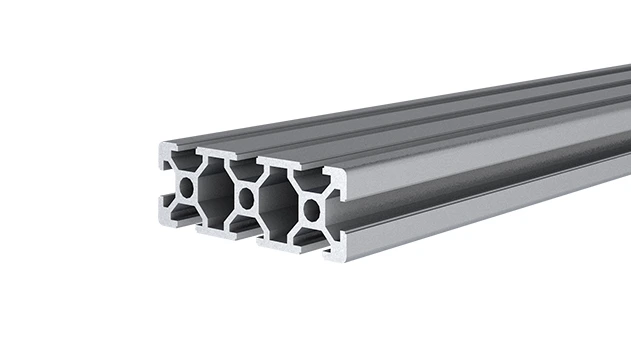
2060 is a 2.00 x 4.00CM fractional 20 series square extrusion T-slot profile with four open T-slots, two side with 2.00cm face, the other side with 6.00cm face. The profile has align-a-grooves to assist in aligning connecting profiles.
Walk into any busy manufacturing facility, and you'll likely spot the same silent struggles. Workbenches that wobble under the weight of tools, flow racks that can't keep up with shifting production demands, and rigid setups that make even small process changes feel like a Herculean task. These aren't just minor inconveniences—they're roadblocks to the sustainable improvement every team craves: smoother workflows, happier workers, and a bottom line that grows without growing waste. What if there was a material that could turn those roadblocks into stepping stones? Enter the 2060 EU Standard Aluminum Profile—a quiet game-changer that's redefining how teams build, adapt, and thrive.
At first glance, it might seem like just another piece of metal. But the 2060 EU Standard Aluminum Profile is more than that. It's a bridge between the chaos of outdated systems and the clarity of a lean, responsive workspace. It's the reason a logistics team can reconfigure their flow racks in hours instead of weeks, or why a small manufacturer can scale up production without tearing down walls. In this article, we'll dive into what makes this aluminum extrusion profile so special, how it fuels sustainable improvement, and why it's quickly becoming the backbone of modern, forward-thinking workplaces.
What Exactly Is 2060 EU Standard Aluminum Profile?
Let's start with the basics. The 2060 EU Standard Aluminum Profile is a type of aluminum extrusion profile—meaning it's shaped by pushing molten aluminum through a die to create a consistent, precise cross-section. The "2060" refers to its dimensions: 20 millimeters in width and 60 millimeters in height, though exact specs can vary slightly by manufacturer (all within EU standards, of course). But what really sets it apart isn't just the numbers—it's the "EU Standard" part. This label isn't just a stamp; it's a promise. EU standards ensure the profile meets strict criteria for quality, safety, and environmental responsibility, from the raw materials used to the energy consumed during production.
Think of it as the difference between a generic tool and one built by a master craftsman. While other aluminum profiles might cut corners on thickness or coating, the 2060 EU Standard version is engineered for consistency. Its T-slot design—those grooves running along its length—isn't just for show. They're the secret to its adaptability, letting you snap in accessories like brackets, hinges, or handles without drilling or welding. And because it's made from high-grade aluminum, it's lightweight without skimping on strength. Hold a section in your hand, and you'll feel it: solid, balanced, and built to last.
But why does the "extrusion" process matter? Unlike casting or machining, extrusion creates profiles with uniform strength and minimal waste. The result? A material that's not just durable, but also cost-effective to produce at scale. For businesses, that translates to reliable, affordable components that perform the same way, every single time. No more guessing if the next batch of profiles will fit your existing setup—with EU standards, you know they will.
Sustainable Improvement: More Than Just a Buzzword
"Sustainable improvement" gets thrown around a lot these days, but what does it really mean for your team? At its core, it's about making choices that benefit your business, your people, and the planet—today and tomorrow. It's about reducing waste, not just in materials, but in time and effort. It's about building systems that grow with you, instead of holding you back. And that's where the 2060 EU Standard Aluminum Profile shines brightest.
Let's break it down. Traditional work setups often fall into one of two traps: they're either cheap and flimsy (think plastic shelves or particleboard workbenches that warp or break within a year) or heavy and rigid (like steel frames that require a forklift to move and a welder to modify). Both lead to the same problem: waste. Flimsy setups mean constant replacements, piling up in landfills. Rigid ones mean you're stuck with a workspace that can't evolve, forcing you to invest in entirely new systems when your needs change. Neither is sustainable—for your budget or the environment.
The 2060 aluminum extrusion profile flips that script. It's designed to be adaptable . Need to add a shelf to your workbench? Slide a bracket into the T-slot. Want to reangle your flow rack for a new product line? Loosen a few screws, adjust, and tighten. No new materials, no wasted time, no landfill-bound scrap. That's sustainability in action: getting more use out of what you already have.
Then there's durability. Aluminum is naturally resistant to corrosion, so unlike steel, it won't rust when exposed to moisture or chemicals. That means a workbench built with 2060 profile won't start showing wear after a few months of heavy use. It also means less maintenance—no repainting, no sanding, no replacing parts that have degraded. Over time, that adds up to fewer disruptions, lower repair costs, and a workspace that stays functional for years, not just seasons.
And let's not forget recyclability. Aluminum is 100% recyclable, and recycling it uses just 5% of the energy needed to produce new aluminum. When a 2060 profile finally reaches the end of its long life (which could be decades), it doesn't become trash—it becomes raw material for something new. Compare that to plastic, which often can't be recycled effectively, or wood, which breaks down into waste. For businesses aiming to reduce their carbon footprint, this isn't just a nice bonus; it's a necessity.

The Features That Make It a Game-Changer
So, what specific features of the 2060 EU Standard Aluminum Profile make it such a powerhouse for sustainable improvement? Let's get into the details—without the jargon.
1. The T-Slot Design: Your Workspace's Swiss Army Knife
Remember those grooves we mentioned earlier? The T-slots are the profile's superpower. They're not just for looks—they're for connection . Aluminum profile accessories like end caps, hinges, and even small shelves slide right into these slots, held in place by simple bolts or clips. No drilling, no welding, no messy adhesives. This means you can build a workbench on Monday, add a tool rack on Wednesday, and reconfigure it as a packing station by Friday—all with basic hand tools. For teams that need to pivot quickly (and let's face it, which team doesn't?), this flexibility is priceless.
2. Strength-to-Weight Ratio: Light Enough to Move, Strong Enough to Trust
Aluminum has long been prized for its strength-to-weight ratio, and the 2060 profile is no exception. At just a fraction of the weight of steel (about 2.7 kg per meter, compared to steel's 7.8 kg), it's easy for two people to carry a 3-meter section without straining. But don't let the lightness fool you—it's surprisingly strong. The 2060 profile can support up to 150 kg per linear meter (depending on the setup), making it sturdy enough for heavy tools, bulk materials, or even small machinery. This balance is a win-win: lighter setups mean less worker fatigue and easier reconfigurations, while the strength ensures safety and reliability.
3. EU-Standard Precision: Consistency You Can Count On
Ever tried building something with parts that don't quite fit? A shelf that wobbles because the brackets are off by a millimeter, or a flow rack that jams because the rails aren't aligned? That's the frustration of working with non-standard materials. The 2060 EU Standard Aluminum Profile eliminates that. EU standards mandate tight tolerances—meaning every section, every T-slot, every edge is consistent. So when you order 10 profiles, they'll all match perfectly. When you buy accessories from different suppliers, they'll slide into the T-slots without a fight. This precision isn't just about convenience; it's about trust. You can plan your workspace with confidence, knowing the parts will work together as intended.
4. Corrosion Resistance: Built to Outlast the Elements
Whether your workspace is a dry office or a humid factory floor, the 2060 profile holds up. Aluminum forms a natural oxide layer when exposed to air, acting as a barrier against corrosion. For extra protection, many 2060 profiles come with anodized or powder-coated finishes, adding another layer of defense against scratches, chemicals, and moisture. This means your flow rack by the loading dock won't rust during rainy seasons, and your workbench in the warehouse won't degrade from exposure to cleaning agents. It's one less thing to worry about—and in a busy operation, that's saying something.
From Lean Systems to Workbenches: Real-World Applications
Talk is cheap—what does the 2060 EU Standard Aluminum Profile actually do in the real world? Let's look at three key areas where it's making a tangible difference: lean systems, workbenches, and flow racks.
Lean Systems: The Backbone of Efficiency
Lean system principles—like minimizing waste, streamlining workflows, and continuous improvement—are all about adaptability. A lean system can't thrive if your tools and workspaces are stuck in the past. That's where 2060 profile comes in. It's the ideal building block for lean setups because it lets you design workflows around how work actually happens , not around rigid equipment.
Take 5S, for example—a lean methodology focused on organizing the workplace (Sort, Set in Order, Shine, Standardize, Sustain). With 2060 profile, you can build custom storage solutions that keep tools exactly where workers need them, reducing "search waste." Or consider continuous flow: a production line where materials move smoothly from one step to the next. Flow racks made with 2060 profile can be adjusted to the exact height and angle needed to keep materials flowing, eliminating bottlenecks. When a process change is needed (because no process is perfect forever), you don't have to scrap the whole setup—just reconfigure the profile and accessories. That's lean in action: improving without overcomplicating.
Workbenches: Where Comfort Meets Productivity
A workbench is more than just a table—it's where the magic happens. It's where an assembler puts together a product, where a technician repairs a machine, where a team collaborates on a prototype. A bad workbench can slow you down, cause fatigue, or even lead to mistakes. A good one? It fades into the background, letting workers focus on what they do best. The 2060 EU Standard Aluminum Profile excels at building good workbenches.
Imagine a workbench tailored to your team's needs: height-adjustable legs (thanks to aluminum profile accessories like leveling feet) so every worker can stand or sit comfortably, integrated tool rails to keep wrenches and screwdrivers within arm's reach, and a durable top that resists scratches and spills. With 2060 profile, that's not a custom-order luxury—it's standard. And because the profile is lightweight, the workbench can be moved (with casters, if needed) to wherever it's most useful that day. No more "the workbench is in the wrong spot, so we'll just work around it." Now, the workbench comes to you.
One manufacturer we spoke to recently switched all their workbenches to 2060 profile after years of using heavy steel tables. "Our old benches weighed a ton," said their production manager. "If we needed to rearrange the floor for a new order, we'd need two people and a dolly. Now, two workers can carry a bench by hand. And when we redesigned our assembly process, we just added a shelf and a tool hook to the existing frame. No new bench, no wasted steel. It's like the benches grow with us."
Flow Racks: Keeping Materials Moving, Without the Headaches
In warehouses and production facilities, moving materials efficiently is half the battle. A delay in getting parts to the assembly line, or in getting finished products to shipping, can throw off an entire day's schedule. Flow racks—those sloped racks that let materials glide forward as items are removed—are supposed to solve this. But traditional flow racks often fall short: they're too rigid, too flimsy, or too hard to adjust.
Not so with flow racks built from 2060 EU Standard Aluminum Profile. The profile's strength means it can support heavy loads of boxes or components without bending. Its T-slots make it easy to attach roller tracks (the wheels that let materials slide) at just the right angle—no more guesswork with shims or wedges. And if you start storing larger boxes next month? Simply adjust the roller spacing or add a crossbar. It's that simple.
A logistics team at a food distribution center shared their experience: "We used to have wooden flow racks that would warp in the humidity, making the boxes stick instead of sliding. We'd have to bang them with a rubber mallet to get them moving—hardly efficient. Now, with aluminum flow racks, the rollers glide smoothly, even when it's humid. And when we added a new product line with taller boxes, we just raised the side rails using 2060 profile extensions. No new rack, no downtime. Our pickers are faster, and we've cut down on damaged goods from stuck boxes. It's a small change that made a huge difference."
How Does It Stack Up? A Quick Comparison
Still not convinced the 2060 EU Standard Aluminum Profile is right for you? Let's put it head-to-head with three common alternatives: steel, wood, and generic plastic profiles. The table below breaks down key factors like weight, durability, and sustainability to help you see the difference.
| Factor | 2060 EU Standard Aluminum Profile | Steel | Wood | Generic Plastic Profile |
|---|---|---|---|---|
| Weight (kg/m) | ~2.7 | ~7.8 | ~5.0 (pine) | ~1.5 |
| Corrosion Resistance | Excellent (naturally resistant) | Poor (rusts without coating) | Poor (warps, rots with moisture) | Good (but prone to UV damage) |
| Reconfigurability | High (T-slot accessories, no tools needed) | Low (requires welding/cutting) | Very Low (nails/screws damage structure) | Medium (limited accessory options) |
| Recyclability | 100% recyclable, low energy use | Recyclable, but high energy use | Biodegradable, but limited reuse | Often not recyclable (depends on type) |
| Estimated Lifespan (Years) | 15–20+ | 10–15 (with maintenance) | 3–7 (indoors), 1–3 (outdoors) | 2–5 (prone to cracking/UV damage) |
| Cost Over Time* | Low (minimal maintenance, reconfigurable) | Medium-High (maintenance, replacement costs) | High (frequent replacement) | High (short lifespan, limited reuse) |
*Based on average industrial use, including maintenance, replacement, and energy costs.
As you can see, while steel might seem stronger on paper, its weight and rigidity make it a poor choice for dynamic workspaces. Wood is cheap upfront but costly in the long run due to frequent replacements. Plastic is lightweight but lacks durability. The 2060 aluminum profile, on the other hand, balances strength, flexibility, and sustainability—making it the most cost-effective choice over time, even if the initial investment is slightly higher.
Accessories: The Cherry on Top of Versatility
A great profile is only as good as the accessories that go with it. Luckily, the 2060 EU Standard Aluminum Profile works with a wide range of aluminum profile accessories, turning a simple length of metal into a fully functional system. Let's explore a few must-haves:
End Caps and Rubber Strips: Safety and Finishing Touches
Ever run your hand along a metal edge and gotten a cut? Not with end caps. These simple plastic or rubber covers snap onto the ends of the 2060 profile, smoothing out sharp edges and preventing injuries. They also keep dust and debris from collecting inside the T-slots, which can gunk up accessories over time. T-slot rubber seal covers do the same for the grooves themselves, keeping them clean and ready for use.
Connectors and Brackets: Building Without Welding
Want to build a 90-degree corner or a crossbar? Connectors and brackets are your best friends. From simple L-brackets to multi-angle joints, these accessories let you join profiles together securely without welding. Many use set screws that tighten into the T-slots, creating a strong, stable connection that can still be disassembled later. It's like building with adult Legos—only sturdier.
Leveling Feet and Casters: Stability and Mobility
Not every floor is perfectly flat, and not every workbench needs to stay in one place. Leveling feet screw into the bottom of 2060 profile legs, letting you adjust height by fractions of an inch to keep your setup stable. Casters (wheels) do the opposite: they let you roll your workbench or flow rack to wherever it's needed. Many casters even have brakes, so you can lock them in place once you're set.
Tool Racks and Hooks: Keeping Essentials Close
Why walk across the room for a wrench when it can hang right above your workbench? Tool racks and hooks slide into the T-slots, giving you a custom storage solution for everything from screwdrivers to power tools. Some even have adjustable positions, so you can arrange tools in the order you use them.
Looking Ahead: The Future of Workspaces
The way we work is changing. Factories are getting smarter, teams are more agile, and sustainability is no longer optional—it's expected. The 2060 EU Standard Aluminum Profile isn't just keeping up with these changes; it's helping drive them. As more businesses adopt lean system principles and embrace modular workspaces, the demand for adaptable, durable materials will only grow. And aluminum extrusion profiles like 2060 are perfectly positioned to meet that demand.
Imagine a future where your workspace isn't just a place you go to work, but a system that adapts to how you work. Need to scale up for a big order? Add a few more 2060 profile sections to your flow rack. Want to test a new assembly process? Reconfigure your workbench in an hour. Move to a new location? Disassemble your entire setup, load it into a truck, and rebuild it in the new space—no waste, no hassle.
This isn't science fiction; it's already happening. Small businesses are using 2060 profile to compete with larger companies by staying nimble. Large corporations are using it to reduce their environmental impact and cut costs. Even schools and makerspaces are getting in on the action, building flexible learning environments that can switch from art studio to robotics lab in a day.
Wrapping Up: More Than a Profile—A Partner in Progress
At the end of the day, the 2060 EU Standard Aluminum Profile isn't just a material. It's a tool for sustainable improvement, a catalyst for change, and a partner in building workspaces that work for people, not against them. It's the difference between dreading a process change and embracing it, between seeing waste as inevitable and seeing it as an opportunity to do better.
Whether you're running a small workshop or a large manufacturing plant, the question isn't whether you need a better way to build your workspace—it's whether you're ready to stop settling for systems that hold you back. The 2060 EU Standard Aluminum Profile offers a better way: one that's flexible, durable, sustainable, and surprisingly affordable over time. It's not just about building workbenches or flow racks; it's about building a future where your team can thrive, your business can grow, and your impact on the planet is a point of pride.
So the next time you walk into your workspace and spot those silent struggles—the wobbly bench, the stuck flow rack, the rigid setup—remember: there's a solution. It's lightweight, it's strong, it's adaptable, and it's waiting to help you build something better. The 2060 EU Standard Aluminum Profile isn't just changing workspaces; it's changing how we think about improvement. And that's a change worth making.