- Company Articles
- Industry articles
- Industry standards
- Sustainable Manufacturing: 2040 National Standard Profile's Eco-Friendly Advantages

Sustainable Manufacturing: 2040 National Standard Profile's Eco-Friendly Advantages
Related Product
2040 National Standard Profile
45° external bending joint, used for 45° external connection of two aluminum pipes.
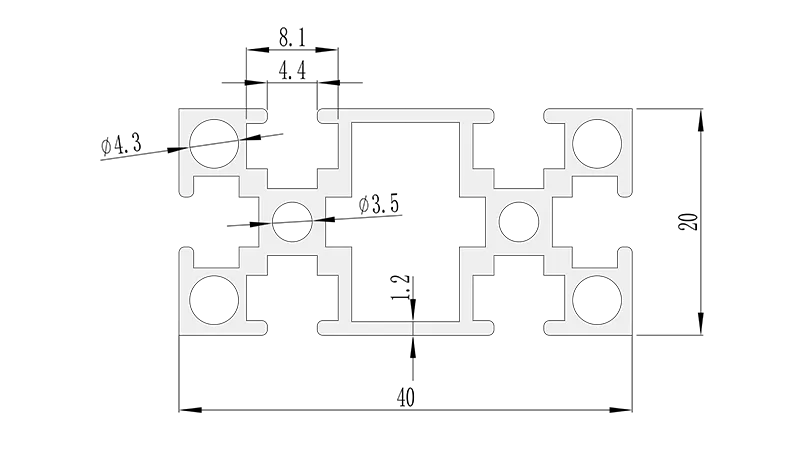
In today's world, where the phrase "sustainability" has shifted from a buzzword to a business imperative, manufacturers are rethinking every aspect of their operations—from production lines to packaging, and even the materials that form the backbone of their workspaces. Climate regulations are tightening, consumers are demanding greener products, and the cost of ignoring environmental impact is no longer just reputational; it's financial. Amid this shift, one material has emerged as a quiet hero: the 2040 national standard profile. A type of aluminum extrusion profile, this unassuming component is transforming how factories approach efficiency, waste reduction, and long-term sustainability. Let's dive into why this profile is more than just a piece of metal—and how it's helping manufacturers build a future that's both profitable and planet-friendly.
First Things First: What *Is* the 2040 National Standard Profile?
If you've ever walked through a factory, warehouse, or even a modern office, you've probably seen aluminum extrusion profiles without realizing it. They're the sleek, modular frames that hold up workbenches, line conveyor belts, or form the structure of material racks. The 2040 national standard profile is a specific type of these extrusions, defined by strict national standards for dimensions, material composition, and performance. Think of it as a building block with rules: its cross-section measures roughly 20mm by 40mm (hence "2040"), and it's made from high-grade aluminum alloy, designed to balance strength, weight, and versatility.
But why does "national standard" matter? For manufacturers, consistency is key. When every piece of 2040 profile adheres to the same specs, it means components from different suppliers fit together seamlessly. No more mismatched joints or custom workarounds. This standardization isn't just about convenience—it's the first step toward sustainability. When parts are interchangeable, they're easier to reuse, repair, or repurpose down the line.
The Eco-Friendly Edge: How 2040 Profile Stands Out
At first glance, aluminum might seem like just another metal. But when you dig into its properties, it's clear why the 2040 national standard profile is becoming a staple for sustainable manufacturers. Let's break down its biggest environmental wins:
1. Aluminum: The Ultimate Recyclable Material
Aluminum is often called the "forever metal," and for good reason. Unlike plastics or even some steels, it can be recycled repeatedly without losing quality. Scrape a 2040 profile off an old workbench, melt it down, and you've got brand-new aluminum ready to be extruded again. The numbers are staggering: recycling aluminum uses just 5% of the energy required to produce new aluminum from raw bauxite ore. That's a 95% energy savings per kilogram—no small feat when you consider how much aluminum goes into a typical factory setup.
For manufacturers, this recyclability isn't just a green talking point; it's a cost-saver. As raw material prices fluctuate and landfill costs rise, being able to recover value from old profiles (by selling them to recyclers) turns waste into a revenue stream. It also future-proofs operations against stricter recycling regulations, which are already popping up worldwide.
2. Precision Extrusion = Less Waste, More Efficiency
The 2040 profile is made using aluminum extrusion—a process where heated aluminum billets are pushed through a die to create complex, uniform shapes. Unlike cutting or milling, which shave off excess material (creating waste), extrusion shapes metal *without* generating scrap. The result? Minimal waste during production. National standards ensure that each profile is extruded to exact specifications, so manufacturers don't end up with uneven pieces that get tossed aside.
Compare this to traditional steel fabrication, where cutting, welding, and grinding generate piles of metal shavings and offcuts. A single steel workbench might produce kilograms of waste; with 2040 profiles, that waste is all but eliminated. Over time, this adds up to fewer resources consumed and less trash sent to landfills.
3. Lightweight Design = Lower Carbon in Transit
Aluminum is about one-third the weight of steel. That might not sound like a big deal until you consider how much material a factory orders. A typical production line could use hundreds of meters of profile; switching from steel to 2040 aluminum slashes transportation weight by 66%. Lighter loads mean trucks burn less fuel, reducing carbon emissions during delivery. For manufacturers with global supply chains, this can cut logistics-related emissions by 20-30%—a huge win for both the planet and the bottom line.
And it's not just shipping. Lighter profiles are easier to handle on the factory floor, too. Workers don't need heavy machinery to move or install them, reducing the risk of injury and lowering energy use from lifts and cranes.
4. Durability That Reduces Replacement Cycles
Sustainability isn't just about recycling—it's about making products that last. The 2040 profile's aluminum alloy is naturally resistant to corrosion (thanks to a thin oxide layer that forms on its surface), so it holds up in humid warehouses, dusty factories, or even outdoor settings. Unlike wood, it won't rot; unlike plastic, it won't crack or degrade under UV light. This durability means a 2040-based workbench or material rack can last 10-15 years, compared to 3-5 years for cheaper alternatives like particleboard or low-grade steel.
Fewer replacements mean less material consumption over time. Instead of scrapping a rusted steel frame every few years, manufacturers can keep their 2040 systems in use, saving money and reducing waste.
Playing Well with Lean Systems: Waste Reduction, Amplified
If you're in manufacturing, you've probably heard of "lean systems"—the philosophy of minimizing waste (time, materials, energy) while maximizing value. The 2040 national standard profile isn't just a sustainable material; it's a lean dream come true. Here's how it fits into lean principles:
Modularity = No More "One-and-Done" Setups
Traditional factory setups are often permanent. Welded steel frames, glued wooden workbenches, or bolted-down conveyor tracks—once they're in place, changing them means tearing everything apart and starting over. That's a massive waste of time and materials. The 2040 profile, though, is modular. It connects using simple aluminum profile accessories: brackets, joints, and clips that slot into the profile's T-slots (those handy grooves running along its length). Need to shorten a workbench? Just unclip a section. Want to add a shelf to a material rack? Screw in a new bracket. No welding, no drilling, no destruction.
This flexibility is gold for lean operations. When production needs change—say, a new product line requires a wider conveyor—manufacturers can reconfigure their 2040 systems instead of replacing them. A study by the Lean Manufacturing Institute found that factories using modular aluminum profiles reduced reconfiguration waste by 40% compared to those with fixed steel setups. That's less scrap, less downtime, and more adaptability.
Standardization = Consistency, Minus the Waste
Remember that "national standard" part? It's not just for quality control—it's for lean efficiency. Every 2040 profile, regardless of supplier, has the same dimensions, T-slot spacing, and load capacity. That means manufacturers can order parts from multiple suppliers without worrying about compatibility. No more custom-made brackets for odd-sized steel beams or last-minute delays because a component doesn't fit. Standardization reduces the "waste of waiting" and the "waste of inventory" (since you don't need to stockpile specialty parts).
Even better, standardization makes training easier. New employees can learn to assemble 2040 systems in hours, not days, because the accessories and connection methods are consistent across the board. Less time training = more time producing.
How Does It Stack Up? A Side-by-Side Comparison
Still not convinced the 2040 national standard profile is worth the switch? Let's put it head-to-head with traditional materials. The table below compares 2040 aluminum extrusion profiles to two common alternatives: mild steel and plastic (PVC) profiles. We'll look at key eco-friendly metrics like recyclability, energy use, and lifespan.
| Metric | 2040 Aluminum Extrusion Profile | Mild Steel Profile | PVC Plastic Profile |
|---|---|---|---|
| Recyclability Rate | 95%+ (can be recycled indefinitely) | 60-70% (recycled steel loses some strength) | 5-10% (most PVC is downcycled into lower-quality products) |
| Energy Used to Produce (per kg) | 5-7 MJ (recycled aluminum); 130-150 MJ (virgin aluminum) | 20-25 MJ (recycled steel); 30-35 MJ (virgin steel) | 60-80 MJ (from fossil fuels) |
| Typical Lifespan (in factory use) | 10-15 years | 5-8 years (prone to rust) | 3-5 years (degrades under heat/UV light) |
| Weight (per meter) | 0.8-1.2 kg | 2.5-3.0 kg | 0.5-0.7 kg (but less strong) |
| Carbon Footprint (per kg produced) | 0.5-1.0 kg CO2e (recycled); 12-15 kg CO2e (virgin) | 1.5-2.0 kg CO2e (recycled); 3.0-3.5 kg CO2e (virgin) | 3.0-4.0 kg CO2e (from plastic production) |
The numbers speak for themselves. Even when using virgin aluminum (which is rare these days, as most extruders use recycled content), the 2040 profile outperforms steel and plastic in recyclability and lifespan. And when you factor in recycling—since 75% of all aluminum ever produced is still in use today—it's not even close. For manufacturers serious about sustainability, this isn't just a choice; it's a no-brainer.
From Theory to Practice: A Real Factory's Success Story
Let's ground this in reality with a case study. Meet GreenTech Manufacturing, a mid-sized electronics assembly plant in the Midwest. Three years ago, their production floor was a patchwork of steel workbenches, wooden shelving, and plastic conveyor guides. Their sustainability goals were ambitious: reduce waste by 30%, cut carbon emissions by 25%, and lower operational costs. But their old setup was holding them back.
The steel workbenches were heavy and rusting; replacing them every 5 years cost $15,000 annually. The wooden shelves warped in the humid factory, leading to product damage. And the plastic conveyors cracked under heavy use, creating mountains of non-recyclable waste. Then, they switched to 2040 national standard profile systems—workbenches, material racks, and even conveyor frames made from aluminum extrusions and compatible accessories.
The results? Within two years:
- Waste dropped by 38%: No more scrapping entire workbenches—they reconfigured old profiles into new setups.
- Carbon emissions from transportation fell by 22%: Lighter aluminum profiles meant fewer truck trips and less fuel use.
- Maintenance costs plummeted by 45%: The corrosion-resistant aluminum needed almost no upkeep compared to steel.
- Employee satisfaction rose: The modular setups made their jobs easier, reducing fatigue and errors.
"We didn't just go green—we got smarter," said GreenTech's operations manager. "The 2040 profiles let us adapt to new products without throwing money away. It's sustainability that actually pays for itself."
Looking Ahead: The Future of Sustainable Manufacturing with 2040 Profiles
The 2040 national standard profile isn't a static product—it's evolving. Extruders are experimenting with higher recycled content (some now use 90%+ post-consumer aluminum), and new alloys are making profiles even lighter and stronger. Innovations in aluminum profile accessories, like quick-connect joints and reusable brackets, are making reconfiguration faster than ever. And as circular economy principles take hold, we're seeing manufacturers design "end-of-life" plans for their 2040 systems: when a profile finally wears out, it's sent back to the extruder to be melted down and turned into a new profile—closing the loop entirely.
Regulations are pushing this trend, too. The EU's Carbon Border Adjustment Mechanism (CBAM) now taxes imports based on their carbon footprint, making low-emission materials like recycled aluminum more competitive. In the U.S., the Inflation Reduction Act offers tax credits for manufacturers using sustainable materials, including aluminum extrusions. For forward-thinking companies, adopting 2040 profiles isn't just about doing good—it's about staying competitive in a carbon-constrained world.
Wrapping Up: Small Profile, Big Impact
Sustainable manufacturing isn't about grand gestures—it's about the small, everyday choices that add up. The 2040 national standard profile is one of those choices: a humble aluminum extrusion that's quietly revolutionizing how factories operate. Its recyclability, precision, lightweight design, and modularity make it more than just a material; it's a tool for building a future where efficiency and sustainability go hand in hand.
For manufacturers ready to take the leap, the message is clear: the 2040 profile isn't just good for the planet. It's good for business. It reduces waste, cuts costs, and future-proofs operations against tightening regulations and shifting consumer demands. So the next time you walk through a factory, take a closer look at those aluminum frames. They might just be the key to a greener, more profitable industry.