- Company Articles
- Industry articles
- Industry standards
- Sustainable Manufacturing: 4080B EU Standard Aluminum Profile as a Green Alternative

Sustainable Manufacturing: 4080B EU Standard Aluminum Profile as a Green Alternative
Related Product
4080B EU Standard Aluminum Profile
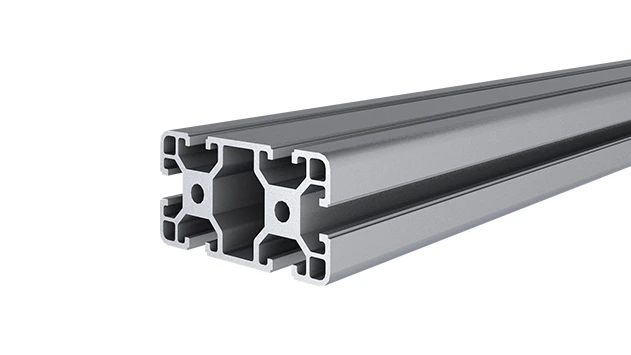
4080B is a 4.00x8.00 CM fractional 40 series square extrusion T-slot profile with two side open T-slots, each side with 4.00cm face, two side with 8.00cm face. The profile has align-a-grooves to assist in aligning connecting profiles.
In today's manufacturing landscape, the pressure to balance productivity with planet-friendly practices has never been higher. Factories and production facilities worldwide are grappling with a common challenge: how to reduce their environmental footprint without sacrificing efficiency or profitability. From soaring energy costs to stricter regulations on waste and emissions, the stakes are clear. Yet, amid these challenges lies an opportunity for innovation—one that starts with the very materials we build our production systems with. Enter the 4080B EU Standard Aluminum Profile, a yet powerful player in the shift toward sustainable manufacturing. More than just a metal frame, this aluminum extrusion profile, paired with thoughtfully designed aluminum profile accessories, is redefining what it means to "build green." Let's dive into why this material is becoming a go-to choice for manufacturers committed to both their bottom line and the planet.
The Sustainability Crisis in Manufacturing: Why Materials Matter
Manufacturing has long been a cornerstone of global economies, but its environmental impact is undeniable. Traditional production setups often rely on materials that are energy-intensive to produce, difficult to recycle, or prone to rapid wear and tear—all of which contribute to waste, carbon emissions, and resource depletion. Consider steel, a staple in factory infrastructure: while strong, its production releases significant CO2, and once a steel structure is outdated, it's often scrapped entirely, with little opportunity for reuse. Plastic-based systems, meanwhile, may be cheap upfront but degrade quickly, leading to frequent replacements and piles of non-biodegradable waste.
For manufacturers, these issues aren't just ethical—they're financial. Governments are cracking down on carbon footprints: the EU's Carbon Border Adjustment Mechanism (CBAM), for example, taxes imports based on their emissions, making carbon-heavy materials costlier. Consumers, too, are demanding transparency; 63% of global consumers prefer brands with sustainable practices, according to a 2023 Nielsen report. Simply put, sustainability isn't a "nice-to-have" anymore—it's a business imperative. And that's where material innovation comes in. The right materials can turn sustainability from a cost center into a competitive advantage.
Meet the 4080B EU Standard Aluminum Profile: A Green Workhorse
At first glance, the 4080B EU Standard Aluminum Profile might look like any other industrial component—a sleek, silver extrusion with a rectangular cross-section, measuring 40mm by 80mm. But its true value lies in the details: compliance with EU standards, a focus on recyclability, and a design built for longevity. Let's break down what makes this aluminum extrusion profile stand out.
First, the "EU Standard" label isn't just a marketing tag. To earn this certification, the 4080B profile adheres to strict regulations on material safety, energy efficiency in production, and recyclability. EU standards like REACH (Registration, Evaluation, Authorization, and Restriction of Chemicals) ensure that no harmful substances are used in its manufacturing, while EN 755 (the European standard for aluminum extrusions) sets benchmarks for structural integrity and quality. For manufacturers exporting to the EU or operating within its borders, this compliance isn't just necessary—it's a signal to partners and customers that sustainability is baked into the product.
But the real green credential of the 4080B profile is aluminum itself. Unlike steel or plastic, aluminum is infinitely recyclable. When you recycle an aluminum product, it retains 100% of its original properties, meaning it can be melted down and reshaped into new profiles again and again—without losing strength or durability. What's more, recycling aluminum uses just 5% of the energy required to produce new aluminum from raw bauxite ore. That's a staggering 95% reduction in energy consumption, translating directly to lower carbon emissions. For a factory that replaces steel or plastic structures with 4080B aluminum extrusion profiles, this recyclability alone can slash its material-related carbon footprint by tens of tons annually.

Aluminum Extrusion Profile: The Secret to Durability and Efficiency
The 4080B profile isn't just sustainable—it's also built to last. Aluminum's natural resistance to corrosion means it holds up in harsh factory environments, from humid assembly lines to dusty warehouses, without needing toxic coatings or frequent treatments. This durability translates to longer lifespans: while a plastic workbench might need replacement every 2–3 years, an aluminum extrusion profile workstation can last a decade or more with minimal maintenance. Fewer replacements mean less waste, fewer raw materials consumed, and lower long-term costs for manufacturers.
Then there's the extrusion process itself, which is inherently efficient. Extrusion involves heating aluminum billets and forcing them through a die to create custom cross-sectional shapes—like the 40x80mm design of the 4080B profile. Unlike cutting or machining, which generates excess scrap, extrusion produces little waste, as the process is precise and the material is shaped in one continuous step. Any scrap that does occur during production is simply recycled back into the manufacturing loop, closing the resource cycle.
Consider a mid-sized electronics manufacturer in Germany that recently swapped its steel material racks for ones built with 4080B aluminum extrusion profiles. The old steel racks rusted quickly in the factory's humid conditions, requiring replacement every 4 years. The new aluminum racks, by contrast, show no signs of corrosion after 3 years, and when they eventually reach the end of their life, the manufacturer plans to recycle them locally. "We're not just saving on replacement costs," says the facility's sustainability manager. "We're also cutting down on the trucks that used to haul away old steel and deliver new ones—less fuel, less emissions, and a cleaner shop floor."
Aluminum Profile Accessories: The Unsung Heroes of Modularity
A sustainable manufacturing system isn't just about the main materials—it's about how those materials work together. That's where aluminum profile accessories come into play. These small, often overlooked components—think brackets, end caps, connectors, and joint fittings—are the glue that turns 4080B profiles into flexible, adaptable systems. And their role in sustainability? Modularity.
Traditional manufacturing setups are often "fixed in time." A steel workbench, for example, is welded into shape, making it nearly impossible to reconfigure if production needs change. If a factory switches from assembling small components to larger ones, that workbench becomes obsolete, destined for the scrapyard. Aluminum profile accessories, however, are designed for quick, tool-free assembly and disassembly. With just a few twists of a wrench, a workstation built with 4080B profiles and compatible accessories can be extended, shortened, or reconfigured to fit new tasks. Need to add a shelf? Screw in an aluminum bracket. Want to raise the height of a material rack? Swap out a connector for a taller one. This modularity means the system evolves with the factory, reducing the need for new purchases and keeping materials in use longer.
Take the example of a automotive parts supplier in Spain. When the company won a contract to produce a new line of electric vehicle components, its existing assembly line was too narrow to accommodate the larger parts. Instead of building entirely new workstations, the team used aluminum profile accessories to reconfigure their 4080B profile workbenches. They added extension brackets to widen the surfaces, swapped out fixed legs for adjustable ones, and even repurposed old aluminum shelves (from retired systems) by attaching new connectors. The result? A fully functional new assembly line in just 2 days, with zero waste and a fraction of the cost of buying new equipment. "We used to throw away perfectly good materials because we couldn't adapt them," says the plant manager. "Now, with aluminum accessories, we're building systems that grow with us."
Lean System Integration: Reducing Waste, One Profile at a Time
Sustainability and efficiency go hand in hand, and few methodologies embody this better than lean manufacturing. At its core, lean is about eliminating waste—whether that's excess inventory, unnecessary movement, or unused space. The 4080B EU Standard Aluminum Profile and its accessories align perfectly with this philosophy, making it easier for factories to implement lean system principles.
Consider "just-in-time" production, a cornerstone of lean systems. To minimize inventory, factories need material racks and conveyor systems that can deliver parts exactly when and where they're needed. The 4080B profile, with its lightweight yet sturdy design, is ideal for building custom flow racks and roller tracks that move materials smoothly along the production line. Aluminum profile accessories like swivel roller balls and plastic guide rails ensure that parts glide into place with minimal friction, reducing the energy needed to move them. And because the system is modular, it can be adjusted on the fly if production schedules change—no need to overbuild or stockpile extra components.
Another lean principle is "kaizen" or continuous improvement. Factories that embrace kaizen are always looking for small, incremental changes to boost efficiency. With 4080B profiles and aluminum profile accessories, these changes are easy to test and implement. A team might notice that workers are bending down too far to reach tools on a low shelf; with a few aluminum brackets and connectors, they can raise the shelf in an hour, reducing strain and speeding up tasks. Or a supervisor might realize a material rack is taking up too much floor space; by swapping out some profiles and adding folding accessories, the rack can be compacted when not in use. These small adjustments add up to big reductions in waste and energy use over time.
A case in point: a pharmaceutical manufacturer in France that adopted a lean system using 4080B aluminum extrusion profiles for its packaging line. By replacing rigid steel conveyors with modular aluminum roller tracks (fitted with plastic guide rails and swivel roller balls), the company reduced the time it took to change over between product sizes from 4 hours to just 30 minutes. Faster changeovers meant less downtime, lower energy use (since machines weren't idling), and fewer defective products due to smoother material flow. "Lean is about making every second and every square foot count," says the lean coordinator. "The 4080B profile makes that possible because it's so adaptable. We're not just cutting waste—we're cutting costs, too."
How Does It Compare? A Look at the Environmental Impact
To truly understand the sustainability of the 4080B EU Standard Aluminum Profile, it helps to see how it stacks up against traditional materials like steel and plastic. Below is a comparison of key environmental metrics, based on industry data and lifecycle assessments:
| Metric | 4080B Aluminum Extrusion Profile | Traditional Steel Profile | Plastic Composite Profile |
|---|---|---|---|
| Recyclability Rate | 100% (infinitely recyclable) | 90% (recyclable, but loses quality over time) | 30–50% (difficult to recycle; often downcycled) |
| Energy Use (per kg produced) | 5–7 kWh (recycled aluminum) | 20–25 kWh (recycled steel) | 15–18 kWh (virgin plastic) |
| Expected Lifespan | 10–15 years (factory use) | 5–8 years (prone to corrosion) | 2–3 years (degrades with wear/UV exposure) |
| Modularity | High (easily reconfigurable with accessories) | Low (welded; difficult to modify) | Medium (some modularity, but parts break easily) |
| Carbon Footprint (kg CO2 per kg) | 0.5–0.7 (recycled aluminum) | 1.8–2.2 (recycled steel) | 2.5–3.0 (virgin plastic) |
The numbers speak for themselves. When compared to steel and plastic, the 4080B aluminum extrusion profile outperforms in nearly every category. Its infinite recyclability, low energy use, and long lifespan make it a clear choice for manufacturers prioritizing sustainability. Even when factoring in upfront costs (aluminum can be pricier than plastic initially), the long-term savings from reduced replacements, lower energy bills, and recyclability often make it the more economical option.
The Future of Sustainable Manufacturing: Beyond the Profile
As manufacturers continue to seek greener solutions, the role of materials like the 4080B EU Standard Aluminum Profile will only grow. But sustainability doesn't stop at the profile itself—it's about creating a circular ecosystem. Aluminum profile suppliers are already innovating to reduce the environmental impact of their products further, from using renewable energy in extrusion plants to developing bio-based lubricants for the extrusion process. Some suppliers even offer "take-back" programs, where old aluminum profiles are collected, recycled, and turned into new 4080B profiles—closing the loop entirely.
Looking ahead, we'll likely see even more integration between aluminum profiles and smart manufacturing technologies. Imagine a factory where 4080B profile workbenches are fitted with sensors that monitor usage, alerting managers when a section needs reconfiguration (to avoid waste) or when parts are due for recycling. Or where aluminum profile accessories are 3D-printed from recycled aluminum, allowing for on-demand, custom components that reduce inventory and shipping emissions. The possibilities are endless, and they all start with choosing materials that prioritize both people and the planet.
Conclusion: Building a Greener Tomorrow, One Profile at a Time
Sustainable manufacturing isn't a distant goal—it's a journey, and every choice matters. The 4080B EU Standard Aluminum Profile, with its focus on recyclability, durability, and modularity, is more than just a building material; it's a tool for change. By choosing this aluminum extrusion profile and pairing it with thoughtful aluminum profile accessories, manufacturers can reduce waste, cut energy use, and align with lean system principles—all while staying competitive in a rapidly evolving market.
At the end of the day, sustainability is about more than checking boxes on a compliance form. It's about creating factories that are better for workers, better for communities, and better for the planet we all share. The 4080B profile is a step in that direction—a small but powerful reminder that even the most basic components of our production systems can make a big difference. So, the next time you walk through a factory floor, take a closer look at the racks, workbenches, and conveyor systems around you. Chances are, if they're built with 4080B aluminum extrusion profiles, they're not just working hard—they're working green.