Sustainable Manufacturing: Reusability of 4040E EU Standard Aluminum Profile

Related Product
4040E EU Standard Aluminum Profile
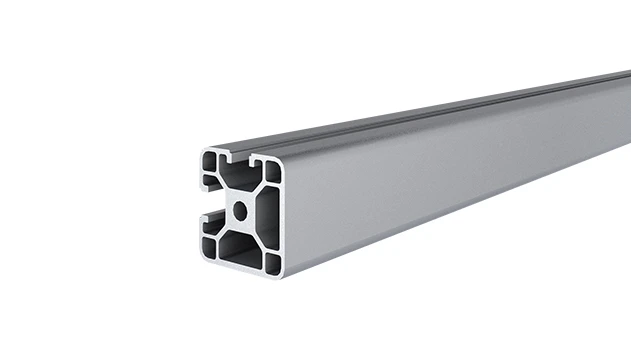
4040E is a 4.00x4.00 CM fractional 40 series square extrusion T-slot profile with two side open T-slots, two side with closed face, each side with 4.00cm face. The profile has align-a-grooves to assist in aligning connecting profiles.
4040E EU Standard Aluminum Profile

Walk into any manufacturing plant, and you'll likely see the same silent problem: piles of discarded metal frames, outdated workbenches, and material racks gathering dust in a corner. These aren't just eyesores—they're symbols of a linear approach to production that's costing businesses money and harming the planet. In 2023, the global manufacturing sector generated over 1.6 billion tons of industrial waste, with a significant portion coming from single-use equipment and rigid structures that can't adapt to changing needs. But what if there was a way to build manufacturing tools that don't end up in the scrapyard after a single use? Enter the 4040E EU Standard Aluminum Profile—a hero in the quest for sustainable, reusable manufacturing solutions.

Sustainability in manufacturing isn't just a buzzword; it's a necessity. With stricter environmental regulations, rising material costs, and consumers demanding eco-conscious practices, businesses are scrambling to find ways to reduce waste without sacrificing efficiency. The answer, it turns out, might lie in a material we've been using for decades: aluminum. But not just any aluminum—profiles designed with reusability in mind, like the 4040E. This isn't about cutting corners; it's about reimagining how we build the tools of production so they serve us longer, cost less, and leave a lighter footprint on the planet.

Why Aluminum Profiles? The Sustainable Choice

Aluminum has long been a favorite in manufacturing for its strength-to-weight ratio, but its sustainability credentials are what make it stand out today. Unlike steel, which requires massive amounts of energy to produce and is often difficult to recycle without losing quality, aluminum is 100% recyclable—meaning it can be melted down and reused indefinitely without degrading. In fact, recycling aluminum uses just 5% of the energy needed to produce new aluminum, cutting carbon emissions by a staggering 95%. For manufacturers looking to shrink their carbon footprint, that's a game-changer.

But not all aluminum profiles are created equal. The EU Standard certification (like the one behind the 4040E) ensures that the profile meets strict quality and safety guidelines, from material purity to dimensional accuracy. This isn't just about compliance; it's about reliability. When you invest in an EU-standard profile, you know it's been tested to withstand the rigors of factory life—heavy loads, constant use, and the occasional bump or scrape. That durability is key to reusability: a profile that bends or cracks after a few months won't last long enough to be repurposed. The 4040E doesn't just meet these standards; it embodies them, making it a trusty partner for manufacturers committed to the long haul.

Meet the 4040E: More Than Just a Profile

Let's get up close with the 4040E. At first glance, it might look like just another aluminum extrusion—four sides, a rectangular shape—but its design tells a different story. Measuring 40x40mm, this profile isn't just about size; it's about smart engineering. The "E" in its name? Officially, it stands for "economic," but we might as well call it "eco-friendly" too. Let's break down what makes it tick.

First, the T-slots. Run your finger along the length of the 4040E, and you'll feel the grooves—those T-shaped channels that run along each of its four sides. They're not just for show. These slots are the secret to its reusability, acting as a universal connection point for a wide range of aluminum profile accessories. Need to attach a shelf? Slide a bracket into the slot and secure it with a bolt. Want to add a light fixture? Clip a holder into the T-slot. Unlike traditional steel structures, which require welding, drilling, or gluing to modify, the 4040E lets you make changes in minutes, not days. No special tools, no messy adhesives, just simple, tool-free adjustments.

Then there's the wall thickness. The 4040E typically comes with a wall thickness of 1.5mm to 2mm, striking the perfect balance between strength and weight. It's strong enough to support heavy equipment (we're talking up to 200kg per linear meter, depending on the configuration) but light enough to be carried and repositioned by just one or two workers. That matters when you're disassembling a workbench or material rack—no need for cranes or forklifts here. It's a small detail, but it makes a big difference in how easily the profile can be reused.

Finally, the finish. Most 4040E profiles come anodized, a process that coats the aluminum with a protective layer to resist corrosion and wear. This isn't just about aesthetics (though the smooth, matte finish does look sleek); it's about longevity. In factories where humidity, oils, or chemicals are present, a non-anodized profile might rust or degrade over time. The 4040E's anodized finish ensures it stays in top shape, even after years of use—so when you disassemble it, you're not left with a corroded, unusable piece of metal, but a profile ready for its next job.

Reusability in Action: From One Project to the Next

Reusability isn't just a buzzword for the 4040E—it's a way of life. Let's say a small electronics manufacturer builds a production line using 4040E profiles. They assemble workbenches, material racks, and conveyor supports, all connected with aluminum profile accessories like 90° connectors and end caps. Six months later, they land a new client with different product specs, requiring a completely redesigned assembly line. In the old days, they'd have to tear down the old setup, haul it to the scrapyard, and buy new steel structures—costing time, money, and resources. With the 4040E, it's a different story.

First, they disassemble. Using a simple hex key, workers loosen the bolts holding the accessories in place, slide them out of the T-slots, and separate the 4040E profiles. No cutting, no grinding, no damage to the profiles themselves. Next, they clean. A quick wipe with a cloth removes dust and oil, and the profiles are as good as new. Then, they reconfigure. Maybe the new assembly line needs taller workbenches, so they swap out the short 4040E legs for longer ones. Or perhaps they need a mobile cart instead of a fixed rack, so they add casters (using those T-slots again) and a handle. In a matter of days, the old components are transformed into a brand-new setup—no new materials, no waste, just creativity and a profile that bends to their needs.

This isn't just hypothetical. Take a car parts manufacturer in Spain that specializes in custom engine components. Their production lines change every 6–12 months as clients update their designs. Before switching to 4040E, they spent €15,000 annually on new steel workbenches and racks. Now, they reuse 80% of their 4040E profiles across projects, cutting tooling costs by €12,000 per year. "We used to see our old equipment as trash," says Carlos, their production supervisor. "Now, we see it as a parts bin. That rack we used for pistons last year? It's now holding valve covers. The workbench from the assembly line? It's now a testing station. It's like having a manufacturing toolkit that never runs out."

Applications: Workbenches, Racks, and Beyond

The 4040E's versatility shines in its applications. Let's take two common manufacturing tools: Workbench E (a single-deck workbench without casters) and Material Rack B (a 3-row, 3-floor storage rack). These are workhorses in factories, and with the 4040E, they become sustainability stars.

Workbench E: The Chameleon of Assembly Lines

Workbench E is a staple in assembly lines—simple, sturdy, and designed to hold tools, parts, and workers' hands as they put products together. Traditional workbenches are often built to fixed specs: a certain height, a certain width, maybe a shelf or two welded on. If your production line changes—say, you start assembling larger products—you're stuck with a workbench that's too short or narrow. You either (slowing down work) or buy a new one (wasting money).

Not with Workbench E built from 4040E profiles. Let's say you need to add a second shelf for more parts storage. Grab an aluminum profile accessory like a 90° aluminum profile connector, slide it into the T-slot on the 4040E uprights, attach a crossbar of 4040E, and boom—new shelf. Need to raise the workbench height by 10cm? Swap out the 4040E legs for longer ones. Want to add a light strip overhead? Clip a bracket into the T-slot and mount the light. When the project ends, disassemble it: the 4040E profiles, connectors, and shelf boards go into storage, ready to become a Workbench E again, or maybe a tool cart, or even a packing station. The possibilities are endless.

Material Rack B: Storage That Grows With You

Material Rack B is designed to hold parts and components, with 3 rows and 3 floors for maximum storage. In a busy warehouse, storage needs shift constantly—one month you're storing small screws and bolts, the next, larger plastic molds. A fixed steel rack would leave you cramming items into too-small spaces or leaving gaps that waste valuable floor area. Material Rack B, built with 4040E, adapts.

Need to widen the rows to fit bigger boxes? Loosen the bolts on the 4040E crossbars, slide them apart, and retighten. Need an extra floor for overflow inventory? Add another layer of 4040E crossbars using parallel aluminum joint accessories. When the rack is no longer needed for storage, repurpose it: remove the shelves, add swivel caster wheels (using the T-slots to mount the caster brackets), and suddenly you've got a mobile trolley for transporting goods around the factory. It's not just a rack—it's a blank canvas.

Feature Traditional Steel Material Rack 4040E Aluminum Profile Material Rack (Material Rack B)
Assembly Time 8–10 hours (requires welding/drilling) 1–2 hours (tool-free with T-slot accessories)
Reconfiguration Nearly impossible (welded joints; requires cutting) Easy (loosen bolts, adjust, retighten)
Weight Capacity High, but fixed (cannot exceed initial design load) High and adjustable (add crossbars for heavier loads)
End-of-Life Scrapped (90% of material ends up in landfill) Reused or recycled (100% of aluminum is recoverable)
Long-term Cost (5 years) €8,000 (replacement every 1–2 years) €2,500 (one initial purchase, reused across projects)

Lean System Integration: Waste Not, Want Not

Lean manufacturing is all about eliminating waste—whether it's time, materials, or space. The 4040E fits right into this philosophy, acting as a flexible building block that adapts to your workflow, not the other way around. Let's break down how it supports key lean principles:

Just-In-Time (JIT) Production: In JIT, you produce only what you need, when you need it, to avoid overstocking. The 4040E helps by letting you build tools and racks on demand. No more waiting weeks for custom steel structures—grab your 4040E profiles and aluminum profile accessories, and assemble a workbench or Material Rack B in hours. When demand drops, disassemble and store the components; when it spikes, rebuild. No wasted inventory, no idle workers.

Kaizen (Continuous Improvement): Kaizen is about constantly refining processes to boost efficiency. With traditional rigid structures, trying out a new workflow means investing in new equipment. With 4040E, you can experiment without risk. Want to test a U-shaped assembly line instead of a straight one? Reconfigure your workbenches in a day. Not working? Change it back. This freedom to iterate is how great ideas are born—and the 4040E makes it possible without breaking the bank.

5S (Sort, Set in Order, Shine, Standardize, Sustain): 5S is all about keeping the workplace organized and efficient. The 4040E's modular design helps here, too. Use it to build custom storage solutions (like Material Rack B) that keep tools and parts exactly where workers need them, reducing time spent searching. When processes standardize, you can replicate the setup across lines using the same 4040E profiles. And when it's time to "shine" (clean), the smooth anodized finish wipes down easily—no crevices for dust to hide.

Take a furniture manufacturer in Denmark that adopted lean practices five years ago. They replaced all their steel workbenches with 4040E-based Workbench E setups and saw a 30% reduction in production time. "Before, if a worker suggested a better way to arrange the line, we'd say, 'Maybe next quarter when we get new benches,'" explains Lars, their lean coordinator. "Now, we say, 'Let's try it tomorrow.' The 4040E turned our factory into a lab—one where every day is a chance to get better."

The Unsung Heroes: Aluminum Profile Accessories

The 4040E can't do it alone. It relies on a ecosystem of aluminum profile accessories that turn "good idea" into "great solution." These small, often overlooked components are the glue (pun intended) that makes reusability seamless. Let's meet a few of the key players:

90° Aluminum Profile Connector: This L-shaped bracket slides into the T-slots of two 4040E profiles, joining them at a perfect right angle. Tighten a bolt, and it's secure; loosen it, and you're ready to reconfigure. No welding, no drilling—just a simple, reliable connection.

End Caps: These plastic or aluminum covers snap onto the ends of the 4040E, protecting workers from sharp edges and preventing dust from clogging the T-slots. When it's time to disassemble, they pop off easily, leaving the profile clean and ready for reuse.

Parallel Aluminum Joint: Need to connect two 4040E profiles side by side? This joint slides into the T-slots of both, keeping them aligned and stable. Perfect for building wider workbenches or stronger rack uprights.

Caster Brackets: Attach these to the bottom of 4040E legs, and suddenly your fixed workbench becomes a mobile cart. Lock the casters to keep it steady; unlock them to move it where it's needed. It's this kind of flexibility that makes the 4040E indispensable.

These accessories aren't afterthoughts—they're designed to work in harmony with the 4040E, ensuring that every connection is strong, every adjustment is easy, and every disassembly is damage-free. Together, they form a system where the whole is greater than the sum of its parts.

The Future of Manufacturing: Built to Last, Built to Reuse

The 4040E EU Standard Aluminum Profile isn't just a product—it's a statement. It says that manufacturing doesn't have to be a cycle of buy, build, discard. It can be a cycle of build, reuse, rebuild. For businesses tired of watching money and materials go to waste, it's a lifeline. For the planet, it's a step toward a more sustainable future.

As circular economy principles take hold—where products are designed to be reused, repaired, or recycled—the 4040E will only grow in importance. Imagine a future where manufacturers lease profiles instead of buying them, returning them to suppliers to be refurbished and resold. Or where AI design tools suggest ways to repurpose existing 4040E structures for new projects, minimizing the need for new materials. This isn't science fiction; it's the direction manufacturing is heading, and the 4040E is leading the way.

So the next time you walk through a factory, take a closer look at the racks, workbenches, and carts. If they're built with 4040E, you're looking at the future—one where sustainability and efficiency go hand in hand, and where every profile has a story that doesn't end in the scrapyard. It's a future worth building—and the 4040E is how we'll build it.


Get In Touch with us

Hey there! Your message matters! It'll go straight into our CRM system. Expect a one-on-one reply from our CS within 7×24 hours. We value your feedback. Fill in the box and share your thoughts!