- Company Articles
- Industry articles
- Industry News
- Sustainable Manufacturing: Reusing 60 Steel Roller Track White Systems

Sustainable Manufacturing: Reusing 60 Steel Roller Track White Systems
Related Product
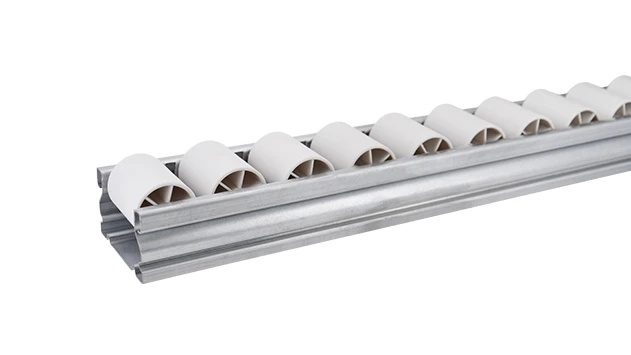
60 Steel Roller Track White
The roller track can be installed with multiple accessories to create different slopes and configurations of flow racks.All steel conveyor 60 roller track accessories are engineered to perfectly fit the sliding rail.It is enable the movement of SLC boxes.
In today's fast-paced manufacturing world, sustainability isn't just a trend—it's a core requirement for businesses looking to stay competitive and responsible. Manufacturers are constantly searching for ways to reduce waste, cut costs, and minimize their environmental footprint. One often-overlooked solution lies in reusing existing components, especially robust systems like the 60 Steel Roller Track White. This versatile component isn't just for one-time use; it can be repurposed across multiple applications, aligning perfectly with lean principles and circular economy goals.
What Makes the 60 Steel Roller Track White Special?
The 60 Steel Roller Track White is a workhorse in manufacturing environments. Made from high-grade steel with a durable white coating, it's designed to withstand heavy loads, resist corrosion, and handle daily wear and tear. Its modular design is key to its reusability—each section can be easily disassembled, cut to size, and reassembled into new configurations without losing functionality. Whether you're using it in a conveyor line, a flow rack, or a workbench feeding system, this roller track delivers consistent performance.
Let's break down its key features:
- Load Capacity: Can support up to 500kg per meter, making it ideal for heavy parts like automotive components or 3C assembly parts.
- Durability: The white coating protects against scratches and rust, ensuring a long lifespan even in harsh factory conditions.
- Compatibility: Works seamlessly with other lean system components—lean pipe, flow rack connectors, caster wheels, and more—so you don't have to invest in new parts when repurposing.
- Ease of Use: No special tools are needed to assemble or disassemble the track, which means your team can repurpose it quickly without downtime.
Why Reusing Matters: Environmental and Economic Benefits
Environmental Impact
Every ton of steel recycled saves approximately 1.5 tons of iron ore, 0.5 tons of coal, and reduces CO₂ emissions by 1.8 tons. When you reuse the 60 Steel Roller Track White instead of discarding it, you're directly contributing to these savings. For example, if a manufacturer repurposes 10 meters of this track (which weighs about 200kg), they avoid sending 200kg of steel to the landfill and save the energy required to produce a new track of the same length. Over time, these small actions add up to a significant reduction in your company's carbon footprint.
Economic Benefits
Cost savings are another major advantage of reusing this roller track. Let's do the math: A new 60 Steel Roller Track White section (1 meter) costs around $50-$70, depending on the supplier. If you need 15 meters for a new flow rack, that's $750-$1050. But if you repurpose existing track sections, you only need to spend on additional components like lean pipe or connectors—say, $300-$400 total. That's a savings of 50% or more! Plus, repurposing is faster than ordering and installing new parts, which means less downtime for your production line.

Real-World Case Studies: Reusing in Action
Case Study 1: 3C Assembly Plant Turns Conveyor Tracks into Flow Racks
A leading 3C assembly plant (specializing in smartphone components) had an old conveyor line using 60 Steel Roller Track White that was no longer in use. They needed to expand their parts storage to accommodate a new product line, but buying new flow racks would cost $45,000. Instead, they decided to repurpose the existing track.
The plant worked with a lean solution provider to:
- Disassemble the 15-meter conveyor track into individual sections.
- Cut the sections into 1.5-meter lengths (ideal for flow rack shelves).
- Assemble the sections into 5 flow racks using lean pipe frames and caster wheels.
The result? They saved $27,000 (60% of the original cost), reduced steel waste by 2 tons, and the new flow racks were ready in just 3 days—compared to the 2 weeks it would take for new ones. The racks now hold small components like screen protectors and batteries, making them easily accessible to workers on the assembly line.
Case Study 2: Automotive Parts Manufacturer Upgrades Workbenches with Reused Tracks
An automotive parts manufacturer wanted to improve the efficiency of their lean pipe workbenches. Workers were spending too much time reaching for parts, which slowed down production. They had unused 60 Steel Roller Track White sections from an old sorting line, so they decided to repurpose them into feeding systems for the workbenches.
The solution: They attached the roller tracks to the sides of the workbenches using lean pipe joints. This allowed parts like bolts and nuts to slide directly to the workers, reducing reach time by 12% per workstation. The total cost of the upgrade was $6,000—compared to $13,000 for new feeding systems. They also kept 1.5 tons of steel out of landfills.
The plant reported a 10% increase in productivity after the upgrade, which translated to an additional $20,000 in monthly revenue. This just goes to show that reusing components isn't just about saving money—it's about improving your bottom line in multiple ways.

Reuse Scenarios: From Old to New
The 60 Steel Roller Track White can be repurposed in countless ways. Below is a table showing some common scenarios, along with the required components and benefits:
| Original Application | Reused Application | Required Components | Cost Savings | Carbon Footprint Reduction |
|---|---|---|---|---|
| 15m Conveyor Line (Engine Parts) | 5 Flow Racks (Parts Storage) | Lean Pipe, Flow Rack Connectors, Caster Wheels | 60% ($27k vs $45k) | 3.2 tons CO₂ |
| 8m Warehouse Sorting Line | 4 Workbench Feeding Systems | Lean Pipe Joints, Workbench Brackets | 45% ($6k vs $13k) | 1.8 tons CO₂ |
| 12m Packaging Line | 6 Turnover Trolley Bases | Caster Wheels, Lean Pipe Frames | 50% ($9k vs $18k) | 2.4 tons CO₂ |
| 10m Assembly Line (Electronics) | 3 Mobile Material Racks | Lean Pipe, Caster Wheels, Rack Shelves | 55% ($11k vs $20k) | 2.8 tons CO₂ |
How to Get Started with Reusing Your Roller Tracks
Repurposing the 60 Steel Roller Track White is easier than you think. Follow these steps to get started:
Step 1: Audit Your Existing Systems
First, identify any unused or underused roller track sections in your facility. Check their condition—look for signs of damage like bent rollers or cracked coating. If they're still functional, they're good to reuse. Make a list of the lengths and quantities you have available.
Step 2: Define Your New Application
Decide what you need to build. Do you need more flow racks? Mobile workbenches? Feeding systems? Once you know the application, measure the space and calculate how much track you need. For example, if you want to build a flow rack that's 1.5 meters long, you'll need two 1.5-meter sections of track.
Step 3: Gather Compatible Components
You'll need additional components to assemble your new system. For example, if you're building a flow rack, you'll need lean pipe for the frame, connectors to attach the track to the frame, and caster wheels to make it mobile. Work with a reliable lean solution supplier to get these parts—they can help you choose the right components for your project.
Step 4: Assemble and Test
Assemble your new system using the repurposed track and new components. Since the track is modular, you don't need special tools—just follow the instructions from your supplier. Once assembled, test it to ensure it meets your needs. For example, if it's a flow rack, check if the parts slide smoothly and if it can support the required load.
Step 5: Continuous Improvement
Lean principles emphasize continuous improvement, so don't stop at one repurpose. Monitor your new system and see if you can make adjustments to improve its performance. For example, if the flow rack is too tall, you can add more lean pipe sections to lower it. The modular design makes it easy to tweak as your needs change.
Choosing the Right Supplier for Reuse Success
Working with a trusted lean solution supplier is key to successful repurposing. A good supplier will not only provide high-quality components but also offer expert advice on how to reuse your existing track. They can help you audit your systems, design your new application, and source the right parts. For example, if you need to cut the track to size, they can provide guidance on the best way to do it without damaging the coating.
When choosing a supplier, look for one that offers:
- Wide range of compatible components (lean pipe, connectors, caster wheels, etc.).
- Custom solution design services to fit your specific needs.
- Expertise in lean manufacturing and sustainability.
- Fast delivery times to minimize downtime.
The Future of Sustainable Manufacturing
As more manufacturers adopt circular economy models, the demand for reusable components like the 60 Steel Roller Track White will continue to grow. This track is a perfect example of how design can support sustainability—its modularity and durability make it easy to reuse, reducing waste and saving resources. In the future, we can expect to see even more innovative reusable systems that help manufacturers meet their sustainability goals.
Conclusion
Reusing the 60 Steel Roller Track White is a win-win for manufacturers. It helps you reduce your environmental footprint, cut costs, and improve efficiency—all while aligning with lean principles. Whether you're repurposing it into a flow rack, a workbench feeding system, or a turnover trolley, this versatile component delivers consistent results. So next time you're thinking about upgrading your manufacturing systems, don't throw away those old roller tracks—repurpose them and take a step towards a more sustainable future.
Remember, sustainability isn't just about big changes—it's about the small, consistent actions that add up over time. Reusing your roller tracks is one of those actions, and it's a step that any manufacturer can take today.