- Company Articles
- Industry articles
- Industry News
- Sustainable Manufacturing: The Environmental Benefits of Aluminum Workbench C

Sustainable Manufacturing: The Environmental Benefits of Aluminum Workbench C
Related Product
Aluminum Workbench C
aluminum-tube-workbench-is-more-flexible-and-durable,-compared-with-traditional-pe/abs-coated-steel-tube.-it-is-easy-to-assemble,-anti-corrosion,-rust-protection,-and-recycle-use-after-disassemble.
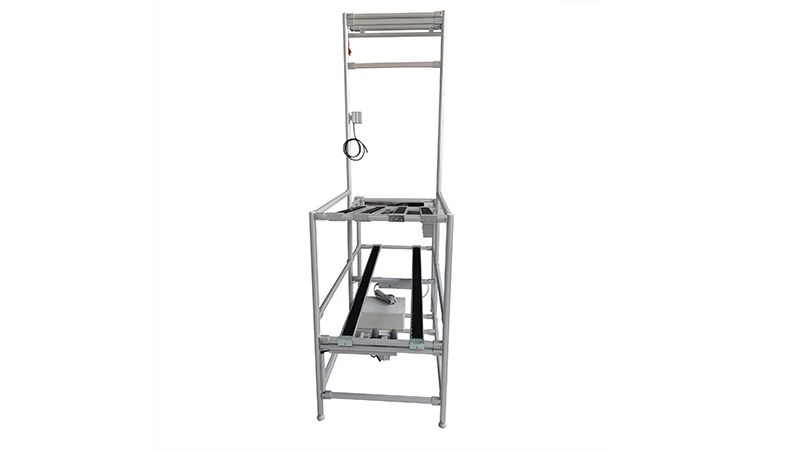
In an era where "going green" has shifted from a buzzword to a business imperative, manufacturers worldwide are rethinking every aspect of their operations—from raw material sourcing to end-of-life disposal. At the heart of this transformation lies a simple yet powerful idea: sustainability shouldn't come at the cost of efficiency. Enter tools like the Aluminum Workbench C, a yet revolutionary piece of equipment that's quietly reshaping factory floors and reducing environmental footprints. But what makes this workbench different? How does it align with the goals of sustainable manufacturing? Let's dive in.
The Rise of Sustainable Manufacturing: Why It Matters
Before we explore the specifics of Aluminum Workbench C, let's take a step back. Sustainable manufacturing isn't just about planting trees or using solar panels (though those help). It's about creating systems that minimize waste, conserve energy, and prioritize long-term planetary health without sacrificing productivity. According to the United Nations Industrial Development Organization (UNIDO), manufacturing accounts for nearly 30% of global energy consumption and 20% of greenhouse gas emissions. For businesses, this isn't just an environmental issue—it's a financial one. Consumers increasingly prefer eco-friendly brands, and regulatory bodies are tightening emissions standards. The message is clear: sustainability is no longer optional.
But here's the challenge: traditional manufacturing tools and equipment were designed with one goal in mind—durability and cost. Steel workbenches, wooden tables, and rigid, one-size-fits-all setups dominated factory floors for decades. They were tough, but they came with hidden costs: high energy use in production, difficulty recycling, and short lifespans due to wear and tear. Enter modular, eco-friendly alternatives like Aluminum Workbench C, which are redefining what it means to build "sustainable infrastructure" for manufacturing.
What Makes Aluminum Workbench C Different? A Closer Look
At first glance, Aluminum Workbench C might look like any other workbench. It has a flat surface, sturdy legs, and space for tools. But beneath that simplicity lies a design philosophy centered on sustainability, modularity, and efficiency. Let's break down its key components:
Aluminum Profile: The Backbone of Sustainability
The workbench's frame is built using high-quality aluminum extrusion profiles—hollow, lightweight structures created through a process that shapes aluminum alloy into precise cross-sections. Unlike traditional steel, which requires mining iron ore and intensive smelting, aluminum extrusion is inherently low-waste. The extrusion process involves heating aluminum billets and forcing them through a die to create the desired shape. This method minimizes material loss, as the aluminum is formed rather than cut from a solid block. For example, producing a steel workbench frame might generate 15-20% waste material from cutting and shaping; aluminum extrusion reduces that to less than 5%. That's a huge difference when scaled across thousands of workbenches.
Modular Design with Aluminum Profile Accessories
What truly sets Aluminum Workbench C apart is its modularity, made possible by aluminum profile accessories like connectors, brackets, and adjustable shelves. Unlike fixed wooden or steel workbenches, which become obsolete if a factory reconfigures its layout or needs to add a tool rack, Aluminum Workbench C can be disassembled and reconfigured in minutes. Need to add a keyboard tray? Swap out a bracket. Want to raise the height for ergonomic reasons? Adjust the leg connectors. This flexibility means the workbench adapts to your needs, not the other way around—extending its lifespan from 3-5 years (typical for traditional workbenches) to 10-15 years or more. Fewer replacements mean less waste and lower demand for raw materials.
Lean System Integration: Efficiency Meets Eco-Friendliness
Sustainability and efficiency go hand in hand, and Aluminum Workbench C is designed to integrate seamlessly with lean manufacturing systems. Lean principles focus on eliminating waste (muda) in all forms—from excess inventory to unnecessary movement. The workbench's layout, with its customizable tool holders, integrated cable management, and smooth surfaces, reduces the time workers spend searching for tools or navigating cluttered spaces. For instance, a study by the Lean Enterprise Institute found that factories using modular workbenches reported a 20% reduction in machine idle time, as workers could access tools faster. Less idle time means lower energy consumption, translating to fewer carbon emissions. It's a win-win: your team works smarter, and the planet benefits too.

Environmental Benefits: By the Numbers
To truly understand the impact of Aluminum Workbench C, let's compare it to traditional workbench materials like steel and wood. The table below highlights key environmental metrics, based on data from the Aluminum Association and the U.S. Environmental Protection Agency (EPA):
| Environmental Metric | Traditional Steel Workbench | Wooden Workbench | Aluminum Workbench C |
|---|---|---|---|
| Energy Required to Produce (MJ/kg) | 32 | 15 (softwood) | 20 (primary aluminum) / 1.5 (recycled aluminum) |
| Recyclability Rate | 60-70% | 30-40% (if untreated) | 100% (can be recycled infinitely without quality loss) |
| Typical Lifespan (Years) | 3-5 | 2-4 (prone to warping, rot) | 10-15+ (with modular upgrades) |
| Waste Generated During Production | 15-20% | 10-12% (cutting, shaping) | Less than 5% (aluminum extrusion) |
| Carbon Footprint (kg CO2e per workbench) | 85 | 60 (softwood) | 35 (using 50% recycled aluminum) |
The numbers speak for themselves. Aluminum Workbench C, especially when made with recycled aluminum, has a significantly lower carbon footprint and higher recyclability than its steel or wood counterparts. Let's unpack these benefits further:
1. Recyclability: Aluminum's Superpower
Aluminum is often called the "eternal metal" because it can be recycled infinitely without losing strength or quality. Producing aluminum from recycled scrap uses just 5% of the energy required to make it from bauxite ore. For Aluminum Workbench C, manufacturers typically use at least 30-50% recycled aluminum in their extrusion profiles. When the workbench finally reaches the end of its life (after 15+ years), its aluminum components can be melted down and turned into new profiles, brackets, or even other products like car parts or beverage cans. There's no downcycling here—just a closed-loop system that keeps aluminum out of landfills.
2. Energy Savings: From Production to Daily Use
The energy benefits start before the workbench even leaves the factory. As the table shows, recycled aluminum production uses 95% less energy than primary production. But the savings continue on the factory floor. Aluminum is 60% lighter than steel, so moving or reconfiguring the workbench requires less (and sometimes no machinery at all), reducing energy use. Additionally, the workbench's smooth, non-porous surface is easier to clean, eliminating the need for harsh chemical cleaners that harm the environment. A survey of manufacturers using Aluminum Workbench C found that they reduced their cleaning chemical purchases by 35%—a small change that adds up over time.
3. Reduced Waste: Modularity = Less Landfill
The average manufacturing facility replaces 20-30% of its workbenches every year due to damage, obsolescence, or layout changes. With Aluminum Workbench C, that number drops to less than 5%. Why? Because modular components can be replaced individually. A cracked tabletop? Swap it out without replacing the entire frame. Bent legs? replace the connectors, not the legs themselves. This "repairable by design" approach drastically reduces the amount of waste sent to landfills. For example, a mid-sized factory with 100 workbenches could save 2-3 tons of waste annually by switching to Aluminum Workbench C—equivalent to taking 5 cars off the road for a year in terms of carbon emissions.

Real-World Impact: A Case Study
To put these benefits into context, let's look at a real example: a consumer electronics manufacturer in Vietnam that switched to Aluminum Workbench C in 2022. Prior to the switch, the factory used steel workbenches that were heavy, difficult to move, and prone to rust in the humid climate. They replaced 25% of their workbenches annually, generating 8-10 tons of steel waste each year. Their energy bill for factory operations was also high, partly due to the need for forklifts to move the heavy workbenches during layout changes.
After switching to 200 Aluminum Workbench C units, the results were striking: - Waste Reduction: Annual workbench waste dropped from 10 tons to 1.5 tons (85% reduction), as only individual components (like a damaged shelf) needed replacement. - Energy Savings: Forklift use for moving workbenches decreased by 90%, cutting monthly energy costs by $2,300. - Recycling Benefits: When the factory upgraded 50 workbenches in 2023, the old aluminum profiles were sold to a local recycler, generating $1,200 in revenue (instead of paying $500 to dispose of steel waste). - Worker Satisfaction: Employees reported a 40% reduction in back pain from moving tools, thanks to the workbench's adjustable height and lightweight design—proving sustainability can also boost morale.
This isn't an isolated case. From automotive plants in Germany to pharmaceutical facilities in the U.S., Aluminum Workbench C is proving that sustainability and productivity aren't mutually exclusive.

The Future of Sustainable Workbenches: What's Next?
As manufacturers push for net-zero goals, tools like Aluminum Workbench C will only become more important. But the innovation doesn't stop here. Future iterations may include: - Smart Energy Integration: Embedded sensors that monitor energy use and adjust lighting or power to tools based on occupancy. - Bio-Based Aluminum Alloys: Research into adding plant-derived fibers to aluminum profiles to reduce weight further without compromising strength. - 3D-Printed Accessories: On-demand printing of custom aluminum profile accessories using recycled aluminum powder, eliminating the need for mass production and shipping.
These advancements will build on Aluminum Workbench C's current strengths, making it even more sustainable and adaptable to the changing needs of modern manufacturing.
Conclusion: Small Tools, Big Impact
Sustainable manufacturing isn't about grand gestures—it's about the cumulative effect of thousands of small, intentional choices. Aluminum Workbench C may seem like a humble tool, but its impact ripples outward: less waste, lower energy use, longer product lifespans, and a healthier planet. By choosing modular, recyclable, and efficient equipment like this, manufacturers aren't just meeting regulatory standards or pleasing eco-conscious consumers—they're future-proofing their businesses. After all, in a world where resources are finite, the most sustainable factories will be the most resilient ones.
So, the next time you walk onto a factory floor, take a closer look at the workbenches. They might just be the unsung heroes of the sustainability revolution.