- Company Articles
- Industry articles
- Industry standards
- Sustainable Manufacturing with 2060 EU Standard Aluminum Profile

Sustainable Manufacturing with 2060 EU Standard Aluminum Profile
Related Product
2060 EU Standard Aluminum Profile
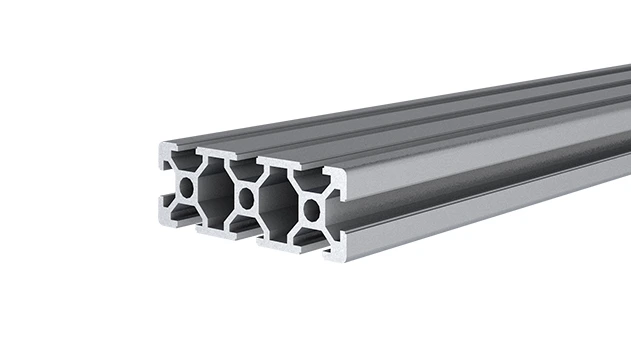
2060 is a 2.00 x 4.00CM fractional 20 series square extrusion T-slot profile with four open T-slots, two side with 2.00cm face, the other side with 6.00cm face. The profile has align-a-grooves to assist in aligning connecting profiles.
In today's manufacturing landscape, the word "sustainability" has shifted from a buzzword to a business imperative. As supply chains face increasing pressure to reduce carbon footprints, minimize waste, and embrace circular economy principles, the materials and systems we choose play a pivotal role in shaping our industrial future. Among the array of solutions emerging to meet these demands, one stands out for its versatility, durability, and eco-friendly credentials: the 2060 EU standard aluminum profile . More than just a component in factory setups, this aluminum extrusion profile is redefining how manufacturers balance productivity with planetary responsibility. Let's dive into how this unassuming material is becoming the backbone of sustainable manufacturing practices worldwide.
The Push for Sustainable Manufacturing: Why Materials Matter
Manufacturing has long been a cornerstone of global economies, but its environmental impact is undeniable. From raw material extraction to production processes and end-of-life disposal, traditional manufacturing often leaves a heavy footprint—think energy-intensive steel production, non-recyclable plastics, and rigid, single-use structures that end up in landfills. Today, however, two key drivers are pushing the industry toward change: regulatory pressure (such as the EU's Carbon Border Adjustment Mechanism and net-zero targets) and consumer demand for eco-conscious products. For manufacturers, this means rethinking not just workflows, but the very materials that power their operations.
Enter aluminum. Unlike many materials, aluminum brings a unique set of advantages to the table: it's lightweight yet strong, highly malleable, and—crucially—infinitely recyclable. But not all aluminum profiles are created equal. The 2060 EU standard aluminum profile , in particular, is engineered to meet stringent European union guidelines for sustainability, safety, and performance. Designed as part of the EU's broader efforts to standardize eco-friendly manufacturing components, this profile isn't just a material choice; it's a commitment to a more sustainable way of making things.
What Is the 2060 EU Standard Aluminum Profile?
Before we explore its sustainability benefits, let's clarify what makes the 2060 EU standard aluminum profile distinct. As part of the EU's harmonized standards for aluminum extrusion profiles, the "2060" designation refers to its specific dimensions and tolerances: a width of 20mm and a height of 60mm, with precise wall thickness and groove specifications that ensure compatibility with a wide range of aluminum profile accessories . These accessories—including connectors, end caps, hinges, and brackets—are designed to work seamlessly with the profile, enabling modular, customizable structures that adapt to evolving production needs.
But the "EU standard" label goes beyond dimensions. To earn this certification, the profile must meet rigorous criteria: it must be made from at least 75% recycled aluminum (a threshold that many suppliers exceed), comply with REACH regulations (restricting hazardous substances), and undergo testing for durability, load-bearing capacity, and corrosion resistance. For manufacturers operating in the EU or exporting to European markets, this compliance isn't just a box to check—it's a mark of quality that builds trust with clients and regulators alike.

Material Advantages: Why Aluminum Profiles Lead in Sustainability
At the heart of the 2060 profile's sustainability story are its material properties. Let's break down how these translate to real-world environmental benefits:
1. 100% Recyclable, with Near-Zero Loss of Quality
Aluminum is one of the few materials that can be recycled repeatedly without losing strength or integrity. According to the International Aluminum Institute, over 75% of all aluminum ever produced is still in use today—a testament to its circular potential. For the 2060 profile, this means that at the end of its life in a factory workbench or material rack, it can be melted down and reformed into new profiles, accessories, or even entirely different products (like automotive parts or consumer goods). Compare this to steel, which loses structural integrity after multiple recycles, or plastic, which often downcycles into lower-quality products. Aluminum's recyclability isn't just a "nice-to-have"—it's a closed-loop system that drastically reduces reliance on virgin raw materials.
2. Energy Efficiency in Production
Producing aluminum from bauxite ore is energy-intensive, but recycling aluminum uses just 5% of the energy required to make it from scratch. For the 2060 profile, which prioritizes recycled content, this translates to a dramatically lower carbon footprint. A study by the European Aluminum Association found that using 1 ton of recycled aluminum instead of primary aluminum saves 9 tons of CO2 emissions. For manufacturers scaling up their use of 2060 profiles, this energy savings adds up quickly—reducing not just their environmental impact, but also their energy costs over time.
3. Lightweight Design, Reduced Transportation Emissions
Aluminum has a strength-to-weight ratio that outperforms steel, meaning structures built with 2060 profiles are lighter without sacrificing durability. A typical workbench frame made from 2060 aluminum weighs 30-40% less than an equivalent steel frame. For manufacturers, this lightness reduces transportation emissions: whether shipping profiles to a factory or moving assembled workbenches across a warehouse floor, less weight means less fuel burned. It also lowers the load on factory floors and equipment, extending the lifespan of other assets like conveyor systems and forklifts.
4. Low Maintenance, Long Lifespan
Sustainability isn't just about reducing waste at the end of a product's life—it's also about making products that last. The 2060 profile's corrosion resistance (thanks to aluminum's natural oxide layer) and durability mean it requires minimal maintenance. Unlike steel, which needs regular painting or coating to prevent rust, or wood, which warps and rots, aluminum profiles can withstand harsh factory environments—humidity, chemicals, and heavy use—for decades. This longevity reduces the need for frequent replacements, cutting down on both material waste and the energy required to produce new components.
Design Flexibility: Aluminum Profile Accessories and the Power of Modularity
If the 2060 profile is the "bones" of sustainable manufacturing systems, then aluminum profile accessories are the "joints and muscles" that bring flexibility to life. These accessories—ranging from simple end caps to complex 90-degree connectors and adjustable hinges—enable manufacturers to build modular structures that adapt to changing needs, rather than being locked into fixed, single-purpose designs. This modularity is a game-changer for sustainability, as it directly addresses one of manufacturing's biggest waste drivers: obsolescence.
Consider a common scenario: a factory needs to reconfigure its production line to accommodate a new product. With traditional steel or wooden workbenches, this often means dismantling the old setup and purchasing new structures—sending the old materials to landfills. With 2060 profiles and accessories, however, the process is entirely different. Using quick-connect joints and sliding brackets, teams can disassemble the existing workbench, reconfigure the profiles into a new layout, and reuse 95% of the components. Need to add a shelf? Attach a bracket. Extend a conveyor? Add a few extra profiles and roller track connectors. The result? Less waste, lower costs, and a production line that evolves with the business.
This flexibility also supports "right-sizing" in manufacturing. Instead of overbuilding structures to accommodate hypothetical future needs, manufacturers can start small and scale incrementally, adding profiles and accessories as demand grows. This just-in-time approach to infrastructure reduces upfront material use and minimizes storage waste—aligning perfectly with lean system principles, which we'll explore next.
Integrating with Lean Systems: Waste Reduction in Action
Lean manufacturing, with its focus on eliminating waste (muda) and maximizing value, has long been a staple of efficient production. What many manufacturers overlook, however, is how material choices can either support or hinder lean goals. The 2060 EU standard aluminum profile, with its modularity and adaptability, is a natural fit for lean systems—turning abstract principles into tangible, sustainable outcomes.
Let's take a concrete example: the humble workbench . In traditional setups, workbenches are often custom-built for specific tasks, with fixed heights, shelves, and tool holders. If a task changes—say, a new assembly process requires more surface area or a different tool layout—the workbench becomes obsolete. With 2060 profiles, workbenches are modular by design. Using height-adjustable feet, removable shelves (secured with quick-release brackets), and tool holders that clamp onto the profile's T-slots, a single workbench can adapt to multiple tasks. This reduces the need for redundant workbenches, cutting down on material use and freeing up floor space.
Beyond workbenches, 2060 profiles shine in flow racks, conveyor systems, and material handling trolleys—all critical components of lean material flow. For instance, a flow rack built with 2060 profiles and roller track accessories can be reconfigured to hold different part sizes by adjusting the spacing between rollers. A conveyor system can be extended or shortened by adding/removing profile sections, ensuring materials move exactly where they're needed, when they're needed (a cornerstone of just-in-time production). By minimizing overproduction, excess inventory, and unnecessary movement, these systems align with lean's "Seven Wastes" framework—proving that sustainability and efficiency go hand in hand.
Sustainability by the Numbers: A Comparative Look
To put the 2060 profile's impact into perspective, let's compare it to two common alternatives: traditional steel profiles and plastic composite materials. The table below breaks down key sustainability metrics for a hypothetical 10-year lifecycle of a factory workbench frame (a typical application for these materials):
| Metric | 2060 EU Standard Aluminum Profile | Traditional Steel Profile | Plastic Composite Profile |
|---|---|---|---|
| Carbon Footprint (kg CO2) | 120 (80% recycled content) | 450 (30% recycled content) | 380 (5% recycled content) |
| Recyclability Rate | 100% (recycled into new profiles) | 85% (recycled into lower-grade steel) | 9% (mostly downcycled into plastic lumber) |
| Maintenance Requirements | Minimal (no painting/coating) | High (annual painting to prevent rust) | Moderate (prone to cracking in UV light) |
| Reconfigurability | High (95% of components reusable) | Low (welding required; difficult to modify) | Low (glued joints; non-reversible) |
| End-of-Life Disposal Cost | Negative (recyclers pay for aluminum scrap) | €50/ton (landfill or recycling fee) | €120/ton (landfill fee; limited recycling options) |
The data speaks for itself: the 2060 aluminum profile outperforms alternatives in nearly every category, from carbon footprint to end-of-life value. For manufacturers, these numbers translate to lower long-term costs, reduced regulatory risk, and a stronger sustainability narrative to share with customers.
Real-World Impact: Case Studies in Sustainable Manufacturing
To ground these benefits in reality, let's look at how two manufacturers have leveraged the 2060 EU standard aluminum profile to transform their sustainability efforts.
Case Study 1: Automotive Parts Supplier in Germany
A mid-sized automotive parts manufacturer in Bavaria was struggling to meet the EU's strict carbon neutrality targets for 2030. Their factory relied on steel workbenches and fixed conveyor systems, which were heavy, energy-intensive to transport, and difficult to modify. After switching to 2060 aluminum profiles for workbenches and flow racks, they saw immediate results: workbench weight dropped by 35%, reducing forklift fuel use by 12%. By reconfiguring existing profiles instead of buying new ones during line changes, they cut material waste by 40% in the first year. Most notably, when old profiles were retired, they sold them to a local recycler, generating €8,000 in scrap revenue—turning waste into a profit stream.
Case Study 2: Electronics Assembly Plant in Spain
An electronics manufacturer in Barcelona needed to adapt quickly to shifting consumer demand for smaller, more complex devices. Their traditional plastic workbenches were prone to cracking under the weight of equipment and couldn't be adjusted for different assembly tasks. Switching to 2060 aluminum profiles with adjustable height feet and modular tool holders allowed them to reconfigure workstations in under an hour, compared to 8 hours with plastic. The aluminum profiles also proved more durable, withstanding daily cleaning with industrial solvents without degrading. Over three years, they reduced workstation replacement costs by 65% and reported a 28% improvement in production line efficiency—all while lowering their carbon footprint by 30%.
The Future of Sustainable Manufacturing: Beyond the Profile
As manufacturers continue to embrace sustainability, the role of materials like the 2060 EU standard aluminum profile will only grow. But the innovation doesn't stop here. Suppliers are already developing new iterations of the profile with even higher recycled content (some now using 90% post-consumer scrap) and integrating smart technologies, like embedded RFID tags, to track components through their lifecycle and optimize recycling. Meanwhile, advances in aluminum profile accessories—such as 3D-printed brackets made from recycled plastic—are further reducing the environmental impact of modular systems.
Looking ahead, the 2060 profile is poised to play a key role in the "circular factories" of tomorrow—facilities where waste is eliminated, resources are reused, and every component is designed with its next life in mind. For manufacturers willing to invest in these systems today, the payoff is clear: lower costs, regulatory compliance, and a reputation as a leader in sustainable industry.
Conclusion: Building a Sustainable Future, One Profile at a Time
Sustainable manufacturing isn't about grand gestures—it's about the everyday choices that add up to meaningful change. The 2060 EU standard aluminum profile, with its recyclability, modularity, and lean compatibility, represents one such choice. By prioritizing this material and its aluminum profile accessories , manufacturers aren't just building better workbenches or flow racks—they're building a more resilient, efficient, and planet-friendly industrial ecosystem.
As we move toward a future where sustainability is no longer optional but essential, the question isn't whether to adopt eco-friendly materials, but which ones will deliver the greatest impact. For the 2060 profile, the answer is clear: it's not just a profile. It's a promise—one that combines performance, profitability, and purpose in a way that benefits businesses, communities, and the planet. And in the end, that's the kind of manufacturing legacy we can all stand behind.