- Company Articles
- Industry articles
- Industry standards
- Sustainable Manufacturing with 4040r EU Standard Aluminum Profile: Waste Reduction

Sustainable Manufacturing with 4040r EU Standard Aluminum Profile: Waste Reduction
Related Product
4040R EU Standard Aluminum Profile
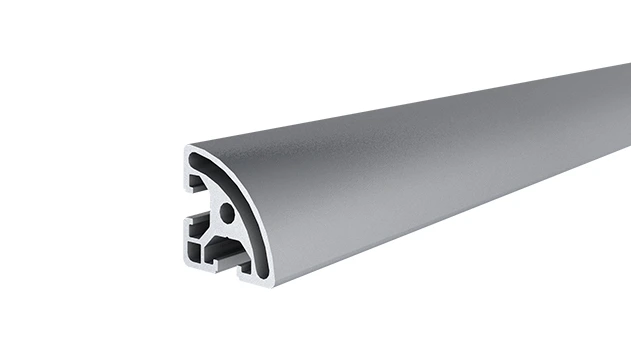
4040R is a 4.00x4.00 CM fractional 40 series square extrusion T-slot profile with two side open T-slots, each side with 4.00cm face,the other side is round face. The profile has align-a-grooves to assist in aligning connecting profiles.
Let's start by walking through a typical manufacturing facility. Picture the rows of production lines, the hum of machinery, and the shelves stacked with tools and materials. Now, look a little closer: that old steel workbench in the corner, bolted to the floor and covered in rust, that can't be adjusted for the new ergonomic standards. The flow rack by the assembly line, custom-built for a product that's no longer made, now collecting dust. The piles of scrap metal from cutting and welding custom brackets to fit a one-off project. These aren't just eyesores—they're symptoms of a bigger problem: waste. And in today's world, where sustainability isn't just a buzzword but a business imperative, that waste is costing companies more than just money. It's costing them their reputation, their efficiency, and their ability to adapt in a fast-changing market.
But what if there was a way to build manufacturing systems that grow, change, and even shrink with your needs—without leaving a trail of waste behind? That's where the 4040r EU Standard Aluminum Profile comes in. This unassuming piece of aluminum, with its precise T-slot design and modular construction, is quietly revolutionizing how factories approach sustainability. It's not just about being "green"; it's about building smarter, more resilient operations that reduce waste at every turn. In this article, we'll dive into how the 4040r profile, paired with lean system principles and adaptable aluminum profile accessories, is helping manufacturers cut waste, save resources, and build a future where efficiency and sustainability go hand in hand.
The Hidden Cost of Manufacturing Waste: Why "Good Enough" Isn't Anymore
Waste in manufacturing isn't just the obvious stuff—scrap metal, excess packaging, or unused raw materials. It's also the time spent reworking faulty parts, the energy wasted on inefficient processes, and the money tied up in equipment that becomes obsolete after a single product cycle. According to the Lean Enterprise Institute, the average factory wastes up to 30% of its resources on non-value-adding activities. That's 30% of materials, labor, and energy that could be redirected to innovation, growth, or improving worker conditions.
Take traditional steel structures, for example. For decades, manufacturers relied on welded steel frames for workbenches, flow racks, and production lines. They're strong, sure, but they're also rigid. If your production line needs to shift from assembling smartphones to tablets, that steel workbench—welded to the floor with fixed shelving—can't be adjusted. You either live with inefficiency or cut it up, sending tons of steel to the scrapyard and buying a new bench. That's material waste, energy waste (from manufacturing the new bench), and labor waste (from installation and disposal). Multiply that across an entire facility, and the numbers add up fast.
Then there's the problem of customization. Every factory has unique needs, so engineers often design custom brackets, frames, or supports to fit specific tools or products. These one-off parts require specialized cutting, welding, and painting—processes that generate significant waste. And when the product changes? Those custom parts become useless, adding to the scrap pile. It's a cycle of "make, use, discard" that's not just unsustainable but also financially draining.
4040r EU Standard Aluminum Profile: The Modular Solution to Waste
Enter the 4040r EU Standard Aluminum Profile. At first glance, it's a simple extruded aluminum bar, 40mm by 40mm, with a series of T-slots running along its length. But those slots are the key to its magic. They allow the profile to connect with a wide range of aluminum profile accessories—connectors, end caps, brackets, and shelves—without a single weld. This modularity transforms how factories build and adapt their systems, turning "one-and-done" structures into flexible, reusable assets.
Modularity: Build Once, Reuse Forever (Almost)
The 4040r profile's T-slot design means you can assemble structures using nothing more than bolts, nuts, and aluminum profile accessories. Need a workbench for your assembly line? Connect 4040r profiles with 90° aluminum profile connectors, add a plywood or aluminum top, and you're done. Six months later, when you need to expand the workbench to fit a new tool? Loosen the bolts, add another section of profile, and tighten. No cutting, no welding, no scrap. When the product line is retired, take the workbench apart and reuse the profiles to build a flow rack, a material cart, or a storage shelf. The possibilities are limited only by your needs, not the material.
This reusability is a game-changer for waste reduction. A study by the Aluminum Extruders Council found that modular aluminum systems reduce material waste by up to 70% compared to traditional steel structures. Why? Because you're not cutting profiles to custom lengths (unless you need to, and even then, the offcuts can often be used for smaller projects). You're not welding, which creates scrap metal from spatter and errors. And when a structure is no longer needed, every piece can be repurposed. It's a shift from a linear "use-and-discard" model to a circular "use-reuse-repurpose" cycle.
Durability: Built to Last, Not to Be Replaced
Aluminum is naturally resistant to corrosion, so 4040r profiles don't rust or degrade like steel, even in humid or industrial environments. This durability means a 4040r workbench or flow rack can last for decades, outliving multiple product cycles. Compare that to a steel structure, which might need to be replaced every 5-10 years due to rust or wear. Fewer replacements mean less material extraction, less manufacturing energy, and less waste in landfills.
And when the day finally comes that a 4040r profile reaches the end of its useful life? Aluminum is 100% recyclable, and recycling it uses just 5% of the energy required to produce new aluminum. That's a fraction of the environmental impact of recycling steel (which uses about 25% of the energy of virgin steel) or disposing of plastic (which often ends up in oceans or landfills). For manufacturers looking to reduce their carbon footprint, this closed-loop lifecycle is a huge win.

Lean System Integration: 4040r and the Pursuit of "Perfect Flow"
Sustainability and efficiency go hand in hand, and few methodologies embody this better than lean manufacturing. Lean systems focus on eliminating waste (muda) in all forms—overproduction, waiting, transportation, defects, inventory, motion, and overprocessing. The 4040r profile isn't just a building material; it's a lean tool that helps factories put these principles into action.
Just-In-Time (JIT) Production: Adapting to Demand Without Waste
JIT production relies on producing only what's needed, when it's needed, to avoid excess inventory (a major source of waste). But to do that, your production line needs to adapt quickly to changes in demand. 4040r profiles make this possible. For example, a flow rack built with 4040r can be reconfigured in hours to hold more or fewer parts, depending on demand. If a product suddenly spikes in popularity, add more levels to the flow rack using aluminum profile accessories. If demand drops, remove sections and repurpose the profiles elsewhere. No more overbuilding racks "just in case" and no more wasted space or materials.
Continuous Improvement (Kaizen): Tweaking for Perfection
Kaizen, the Japanese philosophy of continuous improvement, encourages workers to identify and fix inefficiencies daily. But how do you implement those improvements if your equipment is bolted down and unchangeable? With 4040r, workers can make small, incremental changes to their workbenches or stations without waiting for engineering approval. Need a tool holder moved 6 inches to the left? Loosen the bolts, slide the holder along the T-slot, and tighten. Want to add a shelf for frequently used parts? Clip on an aluminum bracket and a shelf. These small adjustments add up to big gains in efficiency—and they eliminate the waste of "making do" with a suboptimal setup.
Aluminum Profile Accessories: The Unsung Heroes of Flexibility
The 4040r profile is powerful on its own, but it's the aluminum profile accessories that unlock its full potential. These small, standardized parts—connectors, end caps, casters, and brackets—turn generic profiles into custom solutions. Let's take a closer look at a few key accessories and how they reduce waste:
- 90° Aluminum Profile Connectors: These L-shaped brackets connect two 4040r profiles at a right angle, forming the corner of a workbench or rack. Since they're reusable, you can disassemble and reassemble structures as needed, avoiding the waste of custom-welded corners.
- Adjustable Shelf Brackets: These slide into the T-slots of 4040r profiles, allowing shelves to be positioned at any height. No more cutting plywood to fit fixed shelf heights—simply adjust the brackets and reuse the same shelf for different storage needs.
- Casters and Wheels: Adding casters to a 4040r frame turns a stationary workbench into a mobile cart. This eliminates the need for multiple fixed workstations, as one cart can be moved between production lines, reducing overall material usage.
- End Caps: These plastic or aluminum caps fit over the ends of 4040r profiles, preventing dust and debris from collecting in the T-slots. They also protect workers from sharp edges, reducing the need for costly finishing processes like sanding or painting.
The beauty of these accessories is their standardization. Unlike custom parts, which are designed for one specific use, aluminum profile accessories are mass-produced to fit the 4040r's T-slot system. This means they're affordable, readily available, and compatible with any 4040r structure. No more waiting weeks for a custom bracket—grab an accessory from the shelf and install it in minutes. This speed and simplicity cut down on downtime and waste, keeping production lines running smoothly.
Real-World Impact: How Factories Are Cutting Waste with 4040r
Numbers and principles are great, but let's look at how 4040r is making a difference on the factory floor. Take the example of a mid-sized automotive parts manufacturer in Germany. Before switching to 4040r, the company relied on steel workbenches and custom-welded flow racks. When they introduced a new line of electric vehicle components, they had to replace 80% of their existing structures, generating over 12 tons of steel waste and costing €75,000 in new equipment.
Two years later, they switched to 4040r profiles for all new structures. When they updated their production line again to accommodate a larger battery component, they reused 90% of the existing 4040r profiles by reconfiguring them with new aluminum profile accessories. The total waste generated? Just 0.5 tons (from a few minor cuts to adjust profile lengths), and the cost was €12,000—less than 16% of the previous expense. "We used to see every product change as a headache," said the plant manager. "Now, it's just a matter of rearranging parts. The 4040r system has turned waste into savings."
Another example: a consumer electronics factory in China that produces smartphones and tablets. They struggled with frequent changes in product size, which required constant adjustments to their assembly workbenches. With steel workbenches, this meant hiring contractors to cut and weld new frames, leading to 2-3 days of downtime per changeover. After switching to 4040r workbenches with adjustable height legs and modular tool holders, changeovers take less than 4 hours. Workers simply adjust the legs, reposition the tool holders along the T-slots, and start production. Downtime is reduced by 85%, and the factory estimates it has saved over 500 hours of labor and 10 tons of steel waste in just one year.
| Metric | Traditional Steel Structures | 4040r Aluminum Profile Systems |
|---|---|---|
| Material Waste per Structure | 15-20% (welding scrap, offcuts) | 2-5% (minimal offcuts, reusable parts) |
| Reusability Rate | 10-15% (limited by welding) | 85-90% (modular disassembly) |
| Changeover Time | 2-3 days (custom welding, installation) | 2-4 hours (bolt-on adjustments) |
| Carbon Footprint (per kg) | Higher (virgin steel production) | Lower (recyclable aluminum, less energy) |
Beyond the Factory: The Ripple Effects of Sustainable Manufacturing
The benefits of 4040r extend far beyond the factory walls. When manufacturers reduce waste, they lower their carbon footprint, which helps combat climate change. They also save money, which can be reinvested in renewable energy, worker training, or community initiatives. For example, the German automotive parts manufacturer we mentioned earlier used its savings from 4040r to install solar panels on its roof, reducing its reliance on fossil fuels by 30%.
There's also a human element. Workers in factories with modular, adaptable systems report higher job satisfaction. They feel empowered to improve their workspaces, which leads to better morale and lower turnover. When a workbench can be adjusted to fit a worker's height, or a tool can be positioned exactly where it's needed, injuries decrease, and productivity increases. It's a reminder that sustainability isn't just about the planet—it's about people, too.
Overcoming the Hurdle: Why Some Factories Hesitate (and Why They Shouldn't)
Despite its benefits, some manufacturers are hesitant to switch to 4040r. The initial cost is often cited as a barrier—aluminum profiles are more expensive per meter than steel. But this is a short-sighted view. When you factor in reusability, lower maintenance, and reduced waste, 4040r systems have a significantly lower total cost of ownership over time. The German factory we discussed saw a return on investment in just 14 months, and that's not including the intangible benefits like improved flexibility and sustainability credentials.
Another concern is familiarity. Many engineers and maintenance teams have spent decades working with steel, so switching to aluminum feels like a learning curve. But 4040r systems are designed to be intuitive. Most aluminum profile accessories are color-coded or labeled, and assembly requires only basic hand tools. Suppliers often provide training and design support, making the transition smooth. As one maintenance supervisor put it: "I was skeptical at first, but after building my first workbench in 20 minutes, I was hooked. It's like adult Legos—but for factories."
Conclusion: Building a Sustainable Future, One Profile at a Time
Sustainable manufacturing isn't about grand gestures or expensive overhauls. It's about making smarter choices every day—choices that reduce waste, save resources, and build resilience. The 4040r EU Standard Aluminum Profile embodies this philosophy. Its modular design, paired with aluminum profile accessories and lean system principles, turns rigid, wasteful structures into flexible, reusable assets. It's a tool that empowers factories to adapt to change without leaving a trail of waste behind.
As we look to the future—where consumer demands shift faster, environmental regulations tighten, and sustainability becomes a competitive advantage—the 4040r profile isn't just a good investment. It's a necessity. It's how factories will thrive in a world where "reduce, reuse, recycle" isn't just a slogan, but the only way to do business.
So the next time you walk through a factory, take a closer look at the structures around you. Are they part of the problem, or part of the solution? With 4040r, the answer can be the latter. Because when we build smarter, we don't just reduce waste—we build a better future for everyone.