- Company Articles
- Industry articles
- Industry News
- T Slot Aluminum Pipe Market Trends: 2025 Growth Predictions

T Slot Aluminum Pipe Market Trends: 2025 Growth Predictions
Related Product
T Slot Aluminum Pipe
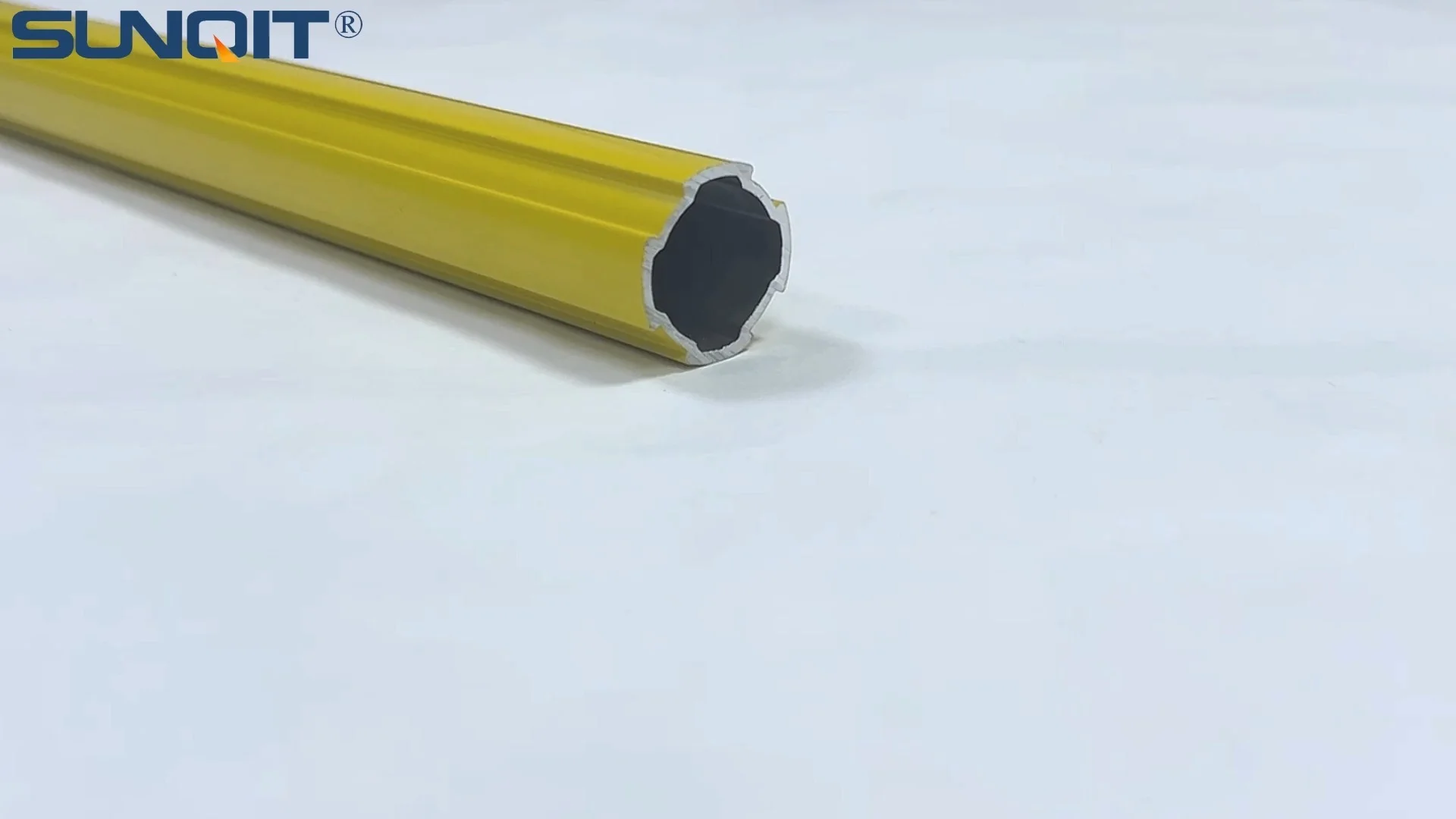
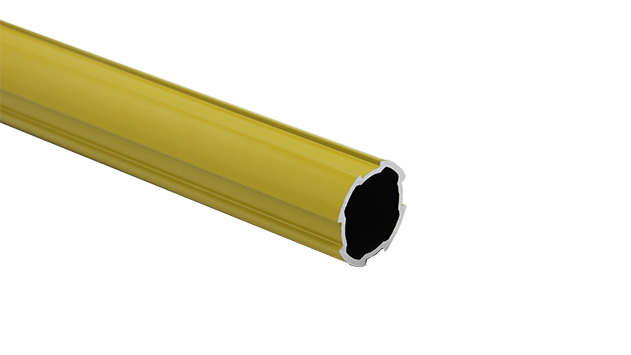
Aluminum pipe, it is used for workbench, flow rack,hand trolley assemble work with advantage of flexible and durable, yellow color makes it more attactive as a caution remind.
How modularity, sustainability, and smart manufacturing are reshaping the industry
Introduction: The Backbone of Modern Manufacturing Flexibility
In the fast-paced world of manufacturing, where change is the only constant, one question looms large for factory managers, warehouse operators, and production planners alike: How do we build systems that can keep up? The answer, increasingly, lies in the unassuming yet powerful T-slot aluminum pipe —a material that has quietly become the backbone of flexible, adaptable, and future-ready industrial setups. From assembly lines that reconfigure in hours to warehouses that scale with e-commerce demand, T-slot aluminum pipes are no longer just components; they are enablers of innovation.
As we stand on the cusp of 2025, the market for these versatile pipes is poised for unprecedented growth. Driven by Industry 4.0, sustainability goals, and a global push for localized manufacturing, the T-slot aluminum pipe sector is evolving beyond mere "parts supply" to become a cornerstone of smart, lean, and eco-conscious production. In this article, we'll dive into the key trends, growth drivers, and regional dynamics shaping the market, with a focus on what 2025 might hold for manufacturers, suppliers, and end-users.
Market Overview: What Makes T-Slot Aluminum Pipes Indispensable?
At its core, a T-slot aluminum pipe is exactly what the name suggests: an aluminum extrusion with a T-shaped groove running along its length. This simple design unlocks endless possibilities. By sliding bolts, brackets, or accessories into the slot, users can build, modify, and expand structures without welding, drilling, or specialized tools. It's modularity redefined—perfect for today's need to pivot quickly.
But what truly sets these pipes apart? For starters, aluminum's natural advantages: it's lightweight (about one-third the weight of steel), corrosion-resistant, and infinitely recyclable. When shaped into extrusion profiles, it gains remarkable strength, making it ideal for everything from lightweight workbenches to heavy-duty material racks. Unlike traditional steel pipes, which are rigid and hard to modify, T-slot aluminum pipes thrive on change. A factory floor using these pipes can transform from assembling smartphones in the morning to packaging medical devices in the afternoon—no demolition required.
Common applications read like a who's-who of modern industrial setups: workbenches with custom tool holders, conveyor systems that adapt to product sizes, material racks that grow with inventory, and even automated guided vehicle (AGV) tracks. And it's not just manufacturing—logistics, aerospace, automotive, and even retail (think in-store displays) are embracing the flexibility of T-slot systems.
Historically, the market has grown steadily, with a CAGR of around 6-7% over the past decade. But post-2020, as industries raced to recover and rebuild more resilient operations, demand surged. Now, with 2025 on the horizon, analysts predict this growth will accelerate, fueled by a convergence of technological, economic, and environmental trends.
Key Drivers: Why 2025 Will Be a Pivotal Year
To understand why the T-slot aluminum pipe market is set to boom in 2025, we need to look at the forces propelling its adoption. These aren't isolated trends—they're interconnected, creating a perfect storm for growth.
1. Industry 4.0 and the Rise of Smart Factories
The fourth industrial revolution isn't just about robots and AI—it's about
connectivity
and
adaptability
. Smart factories require systems that can collect data, communicate with other machines, and reconfigure as production needs change. T-slot aluminum pipes, with their modular design, are the ideal skeleton for these setups. For example, a
workbench
built with T-slot pipes can easily integrate IoT sensors to monitor equipment usage, or add a conveyor extension to feed parts to a collaborative robot. As more manufacturers invest in Industry 4.0, the demand for such flexible infrastructure will skyrocket.
2. Sustainability: Aluminum's Green Edge
In an era of climate urgency, sustainability isn't a buzzword—it's a business imperative. Aluminum is one of the most recyclable materials on the planet, with recycled aluminum requiring just 5% of the energy needed to produce new aluminum. This aligns perfectly with global net-zero goals. Companies are increasingly choosing T-slot aluminum pipes over steel or plastic not just for performance, but to reduce their carbon footprint. Governments are amplifying this trend with regulations favoring recyclable materials, making 2025 a year where "green manufacturing" and "T-slot aluminum" become nearly synonymous.
3. E-Commerce and Warehouse Automation
The e-commerce boom shows no signs of slowing down. In 2023, global e-commerce sales hit $6.3 trillion, and by 2025, they're projected to exceed $8 trillion. This growth is driving a frenzy of warehouse expansion and automation. Fulfillment centers need systems that can handle variable order sizes, rapid inventory turnover, and 24/7 operations. Enter T-slot aluminum pipes: they're used to build dynamic
material racks
, gravity-fed conveyors, and pick-and-pack stations that adjust to seasonal spikes. A single warehouse can reconfigure its layout 3-4 times a year using these pipes, ensuring no space is wasted and every process is optimized.
4. Manufacturing Reshoring and Localization
Supply chain disruptions from the past few years have taught companies a hard lesson: over-reliance on distant suppliers is risky. As a result, reshoring—bringing production back to local markets—is gaining momentum, especially in regions like North America and Europe. Local manufacturers need to be agile to compete with low-cost overseas producers, and T-slot aluminum pipes enable this agility. A small U.S.-based electronics manufacturer, for example, can use these pipes to build a custom assembly line for $50,000 instead of investing $500,000 in rigid steel infrastructure—making reshoring economically viable.

Emerging Trends: What's New in 2025?
Beyond the core drivers, several emerging trends are set to redefine the T-slot aluminum pipe market in 2025. These trends aren't just about incremental improvements—they're about transforming how these pipes are designed, used, and integrated into larger systems.
The Shift to High-Performance
Aluminum Extrusion Profiles
Not all T-slot aluminum pipes are created equal. In 2025, we'll see a move away from basic profiles toward more advanced
aluminum extrusion profiles
engineered for specific use cases. For example, profiles with reinforced walls for heavy machinery, or hollow-core designs for wiring management in smart workbenches. Suppliers are investing in precision extrusion technologies to create profiles with tighter tolerances, ensuring better fit between pipes and accessories. This trend is driven by industries like aerospace and automotive, where even minor defects can compromise safety or performance.
Customization Through
Aluminum Profile Accessories
The real magic of T-slot aluminum pipes lies in their accessories—and 2025 will be the year of hyper-customization. From specialized brackets that lock into place with a click to 3D-printed end caps for unique workflows,
aluminum profile accessories
are becoming as important as the pipes themselves. Suppliers are launching "accessory bundles" tailored to specific industries: a medical device manufacturer might get a kit with anti-static brackets and cleanroom-compatible joints, while a logistics firm could opt for heavy-duty casters and quick-release hinges. This shift from "one-size-fits-all" to "industry-specific solutions" is making T-slot systems even more indispensable.
The Rise of the
Lean System Supplier
In the past, buyers would source T-slot aluminum pipes from one supplier, accessories from another, and assemble systems in-house. But 2025 will see the rise of the
lean system supplier
—companies that offer end-to-end solutions, from design and engineering to installation and maintenance. These suppliers don't just sell parts; they partner with clients to analyze workflows, design custom systems, and even train staff on reconfiguration. This trend is particularly popular among small and medium-sized enterprises (SMEs) that lack in-house engineering teams but still need high-performance setups. By outsourcing system design to a lean system supplier, SMEs can focus on their core business while getting a setup that's optimized for their unique needs.
Integration with Smart Technologies
T-slot aluminum pipes are getting "smarter" in 2025. Imagine a workbench where the T-slot isn't just for brackets, but also for embedding IoT sensors that monitor vibration, temperature, or tool usage. Or a conveyor system where aluminum extrusion profiles house wiring for LED lights that signal when a bin is full. Suppliers are partnering with tech firms to develop "smart slots"—grooves that can power sensors, displays, or even small actuators. This integration is turning passive structures into active data-collection points, making factories more connected and responsive. By 2025, a significant portion of T-slot aluminum systems will come with pre-installed smart capabilities, blurring the line between hardware and software.

Regional Analysis: Which Markets Will Lead in 2025?
The T-slot aluminum pipe market isn't uniform globally—growth rates, drivers, and challenges vary by region. Let's break down the key players and what to expect in 2025.
Asia-Pacific (APAC): The Manufacturing Powerhouse
APAC will remain the largest and fastest-growing market for T-slot aluminum pipes in 2025, driven by manufacturing giants like China, India, and Vietnam. China alone accounts for over 40% of global aluminum production, giving it a cost advantage. The region's focus on Industry 4.0—China's "Made in China 2025" initiative, for example—is fueling demand for smart, modular systems. Additionally, the rise of electronics manufacturing (semiconductors, smartphones) and automotive production in Southeast Asia is creating a surge in orders for workbenches and conveyors built with T-slot aluminum. By 2025, APAC's market share is projected to exceed 55%.
Europe: Sustainability Takes Center Stage
Europe is the second-largest market, and in 2025, its growth will be defined by sustainability. The EU's Carbon Border Adjustment Mechanism (CBAM), which taxes carbon-intensive imports, is pushing manufacturers to adopt greener materials. T-slot aluminum pipes, with their recyclability, are emerging as a preferred alternative to steel. Germany, Italy, and France are leading the charge, with automotive and aerospace industries (both heavy users of aluminum extrusion profiles) driving demand. Europe is also a hotbed for innovation in accessories, with companies developing eco-friendly, bio-based coatings for pipes and joints.
North America: Reshoring and Automation
North America is experiencing a manufacturing renaissance, thanks to reshoring initiatives and government incentives like the U.S. CHIPS Act. Companies are bringing production back from Asia, and they're choosing T-slot aluminum pipes to build flexible, future-proof factories. The U.S. is the region's largest market, with strong demand from the automotive, medical device, and e-commerce sectors. Mexico is also growing rapidly, as a nearshoring hub for U.S. companies. By 2025, North America's market share is expected to hit 18%, up from 15% in 2023.
Latin America and Middle East & Africa: Emerging Frontiers
These regions are smaller but high-growth. In Latin America, Brazil and Mexico are seeing increased investment in manufacturing and logistics, while the Middle East is focusing on diversification beyond oil—particularly in aerospace and renewable energy. Both regions are importing T-slot aluminum systems to modernize their industrial infrastructure, with 2025 projected to be a breakout year for localized suppliers.
| Region | 2023 Market Share | 2025 Projected Market Share | Key Growth Driver (2025) |
|---|---|---|---|
| Asia-Pacific | 52% | 56% | Industry 4.0 and electronics manufacturing |
| Europe | 23% | 22% | Sustainability regulations and green manufacturing |
| North America | 15% | 18% | Reshoring and warehouse automation |
| Latin America | 5% | 3% | Manufacturing investment and logistics growth |
| Middle East & Africa | 5% | 1% | Industrial diversification and renewable energy |
2025 Growth Predictions: Numbers and Narratives
Putting it all together, what does the future hold for the T-slot aluminum pipe market in 2025? Let's start with the numbers: the global market was valued at $2.8 billion in 2023. By 2025, it's projected to reach $4.2 billion—a CAGR of 22% over two years. This growth isn't just about volume; it's about value. As systems become more complex (integrating smart tech, custom accessories), the average selling price (ASP) of T-slot aluminum solutions is rising, driving revenue growth even faster than unit sales.
Segment Breakdown: Who's Buying What?
The
aluminum extrusion profile
segment will lead, with a projected CAGR of 25% by 2025. This is due to demand for high-performance profiles in aerospace and automotive. The
aluminum profile accessories
segment isn't far behind, growing at 23%, as customization becomes key. End-users will increasingly opt for "complete systems" (pipes + accessories + design services), which now account for over 60% of sales and will reach 70% by 2025.
End-Use Industries: Where the Demand Is Concentrated
-
Manufacturing:
45% of market share, driven by automotive, electronics, and medical device production.
-
Logistics & Warehousing:
30%, fueled by e-commerce and automation.
-
Aerospace & Defense:
10%, with demand for lightweight, high-strength systems.
-
Others (Retail, Construction, Education):
15%, including in-store displays and educational robotics labs.
Challenges to Watch
Of course, growth doesn't come without challenges. Raw material price volatility (aluminum prices spiked 30% in 2022 due to energy costs) could squeeze margins. Additionally, competition from low-cost steel and plastic alternatives remains, though sustainability trends are mitigating this. Finally, the skills gap—fewer workers trained in modular system design—could slow adoption in regions like North America. Suppliers are addressing this by offering training programs and online design tools, but it's a hurdle to monitor in 2025.
Conclusion: T-Slot Aluminum Pipes—More Than a Trend, a Transformation
As we look to 2025, the T-slot aluminum pipe market isn't just growing—it's transforming. What began as a niche product for hobbyists and small workshops has evolved into a critical component of global manufacturing, logistics, and sustainability strategies. The trends are clear: modularity, sustainability, and smart integration will define the next decade, and T-slot aluminum pipes are at the heart of all three.
For manufacturers, the message is simple: embrace flexibility or risk falling behind. For suppliers, the opportunity is equally clear: move beyond selling parts to becoming partners in innovation. And for the planet, the shift to T-slot aluminum represents a step toward greener, more efficient production—one modular workbench, one smart conveyor, one recycled pipe at a time.
2025 isn't just a year; it's a milestone. A year when T-slot aluminum pipes stop being "the new kid on the block" and start being "the way we've always done it"—but better, smarter, and more sustainably than ever before.