- Company Articles
- Industry articles
- Industry standards
- T Slot Aluminum Pipe with Board Holder: Industry Standards and Certifications

T Slot Aluminum Pipe with Board Holder: Industry Standards and Certifications
Related Product
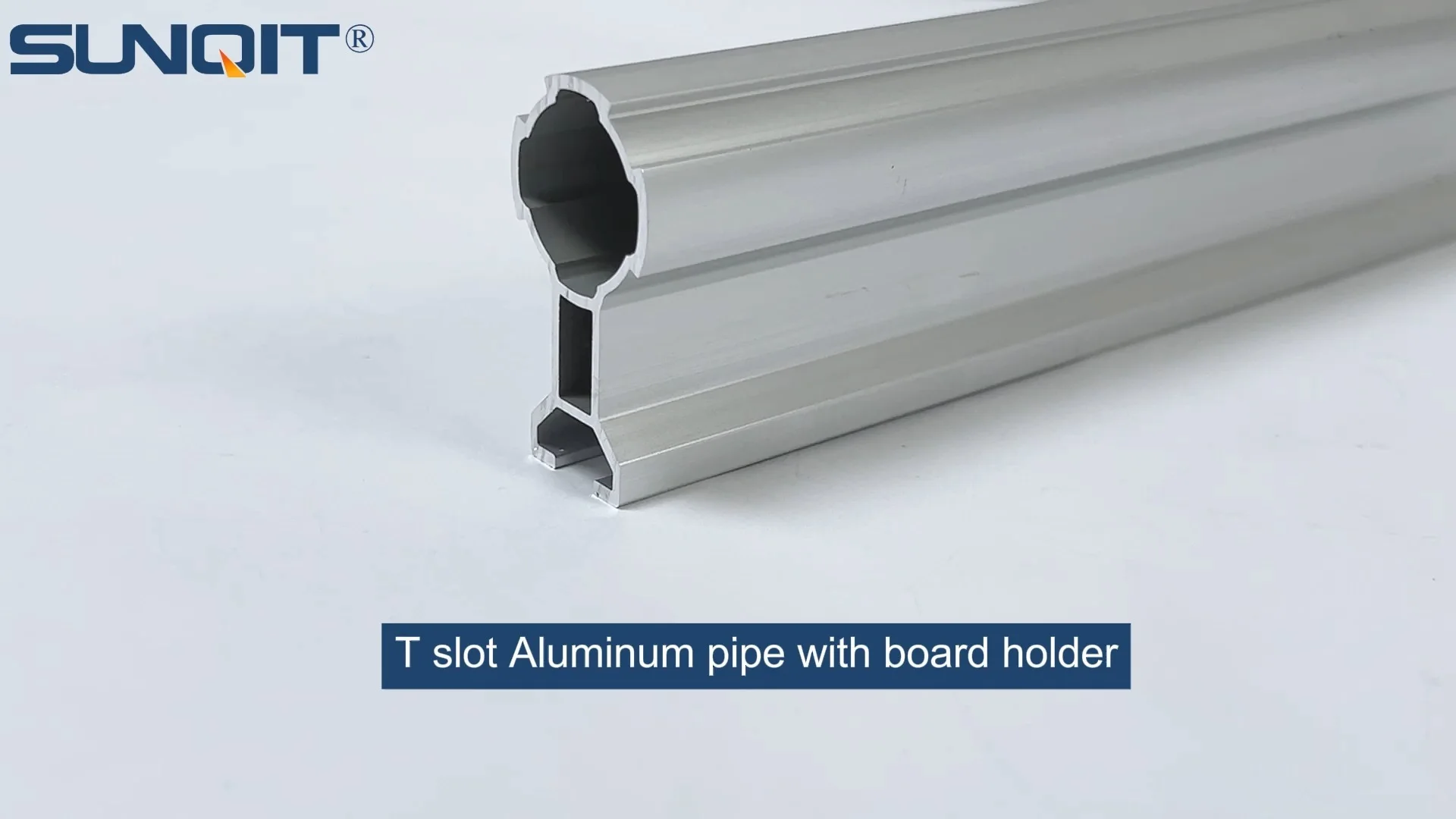
T Slot Aluminum Pipe with Board Holder
T slot Aluminum pipe with board holder,the pipe one side connected by a joint, the other side with a slot which can hold a tray or a aluminum pannel
Introduction: The Backbone of Modern Workspaces
Walk into any manufacturing plant, electronics workshop, or logistics hub today, and you'll likely spot a common sight: sleek, modular structures that seem to adapt effortlessly to the task at hand. From workbenches where technicians assemble delicate circuit boards to material racks organizing components for the next production run, these structures owe their versatility to one key component: the T slot aluminum pipe with board holder. It's not just a piece of hardware; it's the silent enabler of efficiency, the unsung hero that turns chaotic workspaces into well-oiled machines.
But what makes these pipes and holders so indispensable? Unlike rigid, one-size-fits-all solutions of the past, T slot aluminum pipes—often part of broader aluminum extrusion profile systems—offer a unique blend of strength, flexibility, and precision. Pair them with board holders, and you get a system that can be reconfigured in hours, not days, to meet shifting production demands. For managers like Raj, who runs a mid-sized automotive parts facility in Ohio, this adaptability isn't just convenient; it's critical. "Last quarter, we had to switch from producing door handles to dashboard components overnight," he recalls. "With our old steel workbenches, that would have meant weeks of downtime. But with T slot aluminum pipes and quick-mount board holders? We had the new setup ready by the next morning. That's the difference between meeting a deadline and losing a client."
Yet, for all their benefits, not all T slot aluminum pipes and board holders are created equal. In industries where precision, safety, and durability are non-negotiable—think aerospace manufacturing or medical device assembly—cutting corners on quality can lead to costly errors, delays, or worse. That's where industry standards and certifications come in. They're not just stamps on a piece of paper; they're guarantees that the components you're using have been rigorously tested, meet global benchmarks, and will perform reliably, even under the stress of daily use. In this article, we'll dive deep into the standards that govern these essential tools, the certifications that validate their quality, and why they matter for everyone from small workshop owners to Fortune 500 production managers.
Understanding T Slot Aluminum Pipe with Board Holder: Beyond the Basics
Before we explore the standards, let's take a closer look at what exactly a T slot aluminum pipe with board holder is. At its core, the T slot aluminum pipe is a length of aluminum extrusion profile—shaped through a process where heated aluminum is forced through a die to create a specific cross-section—with a longitudinal "T" shaped slot running along its length. This slot isn't just a design quirk; it's the secret to the pipe's modularity. It allows for the easy attachment of accessories like board holders, brackets, and connectors without the need for welding or drilling. Imagine building with a set of high-strength Lego blocks, but for industrial use—that's the idea.
The board holder, as the name suggests, is the component that secures flat surfaces—whether wooden, plastic, or metal—to the aluminum pipe. It slides into the T slot, locks into place with a simple screw or clamp, and voilà: you've got a stable work surface, a shelf, or a partition. What makes this combination so powerful is its simplicity. Unlike traditional steel frames that require specialized tools and skilled labor to modify, T slot systems let even entry-level workers make adjustments. "I remember when we first switched," says Maya, a production line lead at a California-based electronics firm. "A new intern figured out how to reposition the board holder on our testing bench in 10 minutes. With our old setup, that would have required a maintenance request and a two-day wait."
But this flexibility doesn't come at the cost of strength. Aluminum extrusion profiles are engineered to balance weight and durability. Most are made from high-grade aluminum alloys, like 6061 or 6063, which offer excellent tensile strength and corrosion resistance. When paired with quality aluminum profile accessories—like the brackets and fasteners that secure the board holders—they can support heavy loads, from stacks of inventory on a material rack to the constant vibration of machinery on a workbench. It's this combination of adaptability and robustness that has made T slot aluminum pipes a staple in industries ranging from automotive to pharmaceuticals.

Industry Standards: The Rules That Ensure Reliability
Standards are the foundation of trust in any industry. For T slot aluminum pipes with board holders, they define everything from the alloy composition of the aluminum to the tolerance of the T slot's dimensions. These standards aren't arbitrary; they're developed by organizations like the International Organization for Standardization (ISO) and the American Society for Testing and Materials (ASTM) through years of research, testing, and collaboration with manufacturers, engineers, and end-users. Let's break down the key standards that govern these components.
Material Standards: The Aluminum Behind the Pipe
The first line of defense in ensuring quality is the aluminum itself. Most T slot aluminum pipes are made from aluminum extrusion profiles, and the standards for these profiles are strict. Take ASTM B221, for example—a widely adopted standard in North America that specifies the chemical composition and mechanical properties of aluminum alloy extrusions. For 6061-T6, a common alloy used in industrial applications, ASTM B221 mandates a minimum tensile strength of 42,000 psi (pounds per square inch) and a yield strength of 35,000 psi. Why does this matter? Because when you're mounting a heavy board holder loaded with tools or materials, you need to be sure the pipe won't bend or warp under pressure.
In Europe, EN 755 is the go-to standard for aluminum extrusions. Similar to ASTM B221, it classifies alloys based on their chemical makeup and mechanical performance. For instance, EN 755-9 covers extruded profiles for general structural purposes, setting limits on impurities like iron and copper to ensure consistency. "We once had a supplier send us pipes that didn't meet EN 755," says Elena, a quality control manager at a German automotive supplier. "The first batch looked fine, but when we tested their tensile strength, they failed at 38,000 psi—well below the required 42,000. We had to reject the entire order. That's why we never work with suppliers who can't provide certification to these standards."
Dimensional Accuracy: The T Slot's Precision
If the material is the "what," dimensional accuracy is the "how well." The T slot itself—the groove that allows board holders and other accessories to attach—must be machined with microscopic precision. A slot that's too narrow won't accept standard accessories; one that's too wide will cause wobbling, leading to unstable work surfaces. To prevent this, standards like ISO 2768 (for general tolerances) and DIN 1743 (specific to aluminum extrusions) set strict limits on how much a pipe's dimensions can deviate from the design specs.
For example, the width of the T slot in a typical 40mm x 40mm aluminum profile might be specified as 8mm ± 0.1mm. That means the actual width can be no less than 7.9mm and no more than 8.1mm. This tight tolerance ensures that accessories from different manufacturers—whether a board holder from a supplier in China or a bracket from a U.S. company—will fit together seamlessly. "Interoperability is key," explains Tom, an engineer at a U.S.-based aluminum profile supplier. "Our customers often mix and match components from multiple vendors. If our T slots aren't to spec, their entire system falls apart. That's why we invest in high-precision extrusion dies and 3D scanning to check every batch."
Surface Treatment: Protection and Performance
Aluminum is naturally resistant to corrosion, but in harsh industrial environments—think factories with high humidity or exposure to chemicals—extra protection is needed. That's where surface treatments come in, and standards like ISO 10209 (for anodizing) and ASTM D7091 (for powder coating) ensure these treatments are effective and consistent.
Anodizing, a process that grows a protective oxide layer on the aluminum's surface, is particularly common. ISO 10209 specifies the thickness of this layer (typically 10-20 microns for industrial use) and its corrosion resistance. A properly anodized pipe won't rust or discolor, even after years of exposure to oils, coolants, or cleaning agents. Powder coating, another popular option, uses electrostatically applied dry powder that's cured under heat to form a hard finish. ASTM D7091 sets standards for adhesion, impact resistance, and color fastness, ensuring the coating won't chip or fade, even with constant contact from board holders or tools.
A Closer Look: Key Standards at a Glance
| Standard | Focus Area | Key Requirement | Industry Impact |
|---|---|---|---|
| ASTM B221 (U.S.) | Aluminum alloy extrusions | Minimum tensile strength for 6061-T6: 42,000 psi | Ensures structural integrity for heavy loads |
| EN 755 (EU) | Aluminum extrusion profiles | Limits on impurities (e.g., iron ≤ 0.7%) | Guarantees consistency across batches |
| ISO 2768 | General tolerances | T slot width tolerance: ±0.1mm | Enables interoperability of accessories |
| ISO 10209 | Anodizing | Oxide layer thickness: 10-20 microns | Enhances corrosion resistance |

Certifications: The Seal of Quality
Standards set the bar, but certifications are the proof that manufacturers are meeting it. For buyers, certifications are more than just paperwork; they're a shortcut to trust. When a supplier says their T slot aluminum pipes and board holders are certified, it means an independent third party has verified that the products meet the required standards. In industries where safety and compliance are critical—like aerospace or medical device manufacturing—certifications aren't optional; they're legally mandated.
ISO 9001: Quality Management Systems
Perhaps the most widely recognized certification globally, ISO 9001 isn't specific to aluminum products, but it's a strong indicator of a supplier's commitment to quality. It focuses on the entire manufacturing process, from raw material sourcing to final inspection. A supplier with ISO 9001 certification has documented procedures for everything from testing aluminum alloys to calibrating extrusion dies, ensuring consistency in every batch. "We only partner with ISO 9001-certified suppliers," says James, a procurement manager at a Fortune 500 aerospace company. "It's not just about the product; it's about knowing they have systems in place to catch mistakes before they reach us. A single defective pipe in a jet engine component line could cost millions."
RoHS and REACH: Environmental Compliance
In today's eco-conscious world, environmental certifications are just as important as performance ones. RoHS (Restriction of Hazardous Substances), a European union directive, restricts the use of six hazardous materials in electrical and electronic equipment, including lead and cadmium. While T slot pipes themselves might not be "electronic," they're often used in workbenches for electronics manufacturing, so compliance is key. REACH (Registration, Evaluation, Authorization, and Restriction of Chemicals), another EU regulation, requires manufacturers to register and evaluate the safety of chemicals used in their products. For aluminum profile accessories like the screws and clamps that secure board holders, REACH ensures they don't contain harmful substances that could leach into the environment or endanger workers.
"We export to Europe, so RoHS and REACH aren't optional for us," says Li Wei, a sales director at a Chinese aluminum extrusion supplier. "Our customers won't even request a quote unless we can provide compliance certificates. It's added work—testing every batch for heavy metals—but it's worth it to access global markets."
CE Marking: Access to the European Market
For suppliers looking to sell in the EU, the CE mark is a must. It indicates that a product meets the essential health, safety, and environmental requirements of EU directives, including those related to machinery and construction products. For T slot aluminum pipes used in workbenches or material racks, CE marking often involves compliance with the Machinery Directive (2006/42/EC), which sets safety standards for moving parts and structural stability. "Getting CE certified was a rigorous process," recalls Hans, who runs a small German supplier of aluminum profile accessories. "We had to test our board holders for impact resistance, prove the pipes could withstand static loads without deforming, and document every step. But now, we can sell to any EU country without barriers."
Why Standards and Certifications Matter for You
At this point, you might be thinking: "Do I really need to care about all these standards and certifications? Can't I just buy the cheapest T slot pipe and board holder available?" The short answer: maybe—if you're building a shelf for your garage. But in a professional setting, cutting corners on standards can lead to consequences far costlier than the price of a pipe.
Consider safety first. A pipe that doesn't meet tensile strength standards could collapse under a heavy load, injuring workers or damaging equipment. A board holder with a subpar powder coating might chip, exposing sharp edges that could cut hands. In 2019, a Midwest manufacturing plant was fined $145,000 by OSHA after a makeshift workbench—built with non-certified aluminum pipes—collapsed, injuring two employees. The pipes, it turned out, had a tensile strength of just 28,000 psi, well below the ASTM B221 minimum. "That fine was nothing compared to the cost of the accident: lost productivity, medical bills, and a damaged reputation," says OSHA inspector Mark Thompson. "All of it could have been avoided with certified components."
Then there's efficiency. Non-standard pipes with ill-fitting T slots mean accessories like board holders won't lock securely, leading to wobbly work surfaces. Technicians waste time adjusting unstable setups instead of focusing on production. "We tried a budget supplier once," admits Raj, the Ohio automotive plant manager. "Their pipes had T slots that were 0.3mm too wide. Every time we mounted a board holder, it shifted during use. Our error rate spiked by 15% in the first month. We switched back to certified components, and the errors dropped immediately."
Finally, there's the long-term cost. Certified components might cost 10-15% more upfront, but they last longer. A properly anodized aluminum pipe (per ISO 10209) will resist corrosion for years, while a cheap, uncoated one might start rusting in months. "We track the lifecycle cost of our equipment," says Maya, the California electronics lead. "Certified T slot systems last 5-7 years; non-certified ones need replacement in 2-3. Over time, the certified ones are actually cheaper."
Choosing the Right Supplier: What to Look For
Now that you understand the importance of standards and certifications, how do you find a supplier you can trust? It starts with asking the right questions. Any reputable supplier should be able to provide copies of their certification documents—ASTM B221 test reports, ISO 9001 certificates, RoHS compliance statements—without hesitation. If they hesitate or claim "we follow the standards but don't have the paperwork," walk away. Paperwork is proof.
Next, look for suppliers who specialize in aluminum extrusion profiles and aluminum profile accessories. General hardware stores might carry T slot pipes, but they're unlikely to have the expertise to guide you on standards or customization. Specialized suppliers, on the other hand, can help you select the right alloy (6061 vs. 6063), surface treatment (anodized vs. powder coated), and board holder design for your specific needs. "We work with a supplier who sends a technical rep to our facility," says Elena, the German quality control manager. "They measured our workspace, recommended the best pipe dimensions, and even helped us design a custom board holder for our odd-sized inventory bins. You don't get that from a generic supplier."
Finally, check for third-party audits. Reputable suppliers will undergo regular audits by organizations like SGS or Bureau Veritas to verify their compliance with standards. These audits go beyond paperwork, inspecting manufacturing processes, quality control systems, and even raw material sourcing. "We once visited a supplier's factory and found they were mixing scrap aluminum into their extrusion batches to cut costs," says Tom, the U.S. engineer. "Their certification said they used 6061 alloy, but the audit showed otherwise. Third-party audits are the only way to be sure."
The Future: Innovations in T Slot Aluminum Systems
As industries evolve, so too do the standards and technologies behind T slot aluminum pipes and board holders. One emerging trend is the integration of smart features, like embedded RFID tags in pipes to track inventory or sensors that monitor load levels on board holders, alerting managers when a shelf is overloaded. Another is the use of recycled aluminum in extrusion profiles, driven by stricter environmental standards. "We're already seeing suppliers offer 100% recycled aluminum options that meet ASTM B221 standards," notes Li Wei. "It's more expensive now, but as demand grows, costs will come down."
Advancements in surface treatments are also on the horizon. New anodizing techniques are creating layers that are not only more corrosion-resistant but also conductive, opening up possibilities for T slot systems in electronics manufacturing where static control is critical. And as 3D printing technology improves, we might soon see custom board holders and accessories printed on-site, perfectly tailored to unique T slot dimensions—all while still adhering to global standards.
Conclusion: More Than Pipes—Partners in Progress
At the end of the day, T slot aluminum pipes with board holders are more than just components; they're partners in progress. They're the tools that help small workshops compete with industry giants, that let factories pivot quickly in a fast-changing market, and that keep workers safe and productive. But their true power lies in the standards and certifications that ensure they perform reliably, batch after batch, year after year.
So the next time you walk into a workshop and admire a sleek, efficient workspace, take a moment to appreciate the T slot aluminum pipe with board holder. Behind its simple design is a world of engineering, testing, and commitment to quality—all driven by the standards that make modern manufacturing possible. And when it's time to choose your own components, remember: the right standards and certifications aren't just boxes to check. They're the foundation of a workspace that works for you, today and tomorrow.