- Company Articles
- Industry articles
- Industry standards
- Technical Specifications of Three Way Aluminum Pipe Joints: Sizes and Load Capacity

Technical Specifications of Three Way Aluminum Pipe Joints: Sizes and Load Capacity
Related Product
Three Way Aluminum Pipe Joint
Aluminum 3 way pipe joint for 28mm aluminum pipe connection in 3 direction.
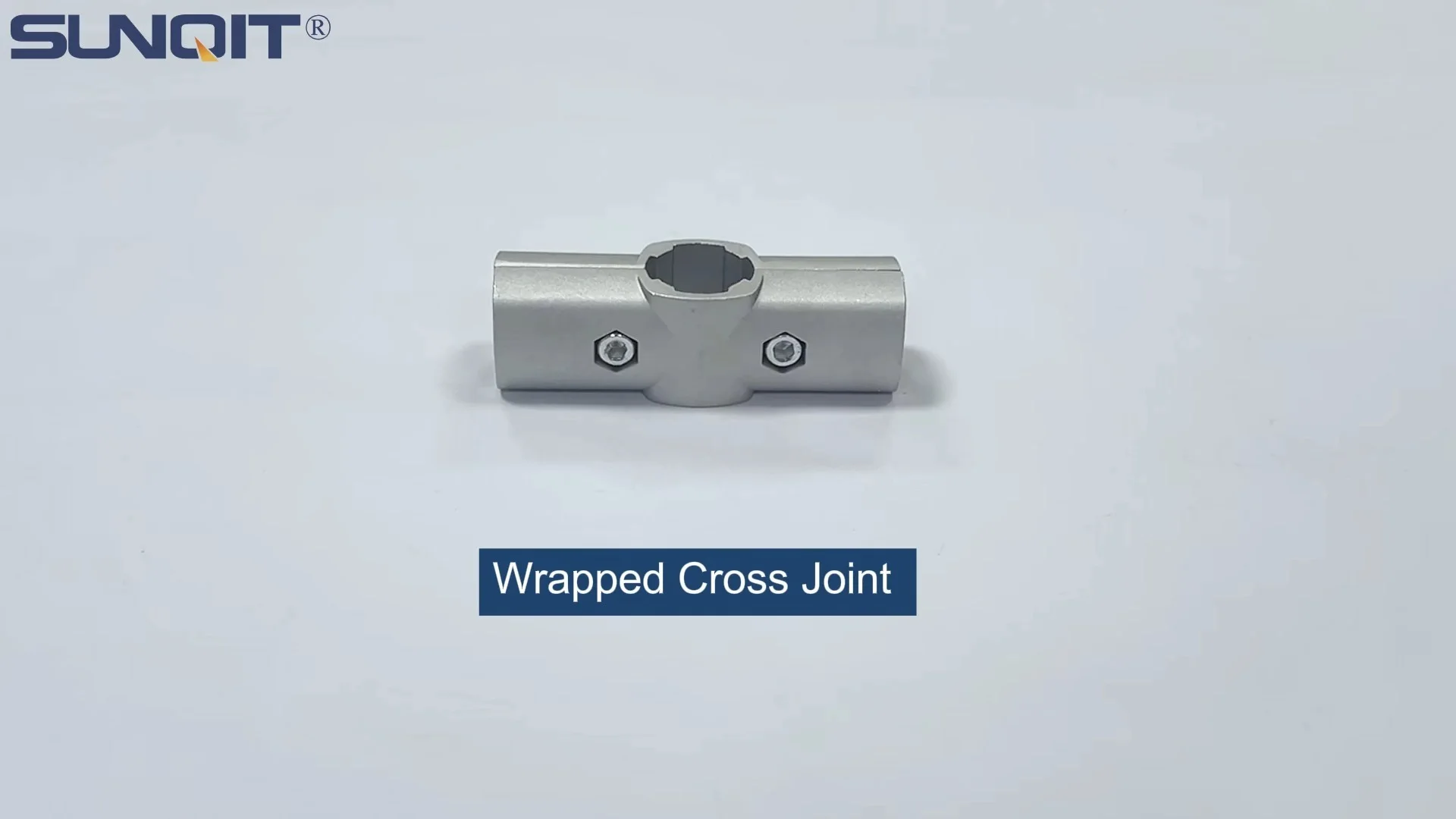
In the world of modular construction—whether it's in manufacturing facilities, warehouses, or even DIY projects—there's a quiet workhorse that holds everything together: the three way aluminum pipe joint . These unassuming components might not grab headlines, but they're the backbone of countless lean system setups, from workbenches to material racks, conveyors to turnover trolleys. What makes them so indispensable? Their ability to connect three aluminum pipes at once, creating sturdy, flexible structures that can adapt to changing needs. Today, we're diving deep into the technical nitty-gritty of these joints: their sizes, load capacities, materials, and why they're a go-to choice for engineers, facility managers, and hobbyists alike.
What Are Three Way Aluminum Pipe Joints, Anyway?
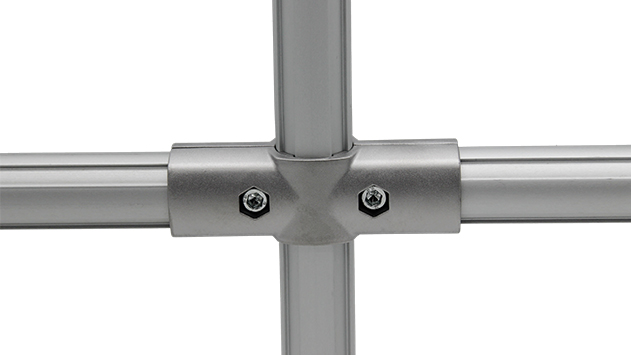
Let's start with the basics. A three way aluminum pipe joint is a specialized connector designed to link three aluminum profile pipes or tubes at a single point, typically forming a T-shape or a Y-shape (depending on the design). Unlike fixed welds or rigid fasteners, these joints are modular, meaning they can be disassembled, repositioned, and reused—making them perfect for environments where flexibility and quick adjustments are key. Think about a busy factory floor where production lines need to be reconfigured seasonally, or a workshop where a workbench might need extra shelving one month and a tool rack the next. These joints turn static structures into dynamic, adaptable systems.
But not all three way joints are created equal. They come in various designs, materials, and sizes, each tailored to specific applications. Some are meant for light-duty use, like small shelving units, while others are built to withstand heavy loads in industrial settings. The magic lies in their precision engineering: a well-made joint ensures a tight, wobble-free connection that can handle both vertical and horizontal stress without compromising stability. And because they're made from aluminum, they bring added benefits like corrosion resistance, lightweight durability, and a clean, professional look—qualities that make them stand out from plastic or steel alternatives.
Materials: Why Aluminum? And What Kind?
Aluminum isn't chosen by accident here. When it comes to modular joints, the material matters—a lot. Aluminum strikes a rare balance between strength, weight, and cost that's hard to beat. Most three way aluminum pipe joints are crafted from aluminum alloys, with 6061-T6 being the gold standard. Why 6061-T6? This alloy is heat-treated to enhance its mechanical properties: it's strong (tensile strength of around 42,000 psi), lightweight (about a third the weight of steel), and highly resistant to corrosion. That last point is crucial in environments like food processing plants, chemical labs, or outdoor settings where moisture and rust are constant threats.
Some joints also feature additional coatings or finishes, like anodizing, which adds a protective layer to the aluminum surface. Anodized joints not only resist scratches and wear better but also come in a range of colors (though silver and black are most common in industrial settings), allowing for subtle customization. For even higher corrosion resistance—say, in marine or pharmaceutical applications—you might find joints made from 5052 aluminum, which has higher magnesium content. But for most general industrial use, 6061-T6 hits the sweet spot: strong enough to hold heavy loads, light enough to make assembly easy, and durable enough to last for years with minimal maintenance.
It's also worth noting that these joints aren't standalone components—they're part of a larger ecosystem of aluminum pipe accessories . From end caps to clamps, casters to roller tracks, the three way joint works hand-in-hand with other parts to create cohesive systems. This compatibility is key: a joint that plays well with standard aluminum pipes and accessories ensures that you're not locked into a single brand or proprietary system, giving you the freedom to mix, match, and expand as needed.
Size Specifications: Finding the Right Fit
One of the first questions anyone asks when shopping for three way aluminum pipe joints is: "What size do I need?" The answer depends on the diameter of the aluminum pipes you're using, as well as the intended load and structural design. Let's break down the most common sizes and what they're used for.
| Model Number | Pipe Diameter Compatibility | Overall Dimensions (L x W x H) | Material Thickness | Weight (per unit) | Typical Application |
|---|---|---|---|---|---|
| TWA-28 | 28mm (standard lean pipe) | 65mm x 65mm x 45mm | 2.5mm | 120g | Light-duty workbenches, small shelving |
| TWA-30 | 30mm (heavy-duty aluminum pipe) | 70mm x 70mm x 50mm | 3.0mm | 180g | Material racks, medium-load conveyors |
| TWA-40 | 40mm (industrial-grade aluminum profile) | 85mm x 85mm x 60mm | 4.0mm | 280g | Heavy-duty workstations, automated conveyor systems |
| TWA-50 | 50mm (large-diameter structural pipes) | 100mm x 100mm x 70mm | 5.0mm | 420g | Warehouse racking, industrial mezzanines |
| TWA-Custom | Custom (20mm–100mm) | Variable | 3.0mm–6.0mm | Variable (150g–800g) | Specialized projects (e.g., aerospace, automotive testing rigs) |
Let's unpack this table a bit. The most common pipe diameters in industrial use are 28mm, 30mm, and 40mm. The 28mm size is standard for light-duty lean system components—think small workbenches in electronics assembly lines or tool organizers in garages. The TWA-28 joint, with its 2.5mm material thickness, is perfect here: it's lightweight (only 120g per unit) but still strong enough to hold up shelving with small parts or tools.
Step up to 30mm pipes, and you're looking at medium-duty applications. These are common in material racks (like the "Material Rack B (3 row and 3 floor)" you might see in warehouses) or conveyors that move boxes or components weighing up to 50kg. The TWA-30 joint, with its thicker 3.0mm walls and 180g weight, provides the extra stability needed to prevent sagging or shifting under these loads.
For heavy-duty work, 40mm pipes and TWA-40 joints are the way to go. These are found in industrial workstations, automated conveyor systems, and even temporary structural supports. With 4.0mm thick walls and a weight of 280g, these joints can handle serious stress—we're talking loads of 100kg or more, depending on the configuration. And for specialized projects, custom joints (like the TWA-Custom model) can be made to fit diameters from 20mm all the way up to 100mm, with material thicknesses up to 6.0mm for extreme applications.
But size isn't just about pipe diameter. The overall dimensions of the joint (length, width, height) matter too, especially when space is tight. A TWA-28, for example, has a compact 65mm x 65mm footprint, making it ideal for crowded workbenches where every inch counts. On the flip side, the TWA-50 (for 50mm pipes) is bulkier at 100mm x 100mm, but that extra size translates to more surface area for load distribution—critical for heavy warehouse racking.

Load Capacity: How Much Weight Can They Really Handle?
If size is about fit, load capacity is about safety and reliability. No one wants a shelf to collapse because a joint couldn't handle the weight of the materials on it. So, how do manufacturers determine how much a three way aluminum pipe joint can hold? It's a mix of material science, engineering design, and real-world testing.
First, let's clarify: load capacity isn't just a single number. It depends on three key factors: the direction of the load (vertical, horizontal, or a combination), the quality of the installation, and the environment (temperature, humidity, vibration). Let's break each down.
1. Load Direction: Most joints are tested for two primary types of load: static and dynamic. Static load is the weight of stationary objects—like boxes on a shelf or tools on a workbench. Dynamic load, on the other hand, is the weight of moving objects, such as parts sliding down a conveyor or a trolley being pushed into a rack. Three way joints are generally stronger under static loads than dynamic ones, since movement adds stress (think of how a sudden jolt can loosen a connection over time).
Vertical load (weight pushing down on the joint) is where these joints shine. A TWA-40 joint, for example, can typically handle static vertical loads of up to 200kg when properly installed. Horizontal load (sideways pressure, like a shelf being bumped) is lower—usually around 80-100kg for the same joint. Why the difference? Because aluminum is strong in compression (vertical load) but more prone to bending under shear stress (horizontal load). Some joints, however, are reinforced with internal ribs or thicker walls to boost horizontal load capacity—these are often labeled "heavy-duty" and cost a bit more, but they're worth it for high-stress areas.
2. Installation Quality: Even the strongest joint will fail if installed poorly. The key here is torque: the amount of force applied when tightening the joint's bolts or screws. Most manufacturers specify a torque range (e.g., 8-10 Nm for M8 bolts) to ensure a snug fit without over-tightening (which can strip threads or warp the joint). Using the wrong tools—like a Phillips head screwdriver instead of a hex key—can also lead to uneven torque, creating weak spots in the connection. It's a small detail, but it makes a huge difference in load capacity. A joint installed at 7 Nm might only handle 150kg, while one at 9 Nm could hit 200kg.
3. Environment: Extreme temperatures, humidity, or vibration can degrade a joint's performance over time. Aluminum expands and contracts with temperature changes, so in environments with frequent swings (like outdoor warehouses in desert climates), joints may loosen slightly, reducing load capacity. Similarly, constant vibration—from nearby machinery or heavy foot traffic—can cause bolts to back out, weakening the connection. That's why it's important to check joints periodically and retighten them as needed, especially in harsh conditions.
To give you a better idea, let's look at real-world examples. A TWA-30 joint (30mm pipe) installed with proper torque can safely hold:
- Static vertical load: 120-150kg
- Static horizontal load: 60-80kg
- Dynamic vertical load (moving objects): 80-100kg
- Static vertical load: 180-220kg
- Static horizontal load: 90-120kg
- Dynamic vertical load: 120-150kg

Applications: Where Do These Joints Shine?
Now that we know the specs, let's talk about where three way aluminum pipe joints actually get used. Their versatility means they're found in almost every industry, but here are a few standout applications:
Lean Manufacturing Workbenches: In lean production facilities, workbench setups need to be efficient and adaptable. A typical "Workbench E (single deck-without caster)" might use three way joints to add side shelves, tool hooks, or overhead racks. The T-shape connection allows for easy attachment of accessories like LED task lights or bin holders, turning a basic bench into a fully functional workstation. And if the production line changes, the joints can be loosened, and the shelves repositioned in minutes—no welding or cutting required.
Material Racks and Flow Racks: Warehouses rely on material racks to keep inventory organized, and three way joints are essential here. Take the "Material Rack B (3 row and 3 floor)" mentioned earlier: each level is supported by vertical pipes connected to horizontal beams via three way joints. The Y-shaped design of some joints even allows for angled shelves, which are perfect for flow racks where gravity feeds items down to the picking area. The joints ensure the rack stays stable under the weight of boxes, while still being easy to disassemble if the warehouse layout needs a overhaul.
Conveyors and Roller Tracks: Conveyor systems, whether manual or automated, use a lot of joints to connect roller tracks (like "40 steel roller track yellow wheel" or "38 aluminum roller track black esd with side guide"). Three way joints are used at corners or junctions, where the conveyor splits into two directions. They provide the rigidity needed to keep roller tracks aligned, preventing jams as products move along. In ESD (electrostatic discharge) environments—common in electronics manufacturing—special ESD-safe joints (often with black ESD wheels or coatings) are used to prevent static buildup that could damage sensitive components.
Turnover Trolleys and Mobile Carts: Trolleys need to be strong enough to carry heavy loads but light enough to push around. Three way joints connect the frame, handle, and shelves, creating a balanced structure that can handle 50-100kg without tipping. Casters (like "360° swivel expanding stem casters wheel with brake") are often attached using three way joints at the base, ensuring the trolley moves smoothly and locks securely when parked. And since the joints are modular, a single trolley can be reconfigured to carry different-sized items—just swap out the shelves or add extra crossbars.
DIY and Custom Projects: It's not just industrial settings that benefit. Hobbyists and small businesses love these joints for custom setups, like garage storage racks, workshop tool walls, or even trade show displays. Their lightweight nature makes them easy to work with (no heavy lifting required), and the clean aluminum finish gives projects a professional look. Plus, since they're reusable, you can experiment with designs without worrying about wasting materials—if a shelf is too high, just loosen the joint and adjust it.
Installation Tips: Getting It Right the First Time
Installing three way aluminum pipe joints isn't rocket science, but there are a few tips to ensure a strong, long-lasting connection. Let's walk through the process step by step:
1. Gather the Right Tools: You'll need a hex key (Allen wrench) or torque wrench (for precise tightening), a rubber mallet (to gently tap pipes into place), and a level (to ensure everything is straight). Avoid using power tools like impact drivers—they can easily over-tighten bolts and damage the joint.
2. Prepare the Pipes: Make sure the ends of the aluminum pipes are clean and free of burrs. A quick pass with sandpaper or a deburring tool will remove any sharp edges that could prevent a tight fit. If the pipes have been stored outdoors, wipe them down to remove dirt or moisture—this prevents corrosion between the pipe and joint.
3. Align the Joint and Pipes: Slide the joint onto one pipe first, then position the second and third pipes at the desired angles (usually 90° for T-shapes or 60° for Y-shapes). Use the level to check that the pipes are straight vertically and horizontally—even a small misalignment can cause stress on the joint over time. If the joint has set screws, leave them loose until everything is aligned.
4. Tighten the Bolts to Spec: Refer to the manufacturer's torque specs (usually printed on the joint or in the datasheet) and tighten each bolt gradually, alternating between them. This ensures even pressure and prevents the joint from warping. For example, if the spec is 8-10 Nm, start at 6 Nm, then go back and tighten to 8 Nm once all bolts are snug. A torque wrench is worth investing in here—over-tightening can strip the threads, while under-tightening leads to loose connections.
5. Test the Connection: Once installed, give the structure a gentle shake or apply light pressure to the joint. It should feel solid, with no wobbling or creaking. If there's movement, check the alignment and retighten the bolts. For heavy-duty setups, do a load test with a few weights before putting the structure into full use—better safe than sorry!
6. Label or Document the Setup: If you're building a complex structure (like a multi-level material rack), take photos or jot down notes about the joint positions and torque settings. This makes it easier to replicate the setup later or troubleshoot if something feels off.
Maintenance: Keeping Joints Strong for Years
Like any mechanical component, three way aluminum pipe joints need a little TLC to stay in top shape., maintenance is minimal—just a few simple steps every few months will extend their lifespan:
1. Inspect Regularly: Walk around your structures and check each joint for signs of wear: loose bolts, cracks in the aluminum, or corrosion. Pay extra attention to joints under heavy loads or in high-traffic areas. If a bolt is loose, retighten it to the recommended torque. If you see cracks or significant corrosion, replace the joint immediately—safety first!
2. Clean as Needed: Aluminum is naturally corrosion-resistant, but dirt and grime can hide issues like small cracks. Wipe joints down with a damp cloth and mild soap (avoid harsh chemicals like bleach) to keep them clean. For stubborn grease (common in manufacturing settings), use a degreaser and a soft brush—scrub gently to avoid scratching the surface.
3. Lubricate Threads: If you plan to disassemble and reuse joints, apply a small amount of anti-seize lubricant to the bolt threads before tightening. This prevents aluminum oxidation from causing the bolts to seize (a common issue called "galvanic corrosion" where aluminum and steel bolts react). A little goes a long way—too much lubricant can attract dirt.
4. replace Worn Parts: Over time, bolts or set screws may wear out, especially if they're frequently tightened and loosened. Most manufacturers sell replacement bolts (usually M6 or M8 size) for a few dollars—keep a handful on hand so you can swap them out quickly. Don't try to reuse stripped bolts—they won't hold torque properly.
Three Way Joints vs. Other Connectors: Why Not Steel or Plastic?
You might be wondering: why choose aluminum three way joints over steel or plastic? Let's break down the pros and cons:
Steel Joints: Steel is stronger than aluminum, so steel joints can handle higher loads—up to 300kg or more for heavy-duty models. But they're also much heavier (about three times the weight of aluminum), making them harder to install and reposition. Steel is also prone to rust, which means they need coatings like zinc plating to survive in damp environments—adding cost and maintenance. For static, ultra-heavy setups (like industrial machine bases), steel might be better, but for most modular applications, aluminum's weight-to-strength ratio wins.
Plastic Joints: Plastic joints are lightweight and cheap, making them popular for DIY projects or light-duty use (like kids' play structures). But they lack the strength of aluminum—even heavy-duty plastic can warp under loads over 50kg, and they degrade in sunlight or high temperatures. They're also less rigid, leading to wobbly structures. For temporary or very light setups, plastic is okay, but for anything industrial or long-term, aluminum is the smarter choice.
Aluminum Joints: The sweet spot. They're strong enough for most industrial loads, light enough for easy handling, corrosion-resistant, and reusable. They also look better than plastic or rust-prone steel, which matters in settings where aesthetics count (like customer-facing workshops or trade shows). Yes, they cost more than plastic, but the durability and flexibility make them a better long-term investment.
Final Thoughts: The Unsung Heroes of Modular Design
At the end of the day, three way aluminum pipe joints might not be the most glamorous part of a lean system or a workbench , but they're the glue that holds everything together. Their technical specs—sizes, load capacities, materials—are a testament to thoughtful engineering, designed to balance strength, flexibility, and ease of use. Whether you're building a small shelf in your garage or a massive conveyor system in a factory, these joints make it possible to create structures that are not just functional, but adaptable to whatever the future throws at them.
So the next time you walk through a warehouse, workshop, or even a trendy co-working space with custom furniture, take a closer look. Chances are, there's a three way aluminum pipe joint quietly doing its job, keeping things stable, flexible, and ready for whatever comes next. And now that you know the specs, you'll appreciate just how much thought and precision goes into that unassuming little connector.