- Company Articles
- Industry articles
- Industry standards
- Technical Specs of 3030a EU Standard Aluminum Profile: Dimensions & Tolerances

Technical Specs of 3030a EU Standard Aluminum Profile: Dimensions & Tolerances
Related Product
3030A EU Standard Aluminum Profile
3030 is a 3.00 x 3.00CM fractional 30 series square extrusion T-slot profile with four open T-slots, each side with 3.00cm face. The profile has align-a-grooves to assist in aligning connecting profiles.
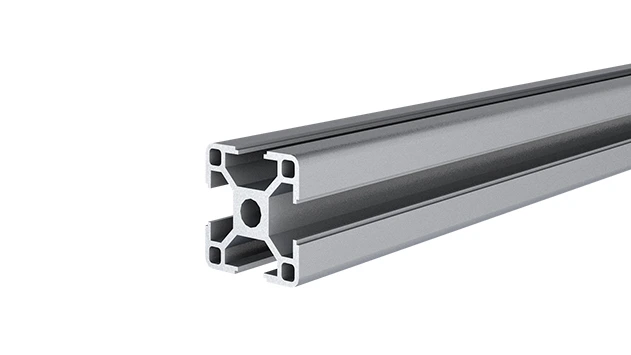
Technical Specs of 3030a EU Standard Aluminum Profile: Dimensions & Tolerances
If you've ever walked through a modern factory, warehouse, or even a busy workshop, you've probably encountered the quiet backbone of efficient workspace design: aluminum profiles. These unassuming metal structures are the building blocks of everything from workbenches and material racks to assembly lines and ESD workstations. Among the countless profiles available, the 3030a EU Standard Aluminum Profile has earned a reputation as a versatile, reliable choice for lean system setups. But what exactly makes it so popular? Today, we're peeling back the curtain to explore its technical heart—dimensions and tolerances. Because when it comes to building something that lasts, the smallest measurements often make the biggest difference.
What Is the 3030a EU Standard Aluminum Profile, Anyway?
First things first: let's decode the name. "3030a" isn't just a random string of numbers and letters. The "3030" refers to its cross-sectional dimensions—30mm in width and 30mm in height, forming a square (or near-square) shape. The "a" typically denotes a specific variant within the 3030 family, often differing in wall thickness, slot design, or manufacturing tolerances compared to other 3030 models (like 3030b or 3030c). As part of the EU standard, it adheres to strict manufacturing guidelines set by organizations like the European Committee for Standardization (CEN), ensuring consistency across suppliers and compatibility with a wide range of aluminum profile accessories.
Why does this matter? Imagine trying to build a bookshelf where the shelves are slightly too wide for the brackets, or the screws don't fit the pre-drilled holes. Frustrating, right? In manufacturing, that frustration translates to wasted time, delayed production, and unstable structures. The 3030a's EU standard compliance eliminates that guesswork, making it a go-to for lean system integrators who need components that work together seamlessly, every single time.
Key Dimensions: The Blueprint of Reliability
At its core, the 3030a's utility lies in its precise dimensions. Let's break down the critical measurements that define this profile, from its cross-section to its length and beyond. For clarity, we've compiled the most important specs into the table below:
| Dimension | Specification | Typical Tolerance | Unit | Why It Matters |
|---|---|---|---|---|
| Cross-Section Width | 30.0 | ±0.15 | mm | Ensures compatibility with width-matched accessories like end caps and connectors. |
| Cross-Section Height | 30.0 | ±0.15 | mm | Works with height-specific brackets and supports; critical for level assembly. |
| Wall Thickness (Standard) | 1.5 | ±0.15 | mm | Balances strength and weight; thinner walls save material, thicker boost load capacity. |
| Wall Thickness (Heavy-Duty Variant) | 2.0 | ±0.15 | mm | Used for high-load applications like heavy material racks. |
| Slot Width | 8.0 | ±0.1 | mm | Fits standard T-bolts, nuts, and accessories; tight tolerance prevents wobble. |
| Slot Depth | 6.0 | ±0.1 | mm | Ensures bolts/nuts seat fully, securing accessories without over-tightening. |
| Standard Length | 2000, 3000, 6000 | ±2.0 | mm | Common stock lengths; tolerance accounts for minor extrusion shrinkage. |
| Custom Cut Length | Variable (per order) | ±0.5 | mm | Tighter tolerance for precision applications like jigs or fixtures. |
| Weight per Meter | 0.7–1.1 | ±0.05 | kg/m | Affects shipping costs, load capacity, and ease of handling during assembly. |
Let's zoom in on a few of these to understand their real-world impact. Take the slot width , for example. At 8.0mm with a tolerance of ±0.1mm, it's designed to fit standard 8mm T-bolts—a common accessory in aluminum profile systems. If the slot were too narrow (say, 7.8mm), the bolt might jam; too wide (8.2mm), and the bolt would wiggle, making the joint loose. For an ESD workstation holding sensitive electronics, that looseness could be disastrous, risking damage to components or even electrical shorts. The 3030a's tight slot tolerance eliminates that risk, ensuring a snug, secure fit.
Then there's wall thickness . The standard 1.5mm variant strikes a balance between strength and weight, making it ideal for light to medium-duty tasks like building a single-deck workbench (think: Workbench E, a common setup without casters for stationary use). For heavier loads—like a Material Rack B with 3 rows and 3 floors stacked with metal parts—the 2.0mm heavy-duty variant steps in, adding rigidity without ballooning the profile's weight. This flexibility is why the 3030a is so popular: it adapts to both simple and complex needs.
Tolerances: The Invisible Hand of Precision
Tolerances are the unsung heroes of manufacturing. They're the tiny allowable variations in dimension that ensure parts from different batches (or even different suppliers) still fit together. For the 3030a EU Standard Aluminum Profile, tolerances are governed by standards like EN 755-9, which specifies dimensional tolerances for aluminum and aluminum alloy extruded profiles. Let's break down why each tolerance matters and how it's maintained.
Cross-Section Tolerances: Keeping It Square
The 3030a's width and height are both specified as 30.0mm with a tolerance of ±0.15mm. That means the actual width of any given profile could be as small as 29.85mm or as large as 30.15mm—and still be considered "in spec." Why not tighter? Extrusion is a complex process: aluminum billets are heated, forced through a die, and cooled. Minute variations in temperature, die wear, or billet composition can cause slight shifts in dimensions. A tolerance of ±0.15mm is tight enough to ensure compatibility with accessories (like 3030 aluminum profile end caps, which snap onto the profile's ends) while accounting for real-world manufacturing variables.
Imagine assembling a cube-shaped material rack using 3030a profiles. If one vertical beam is 29.9mm wide and another is 30.1mm, the difference is just 0.2mm—barely visible to the eye. But over a rack with 4 vertical beams, those tiny differences could add up, making the rack lean slightly. The 3030a's cross-section tolerance keeps that cumulative error in check, ensuring the rack stands straight and true.
Length Tolerances: Avoiding the "Too Short, Too Long" Headache
Standard lengths for 3030a profiles are typically 2m, 3m, or 6m, with a tolerance of ±2mm. For most users, that's more than precise enough. If you order ten 3m profiles, you might get some at 2998mm and others at 3002mm—but when building a workbench, a 4mm difference across the length is negligible. For custom cuts, though, tolerances tighten to ±0.5mm. Why? Custom lengths are often used for jigs, fixtures, or tight spaces where every millimeter counts. A profile cut to 1200.5mm instead of 1200mm might not fit in a pre-designed frame, throwing off the entire assembly.
To hit these tolerances, manufacturers use precision cutting tools like carbide saws with computer numerical control (CNC) for custom orders. After cutting, each profile is measured with calipers or laser tools to ensure it meets the spec—another example of why choosing a reputable aluminum profile supplier matters. A supplier cutting corners on quality control might ship profiles with loose tolerances, turning your lean system into a lean nightmare.
Material Matters: The Alloy Behind the Profile
Dimensions and tolerances tell part of the story, but the 3030a's performance also hinges on its material: aluminum alloy. Most 3030a profiles are made from 6063-T5 aluminum, a popular choice for extrusions. Let's unpack why this alloy is a perfect match for the profile's design.
6063 aluminum is alloyed with magnesium and silicon, giving it excellent extrudability—meaning it flows smoothly through the die to form complex shapes like the 3030a's T-slots. The "T5" designation refers to its heat treatment: after extrusion, the profile is artificially aged (heated to a specific temperature and cooled) to strengthen it without making it brittle. This results in a profile with a tensile strength of around 180 MPa and a yield strength of 110 MPa—numbers that translate to real-world durability. For context, that means a 1.5mm wall 3030a profile can safely support around 50–70 kg per linear meter when properly braced—more than enough for most workshop tools or material bins.
Another perk of 6063-T5? Corrosion resistance. Unlike steel, aluminum forms a natural oxide layer that protects it from rust, making the 3030a suitable for use in damp environments or even outdoors (with optional anodizing for extra protection). For food processing plants or pharmaceutical labs, where cleanliness is critical, this resistance to corrosion is a game-changer, reducing maintenance costs and extending the profile's lifespan.
Beyond the Basics: Compatibility with Accessories
A profile is only as good as the accessories it works with, and the 3030a plays well with a wide range of aluminum profile accessories. Let's explore a few key ones and how the profile's specs enable their functionality:
- End Caps: 3030 aluminum profile end caps snap onto the profile's ends, covering sharp edges and giving a clean, finished look. The profile's width/height tolerances ensure the end cap fits snugly—no rattling or falling off.
- Connectors: 90° aluminum profile connectors, 135° connectors, and three-way connectors join profiles at angles. The T-slot's 8.0mm width allows these connectors to lock in place with T-bolts, creating rigid joints. Tighter slot tolerances mean less play in the joint, boosting stability.
- Gussets: Gusset Alp 3030 brackets reinforce corner joints, adding strength to load-bearing structures like material racks. The profile's consistent wall thickness ensures the gusset's screws bite evenly, preventing stripped threads or weak spots.
- Wheels and Casters: For mobile setups like turnover trolleys, casters attach to the profile via mounting plates. The profile's flat surfaces and precise dimensions ensure the mounting plate sits flush, distributing the trolley's weight evenly and preventing wobbling.
Take, for example, building a mobile material cart using 3030a profiles and swivel caster wheels. The caster's mounting plate has pre-drilled holes spaced to match the 3030a's T-slots. Thanks to the profile's consistent slot spacing and width, the T-bolts thread into the slots easily, securing the caster tightly. Push the cart, and it rolls smoothly—no squeaking, no tilting—because every component fits as intended.
Why the 3030a Stands Out in a Crowded Market
With so many aluminum profiles available (2020, 4040, 3060, etc.), why choose the 3030a? Its sweet spot of size, strength, and versatility. Let's compare it to a few alternatives:
- 2020 EU Standard: Smaller (20x20mm) and lighter, ideal for lightweight tasks like display shelves or small electronics workbenches. But its smaller size limits load capacity—great for a phone repair station, not so much for a metalworking bench.
- 4040 EU Standard: Larger (40x40mm) and stronger, perfect for heavy-duty racks or industrial machinery frames. But it's bulkier and heavier, making it overkill for simple setups and harder to maneuver during assembly.
- 3060 EU Standard: Rectangular (30x60mm), offering more surface area for mounting tools or shelves. Useful for workbenches with side accessories, but its asymmetrical shape limits flexibility in corner joints compared to the square 3030a.
The 3030a's 30x30mm square cross-section hits the middle ground: big enough to handle medium loads, small enough to stay lightweight and easy to assemble. It's the "goldilocks" of profiles—just right for most lean system needs.
Installation Tips: Getting the Most Out of Your 3030a
Even the best profile won't perform well if installed poorly. Here are a few pro tips to ensure your 3030a setup is sturdy, safe, and efficient:
- Deburr After Cutting: Extruded aluminum can have sharp burrs on cut edges. Use a file or deburring tool to smooth them—this prevents injury and ensures accessories like end caps fit flush.
- Prep the Slots: Dust and debris in the T-slots can jam bolts or scratch accessories. Blow out slots with compressed air or wipe them with a dry cloth before assembly.
- Torque Bolts Properly: Over-tightening T-bolts can strip the slot or warp the profile; under-tightening leads to loose joints. Aim for 4–6 Nm of torque (check your accessory's specs) and use a torque wrench for consistency.
- Use Reinforcements for Long Spans: For spans over 1.5m (e.g., a long shelf), add center support brackets. Even a 2.0mm wall profile will sag over time without support, especially under load.
- Match Accessories to Tolerances: Stick with EU-standard aluminum profile accessories. Off-brand accessories might have looser tolerances, even if they claim to fit 3030 profiles.
Final Thoughts: The 3030a—A Lean System's Best Friend
At the end of the day, the 3030a EU Standard Aluminum Profile is more than just a piece of metal. It's a tool for efficiency, flexibility, and reliability—the cornerstones of lean manufacturing. Its precise dimensions and tight tolerances ensure that when you design a workspace, you spend less time troubleshooting fit issues and more time focusing on what matters: production. Whether you're building a simple workbench, a complex material rack, or an ESD workstation for sensitive gear, the 3030a delivers the consistency and versatility to get the job done right.
So, the next time you walk through a factory and see those sleek aluminum structures, take a moment to appreciate the engineering behind them. The 3030a's dimensions and tolerances might seem small, but they're the reason those workspaces run like clockwork—quietly, reliably, and always ready to adapt.