- Company Articles
- Industry articles
- Industry standards
- Tensile Strength of 3030b EU Standard Aluminum Profile: Industry Standards Met

Tensile Strength of 3030b EU Standard Aluminum Profile: Industry Standards Met
Related Product
3030B EU Standard Aluminum Profile
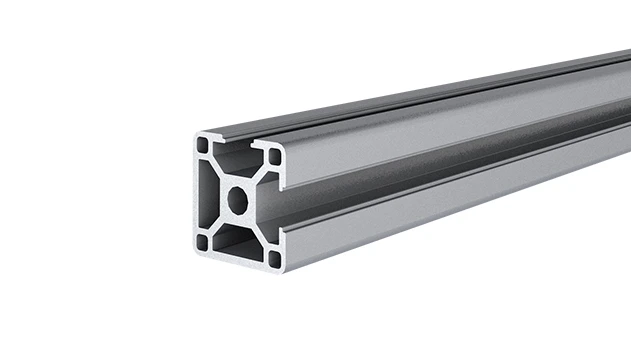
3030 is a 3.00 x 3.00CM fractional 30 series square extrusion T-slot profile with two side open T-slots, each side with 3.00cm face, 2 side with open slot, 2 side with closed face. The profile has align-a-grooves to assist in aligning connecting profiles.
Walk into any modern factory, warehouse, or manufacturing facility, and you'll notice a silent backbone holding everything together: aluminum profiles. These unassuming metal structures form the frames of workbenches, the rails of conveyors, the shelves of material racks, and the skeleton of lean systems that keep production lines running smoothly. But not all aluminum profiles are created equal. When it comes to reliability, safety, and long-term performance, one specification stands out in the European market: the 3030b EU standard aluminum profile . Today, we're diving deep into one of its most critical properties—tensile strength—and exploring how it doesn't just meet industry standards, but sets a benchmark for quality in the field.
What Exactly Is the 3030b EU Standard Aluminum Profile?
Before we get into tensile strength, let's clarify what makes the 3030b EU standard profile unique. First, the "3030" refers to its cross-sectional dimensions: 30mm by 30mm. This square shape strikes a perfect balance between compactness and load-bearing capacity, making it a go-to choice for medium-duty applications. The "b" denotes a specific variation within the 3030 series, often characterized by wall thickness, groove design, or material composition—details that directly impact its mechanical properties, including tensile strength.
Then there's the "EU standard" label. This isn't just a marketing term; it's a guarantee that the profile adheres to strict European norms for material quality, dimensional accuracy, and safety. These standards are set by organizations like the European Committee for Standardization (CEN), ensuring that every 3030b profile rolling off the production line meets uniform criteria for performance. For manufacturers, this means consistency—whether you're buying 10 meters or 10,000 meters, you can trust that each piece will behave the same way under stress.
But what truly sets the 3030b apart is its roots in aluminum extrusion profile technology. Extrusion is the process of forcing heated aluminum alloy through a die to create complex cross-sectional shapes. This method not only allows for precise dimensions but also aligns the metal's grain structure, enhancing its strength and durability. Unlike cast profiles, which can have internal flaws, extruded profiles like the 3030b are inherently more uniform—another reason why their tensile strength is so reliable.
Tensile Strength: Why It Matters More Than You Think
Tensile strength is one of those engineering terms that sounds technical, but its real-world impact is surprisingly tangible. In simple terms, it's the maximum amount of pulling force a material can withstand before breaking or deforming permanently. Imagine a rope holding a heavy load: its tensile strength determines how much weight it can carry before snapping. For aluminum profiles, the stakes are even higher—they're not just holding static loads, but often supporting dynamic, shifting weights in busy industrial environments.
Why does this matter for your operations? Let's break it down. A workbench made with a low-tensile-strength profile might start bending after months of holding heavy tools or components. A conveyor rail with insufficient tensile strength could warp under the constant friction of moving parts, leading to jams or breakdowns. Even a simple material rack could collapse if the profiles can't handle the tension of stacked goods. In short, tensile strength is the difference between a system that lasts for years and one that fails unexpectedly—costing time, money, and even risking workplace injuries.
For the 3030b EU standard profile, tensile strength isn't an afterthought; it's a core design parameter. Manufacturers start by selecting high-quality aluminum alloys—typically 6063 or 6061, known for their excellent strength-to-weight ratios. These alloys are then heat-treated to optimize their microstructure, further boosting their ability to resist tension. The result? A profile that can handle significant pulling forces without compromising its shape or integrity.

Testing Tensile Strength: How the 3030b Measures Up
Claiming to meet industry standards is one thing; proving it is another. To validate the tensile strength of 3030b profiles, manufacturers subject them to rigorous testing using specialized equipment called universal testing machines (UTMs). Here's how the process works:
First, a sample of the profile is cut to a standardized length and prepared with threaded ends or grips. This sample is then mounted in the UTM, which slowly pulls the two ends apart while measuring the force applied and the resulting deformation. The machine records two key values: the "yield strength" (the point at which the material starts to deform permanently) and the "ultimate tensile strength" (the maximum force before breaking). For EU-standard profiles, these values must meet or exceed minimum thresholds set by standards like EN 755-2 (Aluminum and aluminum alloys—Extruded profiles for general applications).
So, what numbers are we talking about? For a typical 3030b EU standard aluminum profile made from alloy 6063-T5 (a common heat-treated variant), the ultimate tensile strength usually ranges from 180 to 220 MPa (megapascals), with a yield strength of 140 to 180 MPa. To put that in perspective, 1 MPa is roughly the pressure exerted by a 10-kilogram weight on a square centimeter—so 200 MPa means the profile can withstand a pulling force of 2,000 kilograms per square centimeter before breaking. That's more than enough for most medium-duty applications, from supporting a fully loaded workbench to guiding parts along a conveyor.
But here's the kicker: Reputable suppliers don't just test a single batch and call it a day. They conduct regular quality checks, sampling profiles from every production run to ensure consistency. This commitment to testing is why EU-standard profiles like the 3030b are trusted by industries as diverse as automotive manufacturing, electronics assembly, and logistics—where failure is simply not an option.
Real-World Applications: Where Tensile Strength Makes a Difference
Tensile strength isn't just a number on a spec sheet; it translates directly to better performance in the field. Let's look at three common applications where the 3030b's tensile strength shines:
1. Workbenches: The Foundation of Productivity
A typical factory workbench sees a lot of action—tools dropped, components stacked, and workers leaning on it for hours on end. The frame, often built with 3030b profiles, must support not just the weight of the bench top and its contents, but also the dynamic forces of daily use. Thanks to its high tensile strength, the 3030b ensures the frame doesn't bow or twist over time. Even heavy-duty workbenches like the "Workbench E (single deck-without caster)" from many suppliers rely on 3030b profiles for their frames, knowing they can handle the stress of repetitive tasks without deforming.
2. Lean Systems: Streamlining Production Without Sacrificing Strength
Lean manufacturing is all about efficiency—eliminating waste, reducing downtime, and optimizing workflows. A key part of this is the lean system , which includes flow racks, turnover trolleys, and modular workstations. These systems often require profiles that are both lightweight (to allow flexibility) and strong (to support continuous use). The 3030b fits the bill perfectly. Its 30x30mm size is easy to assemble and reconfigure, while its tensile strength ensures that even when loaded with parts or tools, the structure remains stable. For example, a material rack like "Material Rack B (3 row and 3 floor)" uses 3030b profiles to support multiple layers of inventory, trusting in their ability to resist the tension of stacked goods over time.
3. Conveyors and Roller Tracks: Handling Constant Motion
Conveyor systems are another area where tensile strength is critical. As parts slide or roll along roller tracks, the rails experience constant friction and lateral stress. A profile with low tensile strength might start to bend or crack under this repeated strain, leading to misaligned tracks and jammed parts. The 3030b, however, holds its shape. When paired with aluminum profile accessories like 90° aluminum profile connectors or gusset plates (which reinforce joints), it creates a conveyor frame that can withstand the daily grind of a busy production line. Whether it's a small roller track for light components or a larger system moving heavy assemblies, the 3030b's tensile strength ensures smooth, uninterrupted operation.
How the 3030b Compares to Other Profiles: A Quick Reference
To truly appreciate the 3030b's tensile strength, it helps to compare it to other common aluminum profiles. Below is a table highlighting key mechanical properties and applications of the 3030b alongside three popular alternatives:
| Profile Type | Dimensions (mm) | Ultimate Tensile Strength (MPa) | Yield Strength (MPa) | Common Applications |
|---|---|---|---|---|
| 3030b EU Standard | 30x30 | 180–220 | 140–180 | Workbenches, lean system frames, medium-duty racks |
| 2020 EU Standard | 20x20 | 160–190 | 120–150 | Lightweight shelving, small machine guards |
| 4040a EU Standard | 40x40 | 200–240 | 160–200 | Heavy-duty workbenches, industrial machinery frames |
| 3060 EU Standard | 30x60 | 190–230 | 150–190 | Long-span racks, conveyor supports, large work surfaces |
As you can see, the 3030b holds its own against smaller profiles (like the 2020) with higher tensile strength, while offering a more balanced size and weight compared to larger profiles (like the 4040a). This versatility is why it's a staple in so many industrial settings—it's strong enough for most medium-duty tasks without being overkill, keeping costs and material usage in check.
The Role of Accessories: Strengthening the Whole System
A profile is only as strong as the system it's part of, and that's where aluminum profile accessories come into play. Even the strongest 3030b profile will underperform if paired with flimsy connectors or brackets. That's why EU-standard systems emphasize compatibility between profiles and their accessories, ensuring every component works together to maximize strength.
Take joints, for example. The 3030b profile uses T-slot grooves along its length, allowing accessories like 90° aluminum profile connectors or internal rotatory aluminum joints to lock into place securely. These connectors are designed to distribute stress evenly across the profile, preventing weak points that could fail under tension. Similarly, gusset plates (like the gusset alp 3030) add extra reinforcement at corners, turning a simple joint into a rigid connection that can withstand pulling forces from multiple directions.
Another critical accessory is the end cap—small plastic or metal covers that seal the ends of the profile. While they might seem minor, end caps prevent debris from entering the T-slots, which could corrode the metal over time and weaken its tensile strength. They also protect workers from sharp edges, adding a safety layer to the system.
Even casters and leveling feet play a role in maintaining tensile strength. A workbench or trolley with poorly designed casters might wobble, putting uneven stress on the profiles and leading to premature fatigue. High-quality casters with sturdy mounting plates distribute the load evenly, ensuring the 3030b frame remains stable and strong, even when in motion.
Choosing the Right Supplier: Why Certification Matters
Not all 3030b profiles are created equal, and much of the difference comes down to the supplier. To ensure you're getting a profile with the tensile strength and quality you need, look for suppliers who prioritize EU standards and certification. This means checking for compliance with EN 755-2, as well as ISO 9001 certification for quality management systems.
Certified suppliers don't just sell profiles—they provide documentation, including test reports for tensile strength, material composition, and dimensional accuracy. This transparency gives you peace of mind that the product you're buying meets the claims on the spec sheet. It also means better after-sales support; if you have questions about installation or performance, a reputable supplier will have the expertise to help.
Avoid generic or uncertified profiles, even if they're cheaper. These often use lower-grade alloys or skip critical heat-treatment steps, resulting in inconsistent tensile strength and a higher risk of failure. In the long run, the cost of replacing failed components or dealing with downtime far outweighs the initial savings.
Final Thoughts: Tensile Strength as a Foundation for Reliability
At the end of the day, the tensile strength of the 3030b EU standard aluminum profile is more than just a technical specification—it's a promise. A promise that the workbenches your team relies on won't collapse, the conveyors moving your products won't warp, and the lean systems keeping your production line efficient won't fail when you need them most. It's a promise backed by rigorous testing, strict EU standards, and a design philosophy that prioritizes performance and safety.
Whether you're building a new production facility, upgrading existing equipment, or simply looking for a reliable profile for your next project, the 3030b EU standard aluminum profile delivers. Its balanced size, impressive tensile strength, and compatibility with a wide range of accessories make it a versatile, cost-effective choice that meets and exceeds industry standards.
So the next time you walk through a factory or warehouse, take a closer look at those aluminum frames. Chances are, many of them are 3030b profiles—quietly doing their job, day in and day out, proving that when it comes to industrial strength, some standards are worth trusting.