
Walk into any modern manufacturing plant, and you'll notice a silent but critical player in the production dance: the equipment that keeps materials moving. From assembly lines to warehouses, these tools form the backbone of efficiency. But here's a question that's gaining urgency in boardrooms and factory floors alike: What's the true cost of the equipment we choose—beyond the price tag? Today, let's zoom in on one workhorse in particular: the 85 steel roller track. We'll stack it against disposable alternatives, and unpack why this choice matters for the planet, your bottom line, and the future of manufacturing.
Why the "Disposable" Mentality Hurts More Than Just Your Budget
Manufacturing has long prioritized speed and upfront savings. It's tempting to opt for cheap, lightweight roller tracks or temporary conveying solutions—after all, they get the job done today. But "disposable" equipment comes with a hidden bill: environmental damage that adds up fast. Think about it: plastic-based tracks that crack after a year, flimsy metal rails that rust and warp, or components designed to be replaced rather than repaired. Each replacement means more raw materials extracted, more energy burned in production, and more waste piling up in landfills. In a world grappling with climate change, this cycle isn't just unsustainable—it's shortsighted.
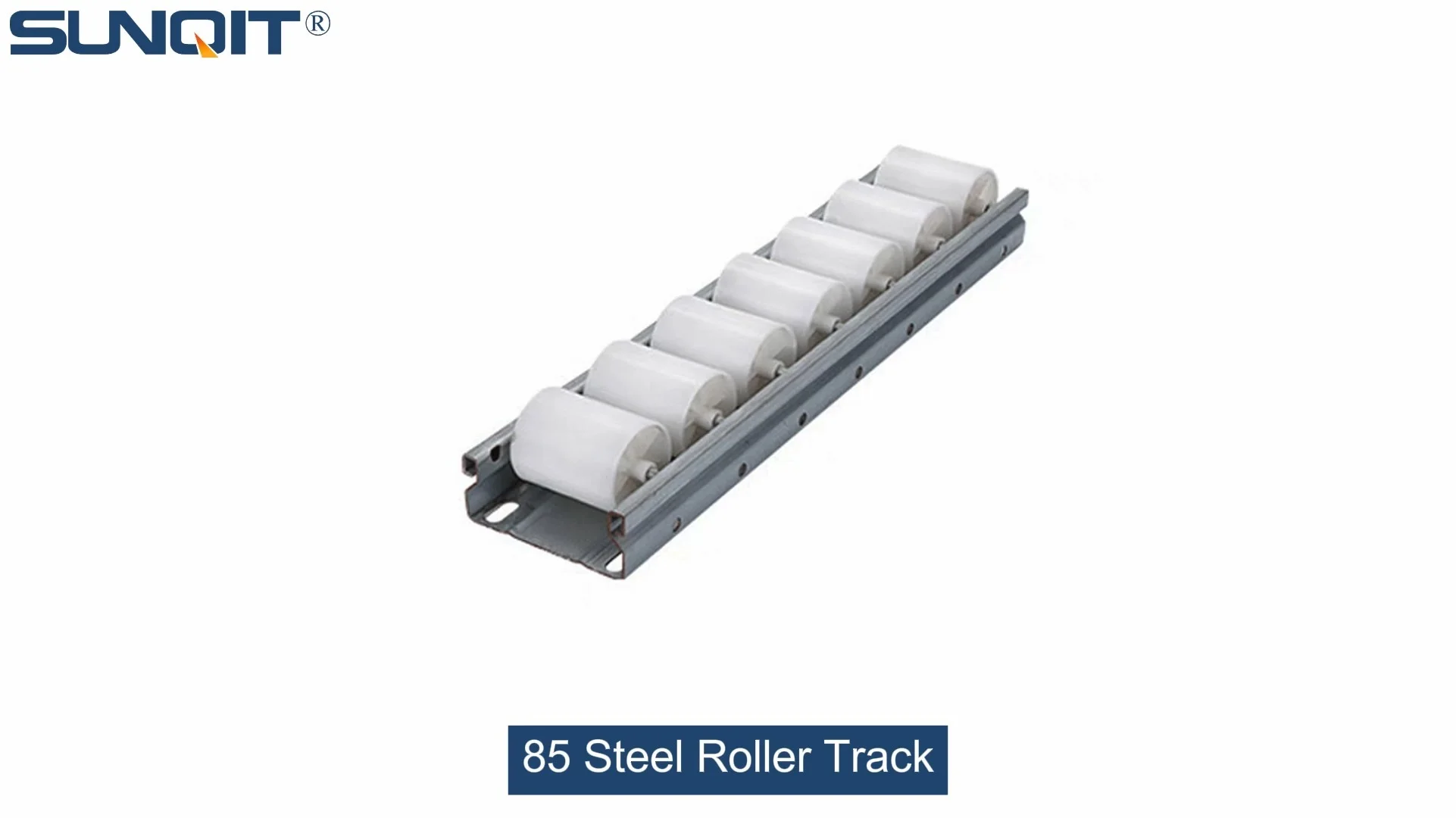
Enter the 85 steel roller track. Part of a broader lean system designed for longevity, this isn't just another piece of hardware. It's a statement about how we build things. Let's break down why swapping disposables for durable steel tracks could be one of the smartest environmental (and financial) moves your operation makes.
Material Matters: Steel vs. the "Quick Fix" Alternatives
First, let's talk about what these tracks are made of. Disposable alternatives often rely on low-grade plastics, thin aluminum alloys, or untreated metals. They're lightweight, sure, but that's because they cut corners on material quality. Plastic tracks, for example, might start strong but degrade under heat, heavy loads, or chemical exposure. Cheap metal rails? They corrode quickly in humid factory environments, turning into scrap before you've even recouped the initial cost.
The 85 steel roller track, on the other hand, is built with high-grade steel—tough, resilient, and designed to handle the grind of daily manufacturing. Steel's inherent strength means it can withstand heavy loads, frequent use, and harsh conditions without losing functionality. But here's the environmental kicker: steel is one of the most recycled materials on the planet. When a steel roller track finally reaches the end of its long life (we're talking decades, not years), it can be melted down and repurposed into new products with minimal loss of quality. Compare that to plastic tracks, which often end up in landfills or incinerators, releasing toxins as they break down. Or cheap metals that, due to their low quality, aren't worth recycling—so they're tossed, too.

Longevity: Less Replacement = Less Waste
Let's get practical. Imagine two scenarios for a busy warehouse using flow racks to move components. Scenario A uses a disposable plastic roller track: it lasts 18 months before cracking under constant use. Scenario B uses an 85 steel roller track: it stays in service for 12 years, with only minor part replacements (like wheels or connectors) along the way. Which one do you think creates more waste?
The math is clear. Over 12 years, Scenario A would require replacing the track 8 times. Each replacement means manufacturing 8 new tracks, transporting them, installing them, and disposing of the old ones. That's 8 times the raw materials, 8 times the energy, and 8 times the waste. Scenario B? One track, periodic maintenance, and zero landfill trips until the end of its lifecycle. This isn't just about durability—it's about redefining "cost" to include the planet's well-being.
And here's where lean system thinking ties in: the 85 steel roller track isn't just built to last; it's built to adapt. As your production needs change—maybe you're shifting from small parts to larger components, or reorganizing your layout—the track can be reconfigured, extended, or repurposed. Disposable alternatives? They're rigid. When your needs change, they're obsolete. So you toss them and buy new ones. That's the opposite of sustainability.

The Carbon Footprint: From Factory to Field
Manufacturing anything leaves a carbon footprint, but not all footprints are created equal. Let's compare the lifecycle carbon emissions of an 85 steel roller track versus a typical disposable plastic track. While exact numbers vary by manufacturer, here's a realistic breakdown based on industry data:
| Category | 85 Steel Roller Track | Disposable Plastic Track |
|---|---|---|
| Production Emissions (per unit) | Higher initially (steel production is energy-intensive) | Lower initially (plastic is cheaper to produce) |
| Lifespan | 10–15 years | 1–2 years |
| Emissions Over Lifespan (per year) | Low (amortized over decades) | High (frequent replacement = repeated emissions) |
| End-of-Life Emissions | Low (90%+ recyclable, minimal landfill) | High (plastic decomposes slowly, releases methane) |
| Total Lifecycle Carbon Footprint | ~500 kg CO₂e | ~1,800 kg CO₂e (over 15 years) |
Notice that "initial emissions" trap? It's easy to think, "Plastic is cheaper and uses less energy to make!" But when you factor in replacement cycles, the plastic track's total footprint triples that of the steel one over 15 years. That's because steel's longevity turns its initial higher emissions into a long-term win. It's the environmental version of "buy once, cry once"—but instead of crying, you're reducing your carbon impact.
And let's not forget transportation. Disposable tracks are often lighter, so shipping them uses less fuel—at first. But when you're shipping 8 replacements instead of 1, that savings vanishes. Steel tracks, heavy as they are, make up for it by eliminating repeat shipments. It's a classic example of how short-term thinking (choosing the lighter, cheaper option) leads to long-term environmental harm.

Lean Solution: Sustainability as a Competitive Edge
Here's the bigger picture: the 85 steel roller track isn't just a piece of equipment. It's part of a lean solution that ties sustainability to operational efficiency. In today's market, customers, regulators, and even employees care about environmental responsibility. Choosing durable, recyclable tools like steel roller tracks isn't just "greenwashing"—it's a tangible way to reduce waste, cut long-term costs, and align with the lean of "continuous improvement."
Take the 3C assembly industry, for example. Factories assembling smartphones or laptops need flexible, reliable conveying systems to keep up with fast-paced production. Disposable tracks might work for a single product cycle, but when the next model comes out (and it will, quickly), those tracks become useless. An 85 steel roller track? It can be adjusted to fit new component sizes, reconfigured with flow rack extensions, or even moved to a different part of the factory. That adaptability reduces downtime, cuts waste, and keeps production running smoothly—all while shrinking your environmental footprint.
Medical device manufacturing is another space where durability matters. Cleanrooms and precision assembly lines can't afford equipment that warps, rusts, or needs frequent replacement. Steel roller tracks, resistant to corrosion and easy to sanitize, stand up to the rigorous demands of medical production. And when regulations change or new devices require new layouts? The track adapts. No waste, no delays, no unnecessary environmental impact.
Beyond the Track: A Ripple Effect
Choosing 85 steel roller tracks sends a message throughout your supply chain. It tells suppliers you value sustainability, encouraging them to prioritize eco-friendly materials and processes. It shows employees that your company walks the talk on environmental responsibility, boosting morale and retention. And it gives customers a reason to choose you over competitors still stuck in the disposable cycle.
Let's talk about the "small wins" that add up. A single factory switching to steel roller tracks might save hundreds of tons of waste over a decade. Multiply that across the manufacturing sector, and you're looking at a significant dent in industrial carbon emissions. It's not about perfection—it's about progress. And progress starts with choices like this: choosing durability over disposability, long-term thinking over quick fixes, and the planet over short-term savings.
The Bottom Line: It's Not Just About Steel—It's About Mindset
At the end of the day, comparing 85 steel roller tracks to disposable alternatives isn't just about materials or cost. It's about shifting from a "take-make-waste" model to one of "reduce-reuse-recycle." It's about recognizing that every piece of equipment in your factory has a story—and that story includes its impact on the environment.
So the next time you're evaluating production equipment, ask more than "How much does it cost?" Ask, "How long will it last?" "Can it be recycled?" "Will it adapt as we grow?" The answers might surprise you. And if you're looking for a sign to make the switch—this is it. The 85 steel roller track isn't just a better choice for your factory. It's a better choice for the planet we all share.