- Company Articles
- Industry articles
- Industry News
- The Environmental Impact of Aluminum Workbench D: Sustainable Choices for Green Factories

The Environmental Impact of Aluminum Workbench D: Sustainable Choices for Green Factories
Related Product
Aluminum Workbench D
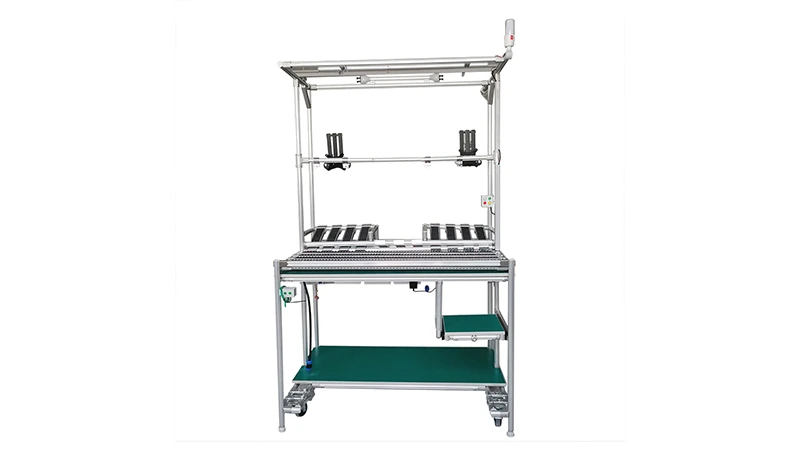
Aluminum tube workbench is more flexible and durable, compared with traditional PE/ABS coated steel tube. It is easy to assemble, anti corrosion, rust protection, and recycle use after disassemble.
Introduction: The Green Factory Revolution
Walk through any modern manufacturing facility today, and you'll likely notice a quiet but powerful shift: the air feels cleaner, the workflow smoother, and the tools—from conveyor belts to workbenches—seem designed with more than just productivity in mind. This is the green factory revolution, where sustainability isn't an afterthought but a core principle. As industries grapple with climate change, resource scarcity, and evolving regulations, the choices manufacturers make about their equipment are no longer just about cost or efficiency—they're about the planet.
At the heart of this revolution is the humble workbench. Often overlooked, workbenches are the backbone of production lines, supporting everything from assembly to quality control. But not all workbenches are created equal. Enter Aluminum Workbench D—a modular, durable, and eco-friendly solution that's quietly redefining what it means to build a sustainable factory. In this article, we'll explore how Aluminum Workbench D, crafted from aluminum profile and designed with lean system principles, is reducing environmental impact while boosting operational efficiency. We'll dive into its materials, lifecycle, and real-world benefits, showing why it's becoming the go-to choice for factories aiming to go green.
What Is Aluminum Workbench D? A Closer Look at Its Design
Let's start with the basics: What makes Aluminum Workbench D different? Unlike traditional workbenches made from steel, wood, or plastic, this workbench is built around aluminum extrusion profile—a lightweight, strong, and infinitely adaptable material. If you've ever seen those sleek, modular shelving units or industrial workstations, chances are they're made from aluminum profile. But Aluminum Workbench D takes this a step further, with a single-deck design (without casters, as specified in its model name) that balances stability with flexibility.
The magic lies in its construction. The frame is assembled using aluminum profile accessories—think brackets, joints, and connectors that snap or bolt together without welding. This modularity means you can adjust the height, add shelves, or reconfigure the layout as your production needs change. No need to buy a whole new workbench when your workflow shifts; just swap out a few parts. And because it's made from aluminum, it's inherently resistant to rust and corrosion, even in humid or dusty factory environments.
But what really sets Aluminum Workbench D apart is its commitment to sustainability. From the raw materials to the manufacturing process, every step is designed to minimize environmental harm. Let's break that down.

The Environmental Case for Aluminum: Recyclability, Energy Efficiency, and Longevity
Aluminum is often called the "green metal," and for good reason. Unlike steel, which requires intensive mining and high-energy smelting, or wood, which contributes to deforestation, aluminum is 100% recyclable—and it retains its properties no matter how many times it's reused. In fact, recycling aluminum uses just 5% of the energy required to produce it from raw bauxite ore. That's a 95% energy savings—an astonishing figure that alone makes aluminum a standout choice for eco-conscious manufacturers.
Aluminum Workbench D leverages this advantage by using aluminum extrusion profile made from recycled content. Most aluminum profiles today contain at least 70% recycled material, and some suppliers source even higher percentages. This means every time you install an Aluminum Workbench D, you're not just buying a tool—you're diverting waste from landfills and reducing demand for virgin resources.
Then there's longevity. A well-maintained aluminum workbench can last decades, far longer than wood (prone to warping and rot) or plastic (susceptible to cracking and UV damage). Steel workbenches, while durable, often rust over time, especially in damp environments, leading to premature replacement. Aluminum Workbench D, with its corrosion-resistant properties, avoids this cycle. Fewer replacements mean less waste, lower production emissions, and a smaller carbon footprint over the long haul.
Let's put this in perspective: If a factory replaces a wooden workbench every 5 years versus an aluminum one every 20 years, that's three fewer workbenches in 20 years. Multiply that across a facility with dozens of workstations, and the environmental savings add up fast.

Lean System Integration: Reducing Waste Through Smart Design
Sustainability and efficiency go hand in hand, and Aluminum Workbench D excels at both, thanks to its alignment with lean system principles. Lean manufacturing is all about eliminating waste—whether that's time, materials, or energy—and Aluminum Workbench D is a masterclass in waste reduction.
Take its modularity, for example. Traditional workbenches are often "one-size-fits-all," meaning if your production line changes (say, you start assembling smaller components), you're stuck with a workbench that's too big or awkwardly shaped. This leads to wasted space and, eventually, the need to buy new equipment. Aluminum Workbench D, with its aluminum profile accessories, avoids this. Need to add a shelf? Screw in a bracket. Want to lower the height for ergonomic reasons? Swap out the legs. It's designed to evolve with your needs, so you never have to discard a perfectly functional workbench just because your workflow shifts.
Then there's mobility—even without casters, Aluminum Workbench D is lightweight enough to be repositioned with minimal effort. This flexibility reduces bottlenecks in the production line, ensuring materials flow smoothly from one station to the next. In lean terms, that's less "motion waste" (workers moving unnecessary distances) and "waiting waste" (delays as materials are rerouted). When every second counts, a workbench that adapts to your workflow isn't just efficient—it's sustainable, as it cuts down on energy use and idle time.
Perhaps most importantly, Aluminum Workbench D supports the "circular economy" model, where products are designed to be reused, repaired, or recycled. At the end of its lifespan, the workbench can be disassembled, and its aluminum components can be melted down and turned into new aluminum profile—no waste, no guilt, just a closed loop of resource use.
Comparing Workbenches: Aluminum vs. Steel vs. Wood
To truly appreciate Aluminum Workbench D's environmental impact, let's compare it to two common alternatives: steel and wood workbenches. The table below breaks down key metrics, from material sourcing to lifecycle emissions.
The data speaks for itself: Aluminum Workbench D outperforms steel and wood across nearly every sustainability metric. Its low energy footprint, long lifespan, and infinite recyclability make it a clear choice for factories prioritizing the environment.
| Feature | Aluminum Workbench D (Aluminum Profile) | Steel Workbench | Wood Workbench |
|---|---|---|---|
| Material Source | Recycled aluminum (70-90% recycled content) | Virgin iron ore (mining-intensive) | Hardwood or softwood (may contribute to deforestation) |
| Energy to Produce (per kg) | 5.5 kWh (recycled aluminum) | 30-40 kWh (virgin steel) | 10-15 kWh (including logging and processing) |
| Recyclability | 100% recyclable; retains properties indefinitely | Recyclable but loses quality over time; 40% energy savings vs. virgin | Biodegradable but not easily recycled into new workbenches |
| Lifespan | 20-30 years (corrosion-resistant) | 10-15 years (prone to rust without maintenance) | 5-10 years (susceptible to warping, rot, and pests) |
| Maintenance Waste | Minimal: occasional cleaning; no painting or treatments | High: regular painting/coating to prevent rust (chemicals, waste) | High: sanding, staining, or sealing (toxic fumes, waste) |
| End-of-Life Impact | Closed-loop recycling; no landfill waste | Often landfilled due to rust damage; partial recycling | May end up in landfills; limited reuse potential |
ESD Workbench Capabilities: Safety Meets Sustainability
For factories in electronics manufacturing, static electricity is a silent enemy, capable of damaging sensitive components and causing costly defects. That's where ESD workbenches (electrostatic discharge workbenches) come in, designed to dissipate static and protect products. But traditional ESD workbenches often rely on materials like treated wood or steel with chemical coatings—substances that can leach toxins into the environment during production or disposal.
Aluminum Workbench D offers a greener alternative. When configured as an ESD workstation, it uses conductive aluminum profile and natural rubber mats (instead of synthetic chemicals) to dissipate static. The aluminum itself is inherently conductive, eliminating the need for toxic coatings. This not only protects your products but also reduces harmful emissions during manufacturing and disposal.
What's more, the modular design of Aluminum Workbench D means ESD components (like grounding straps or conductive mats) can be easily replaced or upgraded without replacing the entire workbench. This "repairable" approach cuts down on waste, ensuring your ESD workstation stays effective for years without contributing to landfill overflow. For factories balancing ESD safety with sustainability, Aluminum Workbench D is a game-changer.
Real-World Benefits: Cost, Compliance, and Brand Reputation
Sustainability isn't just good for the planet—it's good for business. Aluminum Workbench D delivers tangible benefits that go beyond environmental impact, making it a smart investment for forward-thinking factories.
Let's start with cost. While aluminum workbenches may have a slightly higher upfront price than wood or steel, their long lifespan and low maintenance costs more than offset this. A 20-year lifespan for Aluminum Workbench D vs. 5 years for wood means lower replacement costs over time. Add in energy savings from recycling and reduced waste disposal fees, and the total cost of ownership plummets. Many manufacturers report recouping their initial investment within 2-3 years.
Then there's compliance. As governments tighten environmental regulations—from the EU's Carbon Border Adjustment Mechanism to California's strict waste laws—factories face fines for non-compliance. Aluminum Workbench D, with its low carbon footprint and recyclable materials, helps facilities meet these standards without costly overhauls. It's a simple way to future-proof your operations against evolving green policies.
Finally, there's brand reputation. Today's consumers and business partners care deeply about sustainability, and they're increasingly choosing suppliers with eco-friendly practices. A factory equipped with Aluminum Workbench D isn't just reducing its environmental impact—it's sending a message: "We care about the planet." This can open doors to partnerships, contracts, and customer loyalty that would otherwise be out of reach.
Future Trends: Aluminum Profile Innovations and the Circular Factory
The future of manufacturing is circular, and aluminum profile is at the forefront of this shift. Innovations in aluminum extrusion are making profiles lighter, stronger, and even more recyclable. For example, new alloys are reducing material use by 15% while maintaining the same structural integrity, cutting energy consumption during production. Suppliers are also developing "zero-waste" extrusion processes, where leftover aluminum shavings and scraps are immediately recycled back into the production line.
Aluminum Workbench D is poised to evolve with these trends. Imagine a workbench that's not just recyclable but "upcyclable"—where old components are transformed into higher-value parts. Or one that integrates smart sensors to monitor wear and tear, alerting you when a part needs replacement (reducing unplanned downtime and waste). As the circular economy grows, Aluminum Workbench D will likely become even more adaptable, aligning with the vision of factories that produce zero waste and operate on renewable energy.
Another trend is the rise of "lean-green" hybrid systems, where lean system principles (waste reduction) and green practices (sustainability) merge. Aluminum Workbench D, with its modular design and low environmental impact, is the perfect tool for this merge. It's not just a workbench—it's a building block for a factory that's both efficient and kind to the planet.
Conclusion: Building a Greener Tomorrow, One Workbench at a Time
As we've explored, Aluminum Workbench D is more than just a piece of equipment—it's a statement of intent. It says that your factory values the planet as much as it values productivity, that you're willing to invest in tools that protect resources for future generations. From its recycled aluminum profile to its lean system design, every aspect of this workbench is engineered to reduce environmental impact without sacrificing performance.
The green factory revolution isn't coming—it's here. And it starts with choices: the choice to prioritize recyclable materials, the choice to design for longevity, and the choice to invest in tools that align with your sustainability goals. Aluminum Workbench D embodies all these choices, proving that sustainability and efficiency can go hand in hand.
So the next time you walk through your factory, take a closer look at your workbenches. Are they part of the problem, or part of the solution? With Aluminum Workbench D, the answer is clear: you can build better products, run a more efficient operation, and leave a healthier planet for tomorrow. The future of manufacturing is green—and it starts with the workbench beneath your hands.