- Company Articles
- Industry articles
- Industry News
- The Environmental Impact of Reusable Adjustable Leveling Feet in Lean Manufacturing

The Environmental Impact of Reusable Adjustable Leveling Feet in Lean Manufacturing
Related Product
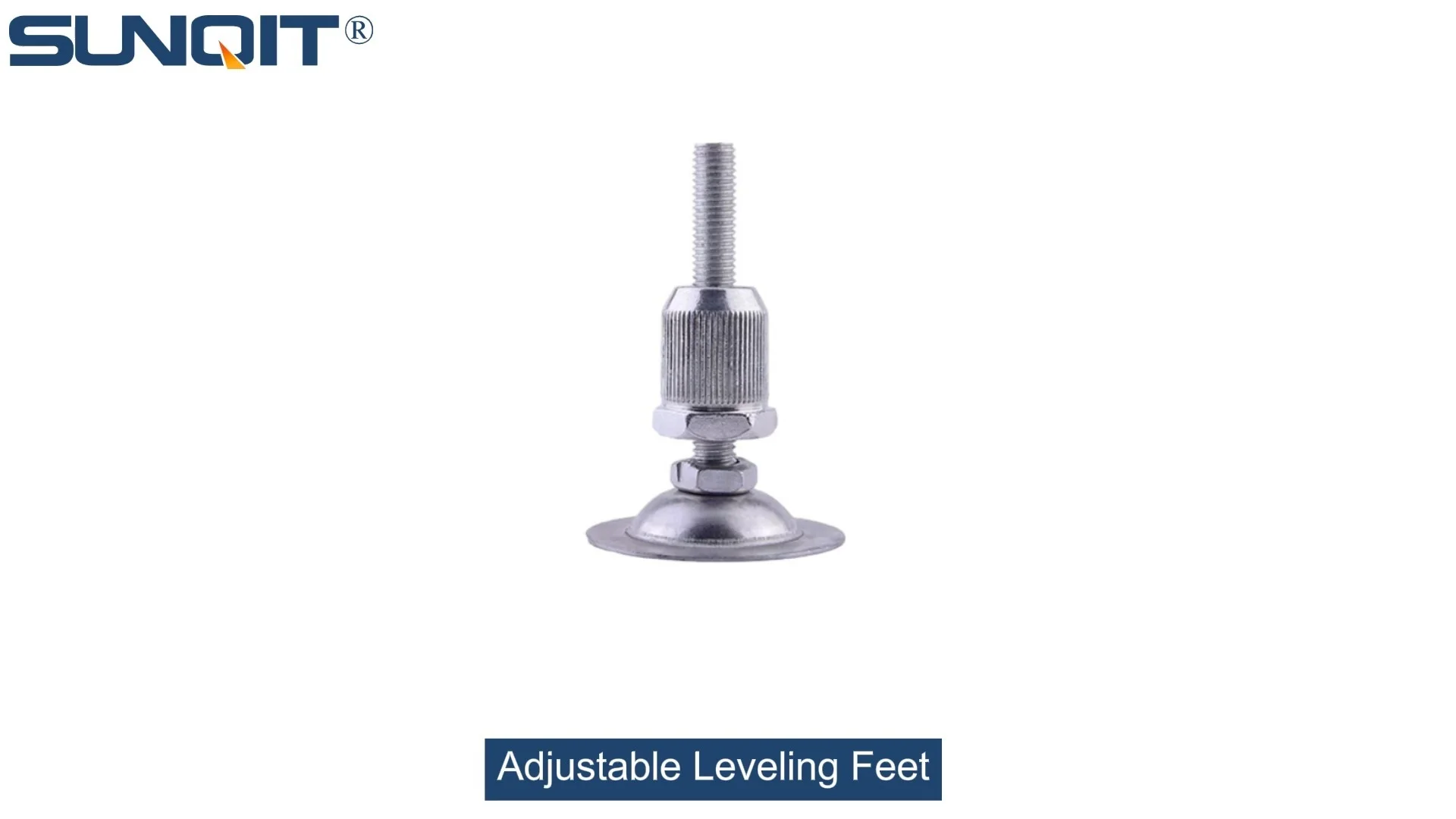
Adjustable Leveling Feet
Adjustable leveling feet are designed to keep machines level when placed on uneven or sloped ground. Otherwise known as adjustable equipment feet, they are available to order in a wide variety of size and load capacity combinations.
1. Introduction: Lean Manufacturing and the Sustainability Imperative
In the world of manufacturing, "lean" has long been synonymous with efficiency—cutting waste, streamlining processes, and maximizing output. But in recent years, a new layer has been added to this philosophy: sustainability. Today's manufacturers aren't just chasing productivity; they're striving to build systems that respect the planet, too. It's a shift that starts with big-picture strategies, but often hinges on the smallest components. Take adjustable leveling feet, for example. These unassuming parts, used to stabilize workbenches, conveyors, and material racks, might seem trivial. But when multiplied across thousands of factories worldwide, their environmental impact—for better or worse—adds up. In lean manufacturing, where every detail matters, reusable adjustable leveling feet are emerging as a quiet hero, aligning the principles of waste reduction with the urgent need for greener practices.
2. Understanding Adjustable Leveling Feet: More Than Just Stability
At first glance, adjustable leveling feet are simple devices: a base, a threaded rod, and a nut, designed to tweak the height of equipment and keep it steady on uneven floors. But in manufacturing, their role is critical. Imagine a workbench on an assembly line where precision is everything—even a millimeter of wobble can throw off measurements, leading to defective products and wasted materials. Or a flow rack loaded with heavy components; uneven feet could cause it to tip, risking injury and damage. Traditional leveling feet, however, are often built for short-term use. Made from cheap plastics or low-grade metals, they wear out quickly, corrode easily, and end up in landfills after just a few months of use. This cycle of disposal and replacement contradicts the very essence of lean manufacturing, which aims to eliminate "muda" (waste) in all forms—including the waste of resources.

3. The Hidden Environmental Cost of "Disposable" Solutions
To truly grasp the impact of traditional leveling feet, let's follow their lifecycle. Most start as raw materials: plastic derived from fossil fuels, or steel mined from the earth. Extracting and processing these materials releases greenhouse gases, pollutes water sources, and depletes finite resources. Then, they're manufactured in factories, often overseas, adding transportation emissions to their carbon footprint. Once installed, their short lifespan means frequent replacements—each new set requiring the same resource-intensive process. When they fail, they're rarely recycled; plastic feet often break into small pieces that are hard to sort, while low-grade metal feet may be coated in non-recyclable finishes. The result? Millions of tons of waste annually, just from a component most manufacturers barely think about. For a lean system built on efficiency, this is a glaring inefficiency: spending time, money, and resources on parts that don't stand the test of time.

4. Reusable Adjustable Leveling Feet: Redefining "Lean" for the Planet
Enter reusable adjustable leveling feet—a design revolution that aligns with both lean principles and sustainability goals. These aren't just "stronger" versions of traditional feet; they're engineered for longevity, modularity, and recyclability. At the heart of this innovation is material choice. Leading lean pipe suppliers now prioritize aluminum profile and stainless steel, materials known for their durability and eco-friendliness. Aluminum, in particular, is a game-changer. It's lightweight yet strong, resistant to corrosion, and—most importantly—100% recyclable. Recycling aluminum uses just 5% of the energy required to produce new aluminum, making it one of the most sustainable metals available. But the benefits don't stop at materials. Reusable feet are designed with modularity in mind: if a nut wears out, you replace just the nut, not the entire foot. If the base gets scratched, you swap the base, not the rod. This "repair, don't replace" approach cuts waste dramatically, turning a single-use item into a long-term investment.
Take, for example, a workbench in an automotive parts plant. Equipped with traditional plastic leveling feet, it might need replacements every 8 months. Switch to aluminum profile reusable feet, and that timeline jumps to 7–10 years. Over a decade, that's 15 replacements avoided per workbench. Multiply that by hundreds of workbenches in a single factory, and the waste reduction is staggering. And it's not just about less trash; it's about fewer emissions from manufacturing, less energy spent on transportation, and lower costs for the business. This is lean manufacturing at its best: solving problems at the source, eliminating waste, and creating value—for both the company and the planet.

5. Lifecycle Analysis: From Cradle to Cradle
To quantify the environmental benefits, let's compare the lifecycle of traditional plastic leveling feet with reusable aluminum profile feet, using data from leading lean system suppliers and environmental studies:
| Metric | Traditional Plastic Feet | Reusable Aluminum Profile Feet |
|---|---|---|
| Primary Material | Polypropylene (non-recyclable grade) | 6061 Aluminum (100% recyclable) |
| Average Lifespan | 6–8 months | 7–10 years |
| Waste per 1000 Units (5-Year Lifespan) | ~1,200 kg (10 replacements per unit) | ~80 kg (1 replacement per 10 units) |
| CO2 Emissions (Manufacturing + Transport) | ~2.3 kg CO2 per unit | ~1.8 kg CO2 per unit (recycled aluminum) |
| Recyclability Rate | <5% (often contaminated) | >95% (high-purity aluminum) |
The data speaks for itself: reusable aluminum feet cut waste by over 90% and reduce long-term emissions significantly. And when they do reach the end of their lifecycle, they're not destined for landfills. A lean pipe supplier can collect, melt down, and repurpose the aluminum into new components, closing the loop on the material cycle. This "cradle-to-cradle" approach transforms leveling feet from a liability into an asset—for both the environment and the bottom line.
6. Case Study: How One Factory Cut Waste by 85% with Reusable Feet
Let's look at a real-world example. PrecisionTech, a mid-sized electronics manufacturer in Ohio, specializes in assembling circuit boards for medical devices. Their production line relies on 200 workbenches, each equipped with four leveling feet. Five years ago, they used traditional plastic feet, replacing them every 6 months at a cost of $12 per set (4 feet). That's 200 workbenches × 4 feet = 800 feet replaced twice a year, totaling 1,600 feet annually. At $3 per foot, that's $4,800 per year in replacement costs—not including labor for installation and disposal fees. Worse, those 1,600 plastic feet ended up in local landfills, contributing to the factory's growing waste problem.
In 2020, PrecisionTech partnered with a lean pipe supplier to switch to aluminum profile reusable leveling feet. The initial investment was higher—$15 per foot, totaling $12,000 for 800 feet—but the results were immediate. The aluminum feet proved resistant to the factory's cleaning chemicals and constant foot traffic, requiring only minor adjustments (not replacements) over the next five years. By 2025, they'd spent just $600 on replacement nuts and bases, a 90% reduction in annual costs. Waste dropped from 1,600 feet per year to just 240 feet over five years (a single replacement for 60 feet due to accidental damage). Most importantly, the aluminum waste was fully recycled, with the supplier offering a take-back program that credited PrecisionTech $0.50 per pound of scrap. "We didn't just save money," says Maria Gonzalez, the factory's sustainability manager. "We turned a waste stream into a resource. Our team now talks about 'lean sustainability' as a core value—not just a buzzword."
7. Beyond the Feet: Ripple Effects on the Entire Lean System
The impact of reusable leveling feet extends far beyond their own lifecycle. Stable, durable feet improve the performance of the equipment they support, creating a ripple effect of efficiency. For example, a wobbly workbench can lead to misaligned parts, rework, and even injuries—all forms of waste. By ensuring consistent stability, reusable feet reduce errors, cut rework time, and lower energy use (since machines run more efficiently on level surfaces). Similarly, material racks and conveyors with reliable feet require less maintenance, reducing downtime and extending the lifespan of the entire system. Even ESD workbenches, which demand precise grounding to protect sensitive electronics, benefit from aluminum feet: their conductivity ensures static control without compromising durability, eliminating the need for separate (often disposable) grounding pads.
Lean system suppliers are now integrating reusable feet into broader sustainability packages. A single order might include workbenches with aluminum profile frames, conveyors with stainless steel roller tracks, and leveling feet made from recycled aluminum—all designed to work together and last for decades. This holistic approach aligns with the "circular economy" model, where products are designed to be repaired, reused, and recycled, rather than discarded. For manufacturers, it's a win-win: lower costs, fewer disruptions, and a smaller environmental footprint.
8. Overcoming Barriers to Adoption
Despite their benefits, reusable leveling feet face adoption barriers. The most common is upfront cost: aluminum and stainless steel cost more than plastic, leading some manufacturers to prioritize short-term savings over long-term value. Others are hesitant to change suppliers or processes, especially if their current system "works well enough." To address this, forward-thinking lean pipe suppliers are offering flexible solutions: financing options, trial programs, and data-driven ROI calculators that show clients exactly how much they'll save over 5–10 years. They're also educating teams on the "total cost of ownership," not just the initial price tag—including disposal fees, labor, and downtime from frequent replacements.
Regulatory pressures are also driving change. Governments worldwide are tightening waste management laws and imposing carbon taxes, making disposable solutions increasingly expensive. The EU's Circular Economy Action Plan, for example, requires manufacturers to design products for recyclability by 2030—a mandate that will soon make non-reusable components like traditional leveling feet non-compliant. For forward-looking companies, the shift to reusable feet isn't just a choice; it's a necessity to stay competitive in a greener market.
9. The Future: Smart, Sustainable, and Connected
The next frontier for reusable leveling feet lies in smart technology. Imagine feet embedded with sensors that monitor wear, temperature, and stability in real time, sending alerts to maintenance teams before failure occurs. This "predictive maintenance" would extend lifespans even further, ensuring replacements are only done when necessary. Some lean system suppliers are already testing feet with RFID tags, allowing factories to track their location, usage, and recycling history—creating full transparency in the supply chain. Meanwhile, material science innovations are making aluminum even more sustainable: companies are developing aluminum alloys made from 100% recycled content, with the same strength as virgin aluminum but 95% lower emissions.
Perhaps most exciting is the potential for "closed-loop" manufacturing ecosystems, where a factory's old leveling feet are collected, recycled, and turned into new feet—all within the same region. This reduces transportation emissions and creates local jobs in recycling and manufacturing. For example, a lean pipe supplier in Michigan could collect scrap aluminum from factories in the Midwest, melt it down at a local facility, and produce new feet for the same factories—creating a circular system that benefits both the environment and the regional economy.
10. Conclusion: Small Parts, Big Change
Reusable adjustable leveling feet may be small, but their impact is enormous. They represent a shift in manufacturing thinking: that sustainability and efficiency aren't competing goals, but two sides of the same coin. By choosing durable, recyclable materials and modular designs, manufacturers can reduce waste, cut costs, and build systems that respect both their bottom line and the planet. As lean manufacturing continues to evolve, the focus will only grow sharper on these "small wins"—the components that, when multiplied across factories and supply chains, add up to a more sustainable future.
For manufacturers ready to take the leap, the path is clear: partner with a lean pipe supplier that prioritizes sustainability, invest in reusable components like aluminum profile leveling feet, and measure success not just in productivity, but in planetary impact. After all, in lean manufacturing, the goal is to create value—for customers, for employees, and for generations to come. And that's a goal worth standing on solid, sustainable ground.