- Company Articles
- Industry articles
- Industry News
- The Environmental Impact of Turning Angle Code 4040: Recyclability Benefits

The Environmental Impact of Turning Angle Code 4040: Recyclability Benefits
Related Product
Turning Angle Code 4040
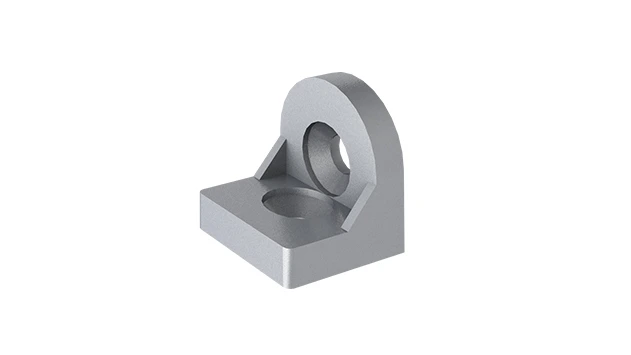
The turning angle aluminum profile connector provides a 90 degree hidden corner connection. 4040 it is means this size is used for 40 series aluminum profile.The corner code comes with set screws that allow for quick, easy connections.
In today's manufacturing landscape, the pressure to balance productivity with environmental responsibility has never been higher. From factory floors to supply chains, every component—no matter how small—plays a role in shaping a company's sustainability footprint. One such unsung hero? The turning angle code 4040 . At first glance, it might seem like just another metal bracket, but this unassuming connector is quietly revolutionizing how we build, use, and recycle industrial systems. In this article, we'll dive into why the turning angle code 4040 matters, how it pairs with aluminum extrusion profiles to drive recyclability, and why it's becoming a cornerstone for businesses aiming to shrink their environmental impact while boosting efficiency.
What Even Is a Turning Angle Code 4040?
Let's start with the basics. If you've ever walked through a factory, warehouse, or even a modern office, you've probably seen the results of aluminum profile systems without realizing it. Those sleek workbenches, modular storage racks, and streamlined production lines? They're often built from aluminum extrusion profiles—long, custom-shaped pieces of aluminum designed to lock together into sturdy, flexible structures. And holding those profiles together at the corners? That's where the turning angle code 4040 comes in.
Think of it as the "glue" of modular systems, but better. Unlike glue, which is permanent and messy, or welding, which is energy-intensive and hard to reverse, the turning angle code 4040 is a mechanical connector. It's designed to fit snugly onto the T-slots of 40mm x 40mm aluminum extrusion profiles (hence the "4040" in its name), using screws or bolts to create a secure joint. What makes it special is its simplicity: it's easy to install, adjust, and—crucially—take apart. This might sound trivial, but in a world where "reduce, reuse, recycle" is more than a slogan, that disassembly feature is a game-changer.
But the turning angle code 4040 isn't alone. It works hand-in-hand with a suite of aluminum profile accessories —end caps that protect profile edges, T-slot nuts that secure components, and brackets that add stability. Together, these parts form a system that's as adaptable as it is durable. Need to reconfigure a workbench for a new product line? Loosen the angle codes, rearrange the profiles, and tighten them back up. No need to buy a whole new bench. That flexibility is key to both lean manufacturing and sustainability—and it all starts with components like the turning angle code 4040.
Aluminum: The Recyclable Superstar
To understand why the turning angle code 4040 is such an eco-friendly choice, we first need to talk about aluminum itself. Aluminum is often called the "miracle metal" when it comes to sustainability, and for good reason. Unlike plastics, which degrade when recycled (losing quality each time) or steel, which requires significant energy to reprocess, aluminum can be recycled infinitely without losing an ounce of its strength or durability. Let that sink in: a soda can you recycle today could become part of an aluminum extrusion profile next year, then a workbench, then a bike frame, and so on—forever.
The numbers back this up. Producing aluminum from raw bauxite ore is energy-intensive, requiring massive amounts of electricity. But recycling aluminum? It uses just 5% of the energy needed to make new aluminum. That translates to huge savings: recycling one ton of aluminum saves 14,000 kWh of energy—enough to power a home for over a year. It also slashes carbon emissions: recycling aluminum cuts CO2 output by 90-95% compared to producing new metal. For manufacturers looking to meet net-zero goals, aluminum is a no-brainer—and the turning angle code 4040 helps maximize its recyclable potential.

How Aluminum Stacks Up: A Quick Comparison
Still not convinced aluminum is the way to go? Let's put it head-to-head with other common materials used in industrial connectors and profiles. The table below breaks down key sustainability metrics for aluminum, steel, and plastic—three of the most popular choices for manufacturing components like the turning angle code 4040.
| Material | Recyclability Rate | Energy Savings (vs. New Production) | CO2 Emissions (kg per ton recycled) | End-of-Life Disposal |
|---|---|---|---|---|
| Aluminum | 95%+ (infinitely recyclable) | 95% | 2-3 kg | Easily separated; recycled into new products without quality loss |
| Steel | 85-90% (recyclable, but quality degrades over time) | 75% | 1.5-2.5 kg | Recyclable, but requires more energy; may need coating removal |
| Plastic (e.g., ABS, PVC) | 5-10% (most types not widely recycled) | 10-15% (for mechanical recycling) | 5-8 kg | Often ends in landfills or incineration; releases toxins when burned |
As you can see, aluminum outperforms steel and plastic by a wide margin, especially when it comes to long-term recyclability. Steel is a strong contender, but its quality degrades with each recycling cycle, meaning it can't be reused indefinitely. Plastic? It's barely recyclable at all, with most plastic connectors ending up in landfills or oceans. The turning angle code 4040, made from aluminum (or sometimes aluminum alloys), leverages these benefits—ensuring that even the smallest components in a manufacturing system can contribute to a circular economy.

Designing for Disassembly: How the Turning Angle Code 4040 Makes Recycling Easier
Aluminum's recyclability is impressive, but it only matters if manufacturers can actually the metal at the end of a product's life. That's where the design of the turning angle code 4040 shines. Traditional manufacturing systems often use welded or glued joints, which make disassembly a nightmare. To recycle a welded steel frame, you'd need to cut it apart with torches, damaging the metal and making it harder to separate from other materials. Glued plastic components? They're practically impossible to take apart without breaking, so the whole assembly often ends up in the trash.
The turning angle code 4040 solves this problem with its modular design. Since it's a mechanical connector—held in place by screws or bolts—taking apart an aluminum profile system is as simple as grabbing a screwdriver. No torches, no chemicals, no broken parts. This means that when a workbench or rack reaches the end of its useful life, workers can easily separate the turning angle code 4040 from the aluminum extrusion profiles, sort them by material (aluminum, steel screws, etc.), and send them off for recycling. There's no need to landfill the entire assembly, and every component can be recycled or reused.
This "design for disassembly" approach is a cornerstone of circular economy principles. By making it easy to take products apart, manufacturers ensure that materials can be recovered and reintroduced into the supply chain. For example, a factory that upgrades its production line can disassemble its old aluminum workbenches, send the profiles and angle codes to a recycler, and use the recycled aluminum to make new components. It's a closed loop that minimizes waste and reduces the need for virgin materials.
Lean Systems, Greener Results: The Perfect Match
If you're in manufacturing, you've probably heard of lean system principles—an approach that focuses on minimizing waste (whether it's time, materials, or energy) while maximizing value. What you might not realize is how well lean systems align with sustainability, and how the turning angle code 4040 bridges the two.
Lean manufacturing aims to eliminate "muda," the Japanese term for waste. One of the biggest sources of muda is overproduction—making more than you need, leading to excess inventory and unused materials. Modular systems built with aluminum profiles and turning angle code 4040s help solve this by allowing manufacturers to build only what they need, when they need it. Need a small workbench for a temporary project? Assemble it from a few profiles and angle codes. Once the project is done, disassemble it and reuse the components elsewhere. No excess, no waste.
Another key lean principle is flexibility. Markets change, product lines evolve, and factories need to adapt quickly. Traditional fixed systems (like welded steel racks or custom-built workbenches) can't keep up—they're too rigid, requiring expensive overhauls when needs change. Modular aluminum systems, however, are designed for change. With turning angle code 4040s, reconfiguring a line takes hours, not weeks. This flexibility reduces the need to buy new equipment, which in turn reduces the demand for raw materials and the energy used to produce them.
Case in point: a leading electronics manufacturer recently switched from fixed steel workbenches to modular aluminum systems using turning angle code 4040s. They reported a 30% reduction in waste from unused equipment, a 25% drop in energy use (since they no longer needed to weld or paint new benches), and a 40% faster setup time for new product lines. All because they could reuse existing components instead of buying new ones. That's lean meets green—and it's all thanks to small, smart parts like the turning angle code 4040.
From Cradle to Cradle: The Full Lifecycle of Aluminum Profiles and Angle Codes
To truly appreciate the environmental impact of the turning angle code 4040, let's walk through its entire lifecycle—from raw material to recycled product. It's a journey that highlights just how sustainable aluminum-based systems can be.
1. Production: Efficient from the Start
Aluminum extrusion profiles begin as molten aluminum, which is pushed through a die to create their specific shape (like the 40mm x 40mm T-slot profile). Extrusion is an energy-efficient process compared to other manufacturing methods, and since aluminum is often made from recycled content (up to 75% in some cases), the initial carbon footprint is already low. The turning angle code 4040 is typically machined from a solid block of aluminum or an aluminum alloy, a process that generates minimal waste—any scrap metal from machining is recycled right back into the production process.
2. Use: Durable and Adaptable
Once produced, the turning angle code 4040 and aluminum profiles enter their "use phase." Aluminum is incredibly durable—resistant to corrosion, wear, and impact—so these systems can last for decades. During that time, they're rarely idle: thanks to their modular design, they're often reconfigured multiple times to meet changing needs. A single turning angle code might spend 5 years holding together a workbench, then another 10 years as part of a material rack, then a few more as part of a shipping trolley. This long, adaptable lifespan means fewer replacements and less waste.
3. End-of-Life: Closing the Loop
Eventually, even the most durable systems reach the end of their useful life. But for aluminum profiles and turning angle code 4040s, this isn't the end—it's a new beginning. Since the system is easy to disassemble, workers can separate the aluminum components from other materials (like steel screws or plastic end caps). The aluminum is then shredded, melted down, and refined into new aluminum—without losing any of its properties. This recycled aluminum can be used to make new profiles, angle codes, or even entirely different products, like car parts or window frames. It's a true "cradle-to-cradle" cycle, with no waste left behind.
The Future: Even Greener, Even Smarter
As sustainability becomes a competitive advantage, manufacturers are doubling down on eco-friendly innovations—and the turning angle code 4040 is no exception. Suppliers are already exploring ways to make these connectors even more sustainable, from using higher percentages of recycled aluminum in production to designing "tool-less" angle codes that require no screws (making disassembly even faster).
Another trend is the integration of smart technology. Imagine a turning angle code 4040 with a small RFID tag that tracks its lifecycle—recording when it was made, which systems it's been part of, and when it's ready for recycling. This "digital thread" would make it easier for manufacturers to manage their circular supply chains, ensuring no component is wasted.
Perhaps most exciting is the growth of "aluminum as a service." Instead of buying profiles and angle codes outright, manufacturers could lease them from suppliers, who would then take them back, recycle them, and lease out new components made from the recycled material. This model shifts the focus from ownership to usage, incentivizing suppliers to design even more durable, recyclable products.
Small Part, Big Impact: Why the Turning Angle Code 4040 Matters
At the end of the day, the turning angle code 4040 is a small component—but small parts can drive big change. In a world grappling with climate change and resource scarcity, sustainability isn't just a choice; it's a necessity. Manufacturers, in particular, have a responsibility to reduce their environmental footprint, and the tools to do so are often right in front of them.
By choosing aluminum extrusion profiles, aluminum profile accessories, and connectors like the turning angle code 4040, businesses can build systems that are not only efficient and flexible but also kind to the planet. They're embracing the idea that sustainability and profitability don't have to compete—they can work together, hand in hand.
So the next time you walk through a factory or use a modular workbench, take a closer look at the corners. That little aluminum connector holding it all together? It's more than just a bracket. It's a symbol of how innovation, sustainability, and lean thinking can come together to build a better future—one angle code at a time.