- Company Articles
- Industry articles
- Industry News
- The Environmental Impact of Two Way Aluminum Pipe Joints vs. Disposable Plastic Joints

The Environmental Impact of Two Way Aluminum Pipe Joints vs. Disposable Plastic Joints
Related Product
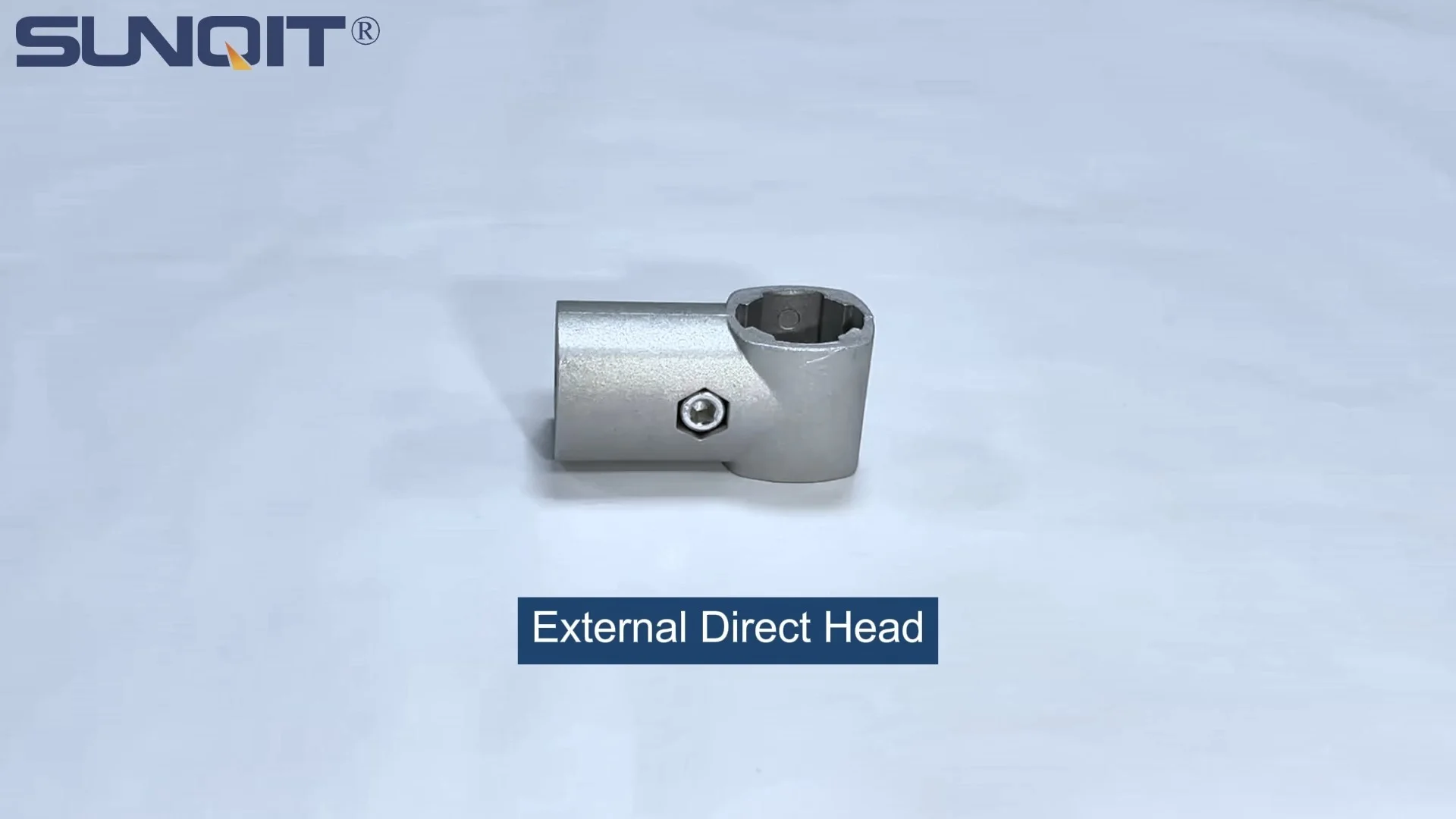
Two Way Aluminum Pipe Joint
Aluminum 2 way pipe joint for 28mm aluminum pipe connection in 2 direction.
The Hidden Cost of "Small Parts" in Modern Manufacturing
Walk through any factory floor, and you'll notice the big-ticket items: massive conveyor belts, gleaming aluminum profile workbenches, rows of flow racks. But if you down and look closer, you'll find the unsung heroes (or villains) of manufacturing: the tiny connectors, joints, and fasteners that hold everything together. These "small parts"—like the plastic joints that snap onto lean pipes or the metal brackets that secure aluminum profiles—might seem insignificant, but their collective impact on the environment is anything but. Today, we're zooming in on one critical comparison: two way aluminum pipe joints versus disposable plastic joints. It's a showdown between short-term convenience and long-term sustainability, and the stakes couldn't be higher for manufacturers aiming to reduce their carbon footprint.
In recent years, the push for greener manufacturing has gone beyond solar panels on factory roofs or recycling bins in break rooms. It's seeped into the very bones of production lines: the materials we choose for building workstations, the durability of the tools we rely on, and yes, even the joints that keep our lean systems intact. For decades, plastic joints have been the go-to choice for many facilities. They're cheap, lightweight, and easy to mass-produce. But as we'll explore, their low upfront cost masks a much heavier price tag—one paid in landfill waste, greenhouse gas emissions, and resource depletion. On the other side of the ring, aluminum-based solutions like two way aluminum pipe joints are emerging as a sustainable alternative, offering durability, recyclability, and a path to truly circular manufacturing. Let's break down why this matters.
Disposable Plastic Joints: The Convenience Trap
Plastic joints became popular in manufacturing for good reason. In the 1990s and early 2000s, as lean manufacturing principles spread globally, factories needed fast, affordable ways to build and reconfigure workbenches, flow racks, and material trolleys. Plastic joints fit the bill: they're moldable into any shape, require no special tools to assemble, and cost pennies on the dollar compared to metal alternatives. For a factory floor that needed to pivot quickly—adding a new workstation here, adjusting a conveyor track there—plastic joints felt like a dream come true.
But here's the catch: "disposable" isn't just a label; it's a lifecycle. Most plastic joints are made from low-grade polyethylene or polypropylene, designed to be lightweight rather than long-lasting. Exposed to the daily grind of manufacturing—heat from machinery, friction from moving parts, the occasional bump from a forklift—they crack, warp, or snap within months. A joint that costs $0.50 today might need replacing 3-4 times a year, adding up to $2-3 per joint annually. Multiply that by thousands of joints across a factory, and suddenly "cheap" becomes expensive. Worse, those broken plastic joints rarely get recycled. They're too small, too contaminated with grease or debris, and often mixed with other plastics—so they end up in landfills, where they'll take 450+ years to decompose, leaching microplastics into soil and water along the way.
The environmental toll starts long before disposal, though. Producing plastic joints requires extracting fossil fuels (the raw material for plastic), refining them into resin, and molding them at high temperatures—processes that release significant CO2. A 2022 study by the Ellen MacArthur Foundation found that plastic manufacturing contributes 4.5% of global greenhouse gas emissions, and small components like joints are a major part of that. When you factor in transportation (shipping lightweight but bulky plastic parts worldwide) and the energy used to replace broken joints repeatedly, the carbon footprint balloons even further. For manufacturers claiming to be "sustainable," relying on disposable plastic joints is like planting a tree while dumping a bag of trash in the forest—it's contradictory at best.
Two Way Aluminum Pipe Joints: Durability Meets Sustainability
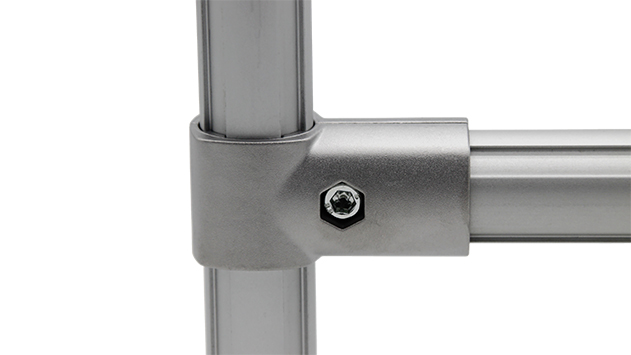
Enter two way aluminum pipe joints : the quiet revolution in manufacturing hardware. At first glance, they might seem like just another metal part, but their design and material choice make them a game-changer for eco-conscious facilities. Unlike plastic, aluminum is infinitely recyclable—meaning it can be melted down and reshaped into new joints (or aluminum profiles, or soda cans) without losing quality. In fact, 75% of all aluminum ever produced is still in use today, according to the Aluminum Association. That's a circularity that plastic can only dream of.
But recyclability is just the start. Aluminum joints are built to last. Made from high-grade aluminum alloy (often mixed with magnesium for strength), they can withstand the rigors of factory life: extreme temperatures, constant vibration, and heavy loads. A well-made two way aluminum pipe joint will outlive its plastic counterpart by 10-15 years—no warping, no cracking, no need for frequent replacements. Think about that: one aluminum joint replacing 40+ plastic joints over a decade. The reduction in waste alone is staggering. And while aluminum joints have a higher upfront cost (typically $3-5 each), their longevity makes them cheaper in the long run. A joint that costs $5 but lasts 10 years works out to $0.50 per year—half the annual cost of disposable plastic.
Production-wise, aluminum has its own environmental considerations, but they're far more manageable than plastic. Mining bauxite (the ore used to make aluminum) does have an impact, but once aluminum is produced, recycling it uses just 5% of the energy required to make new aluminum. That's a 95% energy savings—a stat that makes sustainability managers smile. What's more, aluminum joints are often made locally or regionally, reducing transportation emissions compared to plastic joints shipped from overseas. When you choose aluminum, you're not just choosing a joint; you're choosing a material that aligns with the "reduce, reuse, recycle" mantra at every stage.

Head-to-Head: Environmental Impact by the Numbers
To truly understand the difference, let's compare a single two way aluminum pipe joint with a disposable plastic joint over a 10-year lifecycle. We'll measure carbon footprint, waste generated, and resource use—metrics that matter to factories aiming for net-zero goals.
| Metric | Disposable Plastic Joint (10-year lifecycle) | Two Way Aluminum Pipe Joint (10-year lifecycle) |
|---|---|---|
| Number of units needed | 40 (replaced 4x/year) | 1 (no replacement needed) |
| Carbon footprint (CO2e) | 120 kg (production + transportation + disposal) | 15 kg (production + 1x recycling at end-of-life) |
| Waste generated | 8 kg (40 joints x 200g each, all to landfill) | 0 kg (1 joint recycled, no landfill waste) |
| Raw material use | 8 kg virgin plastic (fossil fuel-based) | 0.5 kg aluminum (recycled content possible) |
| Energy consumption | 200 kWh (manufacturing 40 joints) | 10 kWh (manufacturing 1 joint + recycling) |
The numbers speak for themselves: over a decade, a single aluminum joint reduces carbon emissions by 87.5%, eliminates landfill waste entirely, and slashes raw material use by 93.75%. Multiply that by the thousands of joints in a typical factory, and the impact becomes transformative. A mid-sized facility with 10,000 joints could cut its annual carbon footprint by over 100 tons by switching to aluminum—a reduction equivalent to taking 22 cars off the road for a year.

Beyond the Joint: Building a Leaner, Greener System
Sustainability in manufacturing isn't just about swapping one part for another; it's about rethinking the entire system. Aluminum joints shine here because they're designed to work with other eco-friendly components, like aluminum profiles and lean system infrastructure. For example, a workstation built with aluminum profiles and two way aluminum pipe joints isn't just durable—it's modular. Need to adjust the height? Loosen the joints, reposition the pipes, and tighten. No need to buy a whole new workstation; just reconfigure what you have. This aligns perfectly with lean system principles, where "waste reduction" includes not just physical waste but also the waste of overproduction and unnecessary purchases.
Take the example of a electronics manufacturer in Ohio that recently made the switch. They'd been using plastic joints for their assembly line workbenches, replacing them every 6 months at a cost of $12,000 annually. After switching to two way aluminum pipe joints and aluminum profiles, they eliminated joint replacements entirely. But the benefits didn't stop there: the modularity of the aluminum system let them reconfigure 15 workstations for a new product line in a day, instead of buying 15 new workbenches. They saved $45,000 on new equipment and reduced their annual carbon footprint by 30 tons. "We didn't just save money," said their sustainability director. "We stopped seeing our factory as a place that consumes resources and started seeing it as a system that (cycles resources)."
Aluminum joints also play well with other sustainable components, like recycled aluminum honeycomb panels for workbench surfaces or energy-efficient LED lighting mounted on aluminum profile frames. It's a holistic approach: when every part is designed to last and be recycled, the entire production line becomes a closed loop. Plastic joints, by contrast, are often incompatible with higher-quality materials—they can't handle the weight of aluminum profiles, and their brittleness makes them a weak link in any modular system. They're not part of a solution; they're a temporary fix.
The Road Ahead: Why Every Joint Counts
As manufacturers face stricter regulations on carbon emissions and pressure from consumers to operate sustainably, the choice between plastic and aluminum joints isn't just environmental—it's strategic. Customers are increasingly asking for transparency in supply chains, and investors are rewarding companies with strong ESG (Environmental, Social, Governance) scores. A factory that still relies on disposable plastic joints is sending a message: "We care about cost, not the planet." But those that adopt aluminum joints? They're saying, "We're building for the future."
The good news is that the transition doesn't have to happen overnight. Start small: replace plastic joints in high-wear areas first, like conveyor roller tracks or material handling trolleys. Measure the results—how many replacements you avoid, how much waste you divert from landfills—and use that data to justify a broader rollout. Work with suppliers who specialize in aluminum solutions; many lean system suppliers now offer free consultations to help factories redesign workstations with sustainability in mind. And don't overlook employee buy-in: train your team on how to assemble and adjust aluminum joints (they're just as easy as plastic, once you know the tricks), and celebrate wins like reduced waste or lower maintenance costs. Sustainability is a team sport.
At the end of the day, two way aluminum pipe joints are more than a component—they're a symbol. They represent a shift from "take-make-waste" manufacturing to a circular model where every part has purpose, longevity, and a second life. So the next time you walk through your factory, take a closer look at those small parts. The joints holding your lean pipes together might just be the key to a greener, more profitable future. And isn't that a future worth building—one joint at a time?