- Company Articles
- Industry articles
- Industry standards
- The Future of 4040F EU Standard Aluminum Profile in Smart Manufacturing Environments

The Future of 4040F EU Standard Aluminum Profile in Smart Manufacturing Environments
Related Product
4040F EU Standard Aluminum Profile
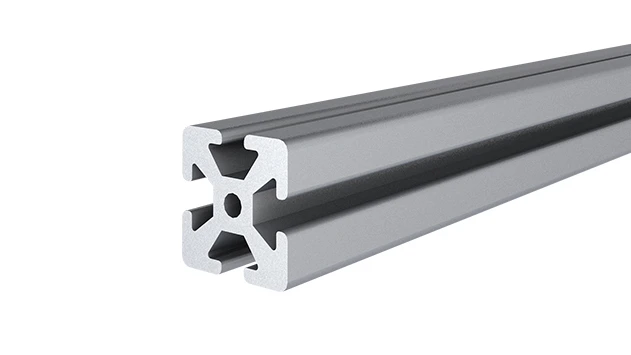
4040F is a 4.00x4.00 CM fractional 40 series square extrusion T-slot profile with four side open T-slots, each side with 4.00cm face. The profile has align-a-grooves to assist in aligning connecting profiles.
Walk into a modern smart factory today, and you'll notice a quiet revolution unfolding on the shop floor. Gone are the days of rigid, one-size-fits-all production lines bolted into place for decades. Instead, you'll find dynamic workspaces that adapt in real time—workbenches reconfigured for new product runs, material racks adjusted to handle different components, and conveyor systems that reroute with the push of a button. At the heart of this flexibility lies a humble yet powerful component: the aluminum extrusion profile. And among these, the 4040F EU standard aluminum profile has emerged as an unsung hero, quietly enabling the agility that defines smart manufacturing.
Industry 4.0 isn't just about robots and data analytics—it's about building systems that can keep up with the pace of change. As manufacturers pivot to smaller batch sizes, customizable products, and faster time-to-market, the infrastructure supporting them must be equally adaptable. This is where the 4040F profile shines. More than just a metal frame, it's a building block for modularity, a canvas for innovation, and a bridge between traditional manufacturing and the smart factories of tomorrow. Let's dive into why this unassuming profile is becoming indispensable in the world of smart manufacturing.
Understanding the 4040F EU Standard Aluminum Profile
So, what exactly is the 4040F EU standard aluminum profile? Let's break it down. First, the numbers: 40x40mm. That's the cross-sectional size, making it a versatile middleweight in the world of extrusion profiles—small enough to be lightweight and maneuverable, yet robust enough to support heavy loads. The 'F' in its name refers to its specific design classification within EU standards, which dictates details like T-slot dimensions, wall thickness, and tolerance levels. Unlike generic aluminum tubes, this profile is precision-engineered through an extrusion process, where heated aluminum alloy is pushed through a die to create its signature shape—complete with the T-slots that make it so adaptable.
Made from high-grade aluminum alloy (typically 6063-T5, a common choice for extrusions), the 4040F profile strikes an impressive balance between strength and weight. It's roughly 30% lighter than steel, which eases installation and reconfiguration, yet it boasts a tensile strength of around 210 MPa—more than enough to handle the demands of most manufacturing environments, from supporting workbenches to framing automated machinery. Its surface is often anodized, giving it a smooth, corrosion-resistant finish that stands up to oils, coolants, and the wear and tear of daily use.
But what truly sets the 4040F apart from other aluminum extrusion profiles is its focus on compatibility. EU standards ensure that profiles from different suppliers fit together seamlessly, meaning a bracket designed for a 4040F profile from one manufacturer will work with a 4040F from another. This interoperability is critical for smart factories, where supply chains are global and downtime is costly. No more hunting for proprietary parts—just grab the right aluminum profile accessories, and you're ready to build.
Why 4040F Stands Out in Smart Manufacturing
Smart manufacturing thrives on three principles: flexibility, connectivity, and efficiency. The 4040F profile excels in all three, but let's start with flexibility—the trait that makes it a favorite among plant managers and engineers alike.
The real magic of the 4040F profile lies in its T-slot design. Run your finger along its length, and you'll feel the grooves—these T-slots are the gateway to endless customization. With the right aluminum profile accessories—think brackets, connectors, shelves, or even sensor mounts—you can attach almost anything to the profile in minutes, no welding or drilling required. Need to add a tool holder to a workbench? Slide a bracket into the T-slot and tighten a screw. Want to mount a light above an assembly station? Clip a fixture into place. This modularity is a game-changer for smart factories, where change is the only constant. A production line that takes weeks to retool with traditional steel framing can be reconfigured in hours with 4040F profiles.
Then there's connectivity. In a smart factory, every piece of equipment is a data point. Sensors track machine health, cameras monitor quality, and IoT devices feed real-time data to central systems. The 4040F profile's T-slots make it easy to integrate these technologies. Cable management accessories—like troughs, clips, and conduit holders—keep wires organized and protected, while mounting plates for sensors or displays can be added without disrupting workflows. Imagine a workbench where a barcode scanner, weight sensor, and LED status light are all attached via T-slot accessories—all powered by cables routed cleanly through the profile itself. It's not just about holding things together; it's about creating a networked ecosystem.
Efficiency, too, is baked into the 4040F's design. Its lightweight nature reduces the energy needed to move or reposition structures, while its durability means less frequent replacement. Even during initial setup, teams save time: no need for specialized tools or skilled welders—just basic hand tools and a bit of creativity. This efficiency extends to maintenance, too. If a component wears out, you don't replace the entire structure—just swap the faulty part. It's a approach that aligns perfectly with lean manufacturing principles, where waste reduction is key.
| Profile Type | Dimensions (mm) | Weight (kg/m) | Max Horizontal Load (kg) | T-Slot Width (mm) | Best For |
|---|---|---|---|---|---|
| 4040F EU Standard | 40x40 | 1.8 | 350 | 8 | Heavy-duty workbenches, material racks, machine frames |
| 4040A EU Standard | 40x40 | 1.5 | 280 | 6 | Light assembly stations, shelving |
| 3030 EU Standard | 30x30 | 1.1 | 180 | 6 | Small workstations, display racks |
The table above highlights how the 4040F profile balances weight, strength, and versatility compared to similar options. Its higher load capacity and wider T-slot make it the go-to choice for applications that demand both durability and customization—exactly the sweet spot for smart manufacturing.

Integration with Lean Systems: A Perfect Match
Lean manufacturing isn't just a buzzword—it's a philosophy centered on eliminating waste, streamlining workflows, and continuous improvement. And the 4040F profile? It's practically built for lean. Let's take a closer look at how it supports core lean principles in smart factories.
First, waste reduction . Traditional manufacturing setups often suffer from overproduction, excess inventory, and unnecessary motion—all forms of waste. The 4040F profile combats this by enabling just-in-time material handling. For example, a material rack built with 4040F profiles can be adjusted to hold exactly the number of components needed for the current production run, reducing excess inventory. Workers spend less time searching for parts (waste of motion) because the rack is customized to their workflow—components at eye level, tools within arm's reach. Even the profile itself reduces waste: its modular design means you only use what you need, and aluminum is 100% recyclable, so old structures can be melted down and repurposed.
Then there's continuous improvement , or kaizen . In lean systems, small, incremental changes add up to big gains. The 4040F profile makes experimentation easy. Want to test a new workflow for assembling a product? Build a prototype workbench in a day using 4040F profiles and aluminum profile accessories. If it works, scale it up; if not, disassemble the profile and try again. This low-risk experimentation fosters a culture of innovation, where frontline workers—who know the process best—can suggest and implement improvements without waiting for engineering approval.
Perhaps most importantly, the 4040F profile supports flow —the smooth, uninterrupted movement of products through the production line. Bottlenecks often occur when workstations or material handling systems can't keep up with changing demand. With 4040F-based conveyor systems or roller tracks, you can adjust the height, angle, or path of material flow in real time. A sudden surge in orders? Add an extra lane to the conveyor using 4040F brackets and roller track connectors. A new product with larger components? Raise the material rack shelves by a few inches. The profile's adaptability ensures that flow isn't just a goal—it's a reality, even as production needs shift.
Real-World Applications: From Workbenches to Material Racks
Theory is one thing, but seeing the 4040F profile in action is where its value truly shines. Let's explore some common applications in smart manufacturing, where this profile is making a tangible difference.
Workbenches : The backbone of any assembly line, workbenches built with 4040F profiles are a study in customization. Take the "Workbench E (single deck-without caster)" from many suppliers—a simple, sturdy design that can be tricked out with accessories like tool hooks, monitor arms, and anti-fatigue mats. Because the 4040F profile supports heavy loads, these workbenches easily handle tools, fixtures, and even small machinery. What's more, they're ergonomic: height-adjustable legs (another T-slot accessory) let workers set the bench to their ideal height, reducing strain and boosting productivity.
Material Racks : "Material Rack B (3 row and 3 floor)" is a popular configuration for storing components, and it's often built with 4040F profiles for its strength and flexibility. Each shelf can be adjusted to fit different box sizes, and dividers (attached via T-slots) keep items organized. In smart factories, these racks are often paired with barcode scanners or RFID readers (mounted on 4040F brackets) to track inventory automatically. When a bin is empty, the system alerts staff—no more manual stock checks.
Conveyor and Roller Systems : Moving materials efficiently is critical in smart manufacturing, and 4040F profiles are ideal for building custom conveyor frames. Roller tracks, like the "40 steel roller track yellow wheel" or "38 aluminum roller track black ESD with side guide," attach to 4040F profiles via specialized connectors, creating gravity-fed or motorized systems. These tracks can be curved, extended, or merged with minimal effort, ensuring materials flow smoothly from one workstation to the next. For example, a electronics manufacturer might use ESD-safe roller tracks (with black ESD wheels) mounted on 4040F profiles to transport circuit boards without risking static damage.
Machine Frames : Even automated machinery benefits from the 4040F profile's versatility. Small robotic arms, testing stations, or inspection booths often use 4040F frames for their rigidity and easy access. Technicians can quickly add safety guards, cable management, or tool storage using T-slot accessories, and if the machine needs to be repositioned, the lightweight frame makes it possible with a forklift or even a pallet jack.
The Road Ahead: Future Trends for 4040F Profiles
As smart manufacturing evolves, so too will the role of the 4040F EU standard aluminum profile. Here are three trends that will shape its future in the years to come.
IoT and Smart Accessories : The next generation of 4040F profiles won't just hold things—they'll communicate . Imagine T-slot accessories with built-in sensors that monitor temperature, vibration, or load. A workbench frame could track how often it's reconfigured, helping managers identify bottlenecks. A material rack could alert maintenance if it's overloaded, preventing accidents. Even the profile itself might integrate RFID tags, so systems can automatically track inventory or locate equipment on the factory floor. These "smart" accessories will turn the 4040F profile into a data hub, connecting physical infrastructure to the digital world of Industry 4.0.
Sustainability Innovations : As manufacturers face pressure to reduce their carbon footprint, the 4040F profile will play a role in greener factories. Look for profiles made from recycled aluminum (already common, but set to grow) and low-energy extrusion processes. There's also potential for bio-based coatings or lubricants in the extrusion process, further reducing environmental impact. Additionally, the profile's modularity will support the circular economy—instead of scrapping entire systems, manufacturers will reuse and repurpose profiles, extending their lifecycle.
Advanced Materials and Designs : While aluminum alloy 6063-T5 is standard today, future 4040F profiles may incorporate new alloys or composites for even better performance. Imagine a profile with carbon fiber reinforcement for higher strength-to-weight ratios, or heat-resistant alloys for use near welding stations. Design innovations are also on the horizon, such as integrated cable channels within the profile (eliminating the need for separate troughs) or T-slots with quick-connect mechanisms for faster accessory attachment. These advancements will make the 4040F profile even more adaptable to the demands of next-gen smart factories.
Conclusion: Building the Factories of Tomorrow, Today
The 4040F EU standard aluminum profile may not grab headlines like cutting-edge robots or AI-powered analytics, but it's the quiet foundation upon which smart manufacturing is built. Its blend of flexibility, strength, and compatibility makes it more than just a building material—it's a catalyst for innovation, a tool for lean improvement, and a bridge between the factories of today and the Industry 4.0 vision of tomorrow.
As manufacturers navigate the challenges of customization, sustainability, and digital transformation, the 4040F profile offers a simple, scalable solution. It empowers teams to adapt quickly, experiment fearlessly, and build systems that grow with their needs. Whether it's a workbench on the front lines of assembly, a material rack keeping inventory in check, or a conveyor system optimizing flow, the 4040F profile is there—quietly supporting the future of manufacturing, one T-slot at a time.
So the next time you walk through a smart factory, take a closer look at the structures around you. Chances are, you'll spot the 4040F profile—hard at work, enabling the flexibility that makes modern manufacturing possible. It's a reminder that in the age of automation and data, sometimes the most powerful innovations are the ones that bring people, processes, and technology together—one profile at a time.