- Company Articles
- Industry articles
- Industry standards
- The Future of 4080A EU Standard Aluminum Profile: Innovations in Modular Design

The Future of 4080A EU Standard Aluminum Profile: Innovations in Modular Design
Related Product
4080A EU Standard Aluminum Profile
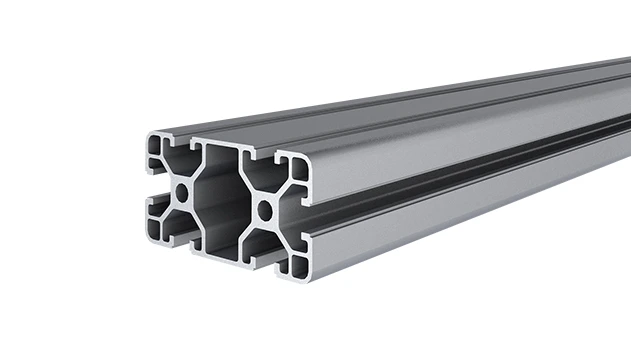
4080A is a 4.00x8.00 CM fractional 40 series square extrusion T-slot profile with two side open T-slots, each side with 4.00cm face, two side with 8.00cm face. The profile has align-a-grooves to assist in aligning connecting profiles.
Walk into any modern manufacturing facility today, and you'll notice a quiet revolution unfolding. Gone are the days of rigid, welded steel structures that take weeks to install and even longer to modify. Instead, factory floors hum with the flexibility of modular systems—setups that can be reconfigured in hours, not months, to adapt to new products, shifting demand, or evolving workflows. At the heart of this revolution lies a unsung hero: the 4080A EU standard aluminum profile. More than just a piece of metal, it's the backbone of a modular design philosophy that's redefining how we build, work, and innovate.
In an era where "agility" isn't just a buzzword but a survival skill, manufacturers can't afford to be tied to inflexible infrastructure. A small electronics producer might need to switch from assembling smartwatches to fitness trackers overnight; a automotive parts supplier might scale up production for a new electric vehicle model. These shifts demand systems that can keep pace—and that's where the 4080A profile shines. Its unique combination of strength, versatility, and compatibility makes it a cornerstone of lean manufacturing, smart factories, and everything in between. Let's dive into why this unassuming aluminum extrusion is becoming the go-to choice for forward-thinking operations, and how its modular innovations are shaping the future of industrial design.
What is 4080A EU Standard Aluminum Profile, Anyway?
First things first: let's demystify the jargon. The "4080A" in its name refers to its dimensions—40mm in width and 80mm in height—making it a medium-to-large profile ideal for supporting heavier loads without sacrificing maneuverability. The "EU standard" tag is crucial too; it means this profile adheres to strict European manufacturing norms for dimensions, T-slot spacing, and material quality, ensuring compatibility with a vast ecosystem of accessories and components across the continent and beyond. No more guessing if a connector from one supplier will fit a bracket from another—EU standardization takes the guesswork out of modular builds.
But what really sets the 4080A apart is its construction as an aluminum extrusion profile. Aluminum extrusion is a process where raw aluminum is heated and pushed through a die to create consistent, complex shapes—like the T-slots that run along the length of the 4080A. These T-slots are the profile's superpower. They act as built-in channels for attaching accessories: brackets, shelves, panels, casters, and more. Unlike traditional bolt-on systems, which require drilling or welding, T-slot connections let you slide in a bolt, tighten a nut, and you're done. It's quick, clean, and reversible—perfect for a world where change is constant.
Why aluminum, you might ask? Steel is stronger, right? While steel does have a higher tensile strength, aluminum brings a winning combo of lightweight durability, corrosion resistance, and cost-effectiveness. A 4080A frame is easy to move (no need for heavy machinery to reposition a workbench), won't rust in humid factory environments, and is infinitely recyclable—aligning with the sustainability goals many companies now prioritize. Plus, aluminum's natural conductivity can be an advantage in ESD (electrostatic discharge) sensitive areas, like electronics assembly, when paired with the right accessories.
Innovations in Modular Design: Beyond "One-Size-Fits-All"
The 4080A's true genius lies in how it enables modularity—the ability to build, break down, and rebuild systems with minimal effort. Let's say a factory needs a new workbench for assembling circuit boards. With traditional methods, that might involve ordering a custom steel bench, waiting weeks for fabrication, and welding it in place. If next month they need to add a shelf or reposition the bench closer to a conveyor, they're out of luck. With 4080A, it's a different story: using pre-cut profiles, aluminum profile accessories like corner brackets and end caps, and a few basic tools, workers can assemble a sturdy workbench in an afternoon. Need to add a shelf? Slide a bracket into the T-slot, bolt it on, and done. Relocate the bench? Remove the casters, move it, and reattach. It's design for the "what if."
One of the most exciting innovations in 4080A modular design is the rise of "plug-and-play" accessory ecosystems. Manufacturers now offer hundreds of specialized components tailored to the 4080A's T-slot system: adjustable feet for uneven floors, LED light brackets for workbench illumination, cable management clips to keep wires tidy, and even tool holders shaped to fit specific screwdrivers or wrenches. This ecosystem turns the 4080A from a static building block into a platform for customization. A pharmaceutical company might use it to build a cleanroom material rack with anti-microbial panels; a startup could fashion a prototype assembly line with roller tracks for part transport. The possibilities are limited only by imagination—and the availability of accessories (which, thanks to EU standardization, is vast).
Another breakthrough is the integration of lean pipe and accessories with 4080A systems. Lean pipes (often called "flexible pipes") have long been used in lean manufacturing for lightweight structures, but they lack the rigidity for heavy-duty applications. By combining 4080A profiles for the main frame with lean pipes for secondary components—like dividers on a shelf or guides on a conveyor—engineers get the best of both worlds: strength where it's needed, flexibility where it's wanted. This hybrid approach is especially popular in automotive plants, where assembly lines need to support heavy car parts while still allowing for quick adjustments to accommodate different vehicle models.

From Factory Floor to Office: Unexpected Applications of 4080A
While the 4080A is a staple in industrial settings, its modularity is pushing it beyond the factory walls. Think about modern offices, where open floor plans and hot-desking require furniture that can adapt to changing teams. A 4080A frame with a wooden desktop becomes a standing desk that can be adjusted in height; add some dividers and cable management, and it's a collaborative workstation for a team of four. When the team grows? Add more profiles and extend the desk. When the office relocates? Disassemble it, pack it in boxes, and rebuild at the new space—no need to buy new furniture. It's a sustainable, cost-effective alternative to traditional office setups, and it's catching on fast.
Retail is another unexpected adopter. Pop-up shops and temporary displays need to be eye-catching, durable, and easy to transport. 4080A profiles, paired with custom printed panels, make lightweight yet sturdy shelving units that can be assembled in a storefront in hours. A clothing brand might use them to build a modular rack system that can be reconfigured weekly to highlight new collections; a tech store could design a demo station with integrated charging ports (thanks to T-slot cable management). The 4080A's clean, industrial aesthetic even adds a modern flair that resonates with today's consumers.
The Numbers Speak: Why Modular Beats Traditional
It's one thing to talk about the flexibility of 4080A systems, but does it translate to real-world value? Let's look at the data. Below is a comparison of key metrics between a traditional welded steel workbench and a modular 4080A workbench over a 5-year lifespan—a typical cycle for manufacturing equipment updates.
| Aspect | Traditional Welded Steel Workbench | Modular 4080A Aluminum Workbench |
|---|---|---|
| Initial Assembly Time | 3-5 days (fabrication + welding) | 4-6 hours (bolt-together assembly) |
| Customization Ability | Limited (requires re-welding or new fabrication) | Unlimited (add/remove components via T-slots) |
| Relocation Cost | High (requires cutting/dismantling; often not reusable) | Low (disassemble, move, reassemble with basic tools) |
| Maintenance Cost | High (rust removal, repainting, weld repairs) | Low (aluminum resists corrosion; parts replaced individually) |
| End-of-Life Value | Low (scrap metal value only) | High (components resold or repurposed; aluminum recycling value) |
| Total Cost Over 5 Years | ~$5,000 (initial + maintenance + replacement) | ~$3,200 (initial + minor accessory upgrades) |
The numbers tell a clear story: modular 4080A systems save time, reduce costs, and offer unmatched adaptability. For a small manufacturer with tight margins, that $1,800 difference over 5 years could mean the ability to hire an extra worker or invest in new machinery. For a large enterprise, scaling up production with 4080A modular lines instead of traditional steel setups could cut expansion timelines from months to weeks, letting them capitalize on market opportunities faster.
The Future: Smarter, Greener, More Connected
So, where does the 4080A go from here? The future looks even more exciting. One trend gaining momentum is the integration of smart technology into modular profiles. Imagine a 4080A workbench with built-in sensors in the T-slots that monitor weight distribution (alerting workers if a shelf is overloaded) or track usage (showing how often a particular station is used, helping managers optimize workflow). Some manufacturers are already experimenting with conductive T-slot nuts that can transmit data, turning the profile itself into a communication channel for IoT devices. It's modular design meets Industry 4.0.
Sustainability is another key driver. As companies aim for carbon neutrality, the 4080A's recyclability becomes a major selling point. Aluminum can be recycled repeatedly without losing quality, and many suppliers now offer profiles made from 100% recycled aluminum, reducing the carbon footprint of production. Even better, modular systems mean less waste overall—instead of scrapping an entire workbench when you need a new feature, you just swap out a component. It's a circular approach to manufacturing that aligns with global environmental goals.
We're also seeing advances in material science that could make 4080A even more versatile. New aluminum alloys are being developed to be stronger yet lighter, opening up applications in aerospace or medical device manufacturing where weight is critical. Coatings that resist chemicals or extreme temperatures are expanding the profile's use in harsh environments, like food processing or semiconductor cleanrooms. And 3D-printed aluminum profile accessories are on the horizon, letting companies create custom brackets or connectors on-demand, further reducing lead times.
Why 4080A Matters: It's About Empowering People
At the end of the day, the 4080A EU standard aluminum profile isn't just a piece of metal. It's a tool that empowers workers and businesses to take control of their spaces. A line worker who notices a bottleneck in the assembly process can grab a few 4080A components and build a simple jig to fix it—no need to wait for engineering approval. A startup founder with a tight budget can bootstrap their first production line using modular systems, reinvesting savings into product development. It democratizes design, putting the power to innovate in the hands of those who use the equipment every day.
In a world that's changing faster than ever, flexibility isn't a luxury—it's essential. The 4080A EU standard aluminum profile embodies that flexibility, offering a glimpse into the future of manufacturing: a future where systems adapt to people, not the other way around. Whether it's on the factory floor, in the office, or in unexpected places like retail stores or labs, the 4080A is more than a trend. It's a shift in how we think about building—one T-slot at a time.
So the next time you walk through a factory, office, or even a pop-up shop, take a closer look at the structures around you. Chances are, you'll spot the 4080A's distinctive T-slots and clean lines. And as you do, remember: it's not just holding up shelves or desks. It's holding up the future of modular, agile, and human-centered design.