- Company Articles
- Industry articles
- Industry News
- The Future of Aluminum Guide Rail B: Trends in Flexible Manufacturing Systems

The Future of Aluminum Guide Rail B: Trends in Flexible Manufacturing Systems
Related Product
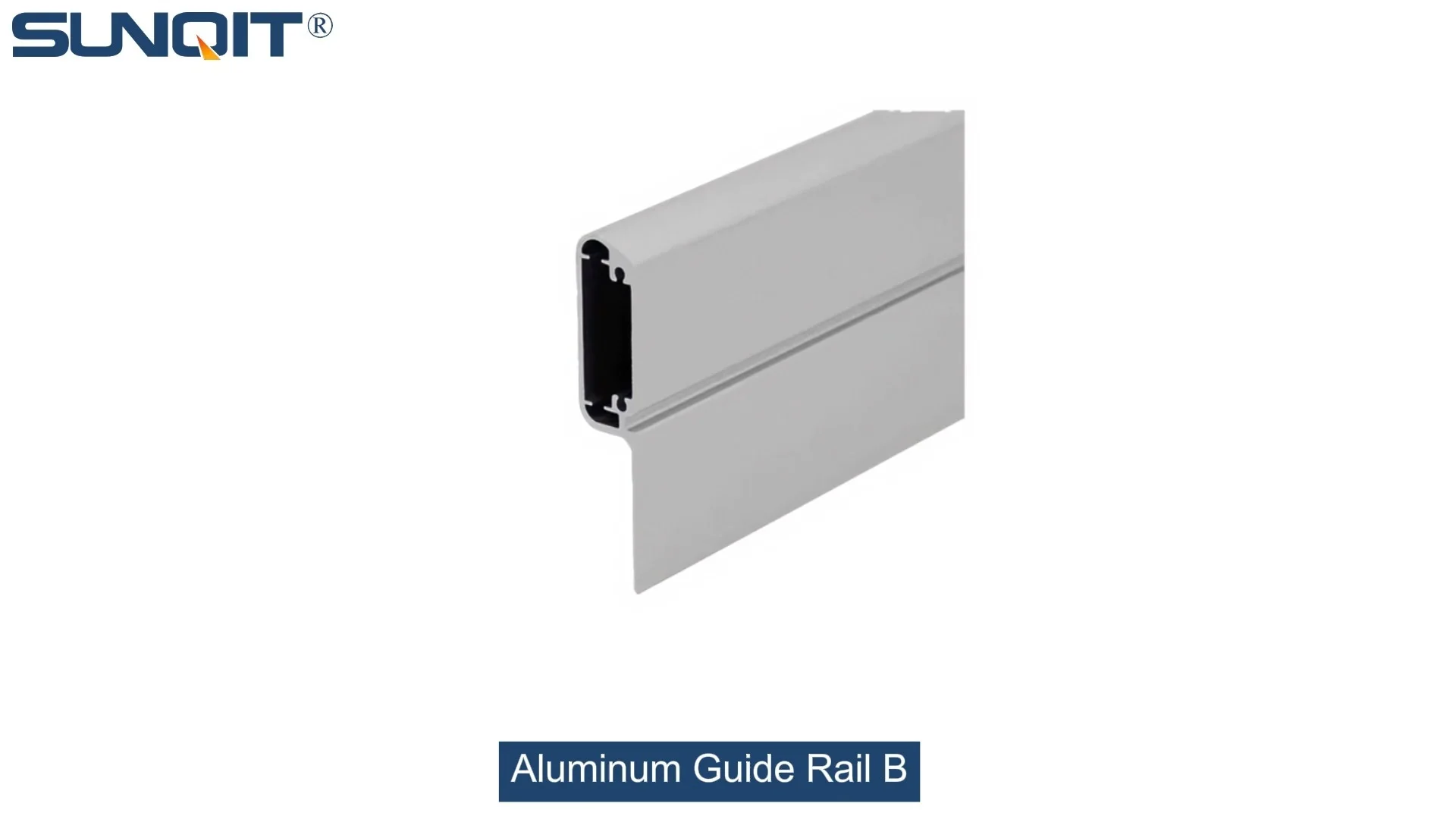
Aluminum Guide Rail B
The aluminum guide rails hold the transport goods securely on the roller track. For installation, the guide rails are simply pushed over the roller tracks.To protect sensitive products.
In today's fast-paced manufacturing world, the ability to adapt isn't just a advantage—it's a necessity. Factories are no longer stuck in rigid, one-size-fits-all production lines. Instead, they're evolving into dynamic ecosystems where flexibility, efficiency, and sustainability take center stage. At the heart of this evolution lies a component that's easy to overlook but impossible to replace: the aluminum guide rail. Specifically, Aluminum Guide Rail B has emerged as a quiet game-changer, reshaping how industries from 3C assembly to medical device manufacturing build their production systems. Let's dive into why this unassuming piece of aluminum is becoming the backbone of the future of flexible manufacturing.
What Makes Aluminum Guide Rail B Indispensable Today?
Before we look ahead, let's ground ourselves in the present. Aluminum Guide Rail B isn't just another metal bar—it's a precision-engineered solution designed to solve real-world manufacturing pain points. Unlike traditional steel rails or generic plastic guides, it brings three key strengths to the table:
Lightweight yet durable : Aluminum's natural strength-to-weight ratio means it can handle heavy loads (think stacks of circuit boards in a 3C factory or delicate medical tools) without weighing down the system. This reduces strain on conveyor motors and makes manual adjustments—like reconfiguring a workbench—easier for operators.
Modular by design : Ever tried rearranging a bookshelf with fixed shelves? Frustrating, right? Now imagine that bookshelf is a 50-foot production line. Aluminum Guide Rail B's modularity eliminates that frustration. It connects seamlessly with other components— flow racks , conveyors , and even custom workbenches—using simple, tool-free joints. Need to add a new station for a sudden order surge? Just snap on a few extra rails. No welding, no downtime, no headaches.
Corrosion and wear resistance : Manufacturing floors are tough environments—oils, coolants, and constant friction can wear down lesser materials. Aluminum Guide Rail B's anodized surface fights off corrosion, while its smooth finish minimizes friction, keeping parts sliding smoothly even after years of use. This isn't just about longevity; it's about consistent performance, which is critical for quality control in industries like automotive or aerospace.
Think of it this way: If a flexible manufacturing system is a symphony, Aluminum Guide Rail B is the conductor's baton. It doesn't make the music, but without it, the instruments—conveyors, workstations, flow racks —would fall out of rhythm.
The Numbers Speak: How Aluminum Guide Rail B Stacks Up
To really understand its impact, let's compare Aluminum Guide Rail B with traditional alternatives. The table below breaks down key metrics from real-world applications across manufacturing plants:
| Metric | Traditional Steel Rail | Plastic Guide Rail | Aluminum Guide Rail B |
|---|---|---|---|
| Weight (per meter) | 8.2 kg | 2.1 kg | 3.5 kg |
| Installation Time | 2+ hours (requires welding) | 45 mins (glue/adhesives needed) | 15 mins (tool-free joints) |
| Maintenance Frequency | Quarterly (rust removal, lubrication) | Monthly (cracks, warping) | Bi-annually (simple cleaning) |
| Reusability Rate | 30% (welded joints break when disassembled) | 10% (prone to bending/breaking) | 95% (modular design allows full disassembly) |
| Cost Over 5 Years (USD/meter) | $450 (initial + maintenance + replacement) | $320 (frequent replacements) | $280 (one-time purchase + minimal upkeep) |
The data tells a clear story: Aluminum Guide Rail B isn't just better—it's smarter. Its reusability alone aligns with the lean system philosophy of "reduce, reuse, improve," turning what was once a capital expense into a long-term investment.

Looking Ahead: 3 Trends Shaping Aluminum Guide Rail B's Future
So, where does Aluminum Guide Rail B go from here? As manufacturing evolves, so too will the demands on this critical component. Based on industry shifts and emerging technologies, three trends are set to define its next chapter:
1. Integration with Smart Manufacturing (Industry 4.0)
The factories of tomorrow won't just move parts—they'll communicate about them. Imagine Aluminum Guide Rail B embedded with tiny sensors that track: How fast are parts moving? Are there bottlenecks at a specific curve? Is a section wearing down faster than expected? This isn't science fiction. Early adopters in the automotive sector are already testing "smart rails" that feed data to central dashboards, allowing managers to predict maintenance needs or adjust conveyor speeds in real time.
Take a lean solution for a 3C manufacturer producing smartphones. If a batch of screens arrives with slightly thicker glass, the rail's sensors could detect the increased friction and automatically slow the conveyor, preventing scratches. No human intervention, no defective products, just a system that adapts on the fly. This level of integration will make Aluminum Guide Rail B not just a physical guide, but a data hub for smarter decision-making.
2. Sustainability: Beyond "Green" to "Circular"
Sustainability in manufacturing used to mean recycling scrap metal at the end of a product's life. Today, it's about designing for a circular economy —where nothing goes to waste, and every component is built to be reused or repurposed. Aluminum Guide Rail B is perfectly positioned to lead here.
First, aluminum itself is infinitely recyclable. Unlike plastic, which degrades with each cycle, recycled aluminum retains 95% of its original strength. Second, its modular design means when a production line is retired, the rails can be stripped down, cleaned, and reinstalled elsewhere—say, from a closed computer factory to a new medical device plant. This isn't just good for the planet; it's good for the bottom line. A recent study by the Manufacturing Sustainability Council found that companies using modular aluminum systems reduced their material costs by 22% over five years compared to those using disposable plastic rails.
3. Hyper-Customization for Niche Industries
Not all manufacturing is created equal. A 3C factory assembling tiny microchips has very different needs than a warehouse handling large automotive parts. Aluminum Guide Rail B's future lies in its ability to cater to these niche demands through hyper-customization.
For example, in the medical industry, cleanrooms require rails that resist bacteria growth and can withstand harsh sterilization chemicals. Manufacturers are already developing antimicrobial coatings for Aluminum Guide Rail B to meet these standards. In food packaging, where hygiene is critical, we're seeing food-grade lubricant channels built directly into the rail, eliminating the need for messy sprays. And in aerospace, where precision is non-negotiable, rails are being engineered with ultra-tight tolerances (down to 0.01mm) to ensure parts move with zero vibration.
This isn't just about "making it fit"—it's about making Aluminum Guide Rail B an active participant in solving industry-specific challenges. As lean system providers push further into specialized sectors, expect to see rails tailored for everything from deep-sea equipment manufacturing to space-bound component assembly.
Real-World Impact: How a 3C Factory Transformed with Aluminum Guide Rail B
Let's bring this to life with a real example. A mid-sized 3C manufacturer in Shenzhen was struggling with two major issues: slow changeover times between product lines and high defect rates due to janky material flow. Their old steel rails were heavy, hard to adjust, and prone to rust, which contaminated sensitive circuit boards.
They switched to a lean solution centered around Aluminum Guide Rail B, paired with modular flow racks and conveyors. The results? Changeover time dropped from 8 hours to just 45 minutes—meaning they could run three product lines in a day instead of one. Defect rates fell by 35% because the smooth, corrosion-free rails eliminated scratches and jams. And because the system was modular, they could easily expand when a new client order came in, adding 10 meters of rail in a single shift without hiring outside contractors.
The plant manager summed it up best: "We used to build production lines around our rails. Now, the rails adapt to our lines. It's like going from a flip phone to a smartphone—you wonder how you ever lived without it."

Challenges on the Horizon: What to Watch For
Of course, no innovation comes without hurdles. As Aluminum Guide Rail B grows in popularity, manufacturers and users alike will need to address a few key challenges:
Cost perception : Upfront, aluminum rails can cost more than plastic or low-grade steel. But as the earlier table shows, the long-term savings (lower maintenance, reusability) more than make up for it. The industry needs to do a better job educating buyers about total cost of ownership, not just sticker price.
Standardization vs. customization : With so many niche applications, there's a risk of fragmenting the market with too many "specialized" rail designs. Striking a balance—keeping core dimensions standard while allowing for add-ons (like sensor ports or coatings)—will be key to keeping systems interoperable.
Skilled labor : While Aluminum Guide Rail B is designed for easy installation, maximizing its potential (like integrating with IoT sensors) requires workers who understand both mechanical systems and basic data analysis. Factories will need to invest in training to bridge this skills gap.

Final Thoughts: Aluminum Guide Rail B as a Catalyst for Manufacturing's Future
At the end of the day, Aluminum Guide Rail B is more than a component—it's a symbol of how manufacturing is evolving. It represents a shift from "good enough" to "constantly getting better," from wasteful to sustainable, from rigid to responsive. As lean system providers continue to innovate, we can expect this humble rail to play an even bigger role in shaping the factories of tomorrow.
Whether you're a plant manager looking to boost efficiency, a sustainability director aiming for net-zero, or an engineer designing the next breakthrough production line, keep an eye on Aluminum Guide Rail B. It might not grab headlines, but it's quietly building the future of manufacturing—one modular, smart, sustainable rail at a time.