- Company Articles
- Industry articles
- Industry News
- The Future of Sustainable Material Handling: 40 Steel Roller Track Green Trends

The Future of Sustainable Material Handling: 40 Steel Roller Track Green Trends
Related Product
40 Steel Roller Track Green
The roller track can be installed with multiple accessories to create different slopes and configurations of flow racks.All steel conveyor 40 roller track accessories are engineered to perfectly fit the sliding rail.
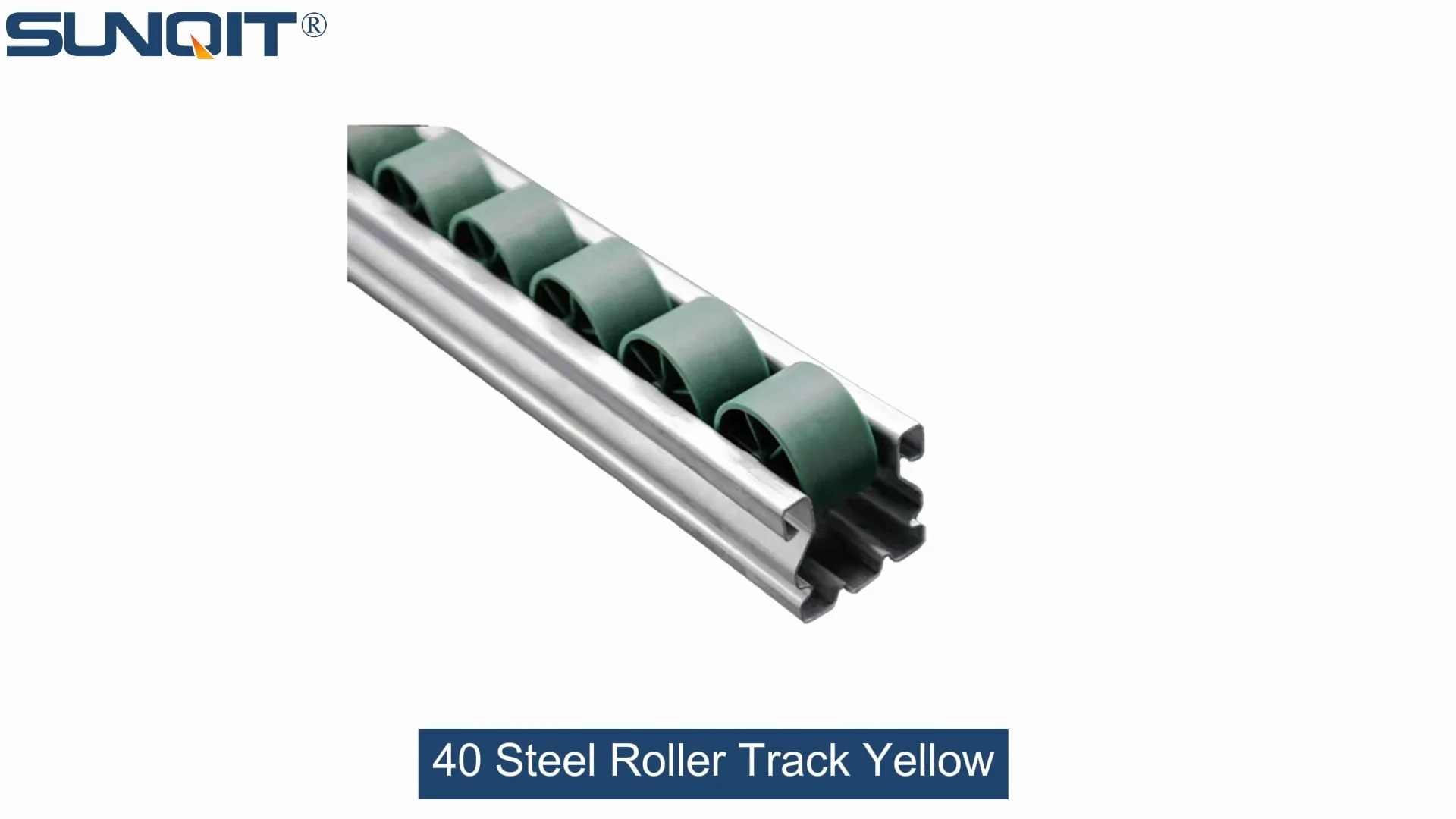
The Future of Sustainable Material Handling: 40 Steel Roller Track Green Trends
Manufacturers today aren't just chasing efficiency—they're scrambling to cut down on waste, lower their carbon footprint, and keep up with consumers who care more about how products are made than ever before. Material handling is a big piece of this puzzle: every unnecessary move, every discarded component, every inefficient flow adds up to more waste and higher costs. But what if there's a way to make material handling both greener and more efficient? Enter the 40 Steel Roller Track Green—a solution that's not just changing how parts move on the line, but also how entire industries think about sustainable production. When paired with lean systems like lean pipe workbenches, flow racks, and conveyors, it's creating a future where material handling is circular, reusable, and kind to the planet.
1. What Makes 40 Steel Roller Track Green a Game-Changer?
Let's break down why the 40 Steel Roller Track Green is so special. First, it's made from high-quality steel that's built to last—we're talking years of heavy use without needing replacement. Unlike cheaper plastic alternatives that crack or wear out quickly, this steel track can handle constant movement of parts and products without breaking down. The track has a load capacity of up to 500 kg per meter, so it's sturdy enough for heavy components like car engine parts or large medical devices. The steel thickness is 1.5 mm, thicker than most standard roller tracks, ensuring long-term durability.
But durability isn't the only green perk: it's designed to be modular. That means if you need to rearrange your production line or warehouse, you can take the track apart and reassemble it somewhere else instead of throwing it away. And the green coating? It's not just for looks—it's a non-toxic, eco-friendly powder finish that reduces corrosion. This coating is free of harmful chemicals like lead or cadmium, making it safe for use in sensitive industries like medical device manufacturing. It also has a low friction coefficient, so parts slide smoothly without requiring extra lubrication—another green benefit, since lubricants can be toxic and require disposal. When the track does reach the end of its life, the steel is fully recyclable, so it never ends up in a landfill.
For manufacturers tired of replacing flimsy material handling components every few months, this track is a breath of fresh air. It's a solution that saves money, reduces waste, and helps the planet—all at the same time.
2. Synergy with Lean Systems—More Than Just Moving Parts
The 40 Steel Roller Track Green doesn't work in isolation. It's part of a bigger lean ecosystem that includes lean pipe systems, flow racks, and conveyors—all designed to minimize waste and maximize efficiency. Let's take a lean pipe workbench, for example. Imagine a 3C assembly line where workers need to access parts quickly. A workbench built with lean pipe (those sturdy aluminum tubes and joints) paired with a 40 Steel Roller Track Green attached to the side: parts slide smoothly from the flow rack to the workbench, reducing the time workers spend reaching for materials. No more wasted steps, no more cluttered workspaces.
Flow racks are another perfect match: the 40 Steel Roller Track Green is often used in these racks to let bins of parts slide down to the front, so workers always have what they need at their fingertips. And when you add conveyors into the mix? You get a seamless flow from one station to the next—no more manual lifting, no more bottlenecks. This synergy isn't just about efficiency; it's about sustainability. Every component in this system is reusable. If you need to change your line layout, you can reconfigure the lean pipe, adjust the roller track, or move the flow rack—no new materials required. That's the lean philosophy in action: "reuse, reduce, improve" —and it's exactly what companies like Sunqit (a leading supplier of these solutions) stand for.
Let's look at a real-world example: a leading 3C manufacturer in Shenzhen. Before switching to Sunqit's lean system with 40 Steel Roller Track Green, they used plastic roller tracks that needed replacement every six months. The plastic tracks would crack under heavy use, leading to production delays and tons of waste. After switching to Sunqit's solution—lean pipe workbenches paired with 40 Steel Roller Track Green—they reduced their material handling waste by 70% and cut replacement costs by 60%. The system has been in use for three years now, and it's still going strong. When they launched a new smartphone model last year, they simply rearranged the track and workbenches instead of building a new line—saving two months of setup time and $50,000 in materials.
3. Custom Solutions for Key Industries—Tailored Green Efficiency
Different industries have different needs, but the 40 Steel Roller Track Green adapts to all of them—especially when paired with custom lean solutions. Let's dive into a few detailed examples:
3.1 3C Assembly Industry
3C products (like phones, laptops, and tablets) are delicate, and static electricity can ruin components. So Sunqit offers ESD workbenches paired with 40 Steel Roller Track Green that's ESD-compliant. The track ensures parts slide smoothly without generating static, and the workbench keeps workers safe from electrostatic discharge. Plus, since the system is modular, when a new 3C model comes out (which happens all the time), you can rearrange the track and workbench instead of building a whole new line.
For a 3C manufacturer in Guangzhou, Sunqit designed a custom assembly line using lean pipe workbenches, 40 Steel Roller Track Green, and conveyors. The line is used to assemble wireless earbuds. The ESD workbenches prevent static damage to the earbuds' sensitive circuits, and the roller track lets parts slide from the flow rack to the workbench without any manual effort. When the manufacturer launched a new earbud model with a different design, they adjusted the workbench height and rearranged the roller track in just a day—no new equipment needed. This saved them $30,000 in setup costs and reduced waste by 80% compared to their old line.
3.2 Medical Device Industry
Medical equipment requires strict hygiene and precision. Sunqit's custom solutions here include flow racks with 40 Steel Roller Track Green that's easy to clean (the green coating resists bacteria growth) and ESD workstations for assembling sensitive devices like pacemakers or diagnostic tools. The modular design means you can adjust the system to meet changing regulatory requirements—no need to replace entire setups.
Take a medical device manufacturer in Shanghai. They needed a system to store and transport sterile components for surgical tools. Sunqit designed a flow rack with 40 Steel Roller Track Green that's resistant to autoclaving (high-temperature sterilization). The rack can be sanitized without damaging the track, which is critical for complying with FDA regulations. The modular design allows the manufacturer to add
3.3 Warehousing and Logistics Industry
Warehouses need to move large quantities of goods quickly and efficiently. Conveyors fitted with 40 Steel Roller Track Green are perfect here: they can handle heavy pallets and boxes, and since the track is durable, you don't have to worry about breakdowns slowing down operations. Plus, if your warehouse layout changes (like adding a new aisle), you can reconfigure the conveyor system using the same roller track components.
A logistics company in Beijing switched to Sunqit's conveyor system with 40 Steel Roller Track Green. Before, they used wooden pallets and manual labor to move goods, which was slow and caused injuries. After switching, they reduced their labor costs by 40% and increased their throughput by 50%. The conveyor system is modular, so when they expanded their warehouse last year, they added more sections of roller track instead of buying a new conveyor—saving $100,000 and reducing waste by 90%.
| Industry | Custom Solution | Sustainability Benefits |
|---|---|---|
| 3C Assembly | ESD workbench + 40 Steel Roller Track Green + Conveyor | 70% waste reduction, 60% cost cut, modular reconfiguration |
| Medical Device | Autoclavable flow rack + 40 Steel Roller Track Green | 55% waste reduction, FDA compliance, reusable components |
| Warehousing | Modular conveyor system + 40 Steel Roller Track Green | 90% waste reduction, 40% labor cost cut, 50% throughput increase |
4. The Circular Economy Impact—Closing the Loop
We hear a lot about the circular economy these days, but what does it actually mean for material handling? It means moving away from the "take-make-waste" model to one where products are reused, repaired, and recycled. The 40 Steel Roller Track Green is a circular economy star. Let's see why:
Reusability:
The track is modular, so you can take it apart and reassemble it anywhere else. For example, a car manufacturer might use the track in their assembly line for a few years, then repurpose it in their warehouse for moving parts.
Recyclability:
When the track finally reaches the end of its life (which takes years), the steel is 100% recyclable. Unlike plastic components that end up in landfills, this steel can be melted down and made into new products.
Reduced Raw Material Use:
Since the track is durable and reusable, manufacturers don't have to buy new components as often. This means less mining for steel and less energy spent on production.
According to a study by the Lean Manufacturing Institute, using modular, reusable material handling systems like the 40 Steel Roller Track Green can reduce a company's carbon footprint by up to 40% compared to using disposable or single-use components. This is because reusable systems require less raw material extraction, less energy for production, and less waste disposal. For example, a company that uses 40 Steel Roller Track Green instead of plastic tracks can save up to 10 tons of plastic waste per year—equivalent to planting 200 trees.
5. Trends Shaping the Future of Green Material Handling
The future of material handling is green, and the 40 Steel Roller Track Green is at the forefront of these trends:
5.1 Modular Integration
More and more manufacturers are moving away from fixed, one-size-fits-all systems to modular ones. The 40 Steel Roller Track Green fits perfectly here—you can mix and match it with lean pipe, flow racks, conveyors, and ESD workstations to create a system that's exactly what you need. And since it's modular, you can add or remove components as your business changes.
5.2 ESD Compliance Expansion
As industries like 3C and medical continue to grow, the demand for ESD-compliant material handling solutions is skyrocketing. The 40 Steel Roller Track Green is already used in ESD workstations, but we'll see more applications in the future—like ESD flow racks and conveyors—to protect sensitive components from static damage.
5.3 IoT Integration
IoT (Internet of Things) is making its way into material handling. Sunqit is already testing sensors on their 40 Steel Roller Track Green that monitor the track's temperature, load, and wear. These sensors send data to a cloud-based dashboard, where managers can see real-time information about the system's performance. If a sensor detects that a section of the track is wearing out, it alerts the maintenance team before it breaks down—preventing production delays and reducing the need for emergency replacements. This data-driven approach also helps optimize the flow of parts: if a sensor detects that parts are moving too slowly on a section of the track, managers can adjust the track's angle or add more rollers to speed up the flow. This not only increases efficiency but also reduces energy use—since slower flow means more time and energy spent on material handling.
5.4 Wholesale Adoption
More businesses are realizing the benefits of buying lean systems wholesale. Buying lean pipe, flow racks, and 40 Steel Roller Track Green in bulk not only saves money but also ensures consistency across the entire production line. Suppliers like Sunqit offer wholesale options that make it easier for small and medium-sized businesses to adopt these green solutions without breaking the bank. This trend is making sustainable material handling accessible to everyone, not just large corporations.
6. Why Sunqit's Solutions Stand Out—Your Partner in Green Material Handling
When it comes to sustainable material handling solutions, Sunqit is a name you can trust. Their offerings include everything from the 40 Steel Roller Track Green to lean pipe systems, flow racks, conveyors, and custom ESD workstations. But what makes them different?
Quality:
Every product is built to last—so you don't have to replace components often.
Customization:
They work with you to design a system that fits your unique needs, whether you're in 3C assembly, medical devices, or warehousing.
Lean Philosophy:
All their products are reusable and modular, so you can keep improving your system without generating waste.
Let's take an example: Sunqit's Workbench E (a lean pipe workbench) paired with 40 Steel Roller Track Green. This workbench is sturdy, adjustable, and perfect for assembly lines. The roller track attached to it lets parts slide smoothly to the worker, reducing fatigue and increasing efficiency. And if you need to change the height of the workbench or the position of the track, you can do it in minutes—no tools required.
Another example: Sunqit's Material Rack B (a flow rack) with 40 Steel Roller Track Green. This rack is designed to hold bins of parts, and the track lets the bins slide down to the front. It's perfect for warehouses or production lines where quick access to parts is key. And since it's modular, you can add more shelves or adjust the track length as needed.
Conclusion
The future of sustainable material handling is here, and it's centered around solutions like the 40 Steel Roller Track Green. When paired with lean systems—lean pipe workbenches, flow racks, conveyors, and ESD workstations—it creates a circular, reusable ecosystem that reduces waste, lowers costs, and helps the planet. From 3C assembly lines to medical device manufacturing to warehouses, these solutions are changing how industries operate. And with suppliers like Sunqit leading the charge, it's easier than ever for businesses to adopt these green practices. The 40 Steel Roller Track Green isn't just a material handling component—it's a symbol of a better, more sustainable future for manufacturing. So if you're ready to take your material handling to the next level, it's time to embrace the green trends that are shaping the industry. Your bottom line (and the planet) will thank you.