- Company Articles
- Industry articles
- Industry News
- The Future of Turning Angle Code 3030: Trends in Lean Manufacturing

The Future of Turning Angle Code 3030: Trends in Lean Manufacturing
Related Product
Turning Angle Code 3030
The turning angle aluminum profile connector provides a 90 degree hidden corner connection. 3030 it is means this size is used for 30 series aluminum profile.The corner code comes with set screws that allow for quick, easy connections.
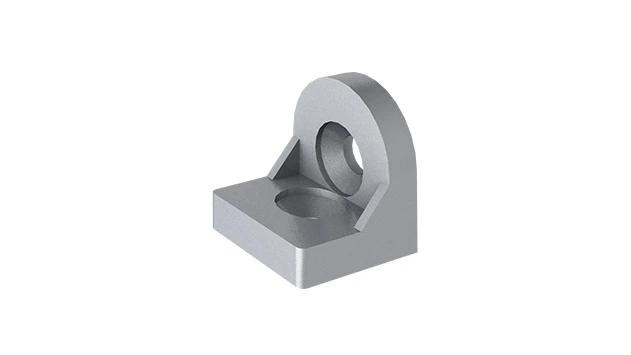
In this article, we're diving deep into the world of turning angle code 3030—what it is, how it's used today, and where it's headed as lean manufacturing evolves. We'll explore the trends driving its development, from sustainability to Industry 4.0, and how this humble aluminum profile accessory is becoming a cornerstone of the factories of tomorrow. Whether you're a seasoned operations director or just curious about the nuts and bolts of modern manufacturing, this is the story of how small parts make a big impact.
First Things First: What Even Is a Turning Angle Code 3030?
Let's start with the basics. If you've ever assembled a bookshelf or a modular desk, you're familiar with the idea of connectors—small pieces that hold larger parts together. In manufacturing, the stakes are higher: these connectors need to support heavy loads, withstand constant use, and adapt to changing needs. That's where turning angle codes come in. Specifically, the turning angle code 3030 is a type of aluminum profile accessory designed to join 30mm x 30mm aluminum profiles at (you guessed it) turning angles—think corners, joints, or where two profiles meet at a 90-degree bend.
Unlike clunky, one-size-fits-all steel brackets of the past, today's turning angle code 3030 is lightweight, corrosion-resistant, and surprisingly strong. It's typically made from die-cast aluminum, with pre-drilled holes that align perfectly with the T-slots of 3030 aluminum profiles—the workhorses of modern lean systems. Tighten a few bolts, and you've got a joint that's sturdy enough to support a fully loaded workbench or a material rack, yet flexible enough to disassemble and reconfigure when production lines change.
Real-World Snapshot: The Assembly Line That Adapted
Consider a mid-sized electronics manufacturer in Vietnam. A few years ago, they were stuck with fixed steel workbenches that took days to reconfigure whenever they switched product models. Today, their workbenches are built with 3030 aluminum profiles and turning angle code 3030 connectors. When a new smartphone model came in, the team disassembled the old setup, repositioned the profiles using the angle codes, and had the line up and running in under four hours. "It's like Legos for adults," Minh, the production supervisor. "But instead of building castles, we're building profit margins."
The Current Role of Turning Angle Code 3030 in Lean Systems
To understand where turning angle code 3030 is headed, we first need to appreciate where it is now. In today's lean systems, this component is the glue that holds modularity together. Let's break down its most common roles:
1. Workbench Assembly: The Heart of the Factory Floor
Workbenches are the command centers of manufacturing—where assembly happens, tools are stored, and workers spend most of their shifts. A well-designed workbench reduces motion waste, keeps tools within reach, and adapts to different tasks. Turning angle code 3030 is critical here because it allows workbenches to be customized for height, width, and load capacity. For example, a workbench E (single deck, without caster) might use multiple 3030 angle codes to secure the aluminum profile frame, ensuring stability even when loaded with heavy equipment. Unlike welded steel frames, which are permanent, these angle-code-connected workbenches can be adjusted if a new tool needs mounting or if a worker requires a higher surface to prevent back strain.
2. Material Racks: Organizing Efficiency
Material handling is a major source of waste in manufacturing—time spent searching for parts, overstocked shelves, or damaged goods from poor storage. Material racks, like the popular material rack B (3 row and 3 floor), rely on turning angle code 3030 to create sturdy, adjustable shelving. Imagine a rack where each level can be raised or lowered by simply loosening the angle codes, repositioning the profiles, and tightening them again. This flexibility means the same rack can hold small electronic components one week and larger mechanical parts the next, without needing to buy a whole new system. In warehouses, this translates to less space wasted and more inventory turnover.
3. Conveyor and Roller Track Systems: Keeping the Flow
Lean manufacturing thrives on "flow"—the smooth movement of materials from one workstation to the next. Roller tracks and conveyors are key to this flow, and turning angle code 3030 often plays a supporting role here, too. For instance, when mounting roller track placon mounts to aluminum profiles, the angle code ensures the track stays aligned, preventing jams or misaligned products. Even something as simple as a 40 steel roller track with yellow wheels relies on stable connections at the corners, where angle codes distribute weight evenly and keep the track from warping under constant use.

Trends Shaping the Future of Turning Angle Code 3030
Now that we've covered the "what" and "how," let's look ahead. The next decade of manufacturing will be defined by five key trends, and turning angle code 3030 is evolving to meet each one head-on.
Trend 1: Sustainability—From "Good to Have" to "Must-Have"
The days of "take-make-waste" manufacturing are numbered. Today's consumers and regulators demand sustainability, and factories are responding by rethinking everything from energy use to material choices. Aluminum profiles have long been a sustainable option—they're 100% recyclable, with 75% of all aluminum ever produced still in use today. But the accessories that connect them, like turning angle code 3030, are now under the microscope, too.
What does this mean for angle codes? First, material innovation. Suppliers are experimenting with recycled aluminum alloys for angle codes, reducing the carbon footprint of production without sacrificing strength. Second, design for disassembly. A turning angle code 3030 that can be easily removed and reused (rather than thrown away) aligns with the circular economy model. Imagine a factory that upgrades its workbenches: instead of scrapping the old angle codes, they're cleaned, inspected, and used in a new material rack. This not only cuts waste but also lowers costs over time.
Even the manufacturing process of angle codes is getting greener. Some suppliers are switching to low-energy die-casting methods or using renewable energy in production facilities. For example, a leading lean pipe supplier in Germany now runs its angle code production line on solar power, reducing CO2 emissions by 30% compared to traditional methods. These small changes add up, making turning angle code 3030 not just a tool for efficiency, but a contributor to a factory's sustainability goals.
Trend 2: Customization—One Size No Longer Fits All
The rise of mass customization—think personalized electronics, custom-fit apparel, or made-to-order machinery—is reshaping manufacturing. Factories can no longer rely on rigid, one-product lines; they need systems that can switch between products quickly, sometimes in batches as small as one. This is where turning angle code 3030 truly shines, but it's also pushing manufacturers to rethink "standard" designs.
Today's angle codes are no longer just 90-degree connectors. Suppliers are introducing adjustable turning angle codes that can lock at 45°, 60°, or even variable angles, giving factories more flexibility in rack and workbench design. For example, a furniture manufacturer might use variable-angle 3030 codes to build a curved material rack for oddly shaped parts, something impossible with fixed-angle brackets.
There's also a trend toward "smart" customization—angle codes designed for specific industries. A medical device manufacturer, for instance, might need angle codes with antimicrobial coatings to meet strict hygiene standards. An automotive plant, on the other hand, might prioritize angle codes with higher load capacities for heavy engine parts. Suppliers are responding by offering specialized lines of turning angle code 3030, each tailored to unique industry needs. This level of customization means factories can build lean systems that fit their exact processes, not the other way around.
| Angle Code Model | Profile Compatibility | Max Load Capacity (kg) | Adjustable Angles? | Common Applications |
|---|---|---|---|---|
| Turning Angle Code 2020 | 20mm x 20mm aluminum profiles | 150 | No (fixed 90°) | Light-duty workbenches, small material racks |
| Turning Angle Code 3030 | 30mm x 30mm aluminum profiles | 350 | Yes (45°, 90°, 135° with adjustable variants) | Medium-duty workbenches, material rack B, roller track supports |
| Turning Angle Code 4040 | 40mm x 40mm aluminum profiles | 600 | Yes (fixed 90° standard, adjustable optional) | Heavy-duty assembly lines, industrial shelving |
Trend 3: Industry 4.0 Integration—Smart Factories Need Smart Components
Industry 4.0—the fusion of physical manufacturing with digital technologies like IoT, AI, and data analytics—is no longer a buzzword; it's the reality of modern factories. Smart sensors monitor equipment health, AI predicts maintenance needs, and digital twins simulate production processes. But for all this to work, the physical infrastructure—including components like turning angle code 3030—needs to play along.
How can a simple angle code be "smart"? It starts with design for connectivity. Newer turning angle code 3030 models include integrated cable management channels, allowing sensors or power cords to run through the aluminum profiles without cluttering the workspace. For example, a workbench equipped with IoT-enabled tools might use angle codes with built-in clips to secure, keeping the area organized and reducing tripping hazards.
There's also experimentation with "digital twins" for angle codes. Suppliers are creating 3D models of turning angle code 3030 that can be integrated into factory simulation software. This allows engineers to test how a workbench or material rack will perform under different loads or configurations before physically building it. If the simulation shows a weak point at a 3030 angle code joint, they can adjust the design—saving time, materials, and headaches down the line.
Case Study: A Smart Factory in South Korea
A automotive parts manufacturer in Seoul recently upgraded its production line with smart workbenches using turning angle code 3030. Each angle code was fitted with a small RFID tag that stores data about its installation date, load capacity, and maintenance history. When the line is reconfigured, a handheld scanner reads the tags, and the factory's ERP system automatically updates the digital twin of the line. "We used to spend hours manually updating our production maps," says Kim, the plant engineer. "Now, the angle codes tell us where they are, and the system does the rest. It's like having a GPS for our factory floor."
Trend 4: Ergonomics—Putting People at the Center of Lean
Lean manufacturing has always focused on eliminating waste, but in recent years, there's been a shift to recognizing "people waste"—the physical strain, fatigue, and discomfort that lead to slower work, more errors, and higher turnover. Ergonomics—the science of designing workspaces for human comfort and efficiency—is now a core part of lean, and turning angle code 3030 is helping drive this change.
Adjustable workbenches are a prime example. Using turning angle code 3030, manufacturers can build workbenches that raise or lower to match a worker's height, reducing stooping or reaching. But it's not just about height. Angle codes with rounded edges reduce the risk of cuts or bruises. Lightweight aluminum profiles (made possible by the strength-to-weight ratio of 3030 angle codes) make workbenches easier to reposition, so workers aren't stuck in one spot all day. Even the color of angle codes is being reconsidered—high-contrast finishes (like bright yellow) make them easier to see during assembly, reducing eye strain.
The result? Happier, healthier workers who are more productive and less likely to miss days due to injury. A study by the International Journal of Industrial Ergonomics found that factories using ergonomically designed modular workbenches (with components like turning angle code 3030) reported a 22% reduction in musculoskeletal disorders and a 15% increase in productivity. It's a win-win: lean systems that work for people, not against them.
Trend 5: Global Supply Chain Resilience—Adapting to Uncertainty
The past few years have taught manufacturers a hard lesson: global supply chains are fragile. Pandemics, trade disruptions, and geopolitical tensions can throw even the best-laid production plans into chaos. To build resilience, factories are looking for local suppliers, standardized components, and systems that can adapt to material shortages. Turning angle code 3030 is emerging as a "universal" component in this new landscape.
Why? Because 30mm x 30mm aluminum profiles are widely produced around the world, and turning angle code 3030 is a standard accessory across most lean pipe suppliers. This standardization means factories in Mexico, Malaysia, or Germany can source similar angle codes, reducing the risk of delays if one region's supply is disrupted. Additionally, the modular nature of angle-code-connected systems means factories can "make do" with what's available—if 3030 profiles are scarce, they might switch to 2020 or 4040, using compatible angle codes, rather than halting production entirely.
Suppliers are also responding by building regional distribution centers, stockpiling common components like turning angle code 3030 to ensure quick delivery. For example, a major lean system supplier now has warehouses in North America, Europe, and Asia, each carrying a 90-day supply of 3030 angle codes. This "local for local" approach reduces lead times and insulates factories from global shocks.

Challenges on the Horizon: What Could Slow Turning Angle Code 3030's Growth?
Of course, no trend is without challenges. Turning angle code 3030's future isn't guaranteed to be smooth sailing. Here are a few hurdles suppliers and manufacturers might face:
- Cost Pressures: Recycled aluminum and smart design features can make advanced angle codes more expensive than traditional steel brackets. For small manufacturers with tight budgets, this might be a barrier—though the long-term savings from reusability and efficiency often offset the upfront cost.
- Skill Gaps: Installing and reconfiguring modular systems with turning angle code 3030 requires a different skill set than welding or bolting fixed frames. Factories may need to invest in worker training to fully leverage these components.
- Counterfeit Products: As demand for 3030 angle codes grows, low-quality counterfeits are appearing on the market. These weak, poorly designed imitations can compromise safety and performance, eroding trust in the technology.
Despite these challenges, the momentum behind modular, lean manufacturing is strong. As factories prioritize flexibility, sustainability, and people-centric design, turning angle code 3030 is well-positioned to overcome these hurdles—especially as suppliers innovate to make their products more affordable, user-friendly, and reliable.
The Bottom Line: Small Parts, Big Future
Turning angle code 3030 may not make headlines, but it's a quiet indicator of where manufacturing is headed: more flexible, more sustainable, more human, and more connected. It's a reminder that lean manufacturing isn't just about big systems or fancy software—it's about the details, the small components that come together to create something greater than the sum of their parts.
As we look to the future, we can expect turning angle code 3030 to evolve in ways we can't yet imagine—maybe with built-in sensors, or made from carbon-neutral materials, or designed to work seamlessly with AI-powered assembly robots. But no matter how it changes, its core purpose will remain the same: to connect, to support, and to enable the factories of tomorrow to do more with less.
So the next time you walk through a factory, take a closer look at the workbenches, the material racks, the roller tracks. Chances are, you'll spot a turning angle code 3030 holding it all together. And now, you'll know: that small, unassuming piece is part of a much bigger story—one of progress, innovation, and the relentless pursuit of better, smarter manufacturing.