- Company Articles
- Industry articles
- Industry standards
- The Impact of Turning Angle Code 2020 on Lean Tube System Maintenance

The Impact of Turning Angle Code 2020 on Lean Tube System Maintenance
Related Product
Urning Angle Code 2020
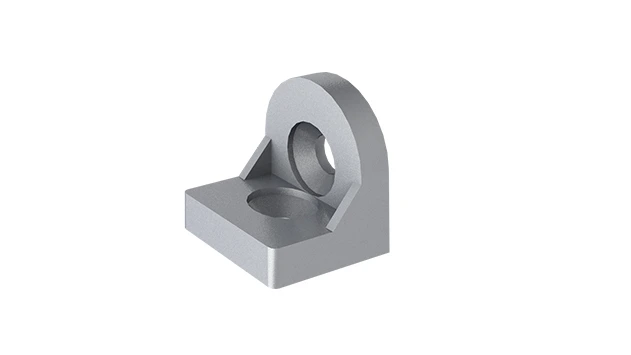
The turning angle aluminum profile connector provides a 90 degree hidden corner connection. 2020 it is means this size is used for 20 series aluminum profile.The corner code comes with set screws that allow for quick, easy connections.
Introduction: The Unsung Hero of Lean Manufacturing
In the fast-paced world of manufacturing, where efficiency and productivity are the lifeblood of operations, every component in a production line plays a critical role. From the largest conveyor belts to the smallest fasteners, each part contributes to the seamless flow of work that defines a well-oiled lean system. Yet, some components—often the smallest and most unassuming—end up having the biggest impact on long-term performance. One such component is the turning angle code 2020, a seemingly simple connector that has quietly revolutionized how maintenance teams approach upkeep in lean tube systems.
Lean manufacturing isn't just about cutting waste; it's about building resilience. A system that can adapt, repair, and evolve without grinding to a halt is one that thrives in today's competitive markets. For years, maintenance managers and production supervisors have grappled with the challenge of keeping lean tube systems—workbenches, material racks, roller tracks, and assembly lines—in top shape. Loose connections, corroded joints, and time-consuming repairs have long been pain points, eating into valuable production hours and inflating operational costs. Enter the turning angle code 2020: a small but mighty aluminum profile accessory designed to address these very issues. In this article, we'll dive deep into how this unassuming component is transforming maintenance workflows, reducing downtime, and elevating the reliability of lean systems across industries.
What Is a Turning Angle Code 2020, Anyway?
Before we explore its impact, let's demystify the turning angle code 2020. At its core, it's a specialized connector used to join aluminum profiles—specifically, 2020 aluminum profiles, a common standard in lean tube systems. Aluminum profiles are the backbone of modern lean setups, prized for their lightweight strength, modularity, and versatility. They form the frames of workbenches, the rails of roller tracks, and the supports of material racks, making them indispensable in factories, warehouses, and assembly plants.
The "2020" in its name refers to the profile's dimensions: 20mm by 20mm, a compact size ideal for applications where space and weight matter. The turning angle code itself is a small, L-shaped bracket (though variations exist for different angles) made from high-grade aluminum alloy. Its design is deceptively simple: two perpendicular arms with pre-drilled holes that align with the T-slots of 2020 aluminum profiles, allowing it to be secured with bolts or screws. What sets it apart from older, bulkier connectors is its precision engineering—every curve, every hole, and every surface is optimized for durability, ease of use, and minimal maintenance.
Think of it as the "hinge" that holds a lean system together. When you see a workbench with a sturdy frame that doesn't wobble, or a roller track that glides smoothly even after years of use, chances are a turning angle code 2020 (or its larger siblings, like the 3030 or 4040) is hard at work. It's not just a fastener; it's a linchpin that ensures stability without sacrificing flexibility—the dual pillars of effective lean manufacturing.

The Role of Turning Angle Code 2020 in Lean Tube Systems
To understand why the turning angle code 2020 matters, we first need to appreciate the role of lean tube systems in modern manufacturing. A lean system is built on the principle of "flow"—materials, parts, and products should move through the production process with minimal friction, delays, or waste. This requires structures that are both rigid (to support heavy loads) and adaptable (to reconfigure as production needs change). Aluminum profiles excel here, but their performance hinges entirely on how they're connected.
Enter the turning angle code 2020. In a typical lean setup, you'll find it in dozens of places: securing the legs of a workbench to its tabletop, linking the vertical supports of a material rack to its horizontal shelves, or joining the rails of a roller track to its frame. Each application demands a connection that can withstand constant use—vibrations from machinery, the weight of parts, even accidental bumps from forklifts or workers. A weak joint here isn't just a maintenance hassle; it's a safety risk. A workbench that collapses under a load of tools, or a material rack that leans precariously, can lead to injuries, damaged inventory, and costly downtime.
The turning angle code 2020 addresses these risks by prioritizing three key traits: strength, precision, and modularity. Made from aluminum alloy (often 6063-T5, known for its high tensile strength and corrosion resistance), it can support significant weight without bending or warping. Its precision-machined holes ensure a tight fit with 2020 profiles, eliminating the "play" that causes rattling or loosening over time. And because it's designed for T-slot profiles, it can be easily adjusted or removed—no welding, no cutting, no specialized tools required. This modularity is critical in lean environments, where reconfiguring a workbench or repurposing a material rack can happen overnight to meet shifting production demands.
In short, the turning angle code 2020 isn't just a part of the lean system—it's the glue that holds its adaptability and reliability together. Without it, lean systems would be stuck between two extremes: rigid but unchangeable (like welded steel frames) or flexible but flimsy (like plastic connectors). It strikes the perfect balance, making it a favorite among manufacturers who refuse to compromise on either front.

Impact on Maintenance: Durability That Stands the Test of Time
From Frequent Replacements to "Set It and Forget It"
Maintenance teams know the frustration of dealing with components that wear out too quickly. In the past, many lean systems relied on plastic or low-grade steel connectors. Plastic joints would crack under stress or degrade when exposed to oils, chemicals, or UV light; steel joints would rust in humid environments or corrode when in contact with aluminum (a chemical reaction known as galvanic corrosion). The result? Monthly, if not weekly, trips to the parts closet to replace loose or broken connectors—a drain on time, labor, and budgets.
The turning angle code 2020 changes this equation. Let's start with its material: aluminum alloy. Unlike plastic, it doesn't crack or degrade under normal operating conditions. Unlike uncoated steel, it's naturally resistant to corrosion. Many manufacturers take it a step further by anodizing the surface—a process that creates a protective oxide layer, making it even more resistant to scratches, chemicals, and moisture. In food processing plants, where sanitation is key, or automotive factories, where oil and grease are omnipresent, this durability is a game-changer. Maintenance crews no longer have to schedule "preventative replacements" for fear of sudden failure; the turning angle code 2020 simply lasts.
Consider a real-world scenario: a busy electronics assembly plant using workbenches fitted with older plastic angle codes. Every six months, the maintenance team would notice that 15-20% of these connectors had cracked or loosened, requiring replacement. Each replacement took 20 minutes per workbench (disassembling the frame, removing the old joint, installing the new one, and testing stability), and with 50 workbenches, that added up to over 250 hours of labor annually. After switching to turning angle code 2020, the replacement rate dropped to less than 2% per year. The math speaks for itself: 250 hours saved, fewer disruptions to production, and a significant reduction in parts costs.
But durability isn't just about material—it's about design. The turning angle code 2020's L-shape distributes weight evenly across the aluminum profile, reducing stress concentration. Its smooth, rounded edges minimize wear on adjacent components, like the T-slot nuts or bolts used to secure it. Even the way it's installed matters: the pre-drilled holes ensure that bolts are tightened to the optimal torque, preventing over-tightening (which can strip threads) or under-tightening (which causes loosening). It's a component engineered to work with the system, not against it.
Ease of Repair: When Maintenance Becomes a Breeze
From Headaches to Quick Fixes
Even the most durable components need occasional maintenance. A bolt might loosen from vibration, or a connector might get damaged in an accident. The difference between a minor hiccup and a major disruption lies in how easy it is to repair. Here, the turning angle code 2020 shines brighter than its predecessors.
Older steel connectors often required welding or specialized tools to remove—think grinders, torches, or proprietary wrenches. This meant that even a simple repair could take hours, requiring skilled technicians and shutting down the affected workstation. Plastic connectors, while easier to remove, often broke during disassembly, turning a "quick fix" into a full replacement job. The turning angle code 2020, by contrast, is designed for tool-less or minimal-tool maintenance. Thanks to its T-slot compatibility, it can be secured with standard hex bolts or T-slot nuts, which can be tightened or loosened with a basic Allen wrench.
Let's walk through a repair scenario: a material rack in a warehouse has a loose shelf, caused by a slightly wobbly turning angle code 2020. A maintenance technician arrives with a tool belt containing a few Allen wrenches. They climb a small ladder, identify the loose joint, tighten the bolt with a 5mm wrench (no need for a torque wrench—just "snug" is enough), and test the shelf by pressing down on it. Total time: 5 minutes. No disassembly, no replacement parts, no production downtime. Compare that to a steel-welded joint, which would require cutting the old weld, grinding down the surface, welding a new joint, and repainting—easily a half-day job.
This ease of repair isn't just about speed; it's about accessibility. In many factories, frontline workers are empowered to perform basic maintenance tasks, freeing up skilled technicians for more complex issues. With the turning angle code 2020, a line operator noticing a loose workbench leg can grab an Allen wrench and fix it themselves in minutes, before it becomes a bigger problem. This "self-service" maintenance culture reduces dependency on specialized teams and keeps production lines running smoothly.
Another advantage? Compatibility. The turning angle code 2020 is part of a broader ecosystem of aluminum profile accessories. Its dimensions and hole patterns are standardized, meaning that replacement parts are easy to source from any reputable lean tube system supplier. No more hunting for proprietary components or waiting weeks for a custom order—maintenance teams can keep a small stock of angle codes on hand, ensuring that repairs happen immediately when needed.
Cost Savings: The Long-Term Financial Impact
From Hidden Costs to Tangible Savings
At this point, you might be thinking: "Sure, the turning angle code 2020 is durable and easy to repair, but isn't aluminum more expensive than plastic or steel?" It's true—upfront costs for aluminum components are often higher than for plastic or low-grade steel. But lean manufacturing is about the long game, and when it comes to maintenance, the turning angle code 2020 delivers significant cost savings over its lifespan.
Let's break down the numbers with a comparison table, contrasting a system using traditional plastic angle codes with one using turning angle code 2020. We'll assume a 5-year lifespan for both systems, with 50 workbenches in a mid-sized factory.
| Metric | Plastic Angle Codes | Turning Angle Code 2020 | 5-Year Savings |
|---|---|---|---|
| Initial Cost per Connector | $2.50 | $8.00 | -$2750 (higher upfront cost) |
| Annual Replacement Rate | 15% | 1% | - |
| Total Replacement Parts Cost (5 Years) | $9375 | $1000 | $8375 |
| Maintenance Labor per Repair (Hours) | 0.33 hours (20 mins) | 0.08 hours (5 mins) | - |
| Total Maintenance Labor (5 Years) | 1237.5 hours | 100 hours | $67,237.50* (based on $60/hour labor cost) |
| Production Downtime (Hours/Year) | 50 hours | 5 hours | $225,000** (based on $1000/hour production value) |
| Total 5-Year Savings | - | - | $298,862.50 |
*Assumes $60/hour average labor cost for maintenance technicians. **Assumes $1000/hour production value (revenue lost during downtime).
The table tells a clear story: while the upfront cost of turning angle code 2020 is higher, the savings in replacement parts, labor, and downtime are staggering. Over five years, the factory saves nearly $300,000—a return on investment that's impossible to ignore. This isn't just about cutting costs; it's about reallocating resources. The 1237 hours saved on maintenance labor can be redirected to proactive tasks, like equipment upgrades or process improvements, driving further efficiency gains.
But the financial impact goes beyond dollars and cents. Reduced downtime means happier customers (fewer delays in order fulfillment), less stress for production teams (no more scrambling to meet deadlines after a workbench breaks), and a more agile operation (quickly reconfiguring systems without worrying about connector reliability). These are intangible benefits that ripple through the entire organization, making the turning angle code 2020 a catalyst for broader operational excellence.
Compatibility: Playing Well with Others in the Lean System
A Connector That Speaks the Same Language
In lean manufacturing, no component exists in isolation. A workbench isn't just a frame and a tabletop; it's a system of aluminum profiles, connectors, caster wheels, roller tracks, and accessories. For maintenance to be efficient, these components must work together seamlessly. The turning angle code 2020's compatibility with standard aluminum profile accessories is another feather in its cap.
Take roller tracks, for example—a critical part of material flow in warehouses and assembly lines. Roller tracks rely on a sturdy frame to keep the rollers aligned and stable. The turning angle code 2020 connects the frame's vertical supports to its horizontal rails, ensuring that the track doesn't sag under the weight of boxes or parts. Because it's designed for 2020 aluminum profiles, it pairs perfectly with other standard accessories: T-slot nuts, end caps, and even specialized brackets for mounting roller track guide rails (like the plastic roller track guide rail yellow or grey, common in many setups). This compatibility means that maintenance teams don't have to source custom parts or adapt components to fit; everything works out of the box.
Caster wheels are another example. Many workbenches and material trolleys use caster wheels for mobility, and these wheels are mounted to the frame via caster installation bases—another aluminum profile accessory. The turning angle code 2020 secures the caster base to the workbench legs, and because both components are designed for 2020 profiles, the connection is tight and reliable. If a caster wheel needs replacement, the maintenance team can remove it without disturbing the angle code, and vice versa. This modularity reduces the scope of repairs: a single faulty component can be fixed without disassembling the entire system.
Even when systems evolve, the turning angle code 2020 adapts. Suppose a factory decides to upgrade from a basic workbench to one with a tool rail or a monitor arm. The new accessories can be mounted directly to the existing 2020 profiles using the same angle codes, no modifications needed. This flexibility future-proofs the lean system, ensuring that maintenance doesn't become a nightmare when upgrades are required.
Case Study: How a Automotive Parts Supplier Cut Maintenance Costs by 40%
To put these insights into perspective, let's look at a case study of a mid-sized automotive parts supplier based in the Midwest. The company operated 30 assembly workbenches, 15 material racks, and 10 roller track systems, all built using a mix of steel and plastic connectors. By 2021, their maintenance team was spending over 800 hours annually on repairing loose or broken joints, and production downtime due to system failures was costing an estimated $150,000 per year.
In early of the next year, they partnered with a lean tube system supplier to upgrade their workbenches and racks to aluminum profiles fitted with turning angle code 2020. The transition took three months (done in phases to avoid disrupting production), and the results were immediate. Within the first year:
- Maintenance hours dedicated to joint repairs dropped from 800 to 320—a 60% reduction.
- Production downtime due to system failures fell to $45,000, a 70% improvement.
- Employee satisfaction scores for "workstation reliability" increased by 35%, as workers no longer had to deal with wobbly benches or stuck roller tracks.
The maintenance manager summed it up: "We used to have a standing joke that our team spent more time fixing workbenches than anything else. Now? We barely think about the angle codes. They just work. The savings in time and stress alone have made the upgrade worth it."
Best Practices for Maximizing the Impact of Turning Angle Code 2020
While the turning angle code 2020 is designed to minimize maintenance, a little proactive care can extend its lifespan even further. Here are some best practices for maintenance teams:
1. Regular Inspections: Conduct monthly visual checks of angle codes, looking for signs of looseness, corrosion, or damage. Tighten any bolts that show signs of vibration-related loosening—this simple step can prevent more serious issues down the line.
2. Cleanliness Matters: Keep angle codes free of debris, oil, and chemicals. A quick wipe with a dry cloth during routine workstation cleaning prevents buildup that can hide damage or cause corrosion.
3. Use the Right Tools: When tightening bolts, use a torque wrench set to the manufacturer's recommended torque (typically 3-5 Nm for 2020 profiles). Over-tightening can strip threads; under-tightening leads to loosening.
4. Train the Team: Ensure all maintenance technicians and even frontline workers know how to identify a loose or damaged angle code. Empowering employees to report issues early can prevent small problems from becoming big ones.
5. Source from Reputable Suppliers: Not all angle codes are created equal. Cheap imitations may use lower-grade aluminum or imprecise machining, leading to premature failure. Partner with a trusted lean tube system supplier to ensure you're getting genuine, high-quality components.
Conclusion: Small Component, Big Impact
In the grand scheme of lean manufacturing, the turning angle code 2020 may seem. It's small, lightweight, and rarely gets the spotlight. But as we've explored, its impact on maintenance is nothing short of transformative. By prioritizing durability, ease of repair, cost-effectiveness, and compatibility, it addresses the core pain points of lean system upkeep: downtime, labor costs, and unreliability.
For maintenance managers, it's a tool that frees up time to focus on strategic improvements rather than constant fire-fighting. For production supervisors, it's a guarantee of smoother operations and fewer disruptions. For business owners, it's a smart investment that delivers tangible returns for years to come. In a world where every efficiency gain matters, the turning angle code 2020 proves that sometimes, the smallest components make the biggest difference.
So the next time you walk through a factory floor, take a moment to look at the workbenches, the material racks, and the roller tracks. Chances are, there's a turning angle code 2020 hard at work—quietly, reliably, and tirelessly keeping the lean system moving forward. And that, in a nutshell, is the power of great engineering: making the complex seem simple, and the ordinary feel extraordinary.