- Company Articles
- Industry articles
- Industry standards
- The Role of 2020 EU Standard Aluminum Profile in Sustainable Manufacturing

The Role of 2020 EU Standard Aluminum Profile in Sustainable Manufacturing
Related Product
2020 EU Standard Aluminum Profile
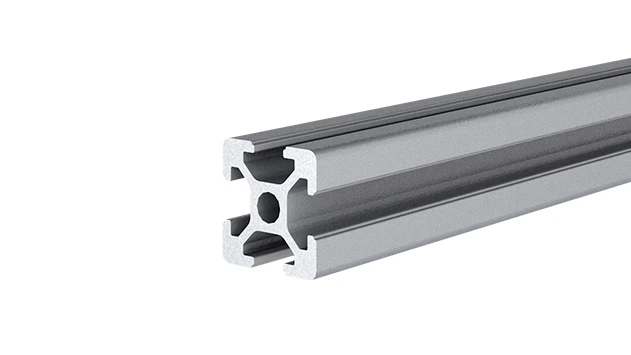
2020 is a 2.00 x 2.00CM fractional 20 series square extrusion T-slot profile with four open T-slots, one on each 2.00 face. The profile has align-a-grooves to assist in aligning connecting profiles.
Introduction: The Sustainability Imperative in Modern Manufacturing
In today's industrial landscape, "sustainability" is no longer a buzzword—it's a business imperative. Manufacturers worldwide are grappling with mounting pressure from regulators, consumers, and investors to reduce their environmental footprint, minimize waste, and operate within the bounds of a circular economy. From stricter emissions targets under the EU's Green Deal to consumer demand for eco-labeled products, the stakes have never been higher. Yet, sustainability often feels like a balancing act: how do you cut costs, maintain efficiency, and meet production goals while also reducing resource use and carbon emissions? The answer, increasingly, lies in rethinking the materials at the heart of manufacturing processes. Enter the 2020 EU Standard Aluminum Profile—a material that's quietly revolutionizing how sustainable manufacturing is done.
At first glance, aluminum might seem like an unlikely hero. It's been around for decades, used in everything from soda cans to skyscrapers. But the 2020 EU Standard Aluminum Profile isn't just any aluminum. Engineered to meet the latest European union regulations, this profile is designed with sustainability, durability, and adaptability in mind. It's a product of rigorous standards that prioritize recyclability, energy efficiency, and compliance with strict environmental directives like REACH and RoHS. For manufacturers, this isn't just about checking a regulatory box—it's about building a production ecosystem that's resilient, cost-effective, and future-proof. Let's dive into how this unassuming material is becoming a cornerstone of sustainable manufacturing.
What Is the 2020 EU Standard Aluminum Profile?
To understand the impact of the 2020 EU Standard Aluminum Profile, we first need to unpack what it is. Aluminum profiles are extruded products—meaning they're formed by pushing heated aluminum alloy through a die to create specific cross-sectional shapes. This process, known as aluminum extrusion, allows for incredible precision: from simple rods to complex, multi-chambered designs, the possibilities are nearly endless. The "2020 EU Standard" refers to a set of specifications updated in 2020 by the European Committee for Standardization (CEN) to ensure aluminum profiles meet the region's evolving environmental and safety requirements.
So, what makes these profiles different from their predecessors? For starters, the 2020 standard tightens controls on material purity. It limits the use of hazardous substances, ensuring profiles are free from heavy metals like lead and cadmium (a key compliance point for RoHS). It also sets stricter tolerances for dimensional accuracy and surface finish, reducing waste from ill-fitting components during assembly. Perhaps most importantly, the standard emphasizes the use of high-recycled-content aluminum, with many certified profiles containing 70% or more post-consumer recycled material. This isn't just good for the planet—it's good for business, too. Recycled aluminum requires just 5% of the energy needed to produce primary aluminum, slashing both carbon emissions and production costs.
But the 2020 EU Standard Aluminum Profile isn't a one-size-fits-all solution. It comes in a range of configurations, from the lightweight 2020 series (named for its 20x20mm cross-section) to larger profiles used in heavy-duty applications. This versatility is key to its sustainability: manufacturers can choose the exact profile they need, avoiding over-engineering and reducing material waste. Whether it's for building workbenches, conveyor systems, or material racks, there's a 2020 EU standard profile designed to fit the task—without excess.

Sustainability by Design: The Environmental Benefits of Aluminum Extrusion Profiles
At the core of the 2020 EU Standard Aluminum Profile's appeal is its inherent sustainability. Let's break down why aluminum, and specifically these extruded profiles, are a game-changer for eco-conscious manufacturers.
1. The Circular Economy Champion: Recyclability Without Compromise
Aluminum is unique among metals for its infinite recyclability. Unlike plastics or even some metals, aluminum can be melted down and reused repeatedly without losing quality. A 2020 EU standard aluminum profile, at the end of its life, can be recycled into a new profile, a car part, or even a smartphone case—with no degradation in performance. This closed-loop system is the backbone of the circular economy, and the 2020 standard doubles down on it by mandating minimum recycled content thresholds. For example, many profiles now contain 80-90% recycled aluminum, sourced from scrap metal that would otherwise end up in landfills.
Consider this: producing one ton of primary aluminum emits approximately 16 tons of CO2. Recycling the same ton? Just 0.8 tons of CO2. That's a 95% reduction in carbon footprint. For manufacturers, this translates to lower energy bills (since recycled aluminum requires less processing) and a stronger sustainability narrative to share with customers. It's a win-win that aligns with both profit margins and planet health.
2. Material Efficiency: Less Waste, More Performance
The aluminum extrusion process itself is a masterclass in material efficiency. Unlike machining, which cuts away excess material from a solid block, extrusion shapes aluminum by "pushing" it into form. This means minimal waste—often less than 5% of the input material ends up as scrap (and even that scrap is recycled). The 2020 EU standard takes this further by optimizing profile designs for strength-to-weight ratios. Engineers have refined cross-sections to use less material while maintaining structural integrity. For example, a 2020 EU standard aluminum profile might feature hollow chambers or ribbed reinforcements, reducing weight by 10-15% compared to older designs without sacrificing durability. Lighter profiles mean lower transportation costs (less fuel used to ship them) and easier handling on the factory floor—another hidden sustainability benefit.
3. Energy Efficiency in Production and Use
Beyond recyclability, the 2020 EU standard aluminum profile shines in energy efficiency. As mentioned earlier, recycled aluminum uses a fraction of the energy of primary production. But the benefits don't stop there. Aluminum's natural thermal conductivity makes it ideal for applications where heat management is key, such as in electronics manufacturing or food processing. Profiles can be designed to dissipate heat efficiently, reducing the need for energy-intensive cooling systems. Additionally, their lightweight nature reduces the energy required to move them—whether on a factory floor or in transit. A conveyor system built with 2020 EU standard aluminum profiles, for instance, requires less motor power to operate than a steel equivalent, cutting electricity use over time.
| Environmental Factor | Traditional Steel Profiles | 2020 EU Standard Aluminum Profiles |
|---|---|---|
| Recyclability | Recyclable, but quality degrades over time; lower recycled content rates (often 30-40%) | Infinite recyclability; 70-90% recycled content in most profiles |
| Carbon Footprint (per ton produced) | 1.8-2.5 tons CO2 | 0.8 tons CO2 (recycled aluminum) |
| Material Waste During Production | 15-20% (machining scrap) | 3-5% (extrusion scrap, fully recycled) |
| Weight (for equivalent strength) | Heavier (density: 7.85 g/cm³) | 40-50% lighter (density: 2.7 g/cm³) |
Integrating with Lean Systems: Reducing Waste, Boosting Efficiency
Sustainability and efficiency go hand in hand, and few methodologies embody this better than lean manufacturing. Lean systems focus on eliminating waste—whether it's time, materials, or energy—to create more value with fewer resources. The 2020 EU Standard Aluminum Profile is a natural fit for lean principles, thanks to its modularity, adaptability, and durability. Here's how they work together to drive sustainable productivity.
Modularity: Build, Adapt, Repeat
One of the biggest wastes in manufacturing is "overproduction"—building more than needed, or building fixed structures that can't adapt to changing needs. Traditional workbenches or material racks, often made of wood or welded steel, are case in point: once built, they're hard to modify. If a production line changes, the old bench becomes obsolete and is discarded, creating waste. The 2020 EU standard aluminum profile, however, is modular by design. Using aluminum profile accessories like connectors, hinges, and end caps, manufacturers can assemble and disassemble structures in minutes. Need a taller workbench? Swap out the legs. Adding a new conveyor line? Reconfigure the existing profiles and accessories. This flexibility means structures evolve with production needs, reducing the waste of replacing entire systems.
Take the example of a small electronics manufacturer that recently switched to 2020 EU standard aluminum profiles for their assembly workbenches. Previously, they used wooden benches that required replacement every 2-3 years due to wear and tear. With aluminum profiles and accessories like 2020 aluminum profile end caps (to protect edges) and T-slot rubber seal covers (for cable management), their workbenches are now adjustable, durable, and easy to repair. When they introduced a new product line, instead of building new benches, they simply reconfigured the existing ones by adding extra shelves and adjusting the height. The result? A 60% reduction in waste from bench replacement and a 30% faster transition to the new production line.
5S and Workplace Organization: A Lean Foundation
The 5S methodology—Sort, Set in Order, Shine, Standardize, Sustain—is a cornerstone of lean systems, aiming to create organized, efficient workspaces. The 2020 EU standard aluminum profile excels here. Its T-slot design (a key feature of many extruded profiles) allows for easy attachment of tools, bins, and accessories, keeping workspaces clutter-free. For example, a workbench built with these profiles can have tool holders, label holders, and even small conveyor tracks (using roller track accessories) mounted directly into the T-slots. This "set in order" step reduces time wasted searching for tools and minimizes unnecessary movement—another lean waste.
Moreover, the profiles' durability ensures that these organized workspaces stay that way. Unlike wood, aluminum doesn't warp or splinter; unlike painted steel, it resists corrosion and chipping. A quick wipe-down (the "shine" step) keeps them looking new, and their standardized dimensions (thanks to the 2020 EU standard) make it easy to replicate efficient setups across the factory (the "standardize" step). Over time, this consistency fosters a culture of sustainability, as workers take pride in maintaining a waste-free, organized environment.
Beyond the Profile: The Role of Aluminum Profile Accessories
A 2020 EU standard aluminum profile is only as good as the accessories that bring it to life. Aluminum profile accessories—connectors, end caps, hinges, casters, and more—are the unsung heroes of sustainable manufacturing. They transform raw profiles into functional, adaptable systems, and they do so with minimal environmental impact.
Take connectors, for example. Traditional steel structures often require welding, which is energy-intensive, produces fumes, and makes disassembly nearly impossible. Aluminum profile accessories like internal rotatary aluminum joints or 90° aluminum profile connectors, on the other hand, allow for tool-free assembly. These joints slide into the T-slots of the profiles and lock into place with a simple twist or bolt, creating strong, stable connections without heat or fumes. When a structure is no longer needed, the joints can be unlocked, and both the profiles and accessories can be reused in a new configuration. This "design for disassembly" is critical for the circular economy—nothing goes to waste because everything is reusable.
Even small accessories play a big role. T-slot rubber seal covers, for instance, not only protect the profile's slots from dust and debris but also extend the profile's lifespan by preventing corrosion. Nylon hinges, which are lightweight and corrosion-resistant, replace metal hinges that might rust and fail over time. End caps, made from recycled plastic or aluminum, seal the ends of profiles, preventing water ingress and improving safety (no sharp edges). Each accessory is designed to complement the profile's sustainability, ensuring the entire system—from the largest beam to the smallest cap—aligns with eco-friendly goals.
Real-World Impact: Case Studies in Sustainable Manufacturing
To truly grasp the 2020 EU Standard Aluminum Profile's role in sustainable manufacturing, let's look at two real-world examples (with details anonymized to protect company privacy).
Case Study 1: Automotive Parts Manufacturer Reduces Waste by 45%
A mid-sized automotive parts manufacturer in Germany was struggling to meet EU emissions targets while keeping up with demand for electric vehicle components. Their production line relied on steel workbenches and fixed conveyor systems, which were heavy, hard to modify, and prone to rust. When a new EV model required a production line redesign, they faced a choice: invest in new steel infrastructure (costing €200,000 and generating 15 tons of waste) or switch to 2020 EU standard aluminum profiles.
They chose the latter, partnering with a supplier to build modular workbenches, material racks, and conveyor systems using 2020 EU standard aluminum profiles and accessories. The results were striking: the new system used 30% less material than the steel equivalent, thanks to aluminum's strength-to-weight ratio. The modular design allowed them to reconfigure the line in just 3 days, compared to 2 weeks for the steel setup. Over the first year, they recycled 9 tons of steel scrap from the old system, and the aluminum profiles' recyclability meant that even the small amount of waste from cutting profiles was melted down and reused. By the end of the year, their overall production waste was down 45%, and their carbon footprint per part had dropped by 22%. "The aluminum profiles didn't just help us meet regulations—they made us more agile," said the plant manager. "We can now adapt to new orders faster, and our workers love how easy the workbenches are to adjust."
Case Study 2: Electronics Assembly Plant Cuts Energy Use by 18%
An electronics manufacturer in Poland faced rising energy costs and pressure to reduce its reliance on fossil fuels. Their assembly workbenches, made of particleboard and steel, were heavy and required constant lighting (due to poor reflectivity) and heating (due to heat loss through drafty workspaces). They turned to 2020 EU standard aluminum profiles to rebuild their workstations.
The new aluminum workbenches, paired with aluminum profile accessories like LED light strips (mounted in T-slots) and insulating rubber strips, transformed their energy use. Aluminum's natural reflectivity reduced the need for overhead lighting by 40%, as the profiles bounced light around the workspace. The T-slot rubber seal covers sealed gaps between profiles, cutting down on drafts and lowering heating costs. Additionally, the lighter benches were easier to move, reducing the need for forklifts and lowering fuel consumption. After six months, the plant's energy bill was 18% lower, and employee satisfaction scores rose due to the brighter, more comfortable work environment. "We didn't expect aluminum to impact our energy use this much," noted the sustainability director. "It's a reminder that sustainability often comes from rethinking the basics—like what our workbenches are made of."
Looking Ahead: The Future of Sustainable Manufacturing with 2020 EU Standard Aluminum Profiles
As we look to the future, the role of the 2020 EU Standard Aluminum Profile in sustainable manufacturing is only set to grow. Here are three trends shaping its evolution:
1. Smart Profiles: IoT Integration for Data-Driven Sustainability
The rise of Industry 4.0 is bringing connectivity to the factory floor, and aluminum profiles are getting in on the action. Future profiles may include embedded sensors (mounted via T-slot accessories) that monitor usage, temperature, and even structural stress. This data can help manufacturers optimize maintenance (reducing waste from unexpected failures), track energy use in real time, and identify opportunities for further efficiency gains. For example, a sensor in a conveyor system could alert managers to a misaligned roller track, preventing jams and reducing material waste.
2. Bio-Based Accessories: Expanding the Circular Economy
While aluminum profiles are already highly sustainable, researchers are exploring bio-based materials for accessories. Imagine end caps made from recycled plastic blended with plant-based fibers, or lubricants for hinges derived from vegetable oils. These innovations would further reduce the environmental impact of aluminum systems, creating a fully circular ecosystem where even the smallest components are biodegradable or recyclable.
3. Stricter Standards: Pushing the Boundaries of Sustainability
As the EU Green Deal tightens emissions targets (aiming for carbon neutrality by 2050), we can expect future updates to the EU aluminum profile standard. These may include higher recycled content requirements, stricter limits on embodied carbon (the total CO2 emitted during production), and even certifications for "carbon-negative" profiles—those that remove more CO2 from the atmosphere than they emit over their lifecycle. For manufacturers, staying ahead of these standards will be key to remaining competitive in a rapidly evolving market.
Conclusion: Building a Sustainable Future, One Profile at a Time
The 2020 EU Standard Aluminum Profile is more than a material—it's a symbol of how sustainability and efficiency can go hand in hand. From its infinite recyclability to its role in lean systems, from the precision of aluminum extrusion to the versatility of its accessories, this profile embodies the principles of modern manufacturing: do more with less, adapt quickly, and leave the planet better than you found it.
For manufacturers, the message is clear: sustainability isn't a cost—it's an opportunity. By choosing 2020 EU standard aluminum profiles, they're not just complying with regulations; they're building more agile, resilient operations that can thrive in a world where resource efficiency and environmental responsibility are the new benchmarks of success. Whether it's through reducing waste, cutting energy use, or creating adaptable workspaces, these profiles are proving that the future of manufacturing is both green and profitable.
As we move forward, the 2020 EU Standard Aluminum Profile will continue to evolve—becoming lighter, more recyclable, and more integrated with smart technologies. But its core promise will remain the same: to help manufacturers build a world where production and sustainability coexist, not as competitors, but as partners. After all, in the end, the most sustainable manufacturing process is one that leaves no trace—except for the products we need, made better, for a better planet.