- Company Articles
- Industry articles
- Industry standards
- The Role of 4040F EU Standard Aluminum Profile in Modular Production Cells

The Role of 4040F EU Standard Aluminum Profile in Modular Production Cells
Related Product
4040F EU Standard Aluminum Profile
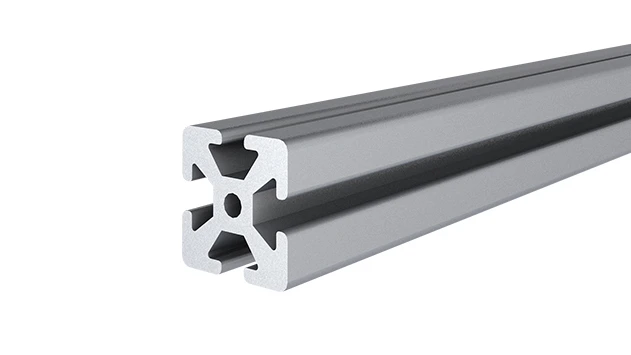
4040F is a 4.00x4.00 CM fractional 40 series square extrusion T-slot profile with four side open T-slots, each side with 4.00cm face. The profile has align-a-grooves to assist in aligning connecting profiles.
Walk into any modern manufacturing facility today, and you'll notice a shift. Gone are the days of rigid, one-size-fits-all production lines bolted to the floor, resistant to change and slow to adapt. Instead, you'll find dynamic, flexible workspaces where stations evolve as quickly as customer demands. At the heart of this transformation? Modular production cells—and the unsung hero making them possible: the 4040F EU Standard Aluminum Extrusion Profile. In this article, we'll explore how this unassuming piece of aluminum is redefining efficiency, adaptability, and scalability in factories worldwide.
1. The Changing Face of Manufacturing: Why Modularity Matters
Manufacturing today is a balancing act. Customers want personalized products, delivered faster than ever. Markets shift overnight, and competitors are always nipping at your heels with new innovations. To keep up, factories can't afford to be stuck with inflexible setups. Traditional production lines, built with welded steel frames or fixed concrete structures, are like trying to fit a square peg into a round hole—they work for a specific task, but change requires tearing everything down and starting over. That's expensive, time-consuming, and a recipe for falling behind.
Enter modular production cells: self-contained units that can be configured, reconfigured, and repurposed to handle different tasks. Think of them as Lego blocks for manufacturing—individual components that snap together to create a functional workspace, then break apart just as easily to build something new. Whether you need to scale up for a sudden order surge, pivot to a new product line, or optimize workflow for better ergonomics, modular cells adapt without the hassle of a complete overhaul.
2. What Are Modular Production Cells, Exactly?
At their core, modular production cells are flexible workstations designed around a specific process—say, assembling circuit boards, packaging products, or inspecting parts. They're built using standardized, interchangeable components that can be rearranged in hours (not weeks) to meet new needs. Key features include:
- Reconfigurability: Swap out a workbench here, add a flow rack there, or reposition a conveyor—no welding or heavy construction required.
- Integration: Components work together seamlessly, from tool holders to material racks, creating a cohesive workflow.
- Scalability: Start small with one cell, then add more as your operation grows, linking them to form a larger production line.
- Ergonomics: Adjust heights, angles, and layouts to fit human workers, reducing fatigue and boosting productivity.
But for all this to work, the "building blocks" of these cells need to be strong, lightweight, and easy to connect. That's where aluminum extrusion profiles come in—and why the 4040F EU Standard is a standout choice.

3. Meet the 4040F EU Standard Aluminum Extrusion Profile
Let's start with the basics. The 4040F is a type of aluminum extrusion profile, meaning it's formed by pushing heated aluminum alloy through a die to create a specific cross-sectional shape. Its name gives away its dimensions: 40mm by 40mm, making it a versatile middleweight—sturdy enough for most industrial tasks, but not so bulky that it limits flexibility. The "EU Standard" tag ensures it meets strict European manufacturing norms for precision, strength, and compatibility with other components.
Material Matters: Why Aluminum?
Aluminum might not seem as tough as steel, but don't let its lightweight nature fool you. The 4040F is typically made from 6063-T5 aluminum alloy, a material prized for its strength-to-weight ratio. It's corrosion-resistant, so it holds up in harsh factory environments, and it's naturally conductive—handy for grounding in electronics manufacturing (more on that later). Best of all, aluminum is recyclable, aligning with the sustainability goals many modern factories are chasing.
The T-Slot Design: The Secret to Flexibility
What really sets extrusion profiles like the 4040F apart is their T-slot design. Run your finger along the length of the profile, and you'll notice grooves (or "slots") running parallel to its edges. These slots are where the magic happens. Using simple fasteners—like bolts, nuts, or specialized brackets—you can attach almost anything to the profile: shelves, panels, casters, tools, or even other profiles. No drilling, no welding, no mess. Just slide a fastener into the slot, tighten it, and you're done. Need to move something? Loosen the fastener, reposition, and retighten. It's that easy.
The 4040F takes this a step further with its "F" variant, which often refers to a specific slot configuration optimized for versatility. More slots mean more attachment points, giving you the freedom to design workstations that fit your exact needs—whether you're mounting a heavy tool on one side or a lightweight label dispenser on the other.
4. How 4040F Profiles Power Modular Production Cells
Now, let's get practical. How does the 4040F profile actually work in a modular production cell? Let's break it down into key roles:
a. The Backbone of Workstations and Frames
Every modular cell starts with a frame, and the 4040F is the perfect skeleton. Whether you're building a simple workbench or a multi-level material rack, these profiles form the structure that holds everything together. For example, a basic workbench might use four vertical 4040F posts connected by horizontal profiles at the top and bottom, creating a stable, rectangular frame. Add a tabletop (often an aluminum honeycomb panel for lightweight strength) and casters (for mobility), and you've got a workstation that can be moved, adjusted, or repurposed in minutes.
What makes this better than a traditional wooden or steel workbench? For starters, weight. Aluminum is lighter than steel, so even a fully loaded 4040F workbench can be moved by two people without heavy machinery. It's also customizable—want to add a shelf halfway up? Slide in some brackets into the T-slots and bolt on another 4040F crossbar. Need to raise the height? Swap out the vertical posts for longer ones. No need to buy a whole new bench.
b. Enabling Flow Racks and Material Handling
In any production cell, moving materials smoothly from point A to point B is critical. That's where flow racks come in—sloped shelves with rollers that let parts or products glide down to the worker, reducing manual lifting and speeding up access. The 4040F profile is ideal for building these racks because it's strong enough to support heavy loads (think boxes of components or finished goods) but lightweight enough to keep the rack itself from being too bulky.
Here's how it works: Vertical 4040F posts form the sides of the rack. Horizontal profiles are mounted at an angle (using adjustable brackets in the T-slots) to create the sloped shelves. Then, roller tracks—often made of aluminum or plastic—are attached to the horizontal profiles, allowing materials to roll freely. Since the T-slots let you adjust the angle of the shelves, you can control how fast items flow, preventing jams or damage. And if you need to add more levels or change the rack's width? Just add or remove profiles—no cutting or welding required.
c. Integrating with Aluminum Profile Accessories
A profile is only as good as the accessories that go with it, and the 4040F plays well with a huge ecosystem of components. From brackets and connectors to end caps and rubber strips, these accessories turn basic profiles into fully functional systems. Let's take a few examples:
- Connectors: 90° aluminum profile connectors let you join two 4040F profiles at a right angle, perfect for building corners of a frame. 45° connectors add angled support, while 135° connectors create obtuse angles for unique layouts.
- End Caps: These plastic or aluminum caps snap into the ends of profiles, hiding sharp edges and giving the cell a clean, professional look—important for worker safety and reducing snagging on materials.
- T-Slot Rubber Strips: Slide these into the T-slots to seal out dust and debris, keeping the slots clean and ready for fasteners when you need to reconfigure.
- Casters: Mount heavy-duty casters to the bottom of 4040F posts, and suddenly your stationary workbench becomes a mobile cart—ideal for moving tools between cells or transporting finished products to shipping.
The beauty of this ecosystem is standardization. Since the 4040F follows EU standards, accessories from different suppliers work together seamlessly. You don't have to worry about mismatched sizes or incompatible parts—just pick the components you need and start building.
d. Supporting Lean Systems and Waste Reduction
Lean manufacturing is all about eliminating waste—whether that's time, materials, or unnecessary movement. Modular production cells built with 4040F profiles align perfectly with this philosophy. For example, a lean system might require a "5S" setup (Sort, Set in Order, Shine, Standardize, Sustain), where every tool and material has a designated place. With 4040F profiles, you can add tool holders, bins, and label holders directly to the workstation frame, ensuring everything stays organized and within arm's reach. No more hunting for a wrench or walking across the factory for a part—workers spend less time searching and more time producing.
Another lean principle is "just-in-time" production, where materials arrive exactly when they're needed. Flow racks made with 4040F profiles make this easier by keeping inventory visible and accessible, so workers can grab parts as they're needed without overstocking. And if production volumes change? Adjust the rack's size or add more levels to match demand—no wasted space, no excess inventory.
4. Traditional vs. 4040F Modular Setups: A Comparison
| Criteria | Traditional Fixed Setups (Steel/Wood) | 4040F Aluminum Modular Setups |
|---|---|---|
| Setup Time | Weeks (requires welding, cutting, and installation by specialists) | Days (assembled with basic tools by in-house teams) |
| Reconfigurability | Costly and time-consuming (often requires rebuilding from scratch) | Fast and easy (loosen fasteners, reposition profiles, and reattach) |
| Weight | Heavy (difficult to move; requires machinery for relocation) | Lightweight (movable by hand or with basic casters) |
| Durability | Prone to rust (steel) or warping (wood) in harsh environments | Corrosion-resistant aluminum; withstands factory conditions |
| Cost Over Time | High (replacement costs for new setups; downtime during changes) | Lower (reusable profiles; minimal downtime; no need for new materials) |
| Sustainability | High waste (scrapped frames when reconfiguring) | Eco-friendly (aluminum is 100% recyclable; profiles repurposed repeatedly) |
5. Real-World Examples: 4040F in Action
Let's look at how two different manufacturers are using 4040F profiles to transform their operations:
Case Study 1: Electronics Assembly Plant
A mid-sized electronics company was struggling to keep up with demand for custom circuit boards. Their old production line used fixed steel workbenches, and switching between product models meant shutting down for a week to retool. They switched to modular cells built with 4040F profiles. Now, each cell is a self-contained assembly station with adjustable 4040F workbenches, ESD (electrostatic discharge) mats (critical for sensitive electronics), and flow racks for components. When a new order comes in, workers reconfigure the cells in a day by adjusting the workbench heights, swapping out tool holders, and repositioning the flow racks. Downtime dropped by 90%, and they're now handling 30% more orders without adding square footage.
Case Study 2: Automotive Parts Supplier
An automotive supplier needed a way to transport heavy engine parts between assembly stations. Their old system used bulky steel carts that were hard to maneuver and often got stuck in tight spaces. They replaced the carts with 4040F frames: lightweight aluminum profiles with heavy-duty casters and custom shelves. The new carts are easier to push, reducing worker fatigue, and the T-slots let them add dividers or tool hooks as needed. Best of all, when a new part size comes in, they just adjust the shelf heights using 4040F brackets—no need to buy new carts.
6. The Future of Manufacturing: 4040F and Beyond
As manufacturing continues to evolve, modularity will only become more critical. Industry 4.0—with its focus on smart factories, IoT, and data-driven production—relies on flexible systems that can integrate sensors, robots, and automation. The 4040F profile is ready for this future. Its T-slots can house sensors to monitor production flow or temperature, and its lightweight design makes it easy to mount small robots or collaborative machines (cobots) alongside human workers.
Looking ahead, we'll likely see even more specialized accessories for 4040F profiles, from quick-connect brackets to integrated cable management systems. And as sustainability becomes a bigger priority, aluminum's recyclability will make it an even more attractive choice over single-use materials.
7. Conclusion: More Than a Profile—A Catalyst for Change
The 4040F EU Standard Aluminum Extrusion Profile might not grab headlines, but it's quietly revolutionizing how factories operate. By providing a strong, flexible, and affordable building block for modular production cells, it's enabling manufacturers to adapt faster, reduce waste, and stay competitive in a rapidly changing world. Whether you're a small workshop or a large industrial plant, the message is clear: rigid systems belong in the past. The future of manufacturing is modular—and it's built on 4040F profiles.
So, the next time you walk through a factory and see those sleek, silver frames holding up workbenches, flow racks, and carts, take a closer look. Chances are, you're looking at the 4040F profile—proof that sometimes, the most impactful innovations are the ones that quietly hold everything together.