- Company Articles
- Industry articles
- Industry standards
- The Role of 4080A EU Standard Aluminum Profile in Sustainable Factory Design

The Role of 4080A EU Standard Aluminum Profile in Sustainable Factory Design
Related Product
4080A EU Standard Aluminum Profile
4080A is a 4.00x8.00 CM fractional 40 series square extrusion T-slot profile with two side open T-slots, each side with 4.00cm face, two side with 8.00cm face. The profile has align-a-grooves to assist in aligning connecting profiles.
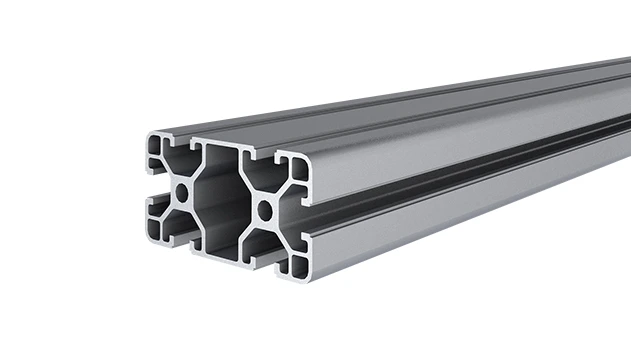
In an era where businesses are increasingly measured by their environmental footprint, factory design has evolved from a purely functional exercise to a strategic commitment to sustainability. Today's manufacturers aren't just building spaces to produce goods—they're crafting ecosystems that minimize waste, reduce energy use, and adapt to changing needs without sacrificing efficiency. At the heart of this transformation lies a seemingly unassuming component: the aluminum extrusion profile . Specifically, the 4080A EU Standard Aluminum Profile has emerged as a quiet hero, redefining how factories balance productivity with planet-friendly practices. Let's dive into why this material matters, how it shapes sustainable operations, and the tangible impact it brings to the factory floor.
The Sustainable Factory Revolution: Beyond "Going Green"
Sustainability in manufacturing isn't about token gestures anymore. It's about rethinking every aspect of operations—from energy sources to waste management—to create closed-loop systems that thrive economically while respecting planetary boundaries. According to the United Nations Industrial Development Organization (UNIDO), the manufacturing sector accounts for 28% of global energy consumption and 24% of greenhouse gas emissions. For factories aiming to meet net-zero targets, incremental changes aren't enough. They need foundational shifts in how infrastructure is designed, built, and reused.
Traditional factory setups often rely on rigid, one-size-fits-all materials like steel or concrete. These are durable, but they come with steep environmental costs: steel production emits CO2, concrete is resource-intensive to mine, and once installed, these materials are hard to modify. If a factory wants to reconfigure a production line, expand a workspace, or adapt to new machinery, it often means tearing down and rebuilding—generating tons of waste in the process. This is where modular, adaptable materials step in, and the 4080A aluminum extrusion profile leads the charge.
What Makes 4080A EU Standard Aluminum Profile Unique?
First, let's decode the name: "4080A" refers to the profile's cross-sectional dimensions—40mm in width and 80mm in height—while "EU Standard" ensures compliance with strict European regulations for quality, safety, and environmental performance. But its real value lies in how it's made and what it enables. Aluminum extrusion, the process used to create this profile, involves heating aluminum billets to a malleable state and forcing them through a die to form precise shapes. This method is inherently efficient: it produces minimal waste, allows for complex designs, and requires less energy than casting or machining.
Unlike steel, aluminum is naturally corrosion-resistant, eliminating the need for toxic coatings or frequent maintenance. It's also lightweight—about one-third the density of steel—making it easier to transport, install, and reconfigure. For factory managers, this translates to lower shipping emissions, reduced labor costs during setup, and greater flexibility in rearranging workspaces. But perhaps most importantly, aluminum is infinitely recyclable. When a 4080A profile reaches the end of its life in one application, it can be melted down and reformed into a new profile with no loss in quality—a closed-loop cycle that aligns perfectly with circular economy principles.

Sustainability by Design: Key Benefits of 4080A Profiles
The 4080A profile isn't just "sustainable" by virtue of being aluminum—it's engineered to amplify sustainability at every stage of its lifecycle. Let's break down its most impactful features:
1. Energy Efficiency from Cradle to Grave
Producing primary aluminum is energy-intensive, but recycled aluminum changes the game. The Aluminum Association reports that recycling aluminum uses 95% less energy than producing it from bauxite ore. Most 4080A profiles on the market today contain high percentages of recycled content, and since they're 100% recyclable, they can re-enter the loop indefinitely. For factories, this means choosing 4080A isn't just a one-time eco-choice—it's an investment in a material that keeps giving back, reducing reliance on virgin resources for decades.
2. Modularity: The Antidote to Wasteful Overbuilding
One of the biggest sustainability challenges in factory design is "future-proofing." Industries evolve, product lines change, and new technologies emerge—yet traditional infrastructure is often too rigid to keep up. A steel workstation built for a specific machine becomes obsolete when that machine is replaced, ending up in a landfill. The 4080A profile, however, is designed for modularity. With compatible
aluminum profile accessories
—joints, brackets, and connectors—factories can assemble, disassemble, and reassemble structures in hours, not weeks. Need to widen a
workbench
for a new tool? Add a few extra profiles. Want to repurpose a section of conveyor into a temporary storage rack? Unbolt the parts and reconfigure. This adaptability slashes waste by extending the lifespan of infrastructure and reducing the need for new materials.
3. Lightweight Strength: Reducing Carbon in Motion
Factories aren't static places—materials move, equipment shifts, and workstations are repositioned to optimize flow. Heavier materials like steel require more energy to move, whether by forklift or human labor, increasing both operational costs and carbon emissions. The 4080A profile's high strength-to-weight ratio solves this. Its aluminum composition provides the structural integrity needed to support heavy machinery or inventory, but at a fraction of the weight of steel. For example, a 4080A-based
roller track
—used to slide components between workstations—requires less energy to operate than a steel alternative, lowering electricity use over time. Even during installation, lighter materials mean fewer trips for delivery trucks and less fuel burned, shrinking the factory's carbon footprint from day one.
From Workbenches to Lean Systems: 4080A in Action
To understand the 4080A profile's real-world impact, let's look at three common factory applications where it shines: workbenches, roller tracks, and lean manufacturing systems. These aren't just random use cases—they represent the backbone of factory operations, where sustainability and productivity intersect most closely.
Workbenches: Ergonomic, Adaptable, and Waste-Free
The average factory worker spends 8+ hours at a workstation, so comfort and functionality directly affect productivity. Traditional workbenches, often made of wood or steel, are fixed in height and layout, leading to ergonomic strain and inefficiency. 4080A-based workbenches, however, are customizable down to the millimeter. Using aluminum profile accessories like height-adjustable legs and modular shelving, managers can tailor each bench to the task—whether it's assembling small electronics or heavy machinery. When a new product line is introduced, the bench can be reconfigured with minimal tools, avoiding the waste of replacing an entire unit. A case study from a German automotive parts manufacturer found that switching to 4080A workbenches reduced workstation replacement costs by 60% over five years, while employee-reported ergonomic issues dropped by 35%.
Roller Tracks: Smoothing Material Flow, Cutting Energy Use
Efficient material handling is the lifeblood of lean manufacturing, and
roller track
systems are critical for moving parts between stations without manual lifting. Steel roller tracks are durable but heavy, requiring more energy to operate and prone to rust in humid environments. 4080A aluminum roller tracks, by contrast, are lightweight, corrosion-resistant, and designed for smooth, low-friction movement. The EU standard ensures consistent quality, so rollers glide evenly, reducing jams and downtime. A UK-based electronics assembler replaced its steel roller tracks with 4080A versions and saw a 12% reduction in energy use for conveyor systems, along with a 50% drop in maintenance costs (thanks to aluminum's resistance to rust and wear).
Lean Systems: Building Agility into Production
Lean manufacturing is all about eliminating waste—whether of time, materials, or space. The 4080A profile aligns perfectly with this philosophy by enabling "just-in-time" infrastructure. For example, a
lean system
might require a temporary assembly line for a seasonal product. With 4080A profiles and compatible accessories, the line can be built in days, then disassembled and the materials reused elsewhere when the season ends. This flexibility prevents overbuilding and keeps resources in circulation. A Japanese consumer goods manufacturer implemented this approach and reduced its "idle infrastructure" waste—materials used for temporary setups that end up unused—by 75% in one year. The 4080A profile's modularity also supports continuous improvement: if a team identifies a bottleneck, they can reconfigure the workflow on the spot, without waiting for contractors or new materials.
Comparing Materials: How 4080A Stacks Up Against Alternatives
To truly appreciate the 4080A profile's sustainability credentials, it helps to see how it compares to other common factory materials. Below is a comparison of key environmental and operational metrics:
| Metric | 4080A Aluminum Extrusion Profile | Traditional Steel Profile | Wood-Composite Profile |
|---|---|---|---|
| Recyclability Rate | 100% (infinite cycles) | 90% (loses quality over cycles) | 30% (limited by adhesives/coatings) |
| Energy Use (Production, MJ/kg) | 8 (recycled aluminum) | 20-25 (virgin steel) | 15-18 (including wood processing) |
| Expected Lifespan (Years) | 20-30 (with proper care) | 15-20 (prone to rust) | 5-10 (susceptible to moisture/wear) |
| Maintenance Cost (Annual, $/m) | $2-3 (minimal cleaning only) | $8-10 (painting, rust treatment) | $5-7 (repairing warping, replacing parts) |
| Weight (kg/m) | 2.5-3.0 | 7.8-8.5 | 4.0-4.5 |
The data speaks for itself: 4080A outperforms steel and wood-composite profiles in nearly every sustainability category, from recyclability to long-term maintenance. Its lower weight reduces energy use during transport and operation, while its infinite recyclability ensures it never becomes waste. For factories prioritizing both planet and profit, this isn't just a material choice—it's a strategic advantage.
Future-Proofing Factories: 4080A and the Circular Economy
As the world moves toward a circular economy—where resources are kept in use for as long as possible—materials like the 4080A profile will become even more critical. Imagine a future where factories don't "retire" old infrastructure but instead "redeploy" it. A 4080A workbench from a closed automotive plant could be disassembled, sorted by material, and recycled into new profiles for a food processing facility. Its aluminum would re-enter the supply chain, requiring minimal energy and no new bauxite mining. This isn't science fiction; it's already happening. Companies like IKEA and Tesla have committed to using 100% recycled aluminum in their products, and factories are following suit by designing infrastructure with end-of-life recycling in mind.
The 4080A profile also paves the way for smarter, more connected factories. Its T-slot design— a key feature of aluminum extrusion profiles—allows for easy integration of sensors, LED lights, or IoT devices. For example, a roller track could be fitted with weight sensors to monitor inventory levels, reducing overstock and waste. Or a workbench could include energy-efficient lighting powered by solar panels mounted on the aluminum frame. These innovations turn static infrastructure into dynamic, data-driven tools that optimize both sustainability and productivity.
Conclusion: Small Profile, Big Impact
Sustainable factory design isn't about grand gestures—it's about the cumulative effect of thousands of small, intentional choices. The 4080A EU Standard Aluminum Profile embodies this idea. It's not flashy, but its impact ripples through every aspect of factory operations: reducing waste, cutting energy use, enabling adaptability, and supporting the shift to a circular economy. For manufacturers looking to build resilient, future-ready operations, this profile isn't just a material—it's a partner in progress.
As we move forward, the question won't be whether factories can afford to adopt sustainable materials, but whether they can afford not to. With the 4080A profile, the answer is clear: sustainability and productivity don't have to compete. They can coexist, thrive, and redefine what it means to build a factory that works—for people, for profits, and for the planet.