- Company Articles
- Industry articles
- Industry News
- The Role of Aluminum Honeycomb Panels in Reducing Carbon Footprint in Manufacturing

The Role of Aluminum Honeycomb Panels in Reducing Carbon Footprint in Manufacturing
Related Product
Aluminum Honeycomb Panel
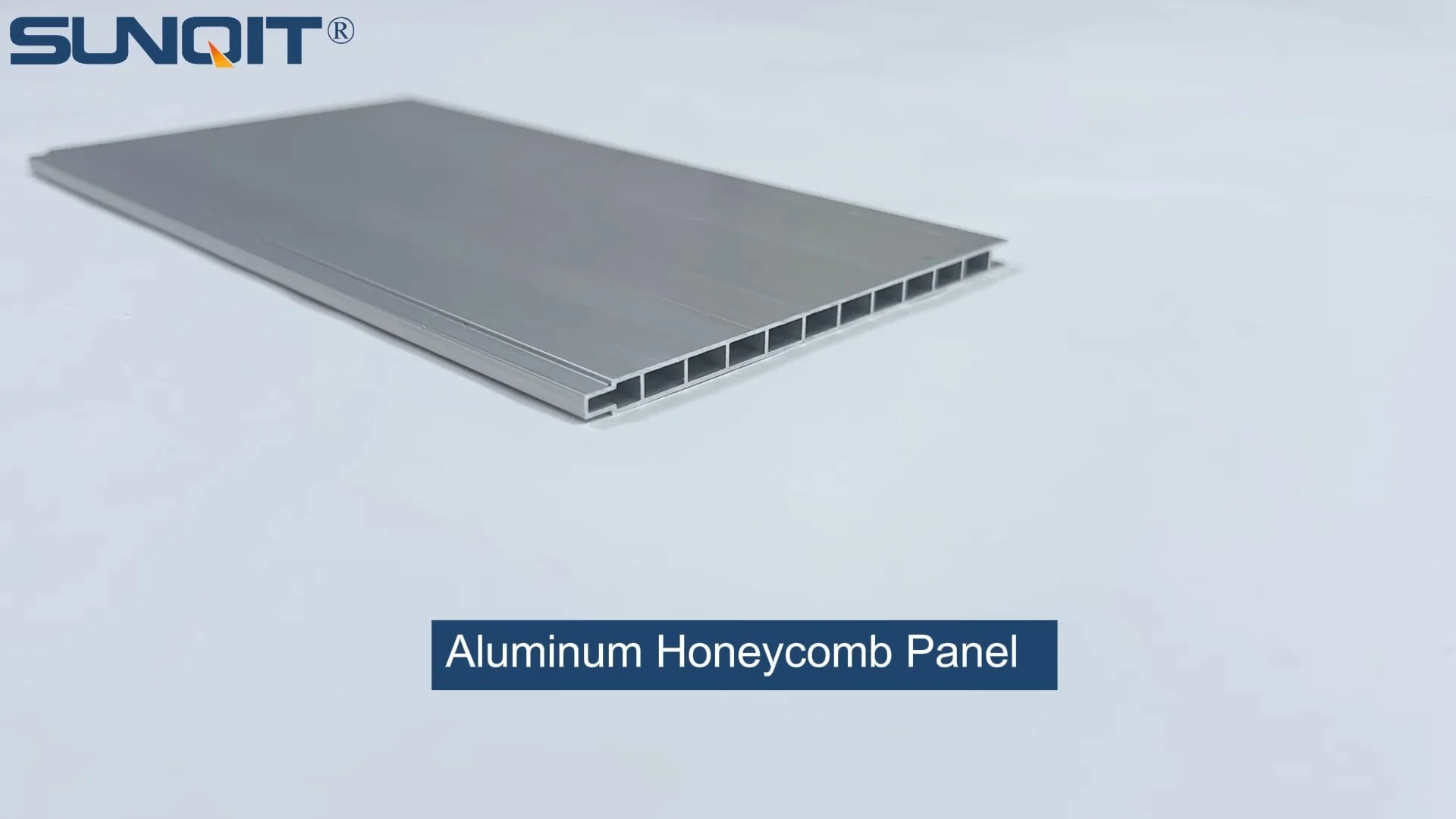
Aluminum honeycomb panel used as table top, side wall, it is connected one pcs by one pcs from the side slot to make a full pieces.This panel width 105mm, 55mm, 35mm are optional for slection.
Introduction: The Urgency of Sustainable Manufacturing
Walk into any modern factory, and you'll likely hear the hum of machines, the clink of tools, and the steady rhythm of production. But behind that productivity lies a quieter, pressing concern: the carbon footprint of manufacturing. From raw material extraction to energy use on the factory floor, the industry is a major contributor to global emissions—accounting for nearly 25% of global greenhouse gas emissions, according to the United Nations Industrial Development Organization. As regulations tighten and consumers demand greener practices, manufacturers are scrambling to find solutions that don't just cut costs, but cut carbon too. Enter aluminum honeycomb panels: a material that's quietly revolutionizing how factories build, operate, and sustain themselves. In this article, we'll explore how these lightweight, durable panels are becoming a cornerstone of sustainable manufacturing, and why they might just be the key to reducing your facility's carbon footprint without sacrificing efficiency.
What Are Aluminum Honeycomb Panels? A Closer Look
Before diving into their environmental benefits, let's get familiar with what aluminum honeycomb panels actually are. Picture a sandwich—but instead of bread and filling, imagine two thin sheets of aluminum (the "faces") glued to a core that looks like a honeycomb. That hexagonal core, usually made of aluminum or sometimes paper (though aluminum is more common in manufacturing), is what gives the panel its superpowers. It's lightweight, yet surprisingly strong—think of how a bee's honeycomb can support the weight of honey and bees despite being made of delicate wax. Translate that to industrial materials, and you get a panel that can withstand heavy loads, resist bending, and last for decades, all while weighing a fraction of traditional materials like solid steel or thick wood.
But what makes them stand out in manufacturing? Unlike solid aluminum sheets or steel plates, aluminum honeycomb panels are engineered for efficiency. The honeycomb core acts as a structural reinforcement, meaning you don't need as much material to get the same (or better) strength. This design quirk is why they're increasingly used in everything from workbench tops and material racks to conveyor systems and even factory walls. And when paired with aluminum extrusion profiles—the versatile, customizable beams and frames made by pushing aluminum through a die—they become part of a modular, sustainable building system that's changing how factories are designed.

The Carbon Footprint Puzzle: Where Manufacturing Stands
To understand why aluminum honeycomb panels matter, let's first unpack where manufacturing's carbon footprint comes from. It's not just one source—it's a chain. Start with raw materials: mining iron ore for steel, cutting down trees for wood, or extracting bauxite for aluminum all release carbon. Then there's production: melting steel in furnaces, pressing wood into panels, or shaping aluminum requires energy, often from fossil fuels. Next, transportation: moving heavy materials from factories to warehouses to assembly lines burns fuel. Finally, there's waste: unused scraps, broken parts, and materials that end up in landfills instead of being recycled. All these steps add up, and for manufacturers, trimming even a small percentage from each can lead to massive carbon savings.
Take traditional workbenches, for example. A typical steel workbench might weigh 80kg, requiring more energy to produce the steel, more fuel to transport it to the factory, and more resources to replace when it rusts or wears out. Now imagine replacing that with an aluminum honeycomb panel workbench that weighs 30kg, lasts twice as long, and can be recycled. The difference isn't just in the numbers—it's in the cumulative impact of thousands of such workbenches across a global industry. That's where aluminum honeycomb panels step in: they're not a silver bullet, but a high-impact piece of the sustainability puzzle.

How Aluminum Honeycomb Panels Cut Carbon: 5 Key Mechanisms
1. Material Efficiency: Less is More
The most obvious way aluminum honeycomb panels reduce carbon is through material efficiency. Let's do a quick thought experiment: a solid aluminum panel that's 20mm thick might weigh 5kg per square meter. An aluminum honeycomb panel with the same thickness? It could weigh as little as 1.5kg per square meter, thanks to that hollow honeycomb core. That's a 70% reduction in material use—and since producing aluminum (or any material) releases carbon, using less material directly cuts emissions. For example, producing 1kg of aluminum emits about 16kg of CO2e (carbon dioxide equivalent), according to the International Aluminium Institute. So, if a factory needs 100 square meters of paneling, a solid aluminum sheet would require 500kg of aluminum (5kg/m² x 100m²) and emit 8,000kg CO2e (500kg x 16kg CO2e/kg). An aluminum honeycomb panel, at 1.5kg/m², would need just 150kg of aluminum, emitting 2,400kg CO2e—a 70% drop in production emissions alone.
But it's not just about less aluminum. The honeycomb core often uses recycled aluminum, which cuts emissions even further. Recycled aluminum requires only 5% of the energy needed to produce new aluminum, slashing carbon emissions by 95%. Many manufacturers of aluminum honeycomb panels prioritize recycled content in their cores and face sheets, turning old aluminum cans, car parts, and factory scraps into high-performance panels. That's material efficiency at its best: using less, reusing more, and emitting less from the start.
2. Energy-Efficient Production with Aluminum Extrusion Profiles
Aluminum honeycomb panels don't exist in a vacuum—they're often part of larger systems built with aluminum extrusion profiles. These profiles are the backbone of modern factory setups: think of the frames of workbenches, the rails of conveyor systems, or the supports of material racks. What makes aluminum extrusion profiles so sustainable is how they're made. Extrusion is a process where aluminum billets (heated blocks) are pushed through a die to create custom shapes—square tubes, T-beams, or even complex, multi-functional profiles. Compared to casting or forging, extrusion uses less energy because it doesn't require melting the aluminum to extremely high temperatures (it's heated, but not to the point of liquefaction like in casting). This lower energy demand translates to fewer carbon emissions during production.
When paired with aluminum honeycomb panels, these profiles create a modular system that's both strong and lightweight. For example, a material rack built with aluminum extrusion profiles and aluminum honeycomb shelves can support the same weight as a steel rack but uses 60% less material. The extrusion process also produces minimal waste: excess aluminum from the die can be recycled on-site, and the profiles themselves are designed to fit together without extra fasteners or adhesives, reducing the need for additional materials (and their associated carbon footprints). It's a production process that aligns with the "reduce, reuse, recycle" mantra, and it's one of the reasons aluminum systems are becoming a staple in sustainable manufacturing.
3. Lightweight Design = Lower Transportation Emissions
Let's talk about trucks. Every time a material is shipped from a supplier to a factory, or from a factory to a customer, the weight of that material determines how much fuel the truck burns—and how much CO2 it emits. A truck carrying 10 tons of steel panels will use far more fuel than one carrying 3 tons of aluminum honeycomb panels. Over thousands of shipments, that difference adds up to millions of tons of CO2 saved annually.
Consider a furniture manufacturer that supplies workbenches to factories across Europe. If they switch from steel workbench tops (each weighing 50kg) to aluminum honeycomb tops (each weighing 15kg), a truck that once carried 200 steel tops (10 tons) can now carry 666 aluminum tops (10 tons). That means fewer truck trips: instead of 10 trucks to deliver 2,000 workbenches, they need just 3. Fewer trucks = less fuel = lower emissions. And it's not just transportation from supplier to factory—lightweight panels are easier to move around the factory floor, too. Workers can reposition workbenches or material racks without heavy machinery, reducing the need for forklifts (which run on diesel or electricity) and cutting on-site emissions. It's a ripple effect: lightweight design touches every stage of the product's journey, from production to end use.
4. Longevity and Recyclability: Closing the Loop
Sustainability isn't just about reducing emissions today—it's about building for the future. Aluminum honeycomb panels excel here because they're built to last. Unlike wood, which can warp or rot, or steel, which rusts, aluminum is naturally resistant to corrosion. The honeycomb design also resists dents and bending, so even in high-traffic factory environments, these panels can stay in service for 20–30 years. That longevity means fewer replacements: instead of replacing a wooden workbench top every 5 years, a factory might replace an aluminum honeycomb top once every 25 years. Fewer replacements = less material produced = lower carbon emissions over time.
And when they do reach the end of their life? Aluminum is 100% recyclable, and it can be recycled infinitely without losing quality. A workbench top that's been in use for 30 years can be melted down (using minimal energy, as we discussed earlier) and turned into a new honeycomb panel, a new aluminum extrusion profile, or even a soda can. This closed-loop recycling is a game-changer for carbon footprints. Traditional materials like particleboard or plastic laminates often end up in landfills, releasing methane (a potent greenhouse gas) as they decompose. Aluminum honeycomb panels, by contrast, become part of a circular economy, where their carbon cost is spread over multiple lifecycles instead of just one.
5. Integration with Lean Systems: Reducing Waste in Operations
Here's where it gets even more interesting: aluminum honeycomb panels don't just reduce carbon through their own properties—they play well with lean systems, the manufacturing philosophy focused on minimizing waste (called "muda" in Japanese). Lean systems aim to eliminate everything that doesn't add value: excess inventory, unnecessary movement, defects, and overproduction. Aluminum honeycomb panels and aluminum extrusion profiles support this by being modular, flexible, and easy to reconfigure.
Imagine a factory that needs to rearrange its assembly line to produce a new product. With traditional steel racks and workbenches, this might require cutting, welding, or buying entirely new equipment—all of which generate waste and emissions. With aluminum honeycomb panels and aluminum extrusion profiles, though, the process is different. The panels can be unbolted, the profiles can be disconnected, and the entire setup can be rearranged in hours. No cutting, no welding, no waste. This flexibility reduces the need for new materials (cutting production emissions) and minimizes downtime (which saves energy). It also allows factories to adapt to smaller batch sizes, reducing overproduction and the carbon emissions that come with making more products than needed.
Lean systems also emphasize "just-in-time" production, where materials arrive exactly when they're needed. Lightweight aluminum honeycomb panels and profiles make it easier to store and move materials on-site, reducing the need for large, energy-hungry warehouses. A material rack made with aluminum honeycomb shelves is lighter, so it can be placed closer to the assembly line, cutting down on worker movement and the energy used by conveyor systems. It's a holistic approach: the panels reduce waste in materials, and lean systems reduce waste in operations, creating a double carbon-cutting effect.
Real-World Applications: From Workbenches to Material Racks
Enough theory—let's look at how aluminum honeycomb panels are making a difference on factory floors today. Take workbenches, the unsung heroes of manufacturing. A typical assembly line might have hundreds of workbenches, each holding tools, parts, and products. Traditionally, these workbenches have solid wood or steel tops, which are heavy, hard to clean, and prone to wear. Switching to aluminum honeycomb panel tops changes the game. For example, a German automotive parts manufacturer recently replaced 500 steel workbench tops with aluminum honeycomb versions. The result? Each top weighed 70% less, cutting transportation emissions by 65% when shipping the new benches. On the factory floor, workers reported easier movement of tools (since the benches were lighter to adjust), and the company estimates a 20% reduction in energy use for heating and cooling the factory—because the aluminum panels reflect heat instead of absorbing it, reducing the load on HVAC systems.
Another application is material racks. Factories rely on racks to store raw materials, semi-finished parts, and finished products. A standard steel rack for heavy parts might weigh 200kg and require a crane to move. An aluminum honeycomb panel rack with aluminum extrusion profiles? It weighs 80kg and can be moved by two workers with a hand trolley. A electronics manufacturer in China recently made this switch, and they found that not only did transportation emissions drop by 40%, but the racks were easier to reconfigure for different part sizes. This flexibility allowed them to reduce inventory by 15% (since they could store more parts in less space), aligning with lean principles and cutting the carbon emissions tied to excess inventory storage.
Even conveyor systems are getting the aluminum honeycomb treatment. Conveyor belts often have metal frames that support the rollers and motors. Using aluminum honeycomb panels for the side frames reduces weight, which means the conveyor motor uses less energy to run. A food packaging plant in the U.S. replaced steel conveyor frames with aluminum honeycomb ones and saw a 12% drop in electricity use for their conveyor system—enough to power 10 homes for a year. And because the panels are easy to clean (aluminum is non-porous), the plant also reduced water and chemical use for sanitization, adding another layer of sustainability.
Comparing Carbon Footprints: A Data-Driven Table
To put these benefits in perspective, let's compare aluminum honeycomb panels to common alternatives using real-world data. The table below shows the carbon footprint and key properties of four materials used in manufacturing workbenches, racks, and panels. All data is based on industry averages from the International Aluminium Institute, the Steel Recycling Institute, and the Food and Agriculture Organization (FAO).
| Material Type | Carbon Emissions During Production (kg CO2e/kg) | Weight (kg/m²) | Recyclability Rate (%) | Typical Lifespan (Years) |
|---|---|---|---|---|
| Steel Sheets (10mm thick) | 1.8 | 78.5 | 90 | 15 |
| Solid Aluminum Panels (10mm thick) | 16.0 | 27.0 | 100 | 20 |
| Plywood Panels (20mm thick) | 0.5 | 12.0 | 10 | 8 |
| Aluminum Honeycomb Panels (20mm thick) | 5.2* | 4.5 | 100 | 25 |
* Includes 50% recycled aluminum content in the honeycomb core and face sheets.
The numbers tell a clear story. While steel has lower production emissions per kilogram, its weight (78.5kg/m²) means you need far more of it to build a rack or workbench, leading to higher total emissions. Plywood has low production emissions but a short lifespan and poor recyclability, so it needs frequent replacement. Solid aluminum is better than steel but still heavier and more carbon-intensive than honeycomb panels. Aluminum honeycomb panels, with their low weight, high recyclability, and long lifespan, offer the lowest overall carbon footprint—especially when you factor in lifecycle emissions (production + transportation + replacement).
Challenges and Future Innovations
Of course, no material is perfect, and aluminum honeycomb panels have their challenges. The biggest barrier for many manufacturers is upfront cost. Aluminum honeycomb panels can cost 30–50% more than plywood or steel upfront, which can be a hard sell for companies focused on short-term budgets. However, when you calculate the total cost of ownership—including transportation, energy savings, and replacement costs—they often become cheaper over time. A 2023 study by the Sustainable Manufacturing Forum found that aluminum honeycomb panels have a payback period of 3–5 years for most manufacturing applications, after which they save money and carbon.
Another challenge is availability. While aluminum extrusion profiles are widely available, high-quality aluminum honeycomb panels with recycled content are still harder to source in some regions, especially in developing countries. This is changing as demand grows, but it's a hurdle for global adoption. There's also the issue of design complexity: engineers used to working with steel or wood may need training to design with honeycomb panels, as their structural properties (like how they distribute weight) are different.
But the future looks bright. Innovations are already addressing these challenges. For example, researchers are developing bio-based adhesives to bond the honeycomb core to the face sheets, replacing petroleum-based adhesives and cutting carbon emissions even further. Companies are also experimenting with hybrid cores—combining aluminum with recycled plastic or bamboo—to reduce weight and cost. And as more manufacturers adopt lean systems, the demand for modular, lightweight materials like aluminum honeycomb panels is skyrocketing, driving down production costs and increasing availability.
Conclusion: A Sustainable Building Block for Tomorrow's Factories
Sustainable manufacturing isn't just a trend—it's a necessity. As the world grapples with climate change, factories have a critical role to play in reducing carbon emissions. Aluminum honeycomb panels, with their material efficiency, energy-saving production, lightweight design, recyclability, and compatibility with lean systems, offer a practical, scalable solution. They're not just a material—they're a building block for a more sustainable industrial future.
From the workbenches where products are assembled to the racks where materials are stored, these panels are quietly cutting carbon footprints one factory at a time. And as innovations continue—better adhesives, more recycled content, lower costs—their impact will only grow. So the next time you walk into a factory, take a closer look at the workbenches and racks. If they're made with aluminum honeycomb panels and aluminum extrusion profiles, you're looking at a facility that's not just making products—it's making a difference.