- Company Articles
- Industry articles
- Industry standards
- The Ultimate Guide to 4080A EU Standard Aluminum Profile: Selection to Installation

The Ultimate Guide to 4080A EU Standard Aluminum Profile: Selection to Installation
Related Product
4080A EU Standard Aluminum Profile
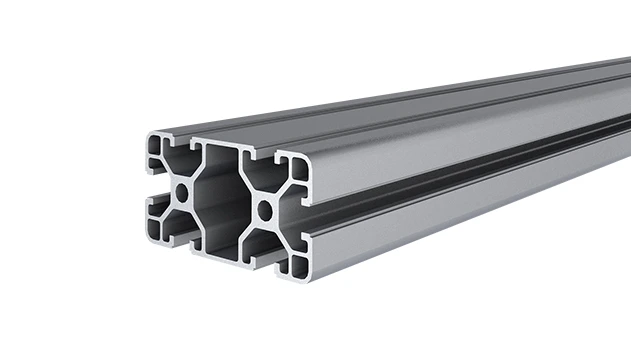
4080A is a 4.00x8.00 CM fractional 40 series square extrusion T-slot profile with two side open T-slots, each side with 4.00cm face, two side with 8.00cm face. The profile has align-a-grooves to assist in aligning connecting profiles.
Introduction: Meet the Workhorse of Modern Manufacturing
Walk into any well-organized workshop, a bustling production line, or even a high-tech lab, and you'll likely spot structures that blend strength with adaptability—shelves that hold heavy machinery, workbenches tailored to specific tasks, or modular frames that seem to reconfigure at a moment's notice. These unsung heroes of industrial design often have one thing in common: they're built with aluminum profiles. And among the stars of this category, the 4080A EU Standard Aluminum Profile stands out as a true workhorse.
But what makes the 4080A so special? Why do manufacturers, workshop owners, and DIY enthusiasts alike reach for it when they need something both robust and flexible? In this guide, we'll break it down—from its core features and how to choose the right one for your project, to step-by-step installation tips and real-world applications. Whether you're setting up a lean system for a small factory or building a custom workbench for your garage, this guide will turn you into a 4080A expert.
What Is the 4080A EU Standard Aluminum Profile, Anyway?
Let's start with the basics. The "4080A" in its name isn't just a random code—it tells you exactly what you're getting. The first two numbers, "40," refer to the profile's width (40mm), and the next two, "80," its height (80mm). The "A" denotes its specific design within the EU standard series, which means it adheres to strict European manufacturing norms for quality, dimensions, and material consistency. Think of it as a guarantee that your 4080A profile will fit seamlessly with other EU-standard accessories, no matter which supplier you buy from.
At its core, the 4080A is an aluminum extrusion profile. Aluminum extrusion is the process of pushing heated aluminum through a die to create a specific cross-sectional shape—like squeezing toothpaste through a tube, but with precision engineering. This method gives the 4080A its signature T-slot design: long, narrow grooves (slots) running along its length that let you slide in accessories, fasten components, or connect multiple profiles without welding. It's this T-slot feature that makes the 4080A so versatile; it turns a simple metal bar into a building block for endless configurations.

Why Choose the 4080A? 5 Compelling Reasons
With so many aluminum profiles on the market, why should the 4080A be your go-to? Let's dive into the benefits that make it a favorite among professionals:
1. The Perfect Balance of Strength and Weight
Aluminum is already known for being lightweight, but the 4080A takes it a step further. Made from high-grade 6063-T5 aluminum alloy (a common choice for extrusions due to its excellent strength-to-weight ratio), it's strong enough to support heavy loads—think 200kg or more per meter when used horizontally—yet light enough to maneuver during installation. Compare that to steel, which would be significantly heavier and harder to work with, and you'll see why the 4080A is a top pick for projects where both durability and portability matter.
2. Corrosion Resistance That Stands the Test of Time
Most 4080A profiles come with an anodized finish—a process that creates a protective oxide layer on the aluminum surface. This layer acts like a shield, resisting rust, scratches, and even chemical spills. Whether you're using it in a humid warehouse or a cleanroom with strict hygiene standards, the anodized 4080A will maintain its sleek appearance and structural integrity for years. Unlike painted steel, which can chip and peel, anodization is part of the metal itself, so it won't wear off easily.
3. Modularity: Build, Adapt, Repeat
Here's where the T-slot design really shines: modularity. With the right aluminum profile accessories—connectors, brackets, end caps, or even wheels—you can assemble the 4080A into almost anything, then take it apart and rebuild it when your needs change. Need a workbench today? Put it together in an hour. Tomorrow, want to turn that workbench into a material rack? Just swap out a few parts. This flexibility saves time and money, especially for small businesses or hobbyists who can't afford custom-built structures for every project.
4. EU Standard Compliance: No Guesswork, Just Compatibility
The "EU Standard" label isn't just for show. It ensures that the 4080A's dimensions, slot sizes, and accessory compatibility are consistent across manufacturers. That means if you buy a 4080A profile from one supplier and a 90° aluminum profile connector from another, they'll fit together perfectly. No more frustrating trips to the hardware store because parts don't match—EU standards take the guesswork out of building.
5. Cost-Effective in the Long Run
While the upfront cost of aluminum profiles might be higher than, say, wooden boards or basic steel pipes, the 4080A pays for itself over time. Its durability means you won't need to replace it every few years, and its modularity lets you reuse components for new projects. Plus, since it's lightweight, shipping and installation costs are lower compared to heavier materials. For businesses focused on lean system principles—maximizing efficiency while minimizing waste—the 4080A is a no-brainer.
Key Features of the 4080A: What Makes It Tick?
To truly understand the 4080A, let's zoom in on its design details. These features might seem small, but they're what make it such a reliable and versatile tool:
Dimensions: 40mm x 80mm—A Sweet Spot for Versatility
The 40mm width and 80mm height hit a sweet spot between compactness and load capacity. It's narrow enough to fit in tight spaces (like between machines on a production line) but tall enough to provide the structural rigidity needed for heavier applications. Whether you're building a vertical shelf or a horizontal workbench top, these dimensions offer the flexibility to scale up or down without sacrificing strength.
T-Slots: The Secret to Modularity
Most 4080A profiles have four T-slots: two on the 40mm faces and two on the 80mm faces. These slots are typically 8mm wide (a standard size for EU profiles) and deep enough to accommodate hex bolts, nuts, and specialized T-slot accessories. You can slide a nut into the slot, position it where you need, and tighten a bolt from the outside—no drilling required. This makes attaching panels, shelves, or other profiles quick and tool-friendly (all you need is a hex key).
Material: 6063-T5 Aluminum Alloy
The 4080A is usually made from 6063-T5 aluminum alloy, a heat-treated material known for its excellent extrudability (meaning it can be shaped into complex profiles easily) and good mechanical properties. T5 tempering involves cooling the aluminum rapidly after extrusion, then aging it at room temperature to increase its strength. The result? A profile that's strong enough for industrial use but still malleable enough to work with hand tools.
Surface Finish: Anodized for Protection and Style
Anodization is the most common finish for 4080A profiles. This electrochemical process thickens the natural oxide layer on the aluminum, making it more resistant to corrosion, abrasion, and fading. Anodized profiles typically have a matte silver appearance, but they can also be dyed in colors like black, blue, or red for a custom look. The finish isn't just about aesthetics, though— it also makes cleaning easy; a quick wipe with a damp cloth is usually all it takes to remove dust or grease.
Wall Thickness: Strength Where It Counts
The wall thickness of the 4080A can vary slightly by manufacturer, but it's generally around 2.0mm to 3.0mm. Thicker walls mean higher load capacity, but they also add weight and cost. For most general applications (like workbenches or light-duty shelves), 2.0mm is sufficient. If you're building something that needs to support very heavy loads (like a material rack for engine parts), opt for a thicker-walled variant.
How to Choose the Right 4080A Profile for Your Project
Not all 4080A profiles are created equal, and choosing the right one depends on your specific needs. Here's a step-by-step guide to help you select the perfect profile:
Step 1: Define Your Load Requirements
Start by asking: What will this profile hold? A workbench might need to support 100kg of tools, while a vertical shelf could carry 50kg per level. Check the manufacturer's load capacity charts—they'll specify maximum horizontal load (weight per meter when the profile is used horizontally) and vertical load (weight when used vertically). As a rule of thumb, if your project involves heavy, concentrated loads (like a vice mounted on a workbench), go for a thicker-walled profile.
Step 2: Consider Length and Cutting Needs
4080A profiles are typically sold in standard lengths (2m, 3m, or 6m), but most suppliers will cut them to your desired length for a small fee. Measure your project space carefully—do you need a 1.2m section for a workbench leg or a 4m beam for a long shelf? If you're cutting the profile yourself, use a fine-tooth saw (aluminum is soft, so a hacksaw or miter saw with a metal blade works) and deburr the edges with sandpaper to avoid sharp corners.
Step 3: Choose the Right Finish
Anodized silver is the default, but if you need corrosion resistance in harsh environments (like a chemical lab or outdoor workshop), consider a thicker anodized layer or even a powder-coated finish (though powder coating can fill T-slots, so check with the supplier first). For cleanrooms or food-processing areas, look for profiles with a food-grade anodized finish (free of heavy metals).
Step 4: Don't Forget the Accessories
The 4080A is only as good as the accessories you pair it with. Think about how you'll connect profiles (90° connectors, corner brackets), attach surfaces (panel mounts, shelf supports), or add mobility (casters, leveling feet). Most suppliers sell accessory kits tailored to common projects (like workbench kits that include profiles, connectors, and a tabletop), which can save you time and ensure compatibility.
| Profile Type | Dimensions (mm) | Wall Thickness (mm) | Max Horizontal Load (kg/m) | Common Applications |
|---|---|---|---|---|
| 4080A EU Standard | 40 x 80 | 2.0–3.0 | 200–300 | Workbenches, material racks, conveyor frames |
| 4040A EU Standard | 40 x 40 | 1.5–2.0 | 100–150 | Light-duty shelves, machine guards |
| 3030A EU Standard | 30 x 30 | 1.2–1.5 | 50–80 | Small workstations, display racks |
Table 1: Comparing 4080A with other common EU standard profiles. Load capacities are approximate and vary by manufacturer.
Essential Aluminum Profile Accessories for the 4080A
You've picked your 4080A profile—now it's time to round out your toolkit with accessories. Here are the must-haves for most projects:
Connectors: The Glue That Holds It All Together
Connectors are what let you join profiles at angles or in straight lines. For 90° corners, 90° aluminum profile connectors (L-shaped brackets that fit into T-slots) are the most common. For straight runs, use straight connectors or simply bolt two profiles together using T-slot nuts. If you need flexibility (like a foldable workbench), hinge connectors let you pivot profiles. And for complex joints (like three-way intersections), T-connectors or cross-connectors do the job.
End Caps: Protection and Polish
4080 aluminum profile end caps are small plastic or metal covers that snap onto the ends of the profile. They serve two purposes: preventing dust, debris, or fingers from getting stuck in the open ends, and giving the structure a clean, finished look. Most end caps are color-matched to the anodized finish (silver, black, or white) and install with a simple press-fit.
Panels and Shelves: Adding Surfaces
To turn your 4080A frame into a functional workbench or shelf, you'll need panels. Options include plywood (budget-friendly), MDF (smooth for painting), or aluminum honeycomb panels (lightweight and strong). Use panel mounts (small brackets that attach to T-slots) to secure the panel to the profile. For heavier loads, add cross-braces between profiles to support the panel's weight.
Leveling Feet and Casters: Stability and Mobility
If your structure is staying put (like a stationary workbench), leveling feet are a must. These screw into the bottom of the profile and let you adjust the height to compensate for uneven floors. For mobile setups (like a rolling cart), add casters (wheels) with brakes. Look for casters rated for your total load (including the structure and whatever you'll be carrying) and choose swivel casters for easy maneuverability.
T-Slot Accessories: The Little Extras That Matter
T-slot nuts, bolts, and washers are the backbone of T-slot connections—stock up on these (they're cheap and easy to lose!). Other handy extras: T-slot rubber seal covers (to fill slots and prevent dust buildup), cable management clips (to route wires along the profile), and tool hooks (to hang tools from the workbench frame).
Step-by-Step Installation: Building with 4080A
Ready to put it all together? Let's walk through building a simple 4080A workbench—a common project that showcases the profile's versatility. We'll assume you have the following materials: four 4080A legs (each 80cm long), two 4080A side rails (each 120cm long), two 4080A front/back rails (each 60cm long), 90° connectors (8 total), a plywood tabletop (120cm x 60cm), end caps (8), and leveling feet (4).
Step 1: Lay Out the Frame
Start by laying out the four legs on a flat surface, spaced to match the rail lengths (120cm apart for the sides, 60cm for the front/back). Attach the side rails to the top of the legs using 90° connectors: slide a T-slot nut into the rail's slot, position the connector over the nut, and tighten the bolt with a hex key. Repeat for the front and back rails to form a rectangular frame (the tabletop will sit on this frame).
Step 2: Add Cross-Braces (Optional but Recommended)
For extra stability, add cross-braces between the side rails (near the bottom) and front/back rails. Cut two 55cm 4080A sections, and attach them diagonally or horizontally using connectors. This prevents the frame from wobbling under heavy loads.
Step 3: Attach the Tabletop
Lay the plywood tabletop on the frame. Mark where the T-slots are underneath, then drill small pilot holes through the plywood (just big enough for a bolt to pass through). Slide T-slot nuts into the frame's top rails, align them with the pilot holes, and bolt the tabletop down. Use washers under the bolts to prevent the wood from cracking.
Step 4: Install Leveling Feet and End Caps
Screw the leveling feet into the bottom of each leg. Stand the workbench upright and adjust the feet until it's level (use a spirit level on the tabletop). Finally, press the end caps onto the open ends of all profiles—your workbench is now ready to use!
Pro Tip: If you're new to aluminum profiles, start small! Build a simple shelf or cart first to get the hang of connecting profiles and using T-slot accessories. You'll be surprised how quickly you get the knack.
Real-World Applications: Where the 4080A Shines
The 4080A isn't just for workbenches—it's used in countless industries to solve unique challenges. Here are a few examples of how professionals leverage its versatility:
Manufacturing: Lean System Workstations
In lean manufacturing, efficiency is key. Factories use 4080A profiles to build custom workstations tailored to specific tasks—like assembly stations with built-in tool holders, bins for parts, and even integrated conveyor systems (using roller track accessories). Since the 4080A is modular, stations can be reconfigured when production needs change, reducing downtime and waste.
Laboratories: Clean, Custom Racks
Laboratories need sturdy, easy-to-clean storage for equipment and samples. 4080A profiles with anodized finishes are resistant to chemicals and can be wiped down with disinfectants. Researchers often build custom racks with adjustable shelves (using T-slots to move shelves up or down) to fit test tubes, microscopes, or lab instruments of different sizes.
Retail: Display Shelves with Style
Retailers love the 4080A for its sleek, modern look. Anodized black or silver profiles make eye-catching display shelves for clothing, electronics, or cosmetics. Add glass panels (secured with T-slot brackets) for a high-end feel, or use LED strip lights (mounted in T-slots) to highlight products. Best of all, displays can be updated quickly for seasonal promotions by swapping out panels or adjusting shelf heights.
DIY Garages: Custom Tool Storage
Hobbyists and mechanics use 4080A to build wall-mounted tool racks, pegboards, or even car lifts (for smaller vehicles). With T-slots, you can mount tool hooks, socket organizers, or even a fold-down workbench that tucks away when not in use. It's a budget-friendly alternative to pre-made tool cabinets and can be customized to fit your exact collection of tools.
Maintenance and Care: Keeping Your 4080A Looking and Working Like New
The 4080A is low-maintenance, but a little care goes a long way in extending its lifespan:
Cleaning
Wipe down the profile with a soft cloth and mild soap (like dish soap) to remove dust, grease, or fingerprints. Avoid abrasive cleaners or scouring pads—they can scratch the anodized finish. For stubborn stains (like oil), use isopropyl alcohol on a cloth, then rinse with water and dry.
Checking Connections
Every few months, tighten any loose bolts or connectors with a hex key. Vibrations from machinery or heavy use can cause connections to loosen over time, which can lead to wobbling or reduced load capacity. A quick once-over with a hex key takes 5 minutes and prevents bigger issues.
Replacing Worn Accessories
Accessories like end caps or rubber T-slot covers can wear out faster than the profile itself. replace cracked end caps to keep debris out, and swap out old rubber covers to maintain a clean look. Most accessories are inexpensive and easy to find online or through your profile supplier.
Protecting Against Corrosion
If your 4080A is used outdoors or in a humid environment, inspect the anodized finish regularly for signs of pitting or discoloration. If you spot damage, clean the area and apply a thin coat of clear acrylic spray paint to protect the exposed aluminum from further corrosion.
Troubleshooting Common 4080A Issues
Even with proper care, you might run into minor hiccups. Here's how to fix them:
Issue: Loose Connectors
Solution: Tighten the bolts with a hex key. If they keep loosening, try using thread-locking fluid (like Loctite) on the bolt threads—just don't use too much, as it can make future disassembly hard.
Issue: Scratched Anodized Finish
Solution: For shallow scratches, use a metal polish (like Brasso) on a soft cloth to buff them out. For deeper scratches, touch up with a small amount of silver acrylic paint (test on a hidden area first to match the color).
Issue: T-Slot Nut Stuck in Slot
Solution: Spray a little WD-40 into the slot and gently tap the nut with a rubber mallet to loosen it. Avoid using pliers, as they can damage the slot edges.
Issue: Wobbly Structure
Solution: Check for loose connectors and tighten them. If the wobble persists, add cross-braces or diagonal supports to improve stability. For workbenches, ensure the leveling feet are adjusted evenly.
Conclusion: Why the 4080A Is a Must-Have for Your Toolkit
The 4080A EU Standard Aluminum Profile isn't just a piece of metal—it's a blank canvas for innovation. Its blend of strength, flexibility, and compliance with EU standards makes it the go-to choice for professionals and DIYers alike. Whether you're building a lean system for a factory, a custom workbench for your garage, or a display shelf for your store, the 4080A adapts to your needs, not the other way around.
Remember, the key to success with the 4080A is planning: define your load requirements, choose the right accessories, and take your time with installation. With a little creativity, this humble profile can transform how you build, organize, and work. So next time you're staring at a project that needs a sturdy, adaptable structure, reach for the 4080A—you won't be disappointed.